Ganesha (Elephant and Ganesha)
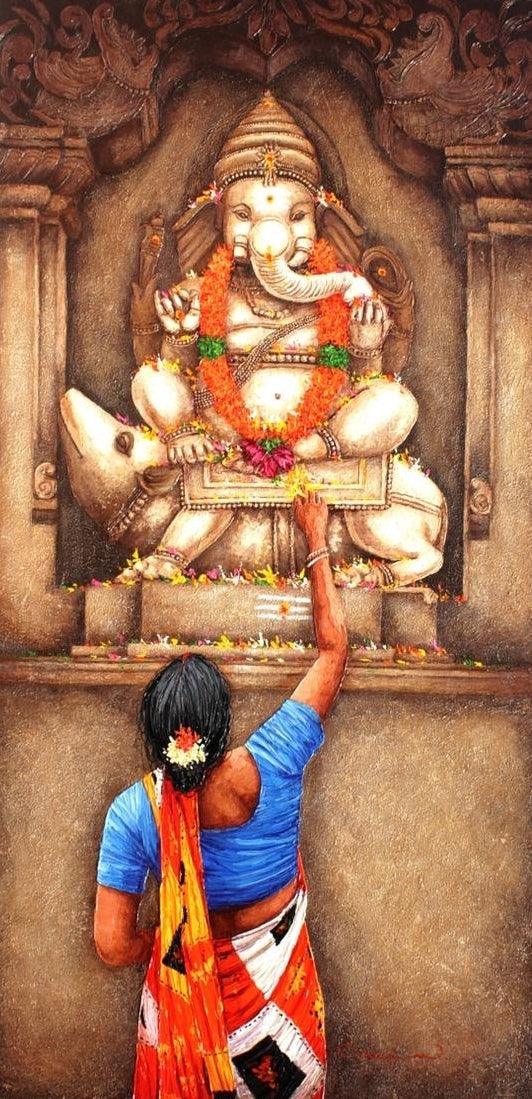
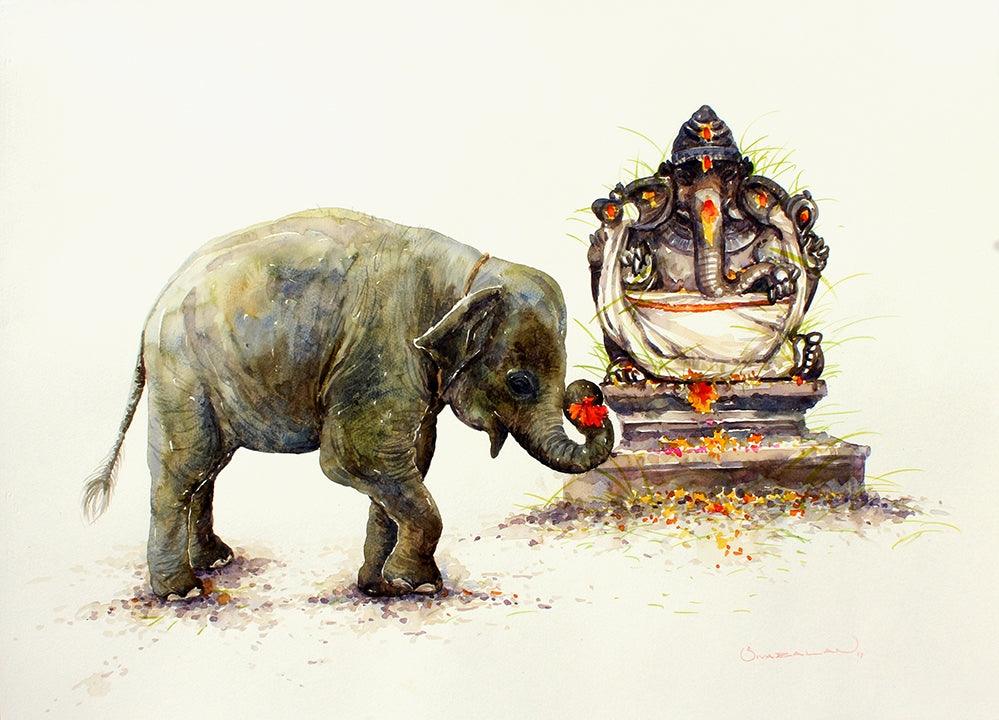
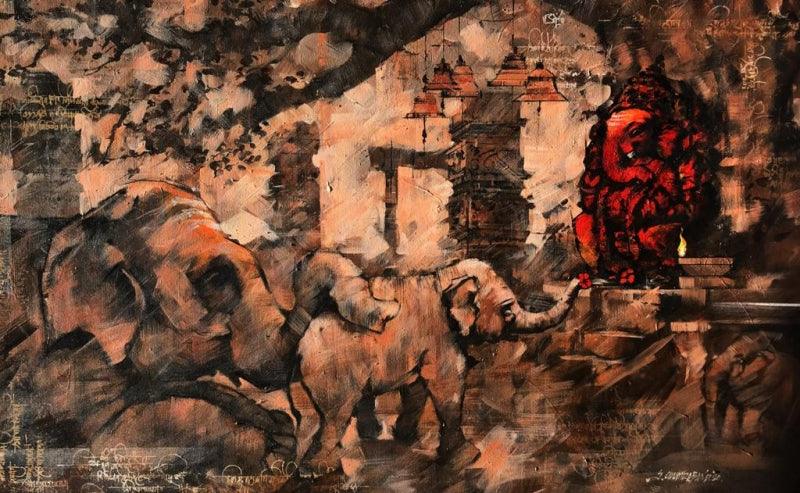
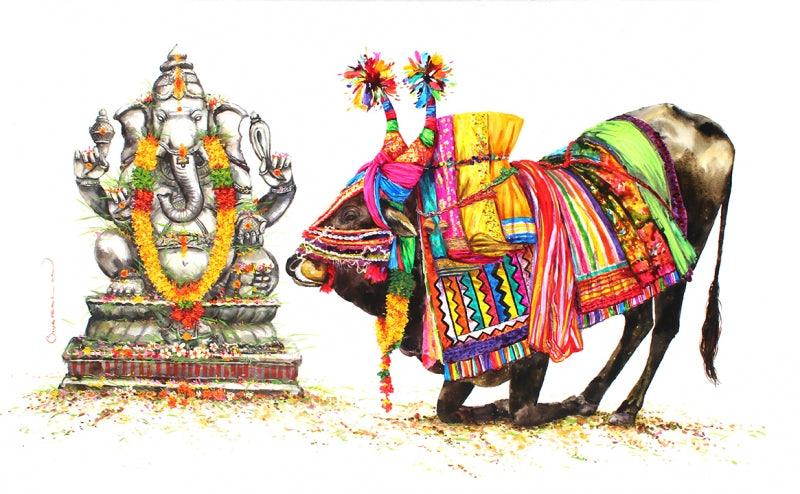
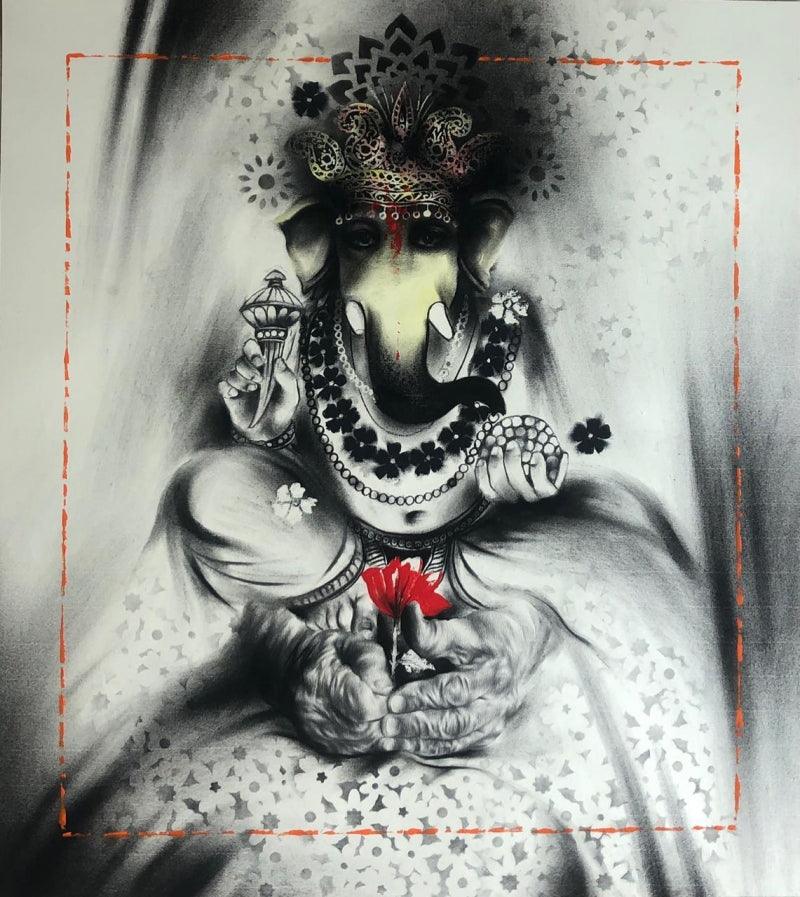
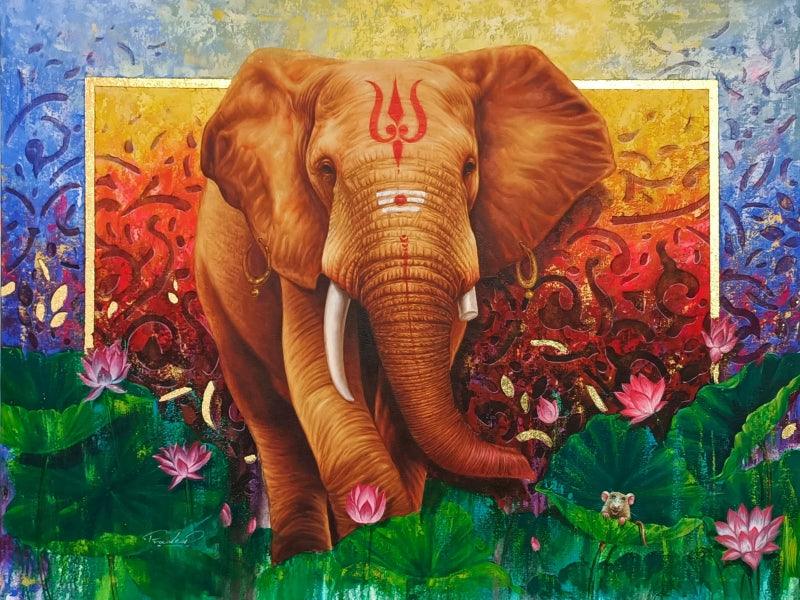
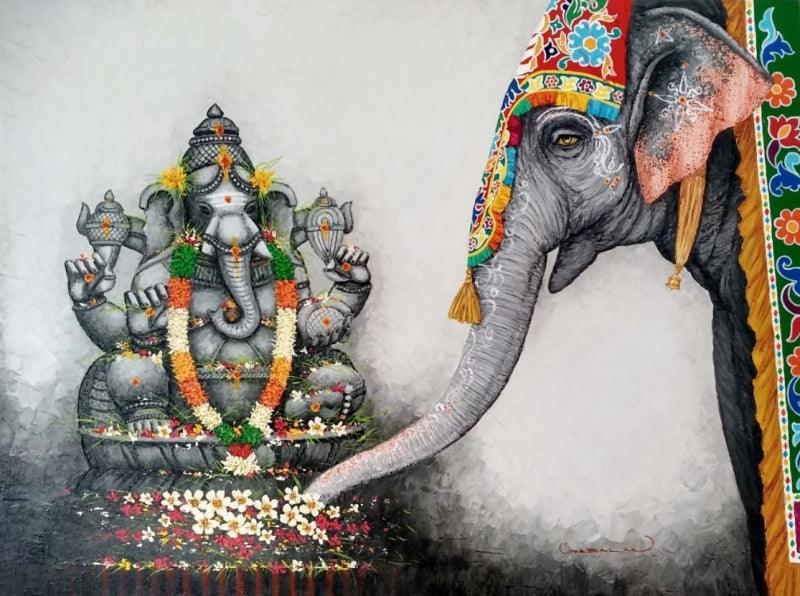
Set against a hushed, misted ground, the stone-grey Ganesha emerges like a memory made tangible, its carved stillness awakened by garlands and scattered blossoms that read as offerings of time and devotion. The elephant at right—draped in riotous textile pattern—leans inward, its trunk forming a tender conduit between the living and the icon, turning the negative space into a charged interval of reverence. Color is rationed and therefore potent: saffron, vermilion, and floral whites puncture the monochrome with ritual intensity, suggesting faith as the quiet force that animates matter. The composition holds a gentle hierarchy—monument and mortal, deity and devotee—yet dissolves it through touch, implying that blessing is not bestowed from above but discovered in intimate proximity.
Delivery
You may also like