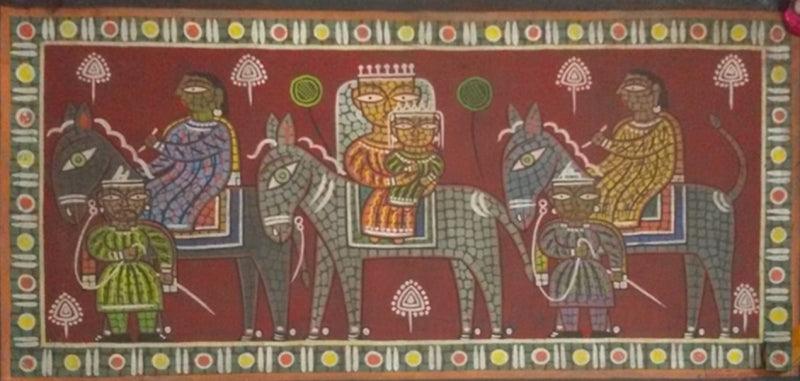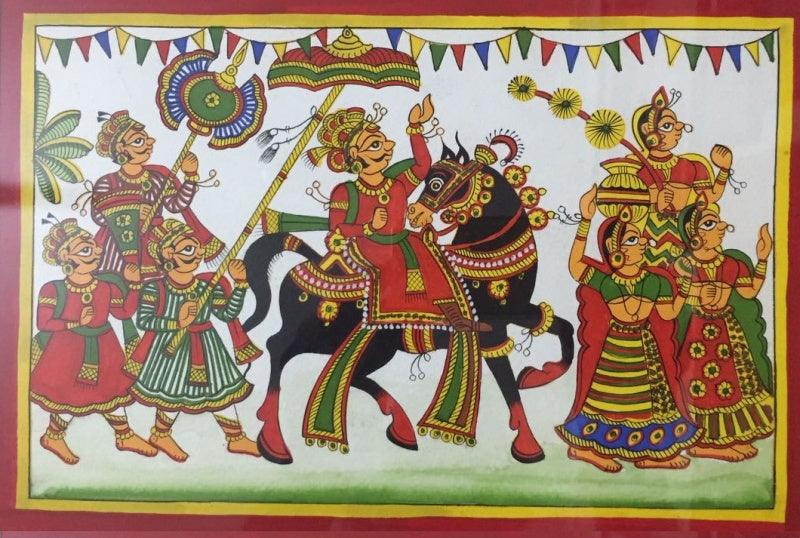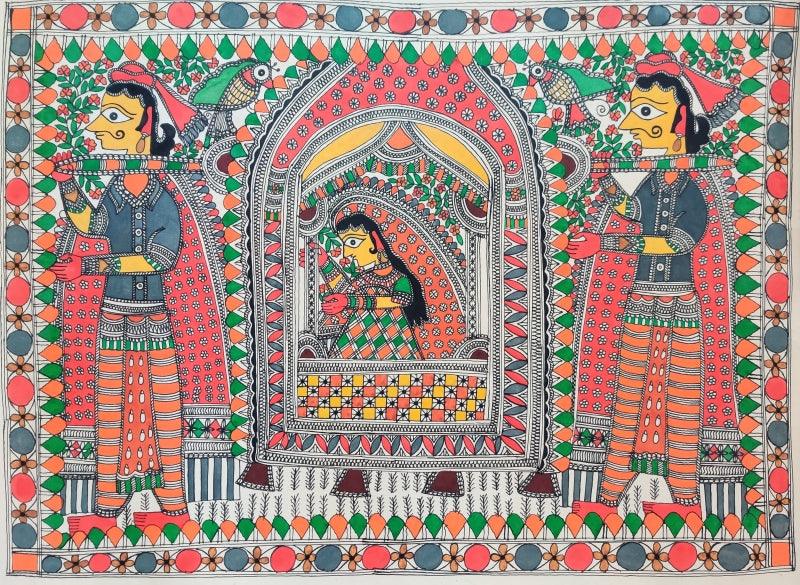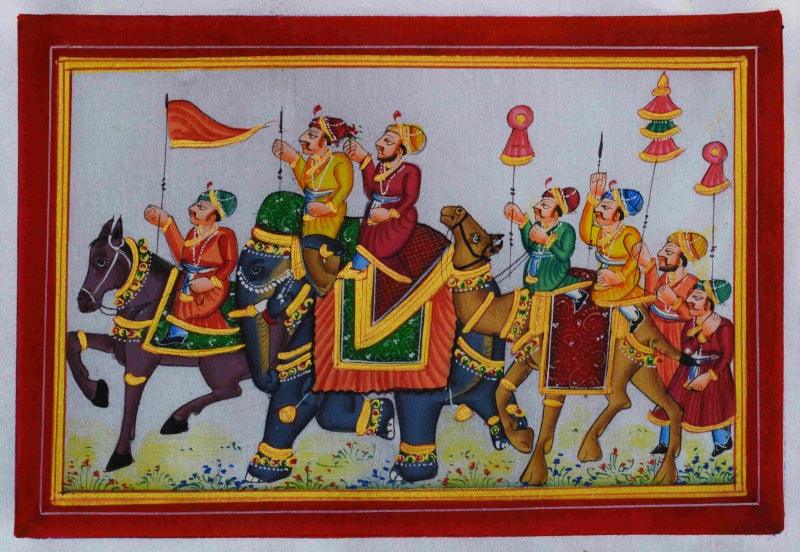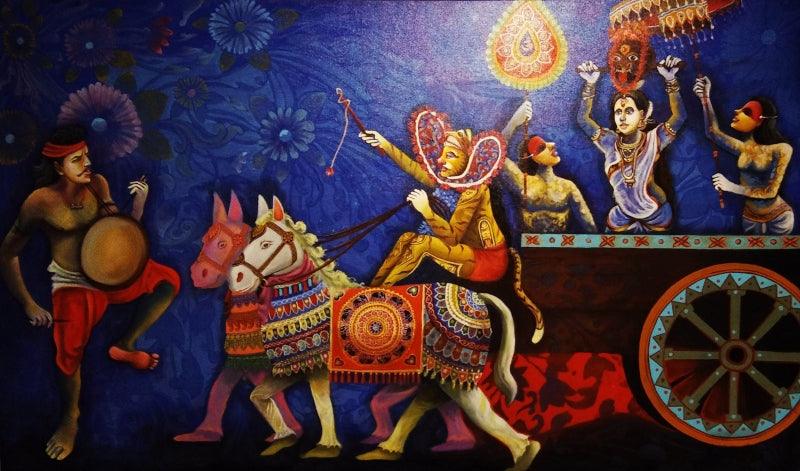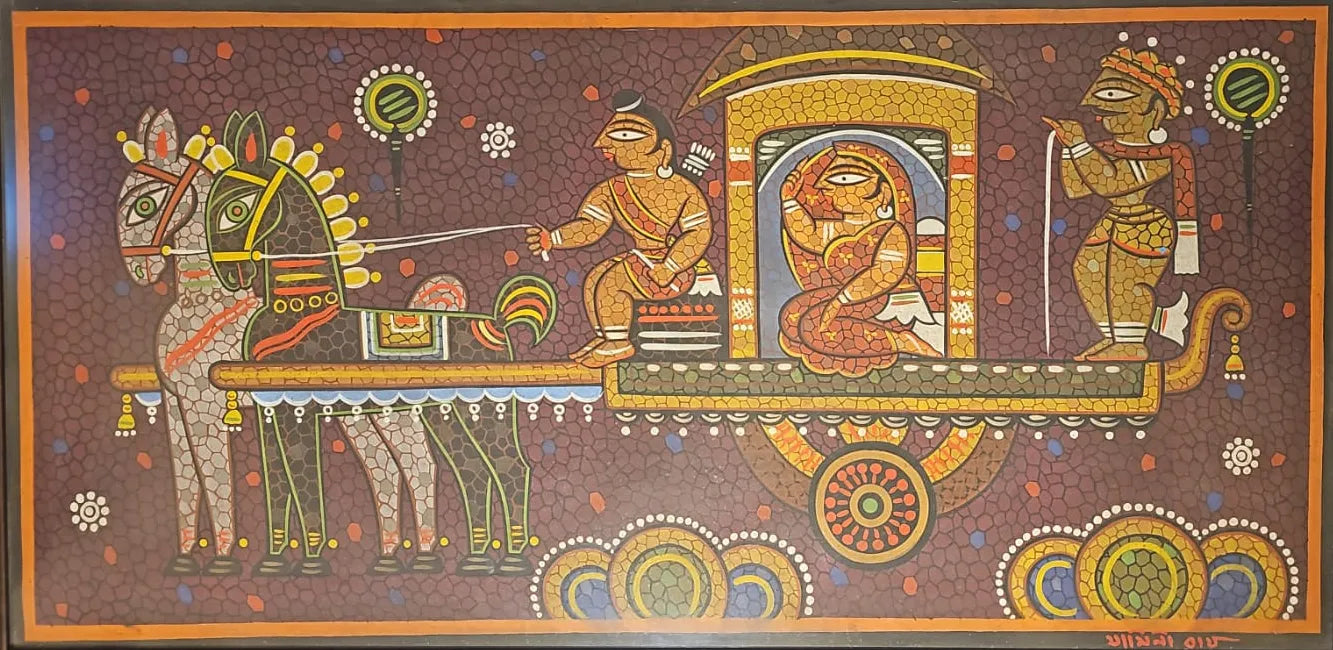
Bride And Companion (Royal Procession)
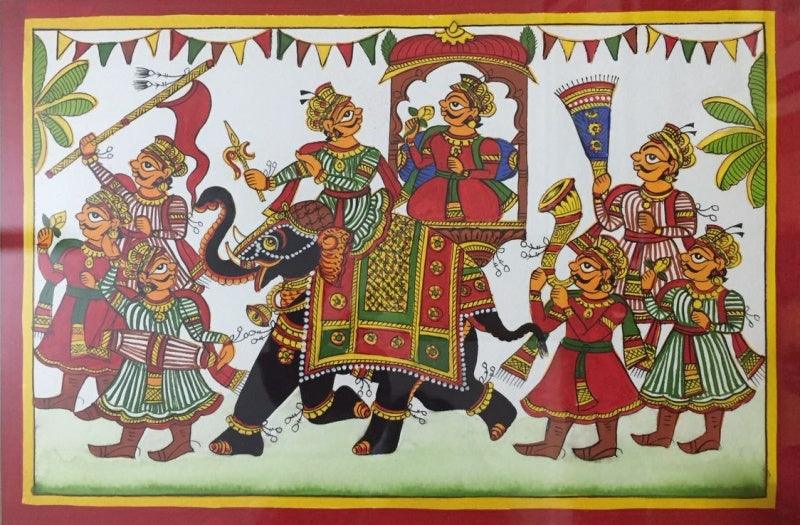
Set against a burnished terracotta ground, this folk-inflected procession turns travel into a ritual of belonging, where the horse and chariot move less through geography than through a carefully ordered cosmos of symbols. Flat planes of color and emphatic contouring give the figures an iconic stillness, while the concentric ornaments and repeating borders pulse like mantras, binding the scene into a single rhythmic breath. The seated woman—framed like a shrine within the carriage—becomes both passenger and presence, suggesting protection, auspice, and the quiet authority of the domestic carried into public space. In its decorative density and measured symmetry, the work reads as a celebration of continuity: tradition rolling forward, richly patterned, and unmistakably alive.
Delivery
You may also like