Shrinathj 5 (Shrinathji in a Lotus Garden)
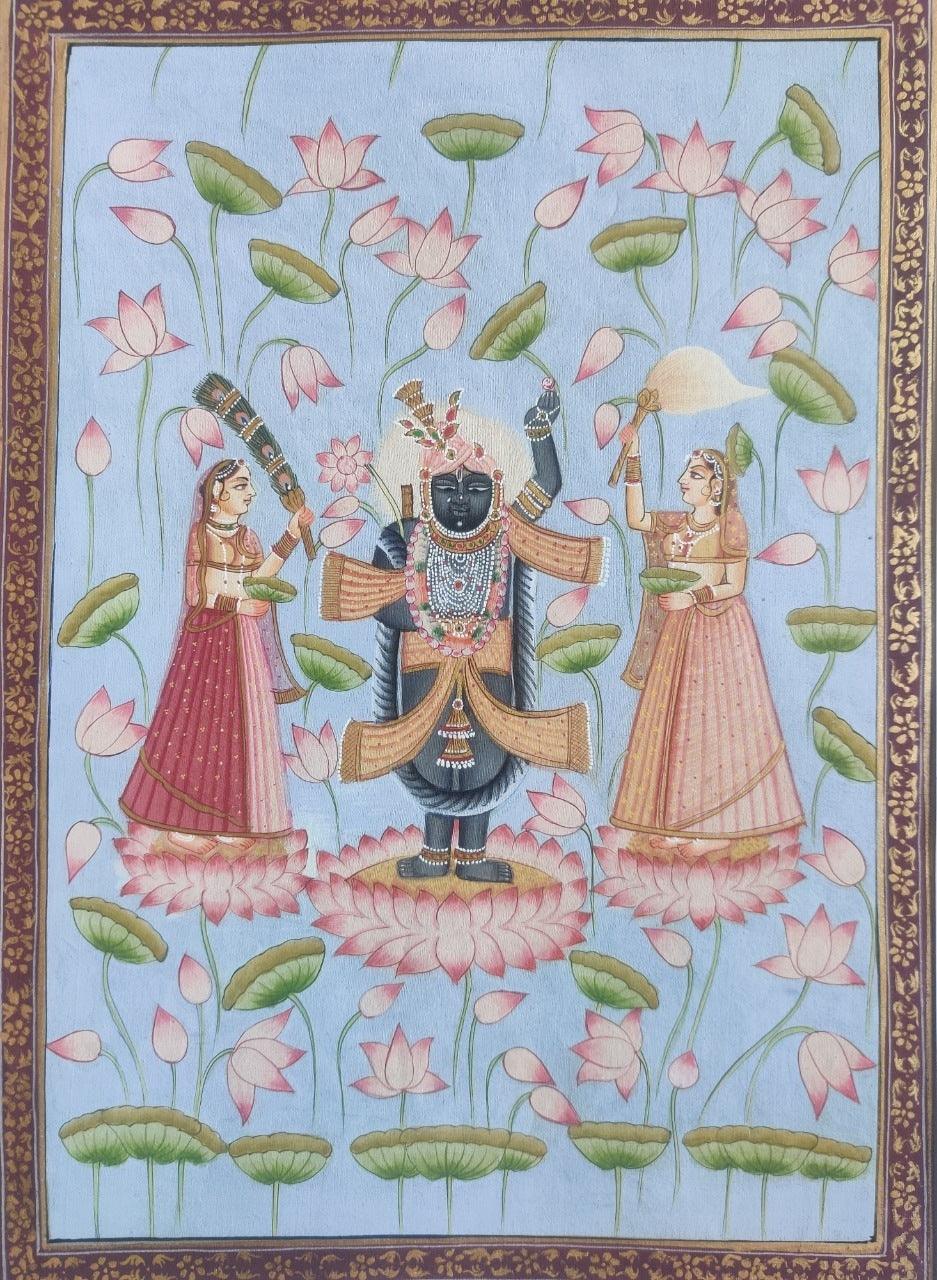
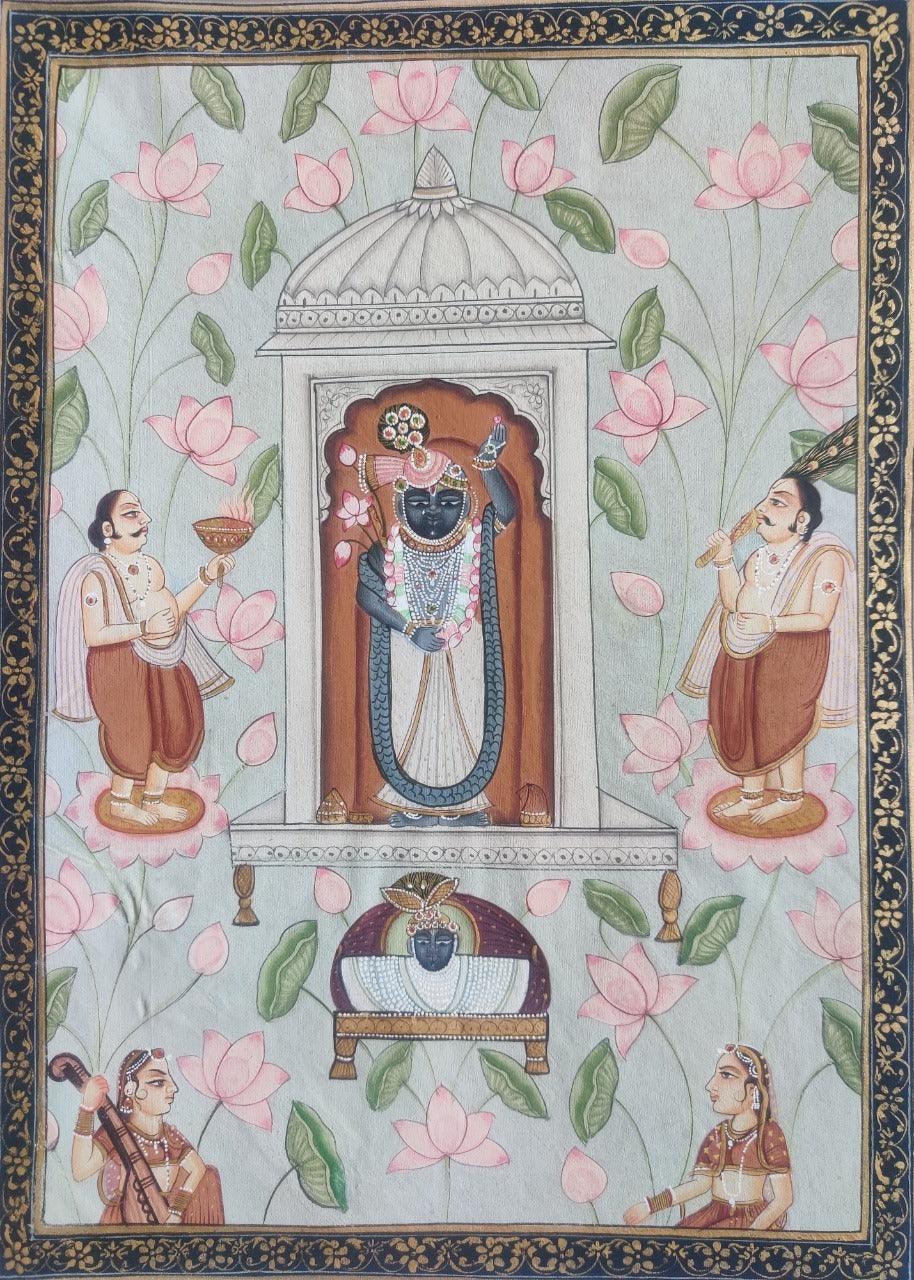
Framed by a dense arabesque border, the composition unfolds like a devotional chamber where the still, dark visage of the deity is sheltered within a pale pavilion, its luminous ornaments and garlands turning sanctity into a measured brilliance. Lotus blossoms and drifting petals saturate the field, dissolving architectural gravity into a continuous garden of reverence, as if nature itself becomes the liturgy that holds the scene together. The attendants—musicians and bearers of offerings—stand on lotus plinths, their symmetrical placement creating a ritual rhythm that guides the eye in quiet procession toward the central presence. Through this calibrated balance of softness and icon-like certainty, the work speaks of darshan: an encounter where beauty is not decoration but a disciplined pathway into contemplation.
Delivery
You may also like