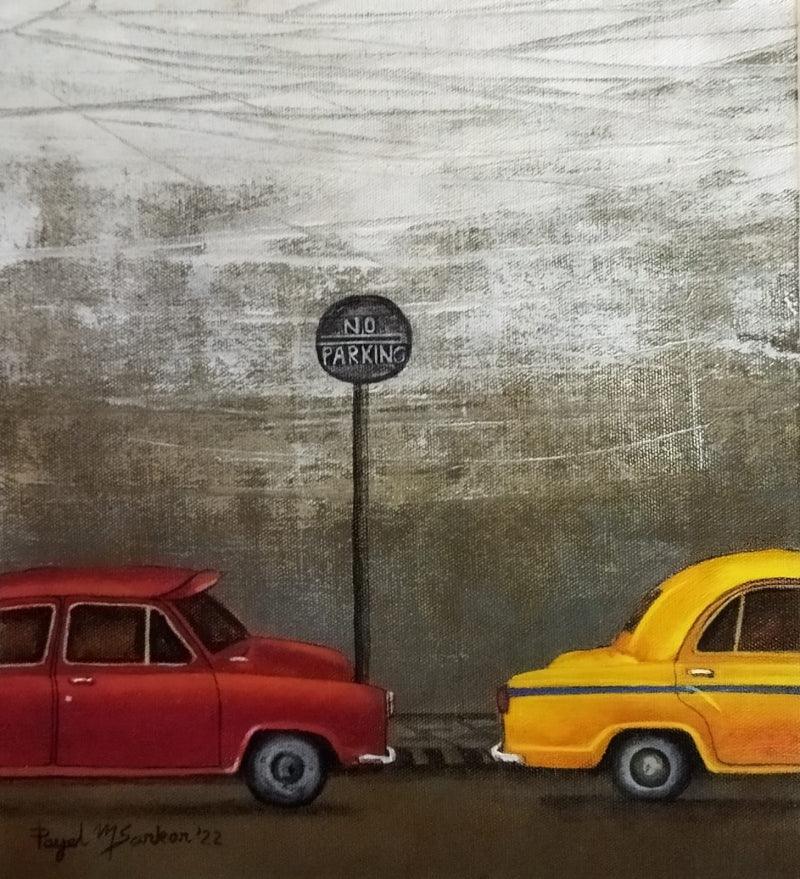
Kolkata My City 1 (No Parking)
Against a scumbled, weathered wall that reads like accumulated time, two vintage cars—one crimson, one saffron—face each other in a tense, quiet standoff beneath the blunt decree of a “NO PARKING” sign. The composition turns ordinary street furniture into a moral axis: the sign’s rigid vertical interrupts the horizontal drift of the scene, as if authority were trying to pin down lives that keep edging forward. Muted greys and gritty textures swallow the background into near-anonymity, making the saturated bodies of the cars feel like stubborn human impulses—desire, memory, impatience—caught between compliance and defiance. In this stripped urban vignette, the real subject becomes the friction between rule and presence, and the small, persistent way color insists on belonging.
Delivery
You may also like