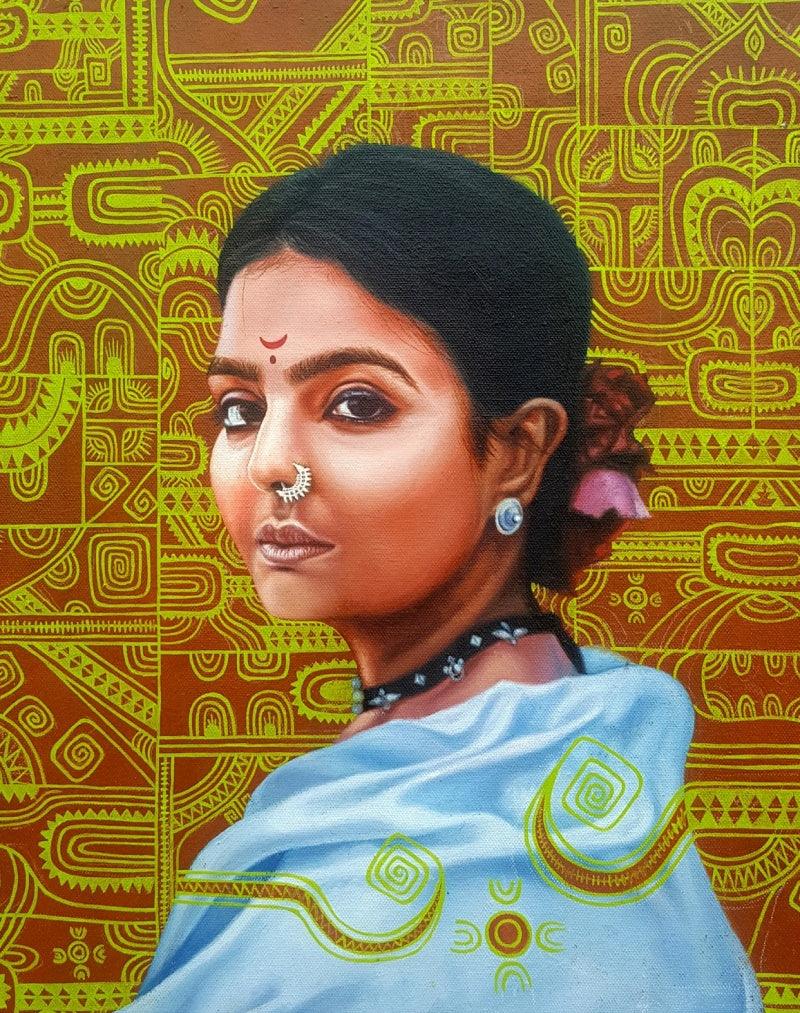
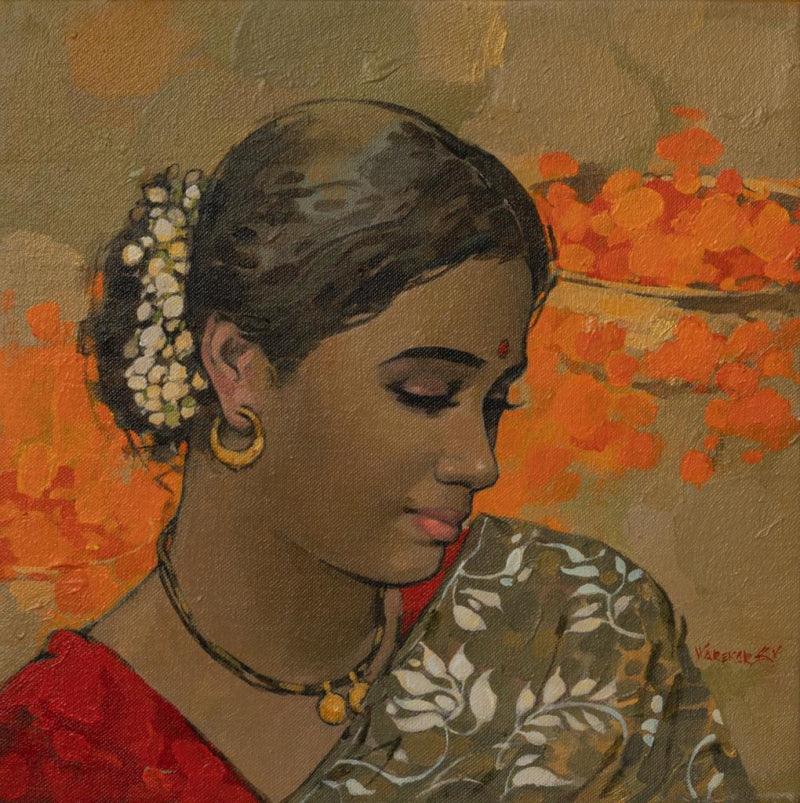
Elegance
₹21,000
Out of stock · ★ 4.0 (11)checking live price…
Size
17x14Type
OriginalMaterial
CanvasSet against a field of intricate, glyph-like ornament, the woman’s three-quarter gaze becomes a quiet act of defiance—an anchored human presence amid a chorus of inherited symbols. The warm ochres and acidic greens pulse like a living textile, while the cool, pale drape of her garment opens a breath of stillness that lets her face hold the light with tender authority. Jewelry and bindi read not as decoration but as punctuation, marking identity as both intimate and communal, as if the portrait is negotiating the space between personal memory and cultural inscription. In this tension, the work suggests that tradition is not a backdrop but a language—one the sitter both carries and rewrites with her poised, unflinching calm.
Delivery
You may also like
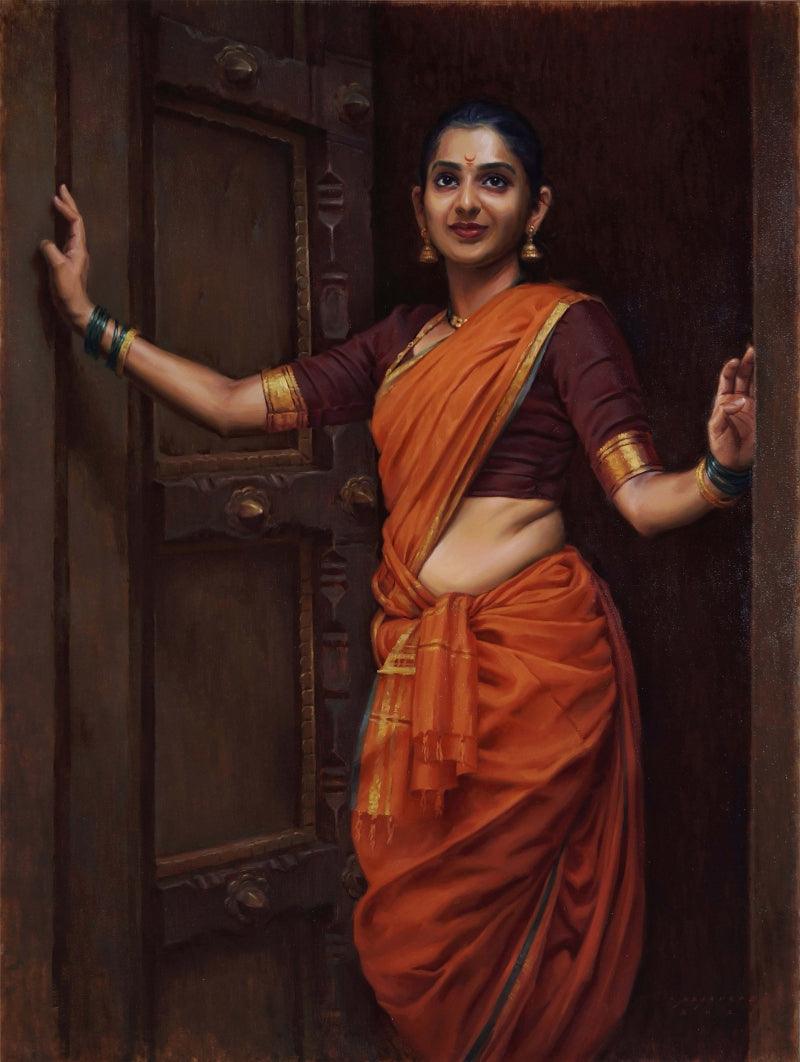
Elegance
Artzolo
₹70,000
out of stock
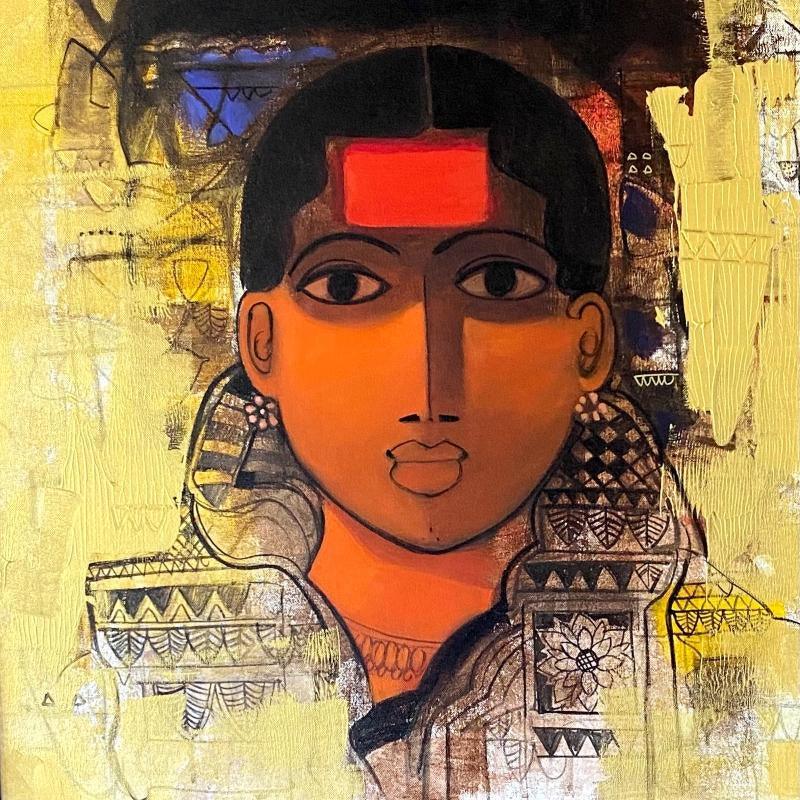
The Indian Woman 11
Artzolo
₹56,000
out of stock
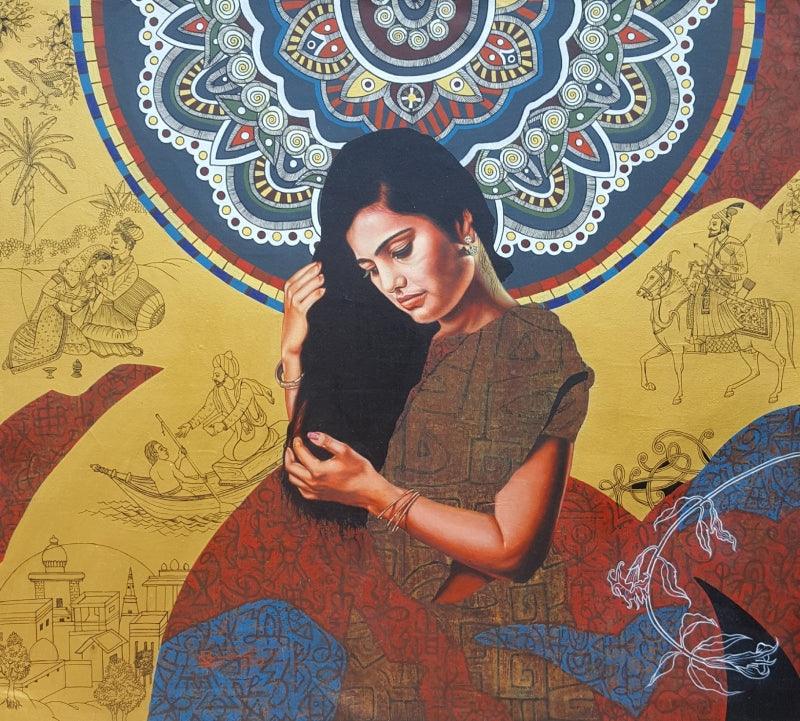
Love Roots And Philosophy
Artzolo
₹45,000
out of stock
★ 4.0 (13)
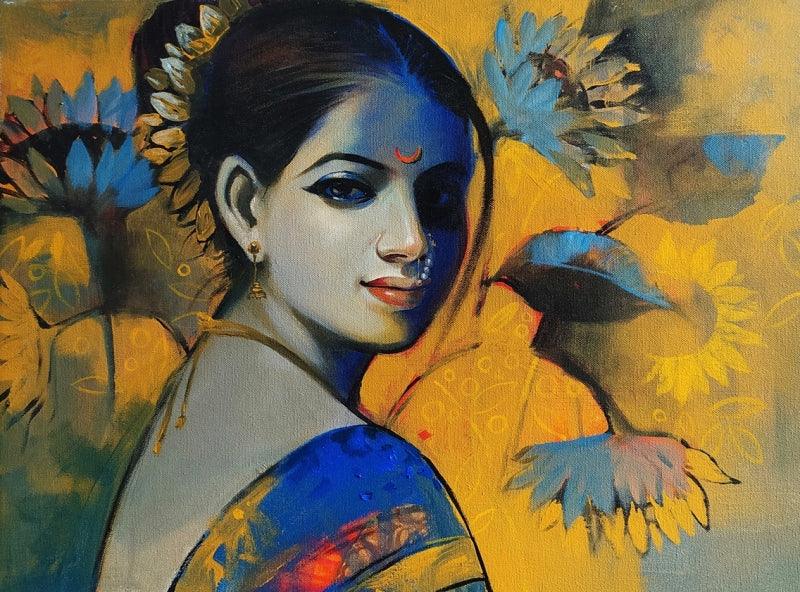
Beauty
Artzolo
₹45,000
out of stock
★ 4.0 (13)
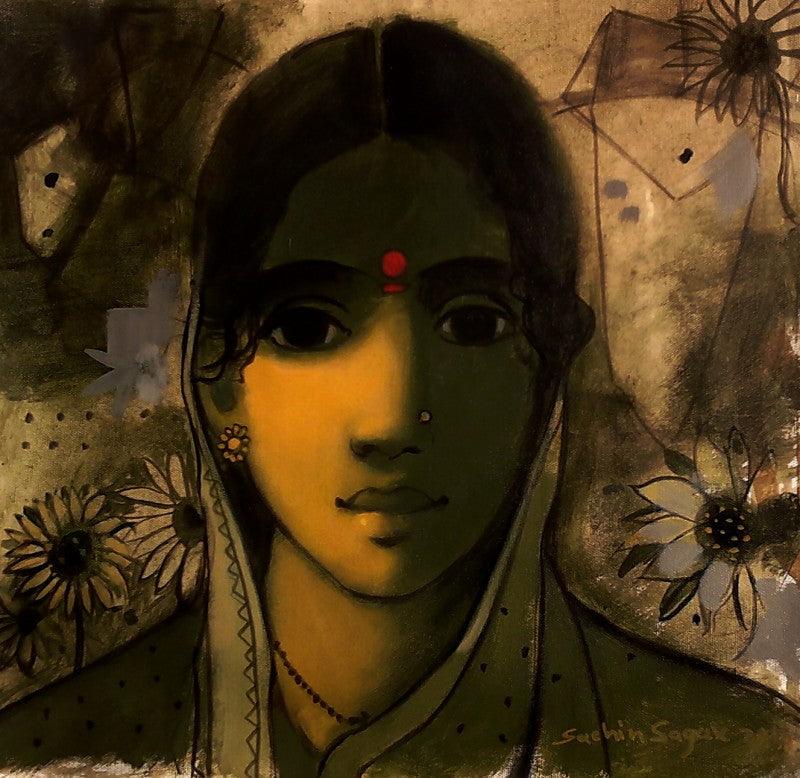
The Indian Woman
Artzolo
₹18,000
out of stock
★ 4.0 (7)
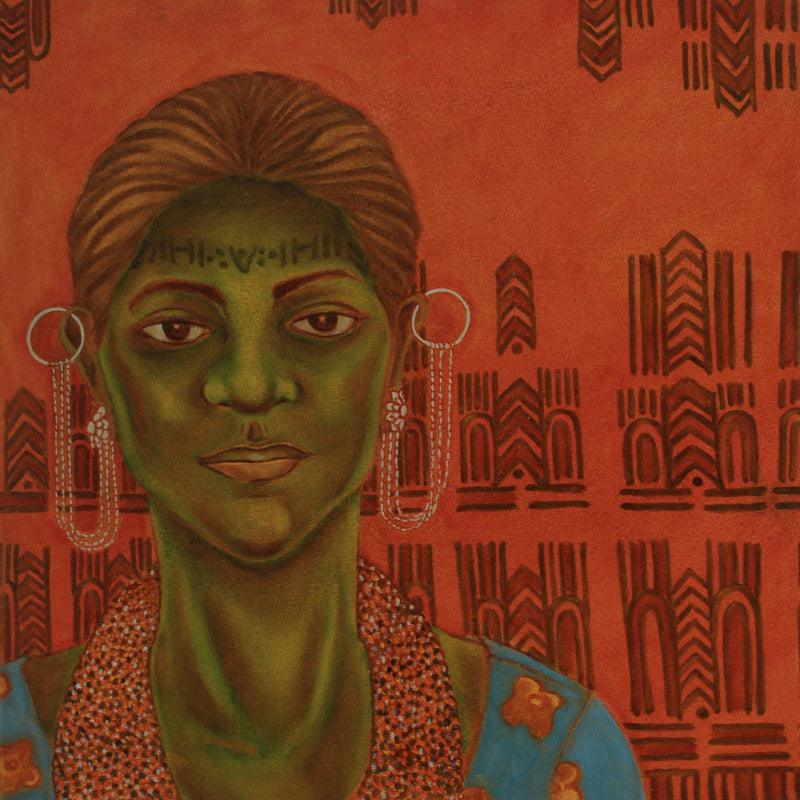
Earthen Native 3 (Baiga Tribe)
Artzolo
₹38,000
★ 5.0 (11)
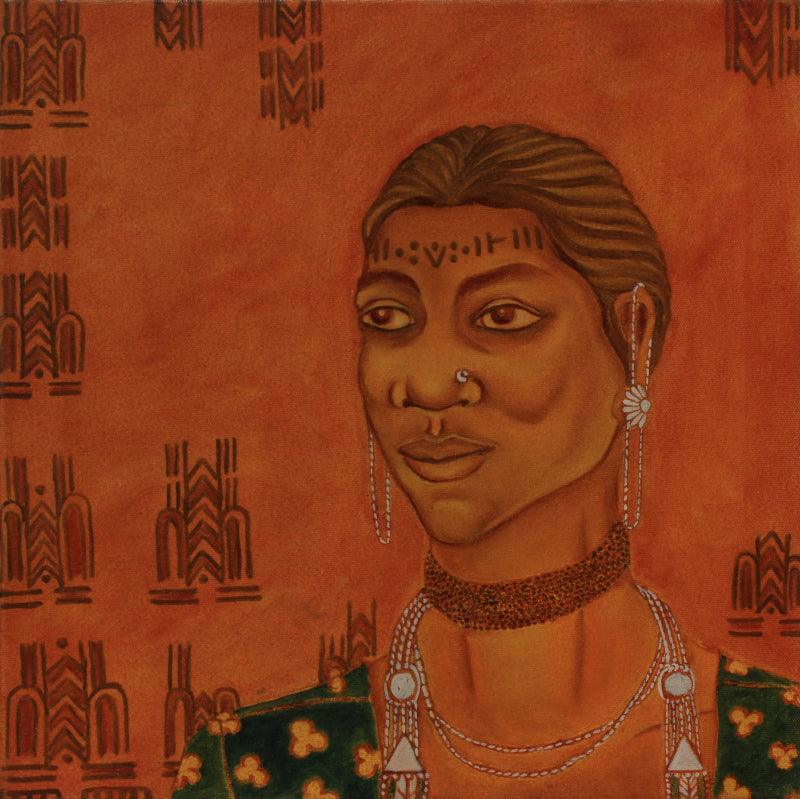
Earthen Native 8 (Baiga Tribe)
Artzolo
₹38,000
★ 5.0 (5)
Untitled 26
Artzolo
₹30,000