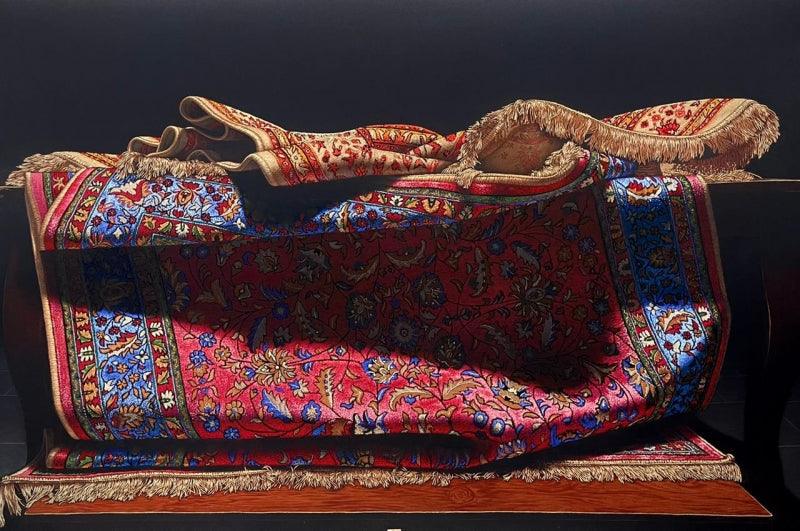
Untitled 4
₹950,000
Out of stockchecking live price…
Size
40x60Type
OriginalMaterial
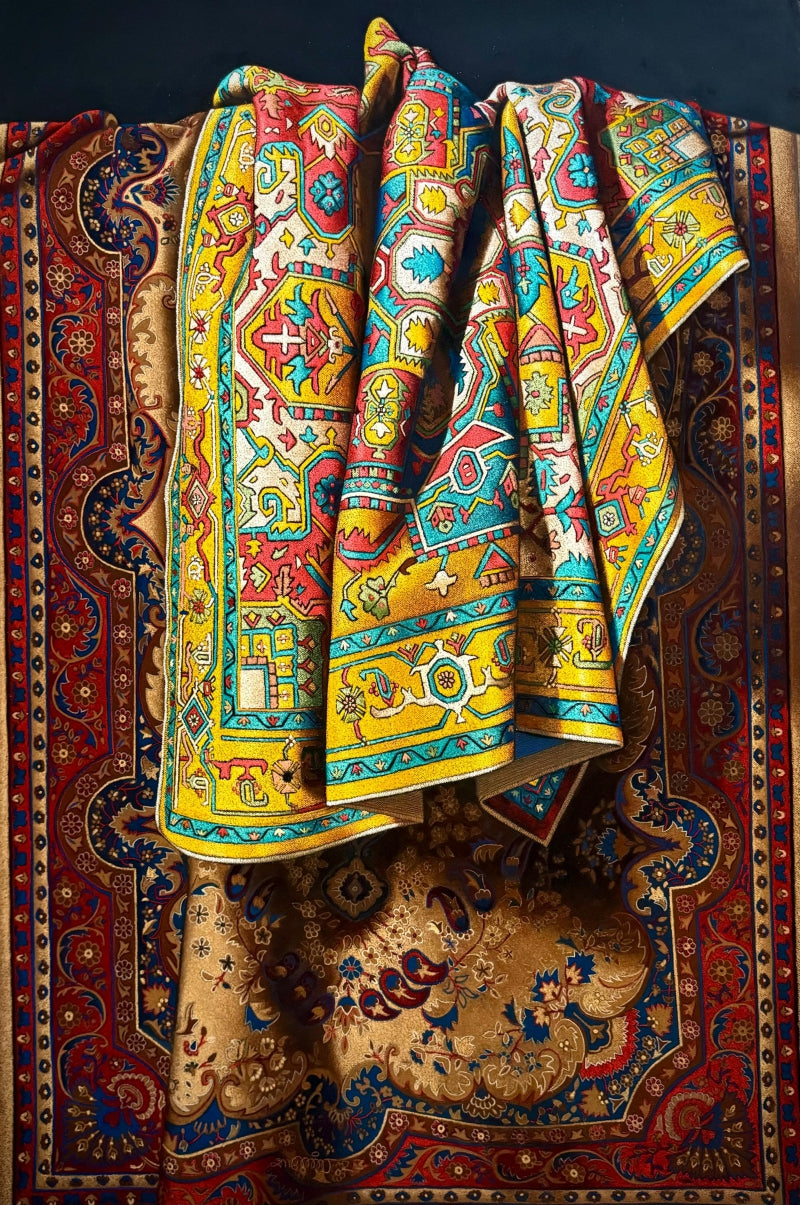
PaperDraped in a quiet, theatrical darkness, the folded carpet becomes less an object than a repository of lived time—its floral arabesques glowing like memory under a single, raking beam. The composition stages a dialogue between opulence and weight: saturated crimsons and lapis borders assert vitality while deep shadows press in, suggesting what is concealed, carried, or inherited. Texture turns into narrative—fringe, pile, and worn sheen reading as tactile evidence of hands, rooms, and rituals—so that ornament becomes a kind of intimate history rather than mere decoration. In this suspended stillness, the rug feels like a portable landscape, holding both the comfort of home and the gravity of tradition.
Delivery
You may also like
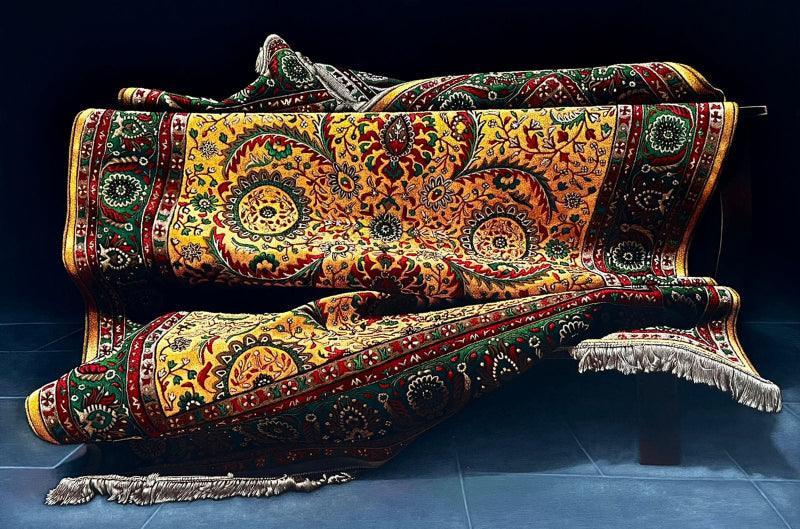
Untitled 15 (Unveiled Tapestry)
Artzolo
₹0
out of stock
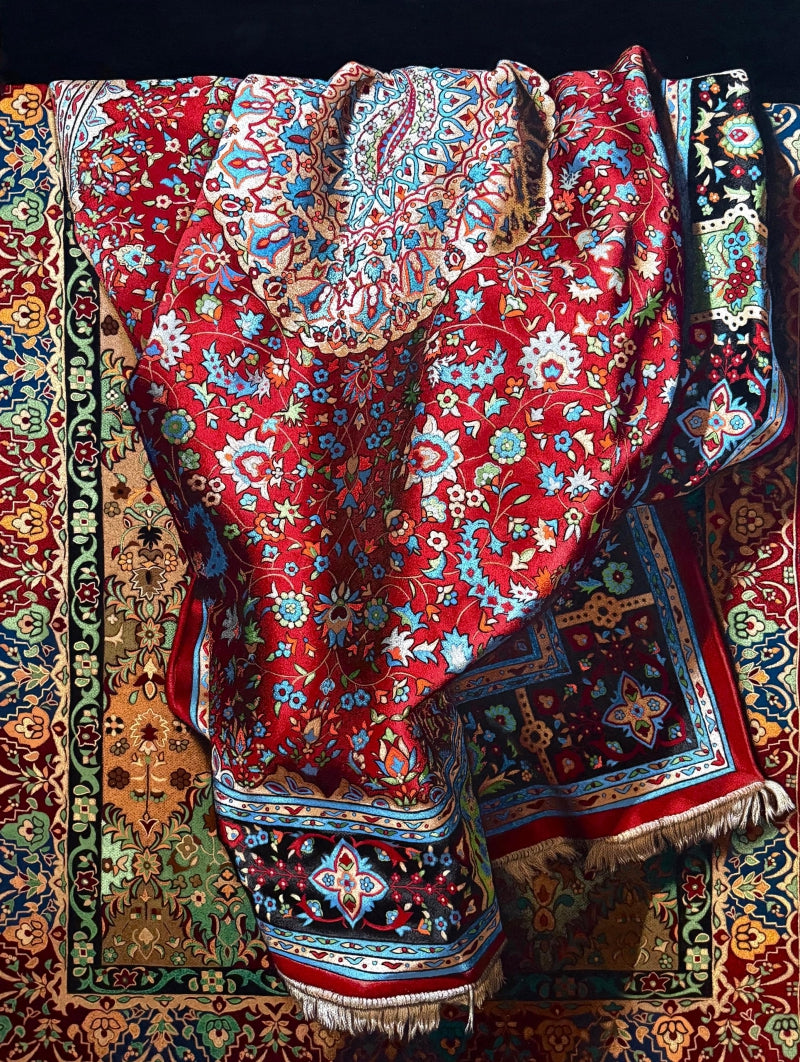
Untitled 1
Artzolo
₹0
out of stock
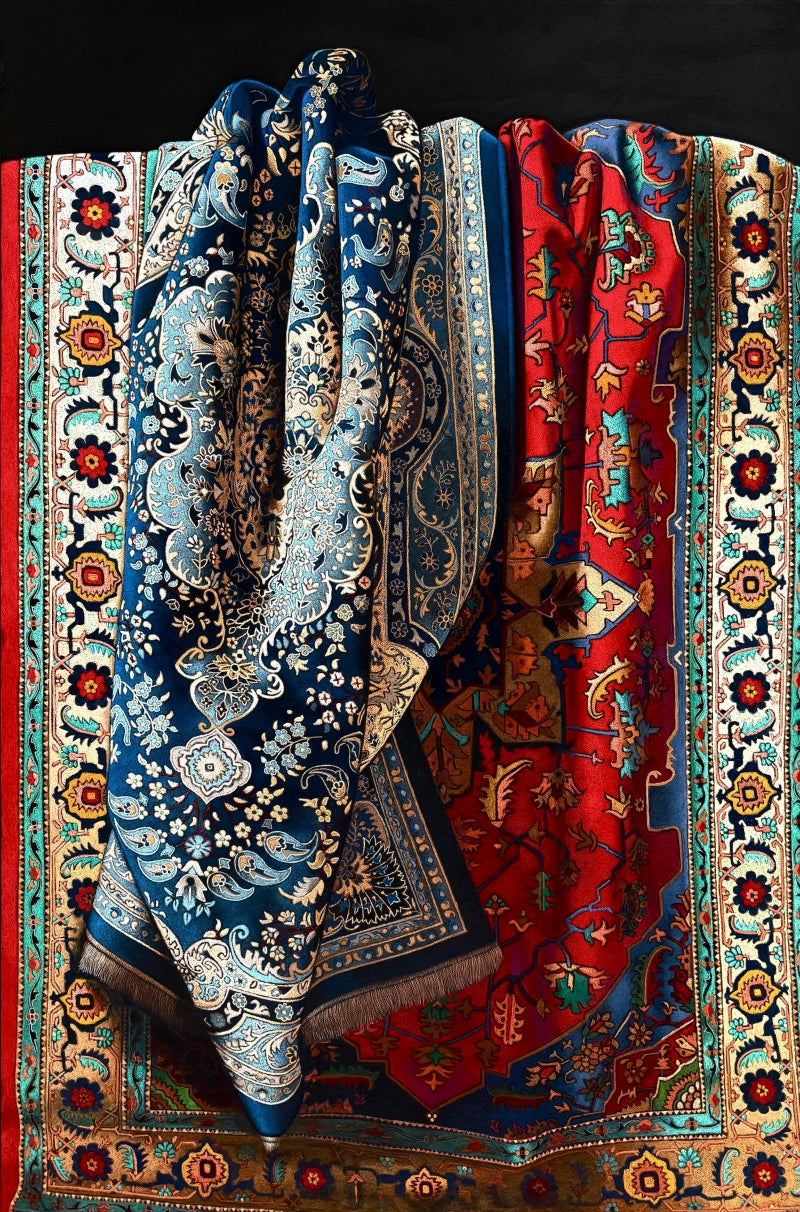
Untitled 1
Artzolo
₹0
out of stock
Untitled 2
Artzolo
₹0
out of stock
Untitled 21 (Untitled 21)
Artzolo
₹0
Untitled 16
Artzolo
₹0
out of stock
Untitled
Artzolo
₹0
out of stock
★ 5.0 (15)
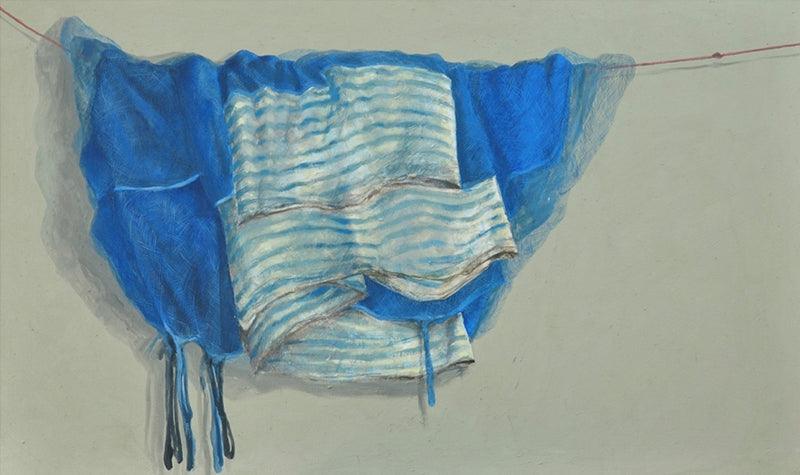
Untitled 1 (Drying in the Sun)
Artzolo
₹50,000
★ 4.0 (11)