Calcutta Carrier (The City's Backbone)
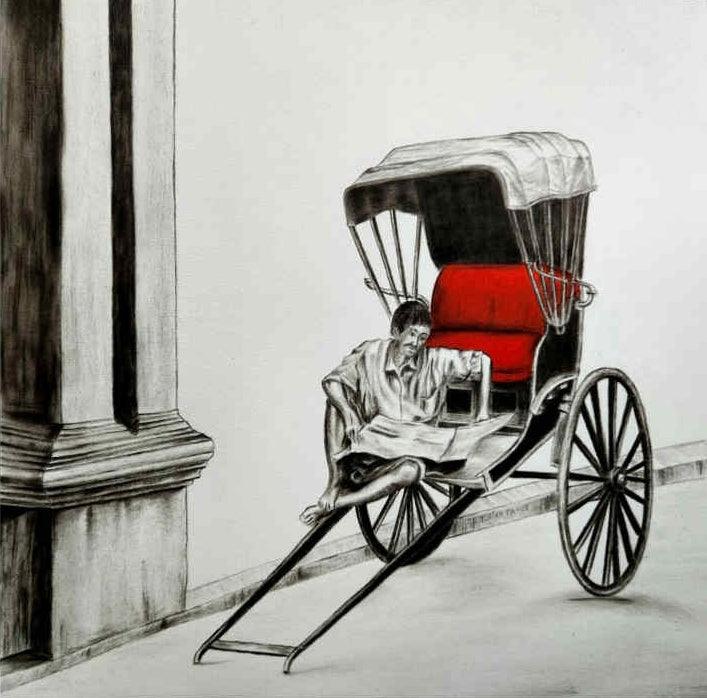
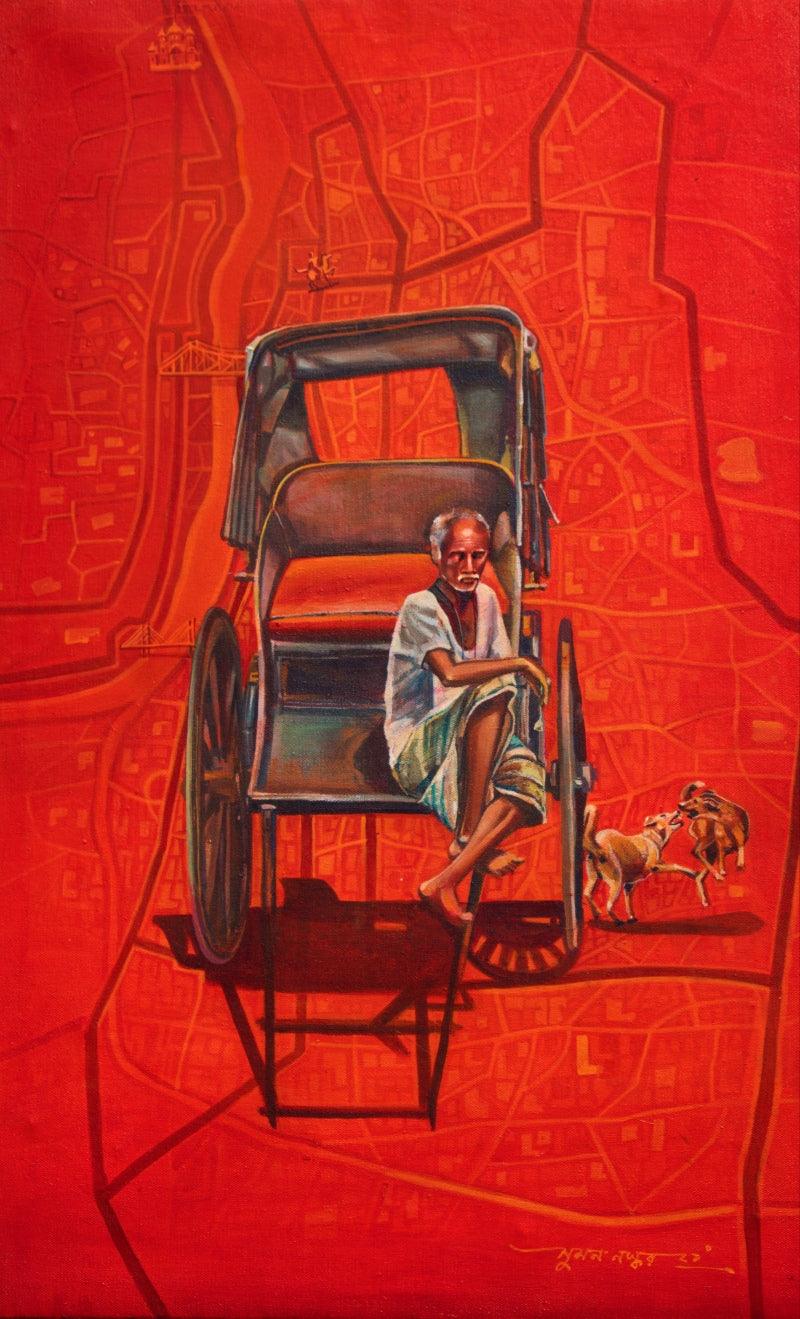
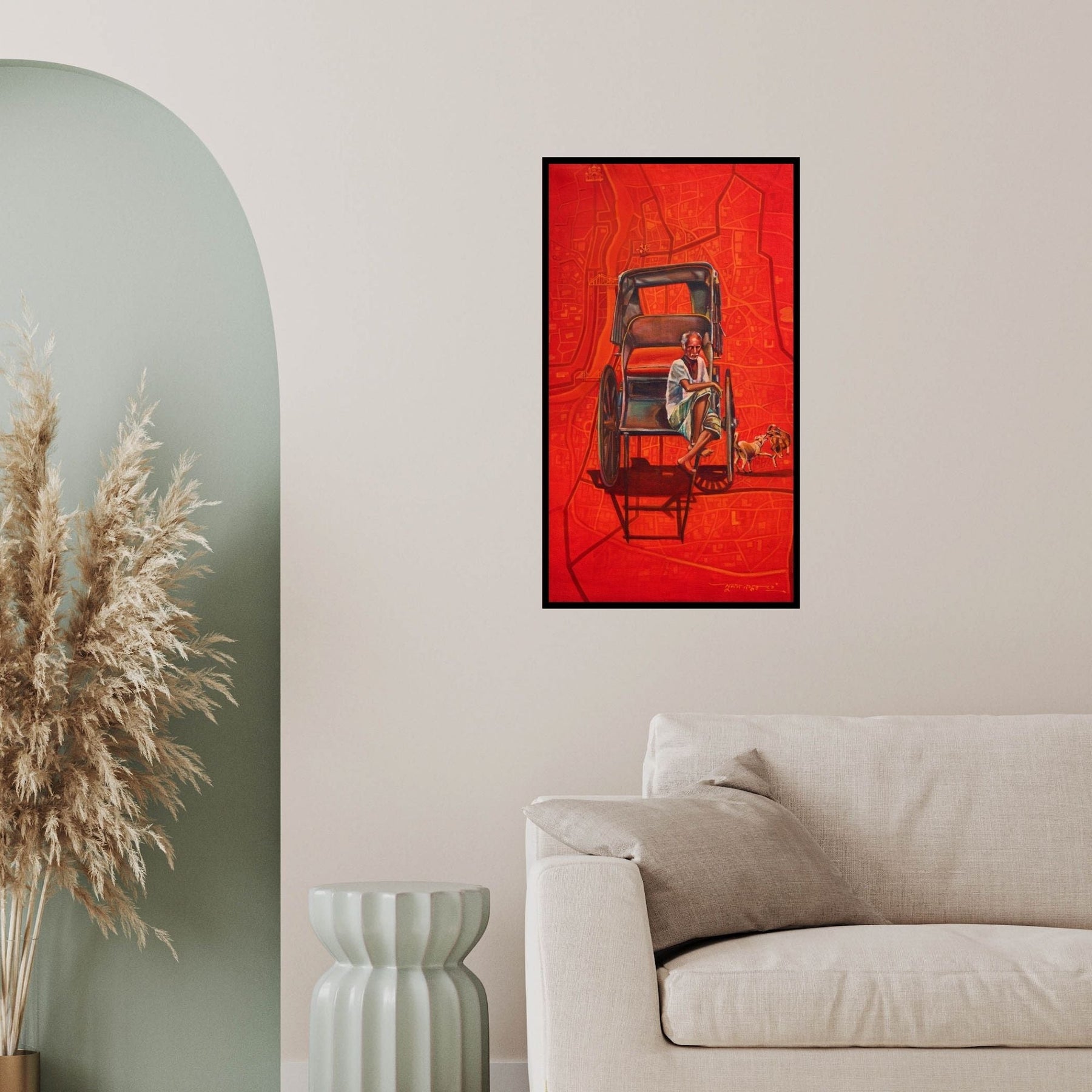
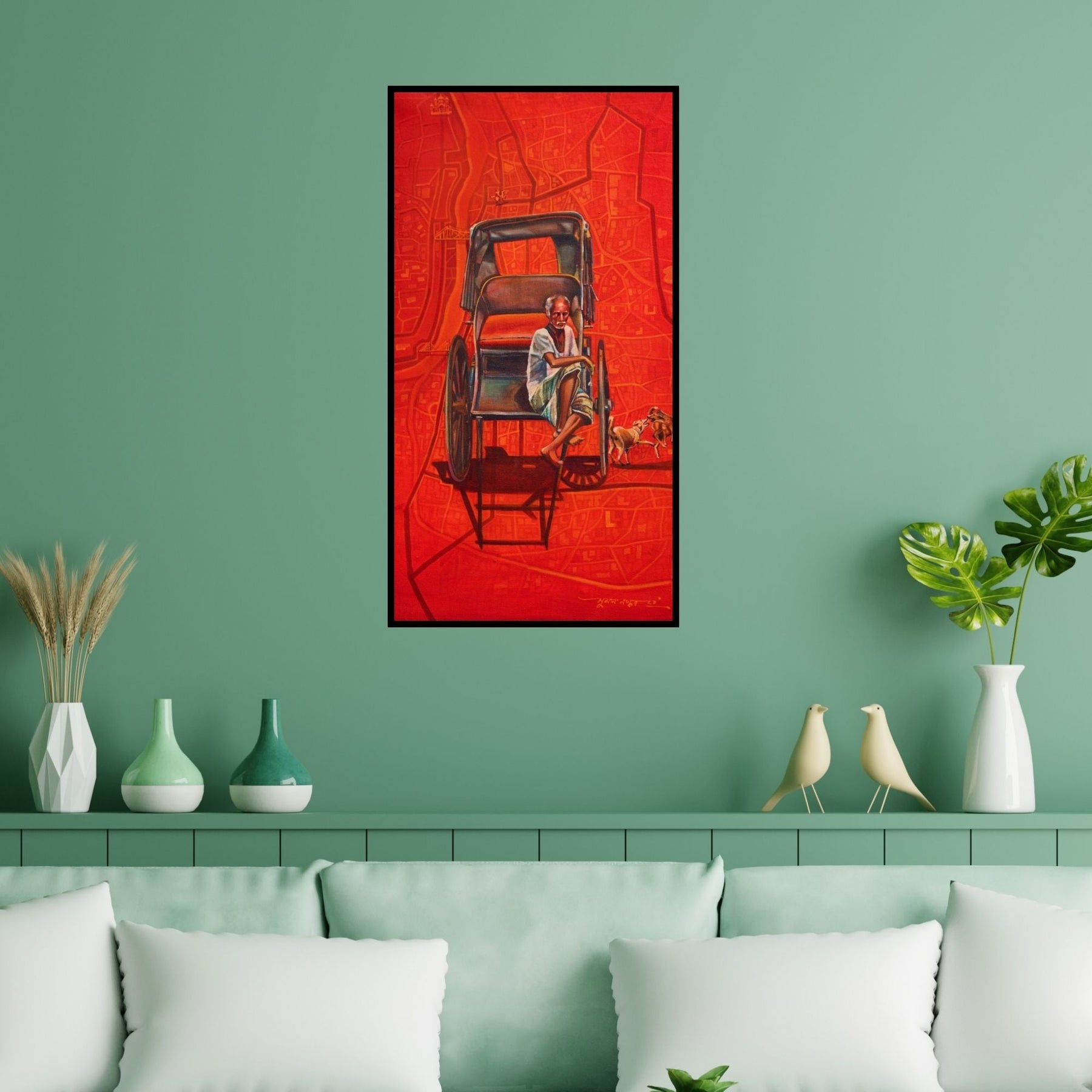
Set against a fervent red field that reads like a city map turned into a living pulse, the rickshaw and its seated elder become both vehicle and monument—an intimate human weight suspended within an immense urban circuitry. The composition stages a quiet stasis amid implied motion: hard shadow geometry anchors the figure while the cart’s curved canopy softens him, suggesting endurance carried by fragile shelter. The saturated crimson atmosphere feels like heat, memory, or alarm, folding the metropolis into a single emotional register where livelihood, fatigue, and dignity coexist. Small peripheral details—like the animals at the edge—operate as a counterpoint to the mechanized grid, hinting at the persistence of the organic and the vulnerable within a city’s relentless design.
Delivery
You may also like