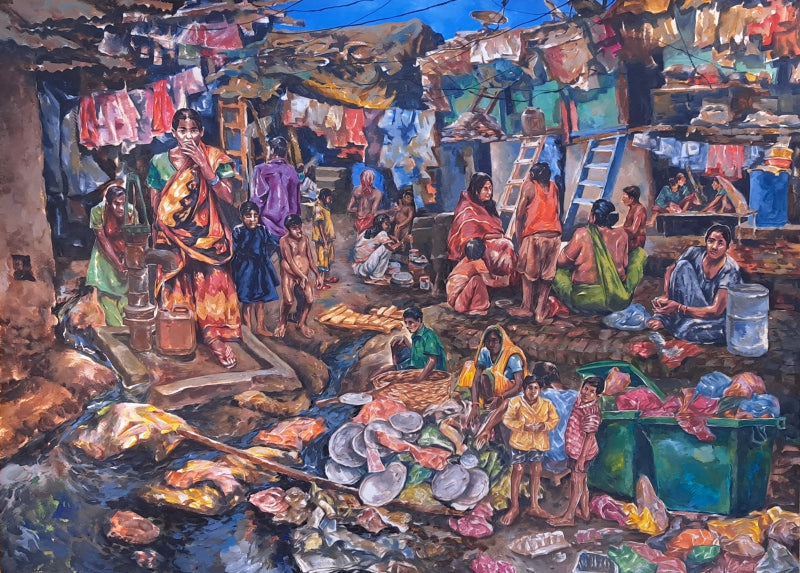
Slum 2
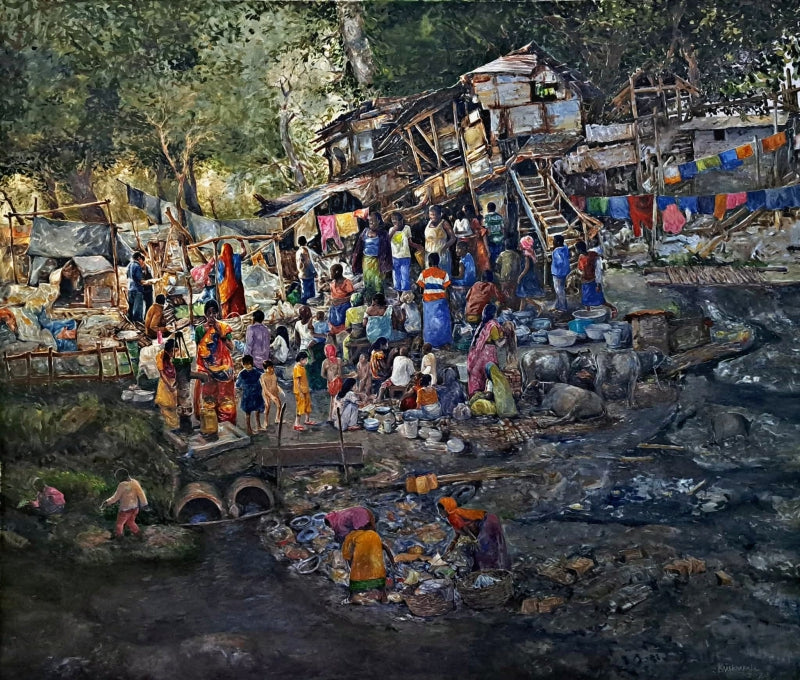
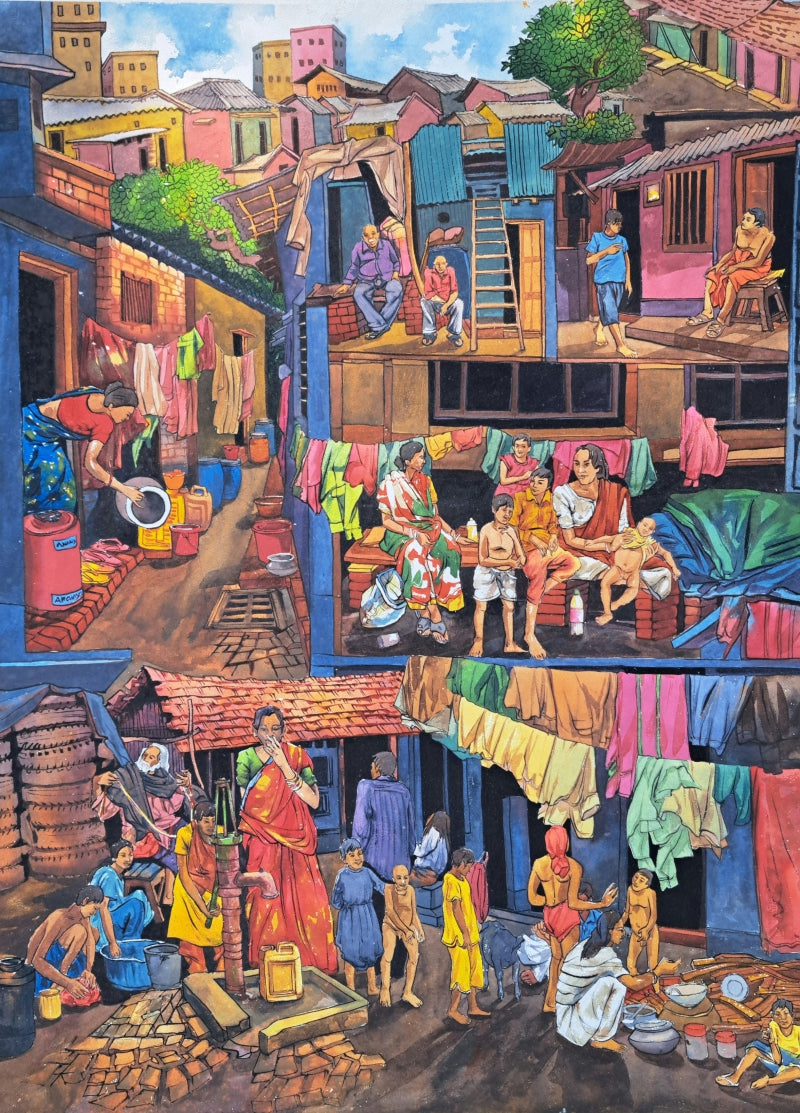
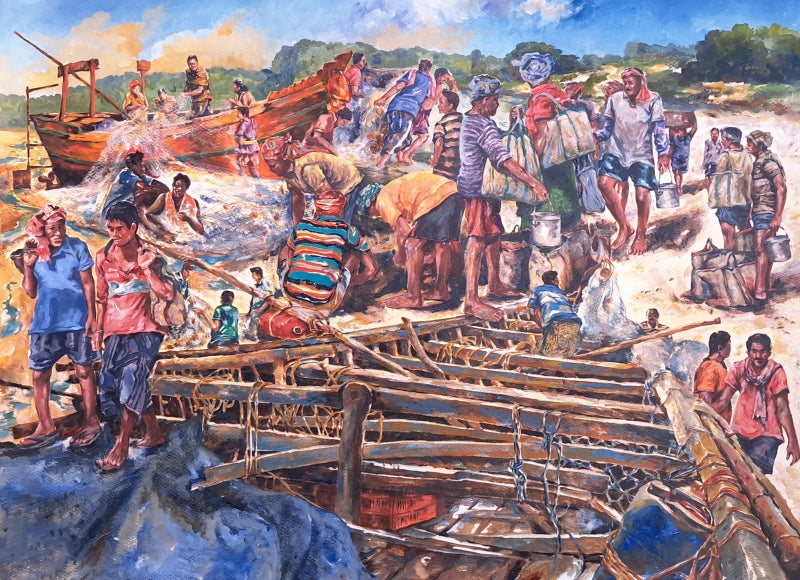
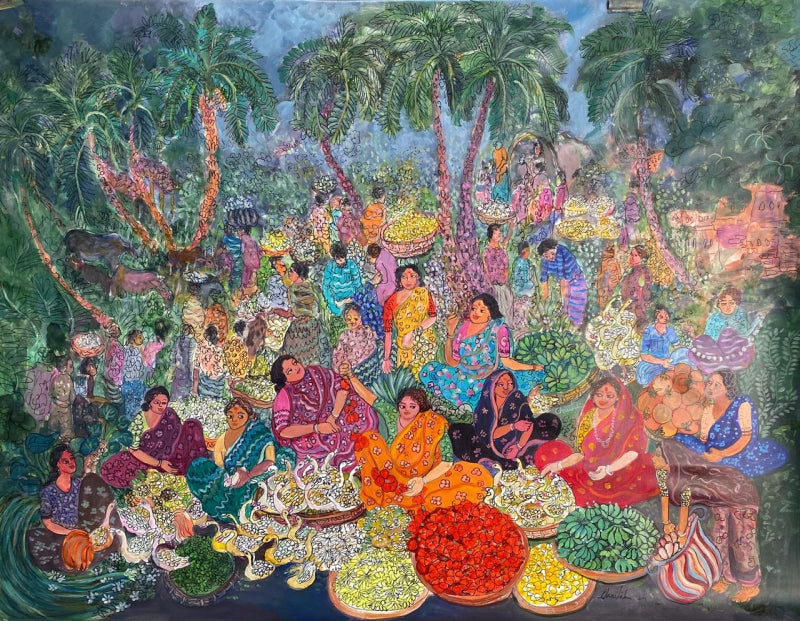
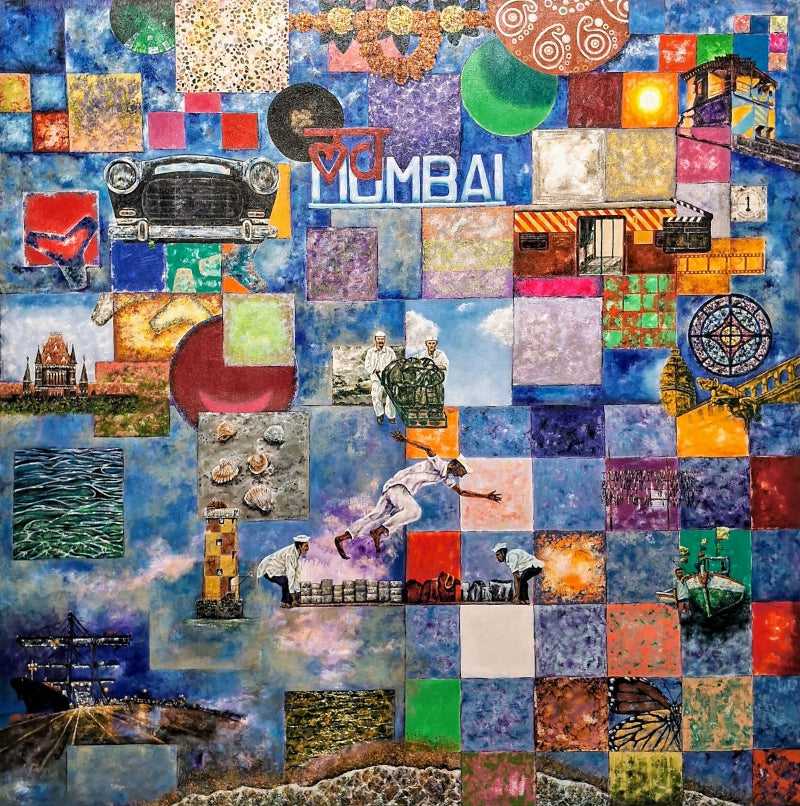
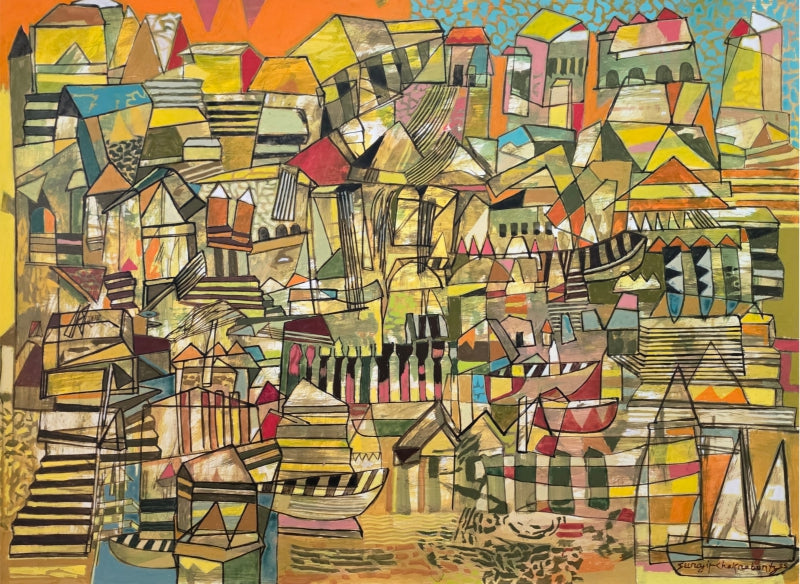
The painting choreographs a dense, almost breathless habitat where bodies, utensils, and makeshift architecture press against one another, turning daily survival into a continuous, public ritual. A bruised palette of rust, soot, and saturated sari colors collides with sharp highlights on metal plates and wet ground, using light less as beauty than as testimony—flashing briefly on what endures. Compositionally, the eye is pulled through a maze of ladders, hanging cloth, and clustered figures toward a raw center where water and refuse mingle, suggesting a fragile threshold between care and contamination. Yet within the congestion, the repeated gestures of carrying, washing, and tending quietly insist on dignity, making the work as much about resilience and community as it is about hardship.