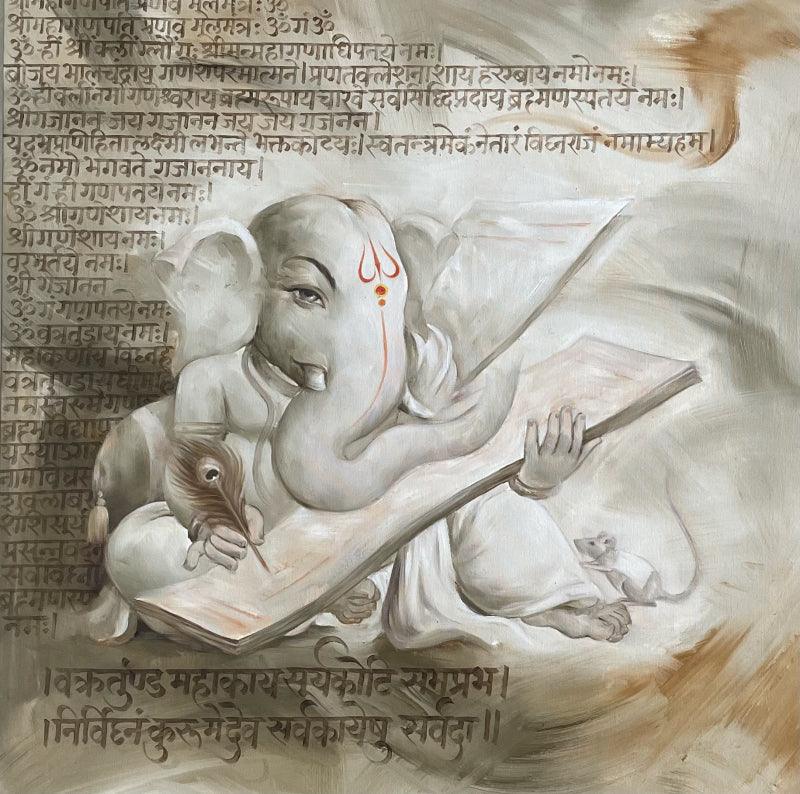
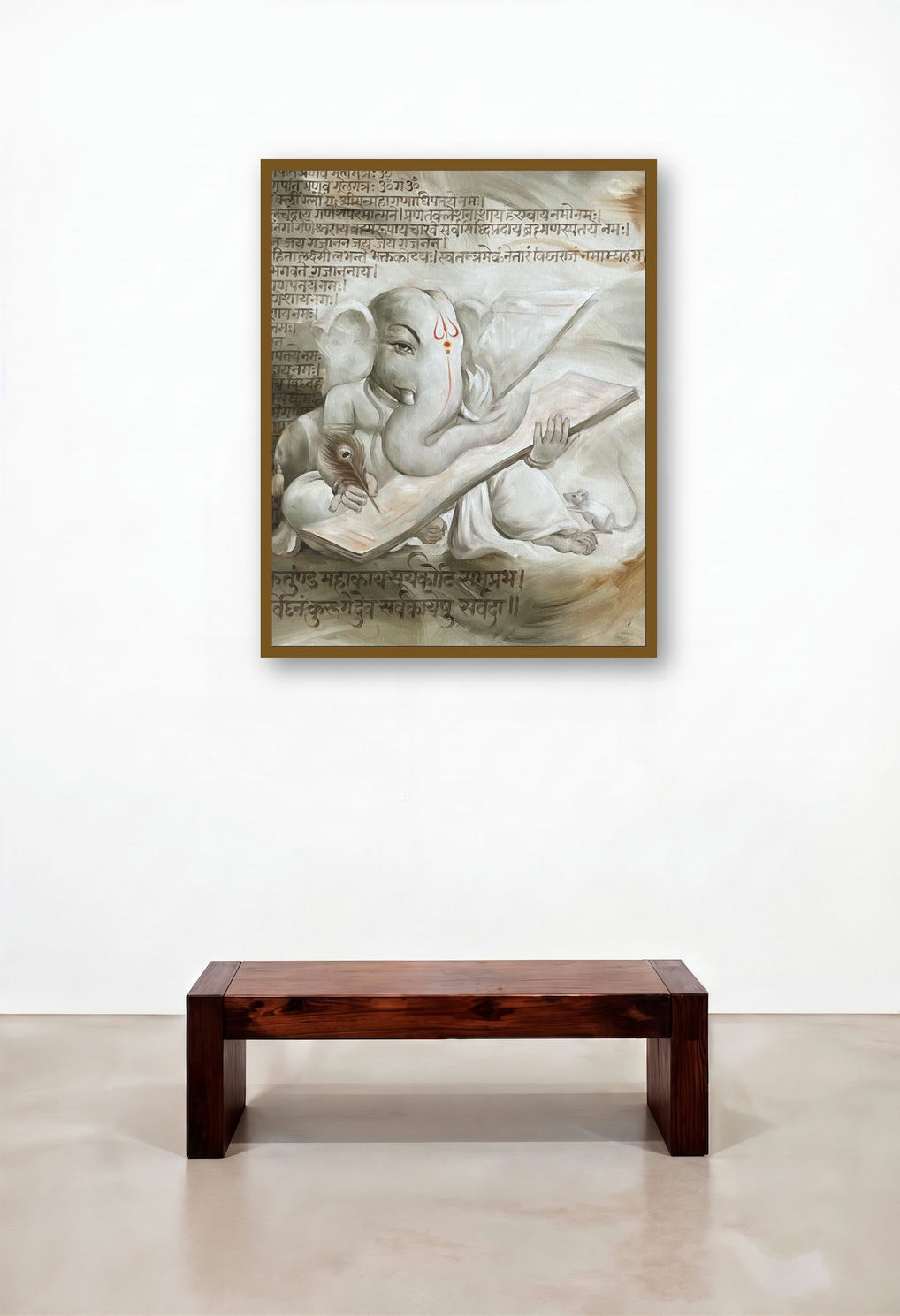
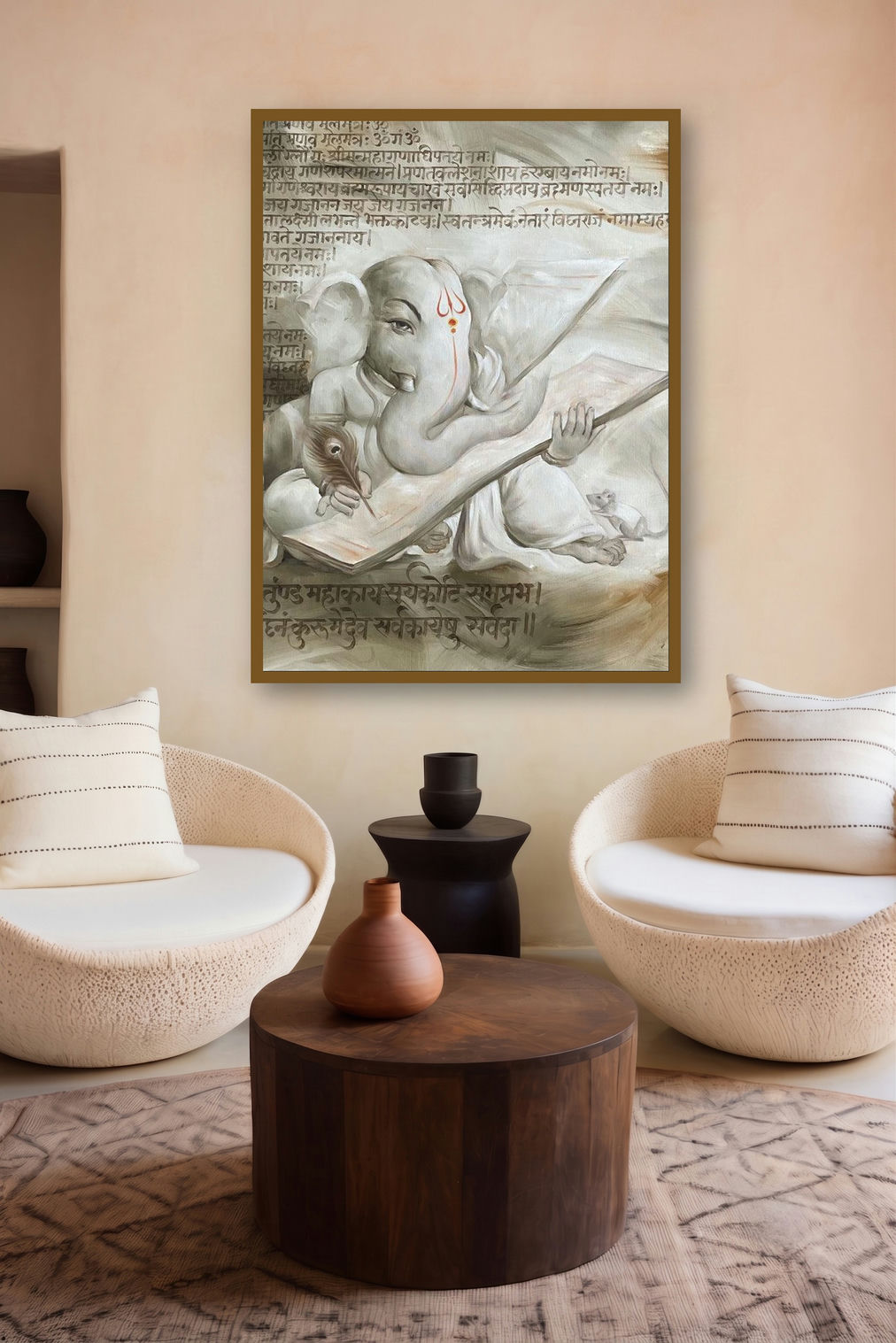
Gajanana (Ganesha Writing on a Palm Leaf)
₹68,000
● In stock · ★ 5.0 (5)checking live price…
Size
34x34Type
OriginalMaterial
CanvasIn a hushed palette of ash, sand, and soft umber, Ganesha emerges not as an emblem of spectacle but as a quiet scribe—his monumental form bent tenderly over an open manuscript, turning wisdom into an intimate, lived act. The surrounding Sanskrit verses function like a devotional atmosphere, dissolving the boundary between figure and field so that reading, prayer, and breath feel braided into the same space. A single vermilion mark on the forehead punctures the monochrome like a pulse, anchoring the composition in spiritual immediacy while the small mouse at the periphery gently reminds us that humility and desire still inhabit the margins of learning.
Delivery
You may also like
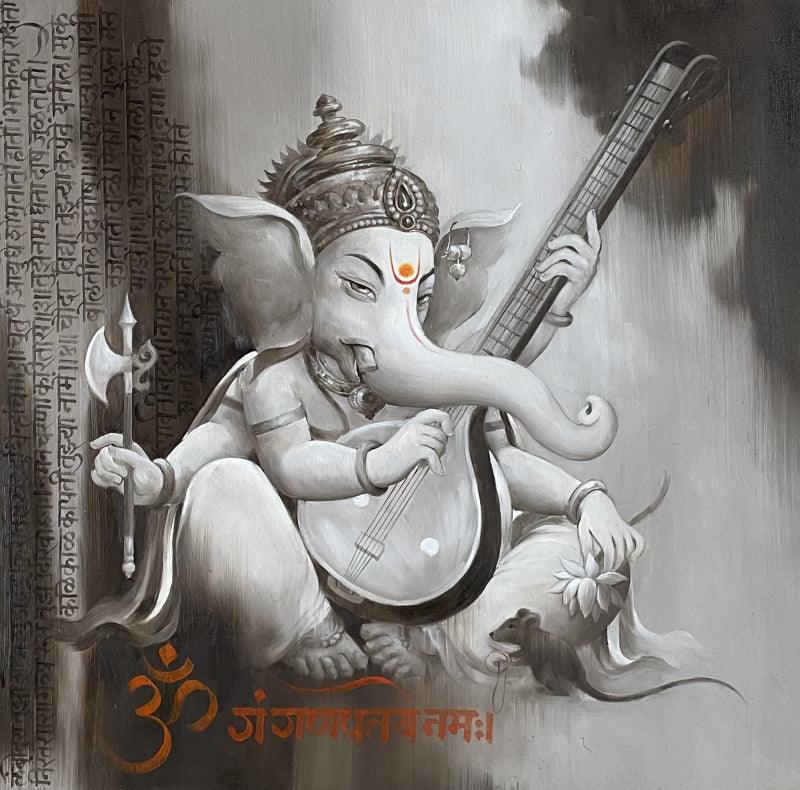
Gajanana (Ganesha, the Musician)
Artzolo
₹85,000
★ 4.0 (6)
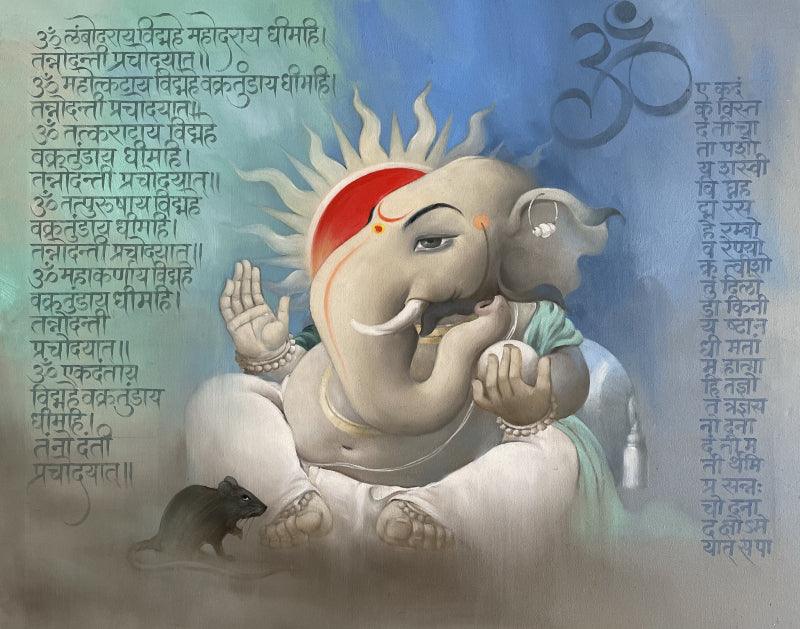
Ekadanta (Ganesha, the Remover of Obstacles)
Artzolo
₹70,000
out of stock
★ 5.0 (13)
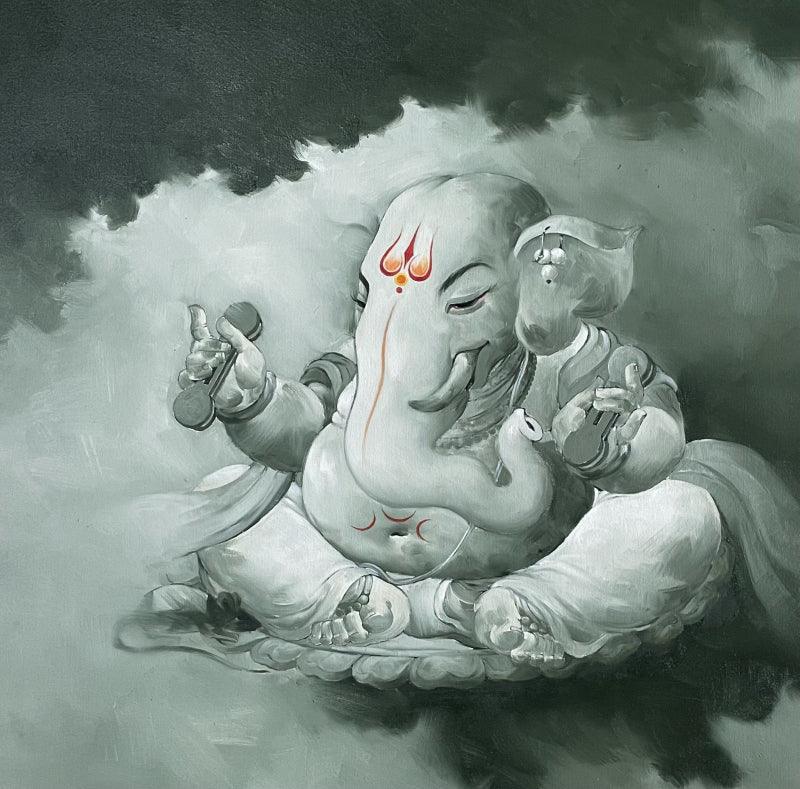
Lord Ganesha (Tranquil Power)
Artzolo
₹85,000
★ 5.0 (11)
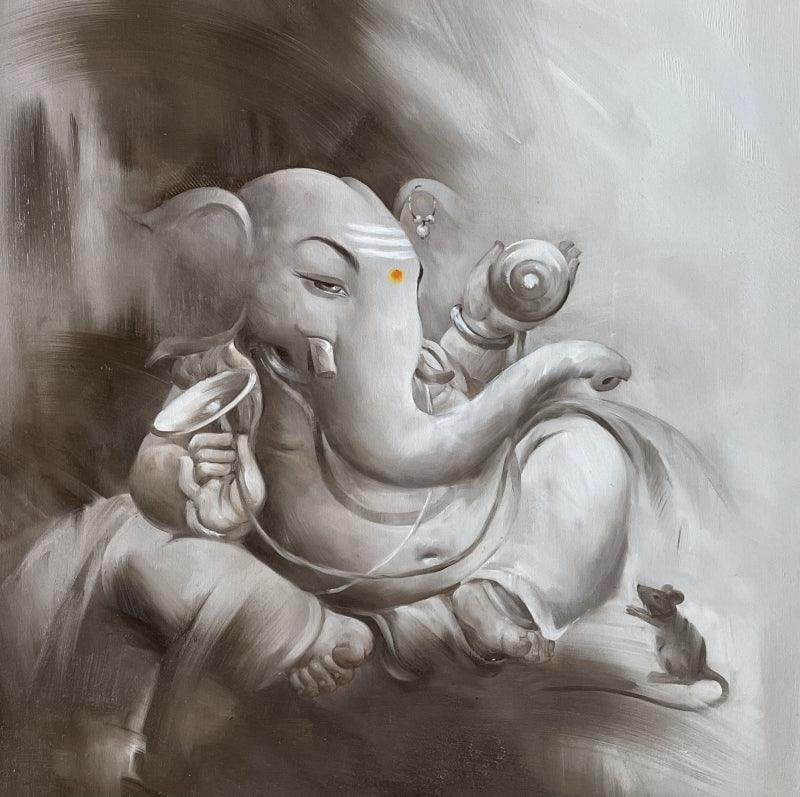
Ganapati (Inner Peace)
Artzolo
₹85,000
★ 4.0 (5)
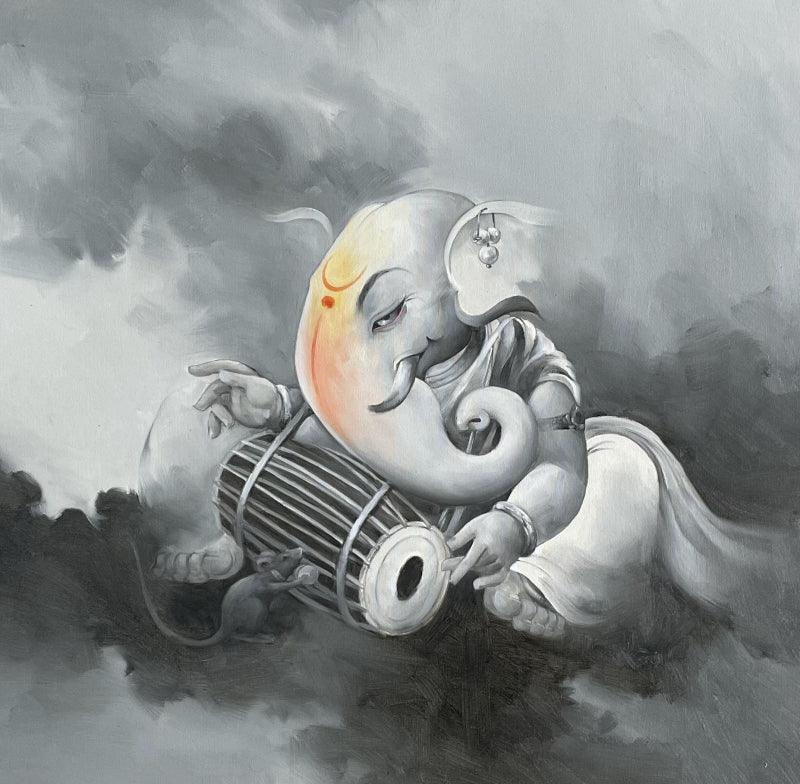
Balaganapati (Divine Rhythm)
Artzolo
₹85,000
★ 5.0 (12)
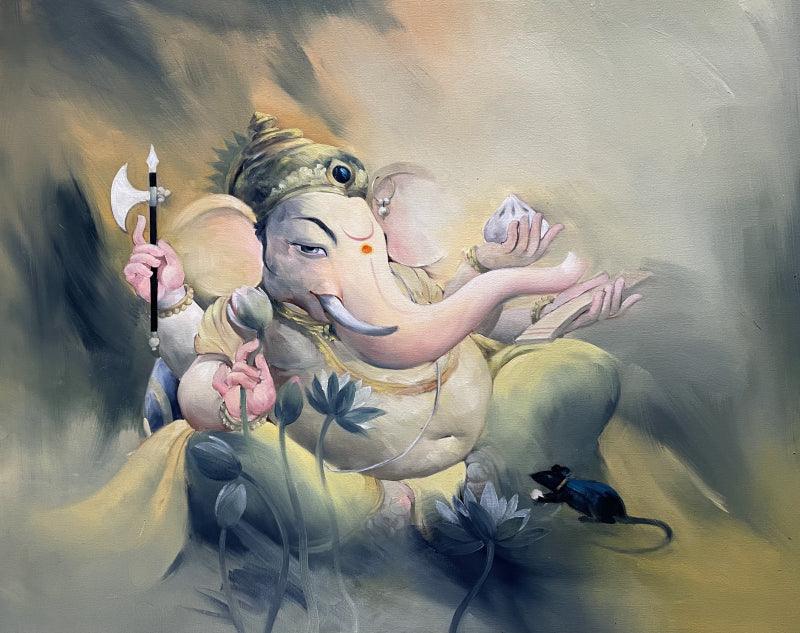
Bhalchandra (Majestic Ganesha)
Artzolo
₹105,000
out of stock
★ 4.0 (12)
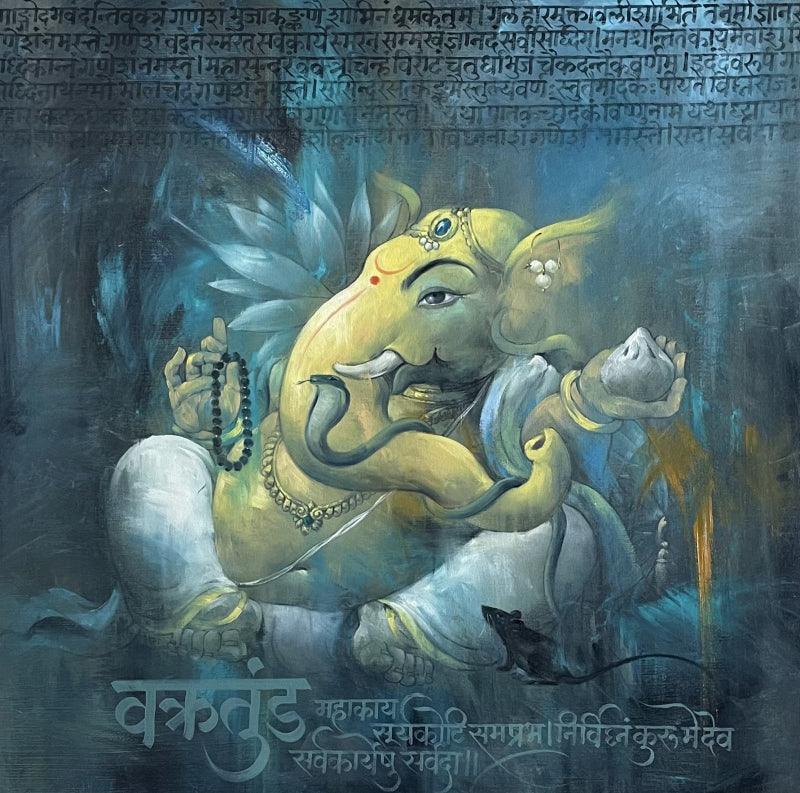
Ganapati (Lord Ganesha with Mantra Background)
Artzolo
₹83,000
★ 4.0 (8)
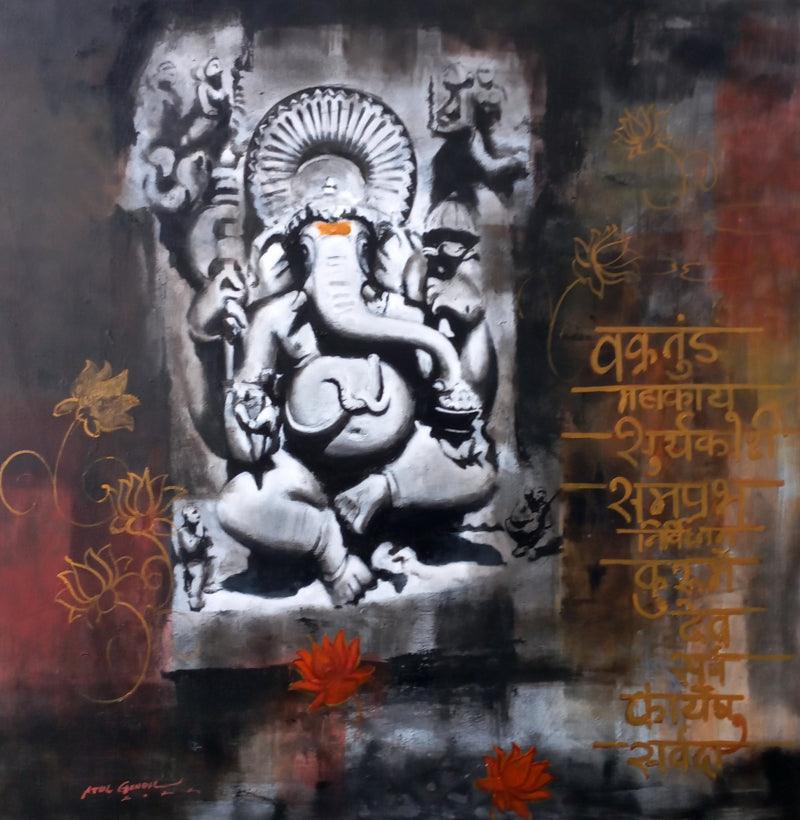
Ganesha (Ganesha in Monochrome) (Ganesha Monochrome Majesty)
Artzolo
₹81,000
out of stock
★ 5.0 (10)