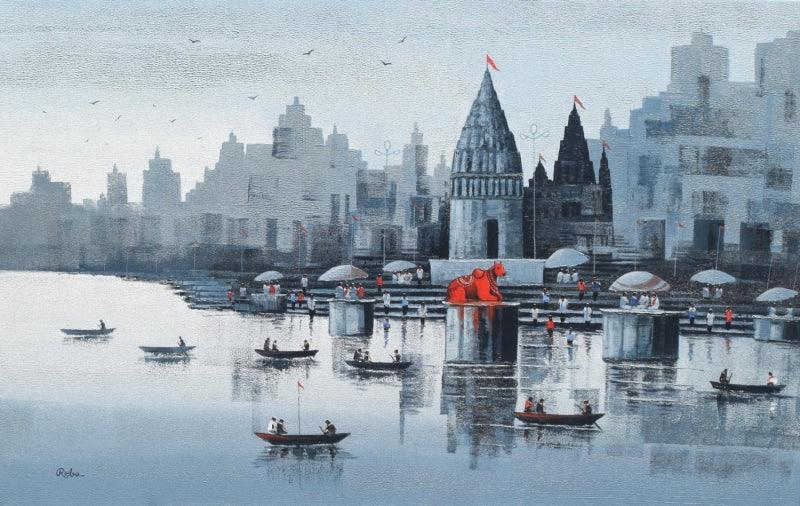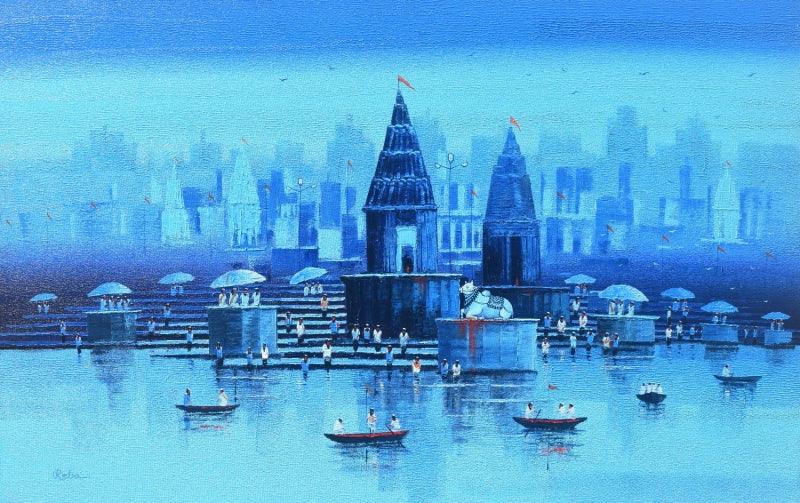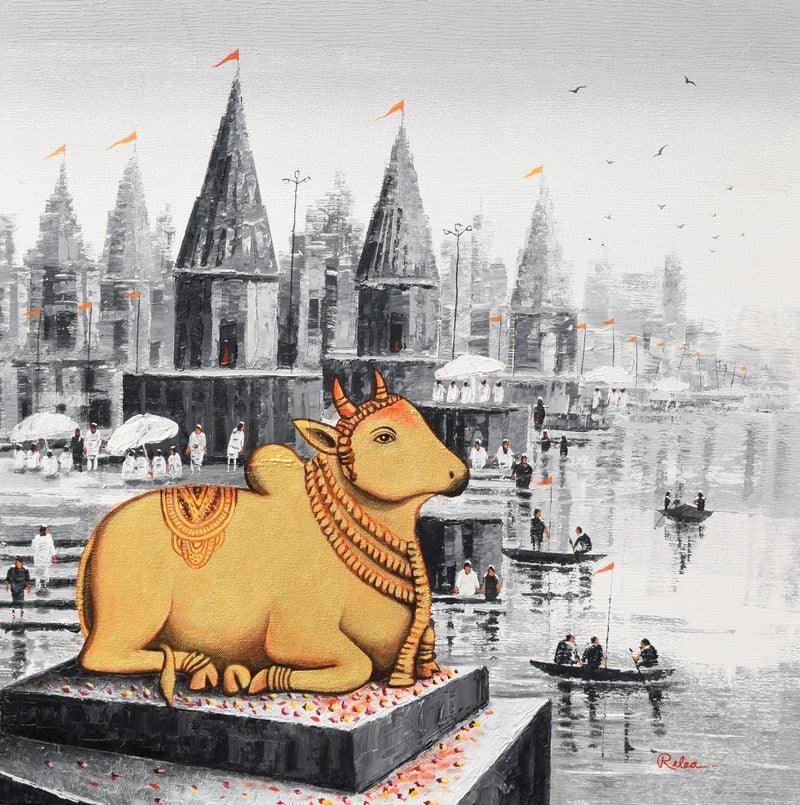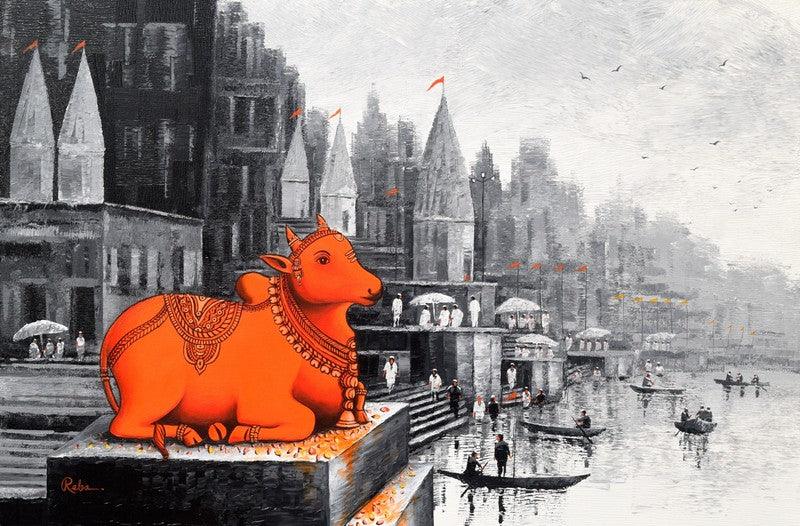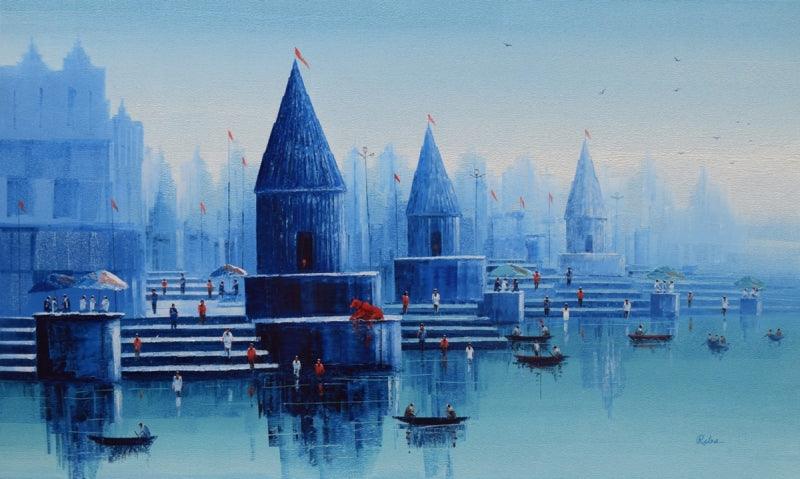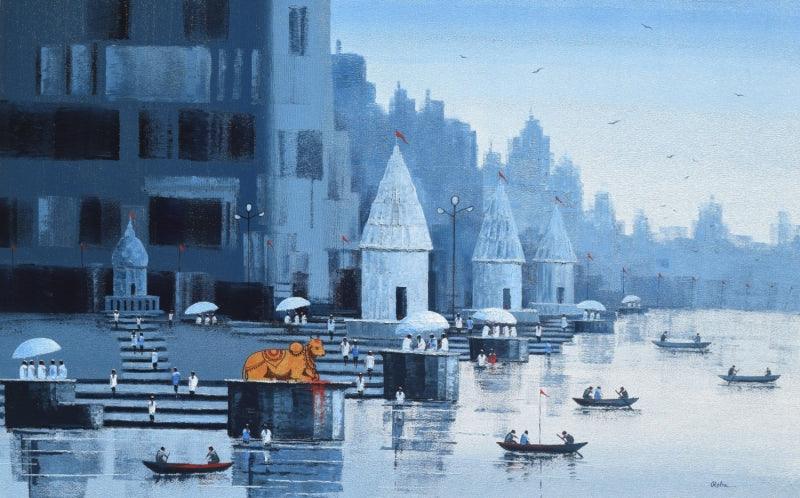
Nandi On Banaras Ghat 1 (Varanasi Ghats in Morning Light)
The painting stages a quiet dialogue between the monumental and the momentary: pale temple spires and dense urban blocks recede into a blue-grey haze, while the river holds their reflections like a soft, shifting memory. A disciplined, cool palette is punctuated by small human movements—boats, umbrellas, and clustered figures—so that scale becomes emotional rather than merely architectural, measuring how intimacy persists inside an expanding city. The central saffron animal form reads as a concentrated ember of myth and ritual, a warm interruption that anchors the scene’s contemplative drift and suggests devotion surviving amid modern silhouettes. Light is treated less as illumination than as atmosphere—an enveloping veil that dissolves edges and turns the waterfront into a threshold between past reverence and present rhythm.
Delivery
You may also like