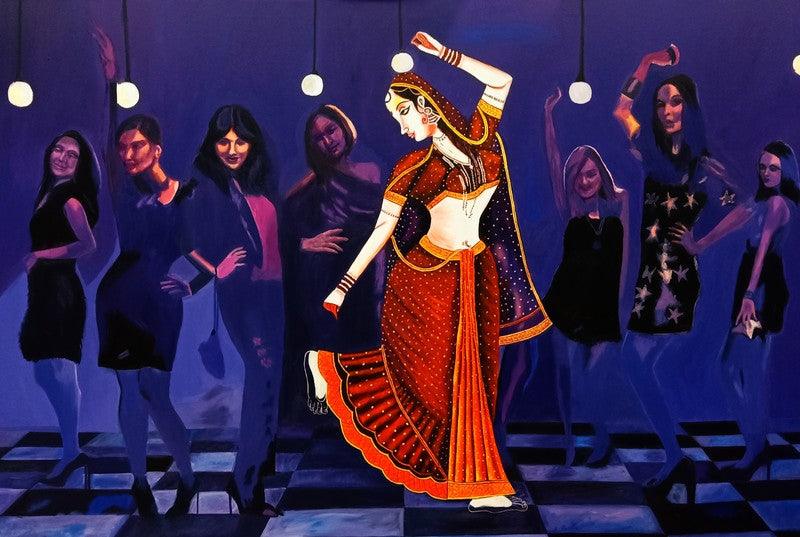
Journey Of Life And Culture
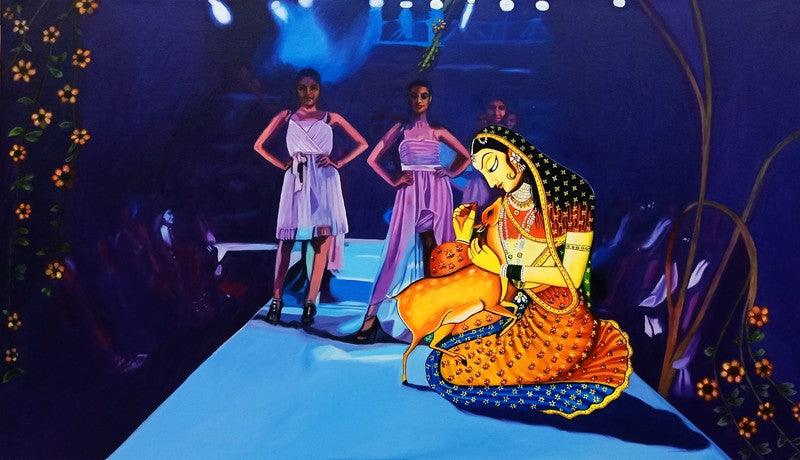
Set against a nocturnal wash of indigo and violet, the central dancer ignites the room like a living ember—her vermilion attire and gilded ornamentation carving a luminous silhouette that the surrounding figures can only echo in shadow. The composition stages a quiet tension between individuality and crowd: the onlookers dissolve into smoky, abbreviated forms while the dancer’s crisp line and rhythmic drapery assert cultural memory as an act of presence. Suspended bulbs punctuate the space like metronomes, turning the floor into a theatrical grid where tradition steps into modern nightlife without apology. In this choreography of light and anonymity, the painting suggests that true radiance is less about being seen than about claiming one’s center.
Delivery
You may also like