Life (The Wandering Song)
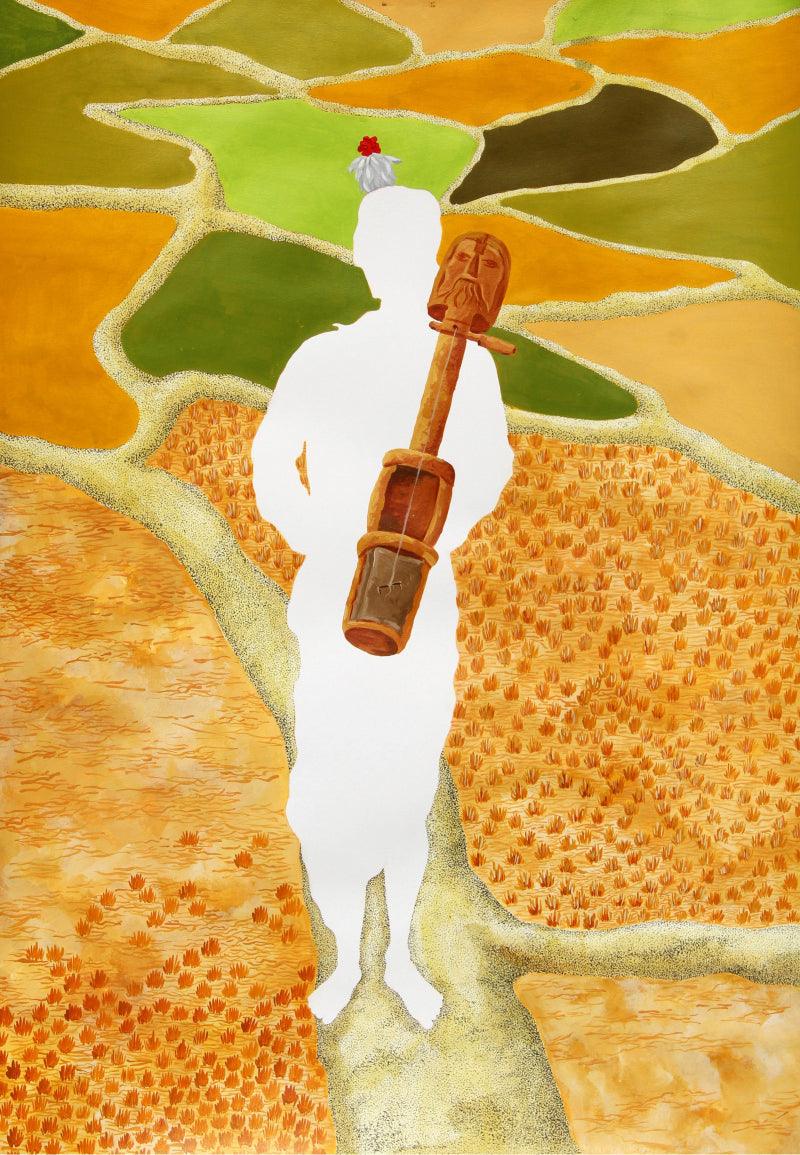
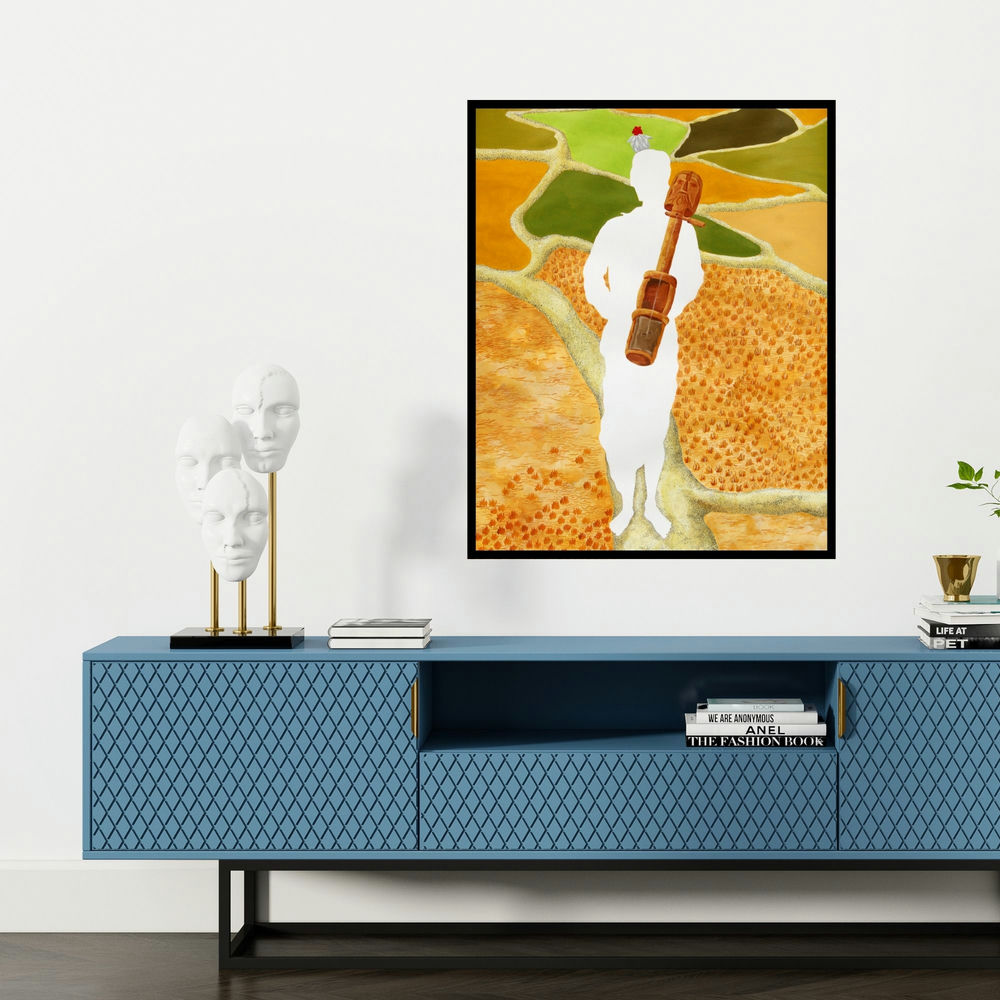
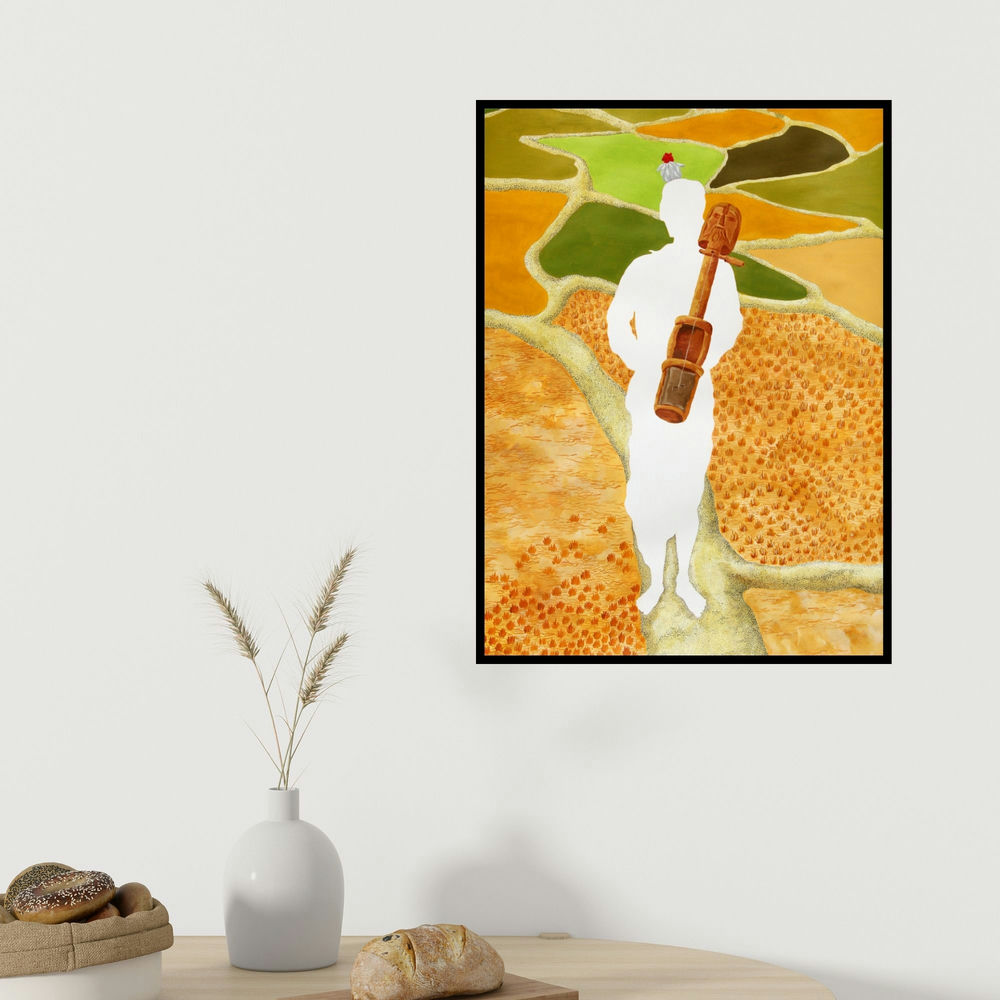
Against a quilted expanse of fields—ochres, moss greens, and sunbaked golds stitched together by pale, meandering paths—a faceless white figure stands like an absence made monumental, a quiet pause in the land’s restless geometry. The carved instrument, warm and earthen in tone, becomes the work’s true visage: a weathered totem of memory and voice, suggesting that identity here is carried through craft, sound, and tradition rather than through portraiture. The aerial, map-like composition flattens space into pattern, yet the solitary stance reintroduces human scale, turning the landscape into a psychological terrain where belonging is felt as resonance more than location. In this tension between anonymity and inheritance, the painting reads as an elegy for rural continuity—fragile, enduring, and held together by the thin threads of passage and song.
Delivery
You may also like