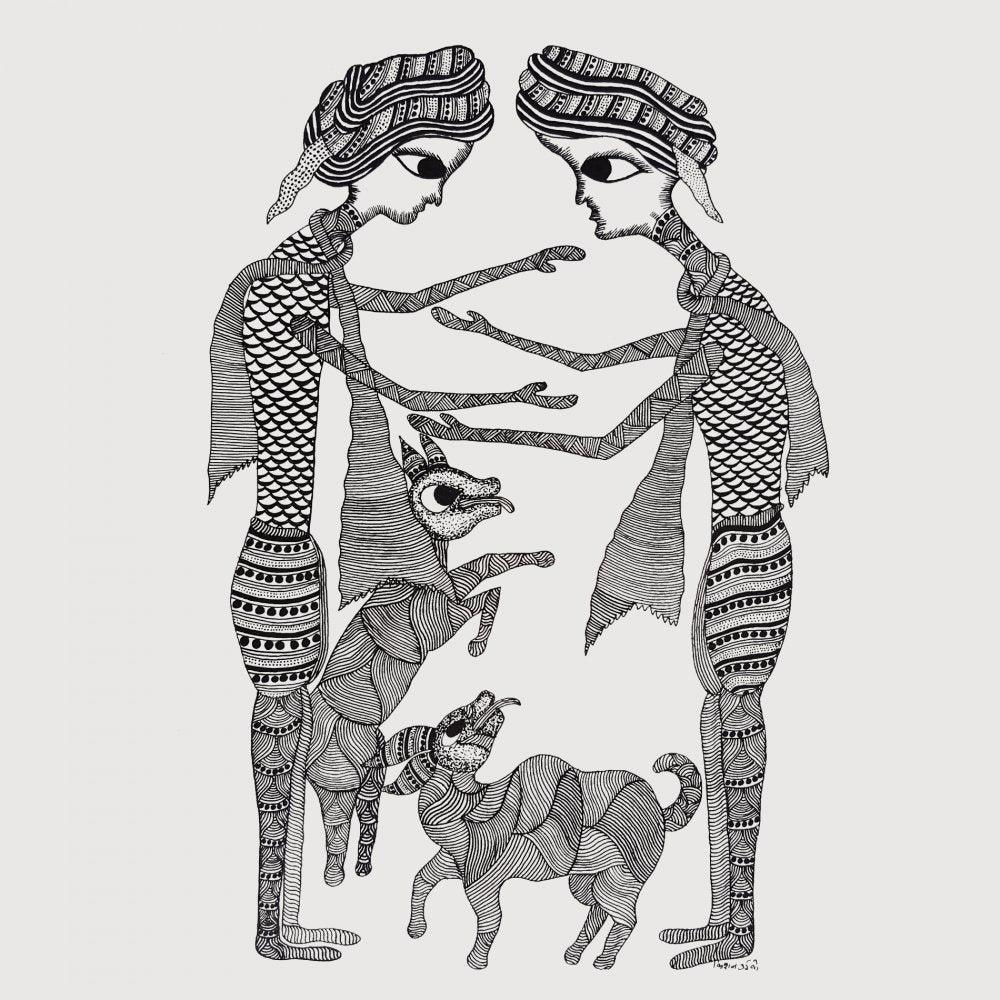
Reunion Of Gond Men Gond Art
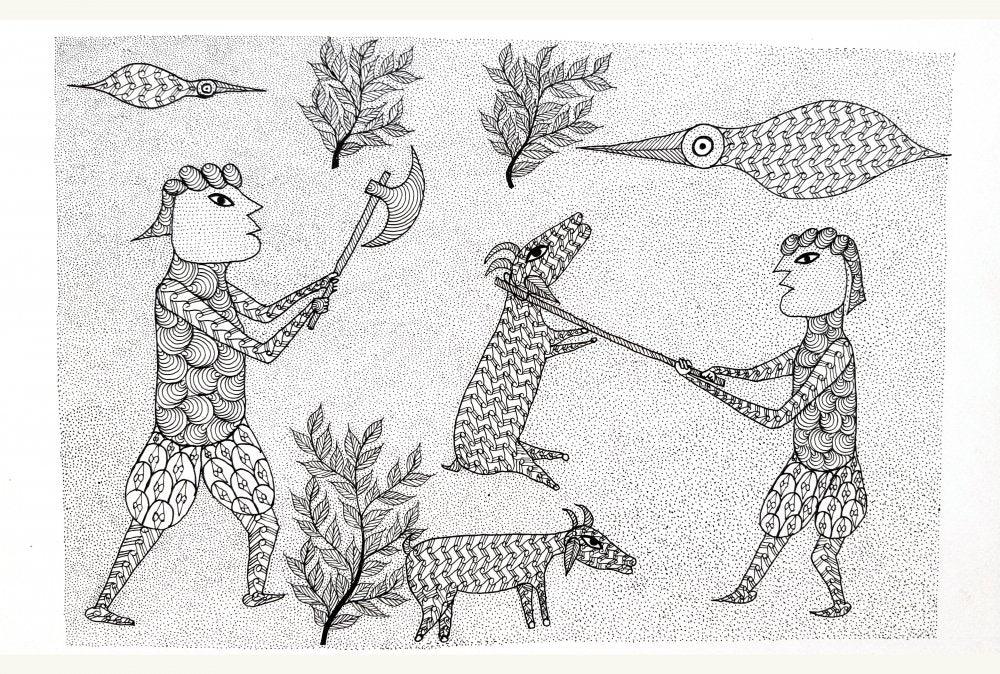
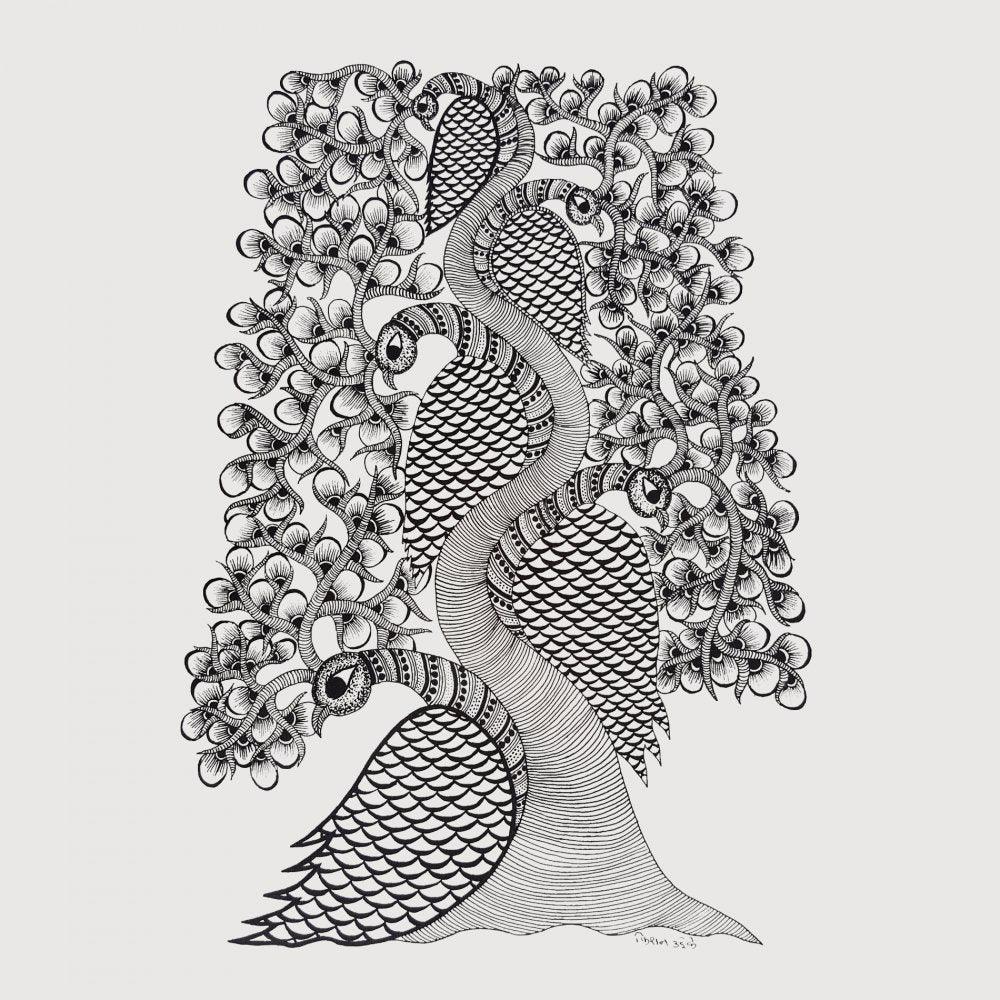
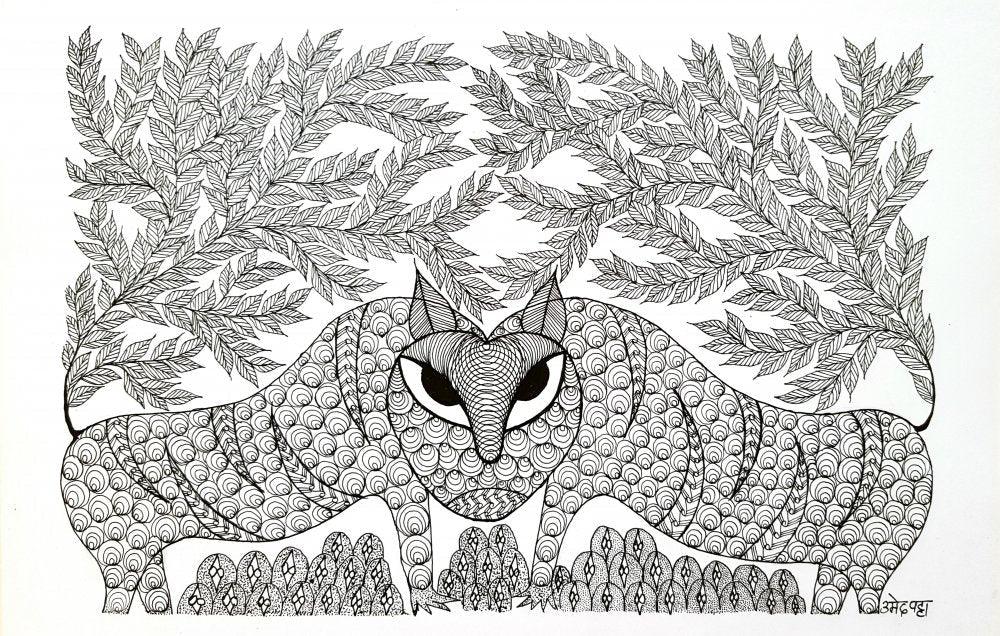
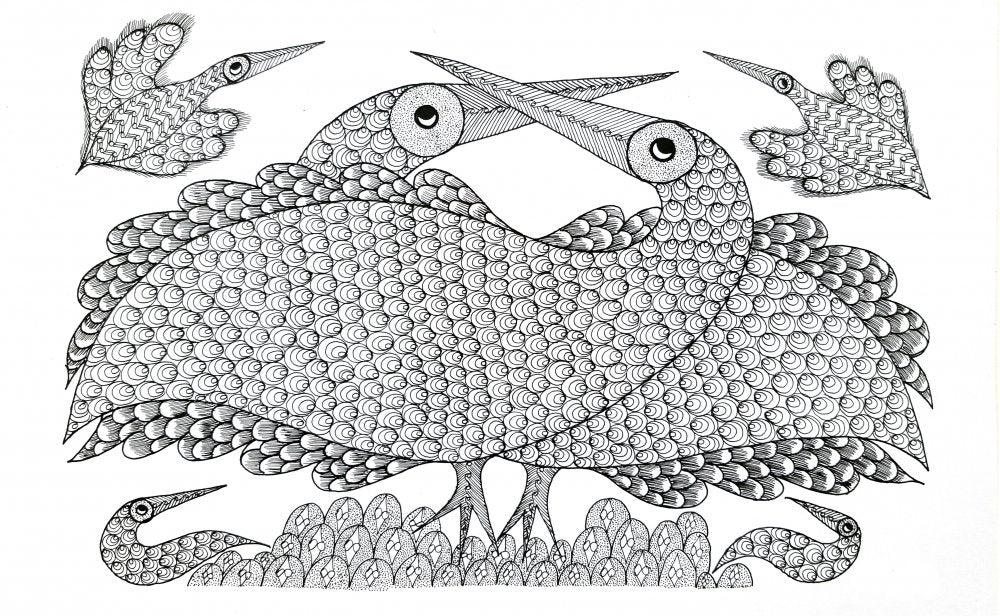
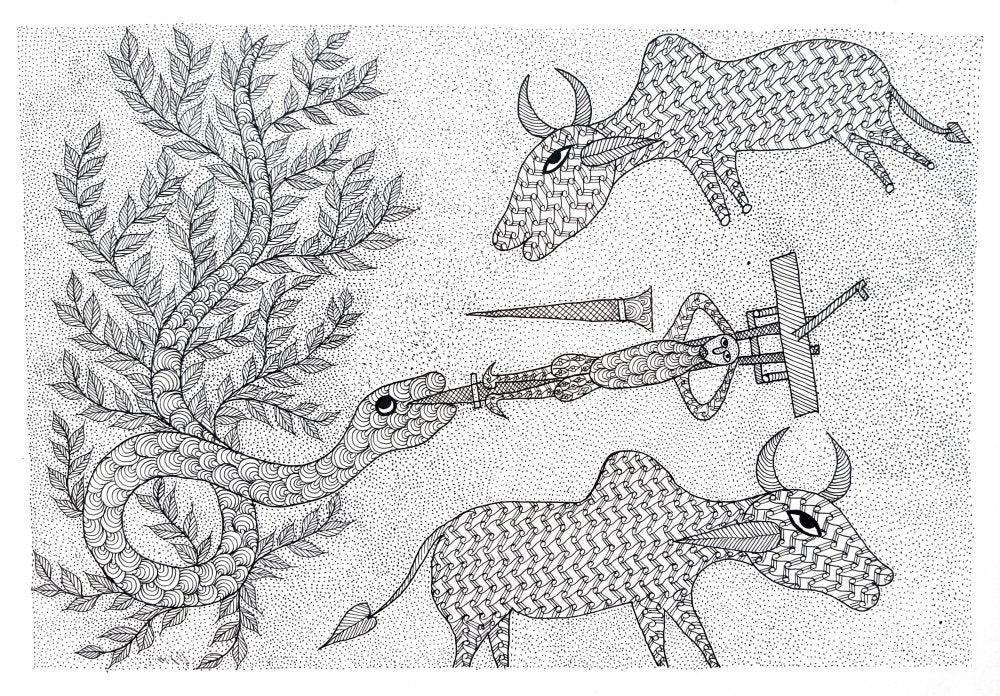
Rendered in meticulous black-and-white linework, the scene stages a quiet confrontation between two elongated figures whose reaching hands carve a charged corridor of negative space, as if dialogue itself becomes a tangible architecture. The dense textile-like patterns—scales, bands, and crosshatching—cloak their bodies in cultural memory, turning skin into a woven archive of ritual and identity. Between them, the animal forms act as intermediaries, a living punctuation that softens the human tension and suggests innocence, instinct, or livelihood caught in the currents of exchange. The spare palette heightens the intimacy: without color’s seduction, the viewer is drawn to rhythm, repetition, and the fragile ethics of touch—how connection is offered, withheld, and negotiated.
Delivery
You may also like