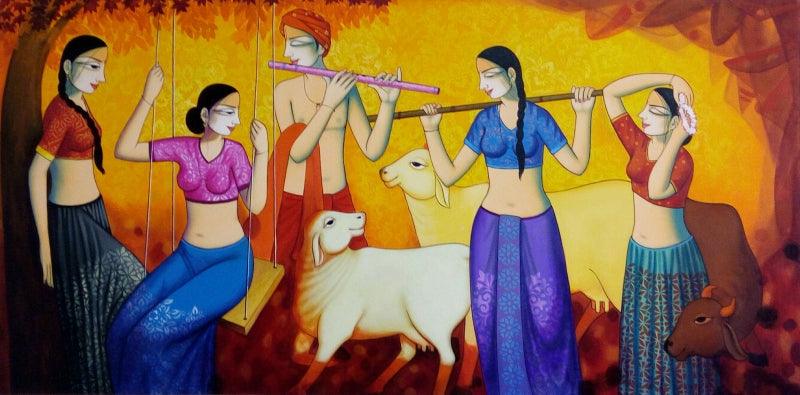
Raas Leela
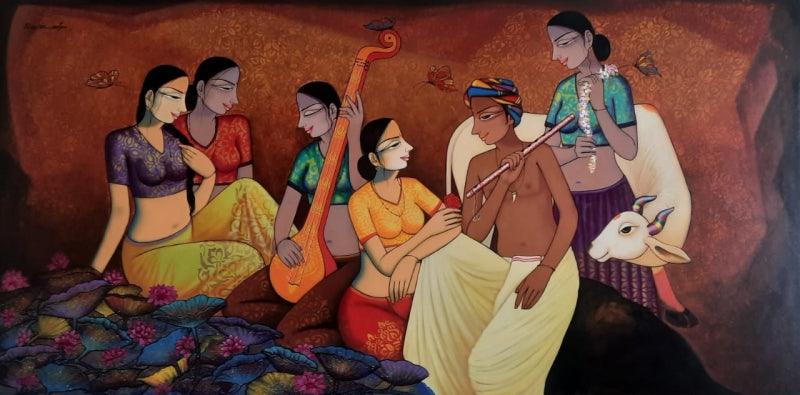
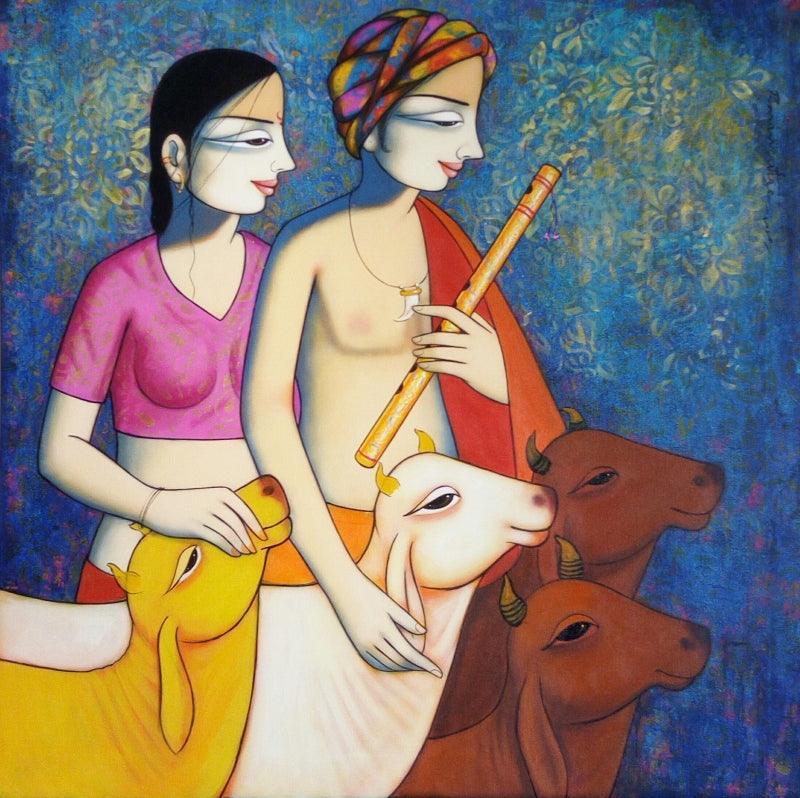
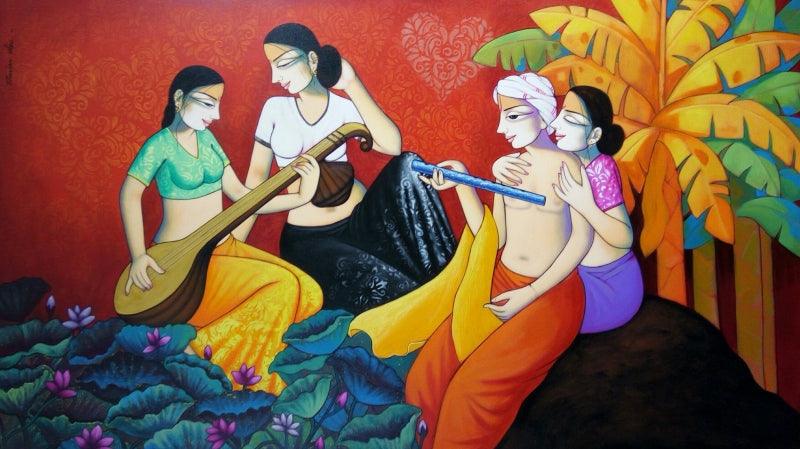
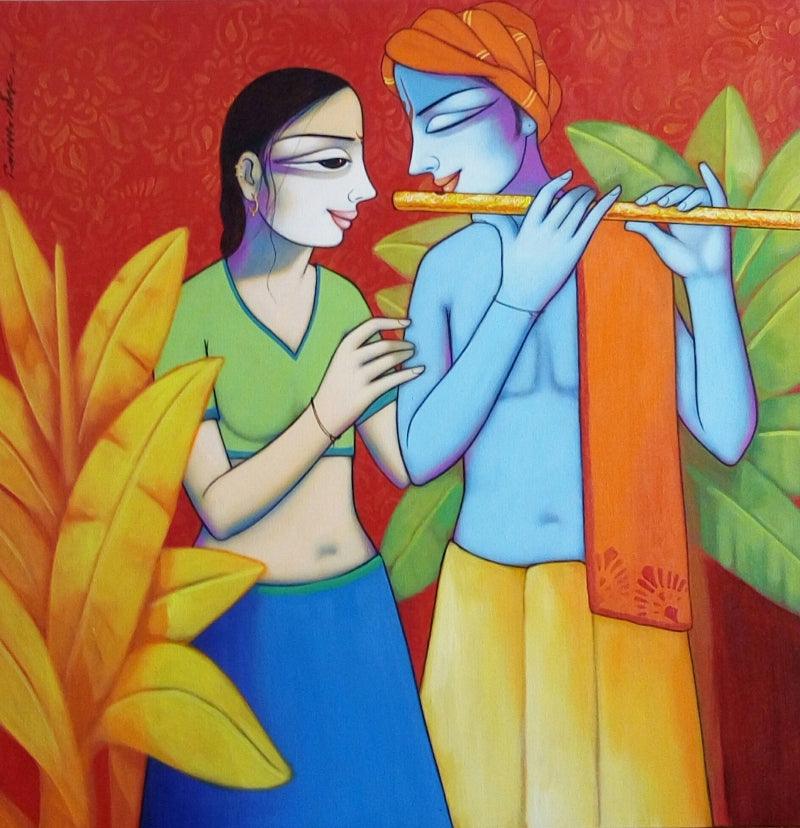
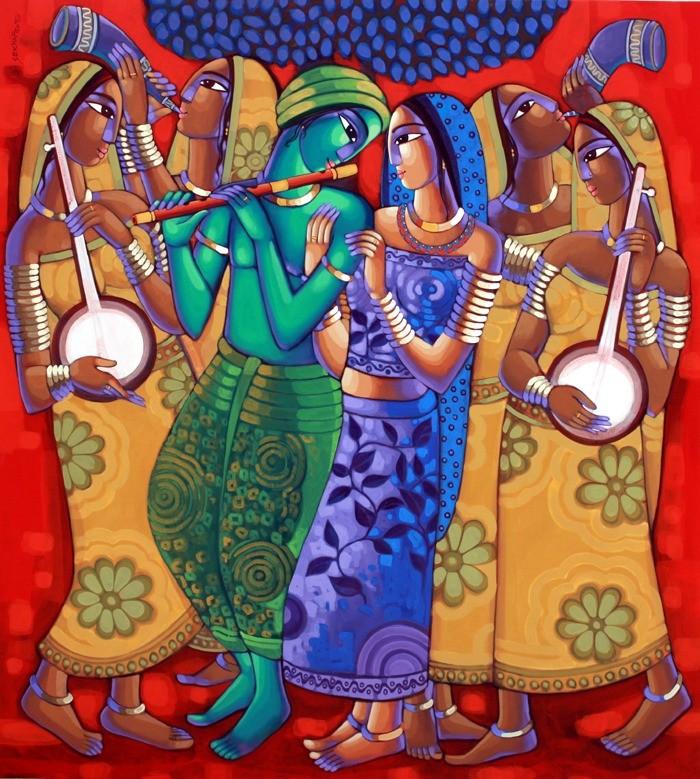
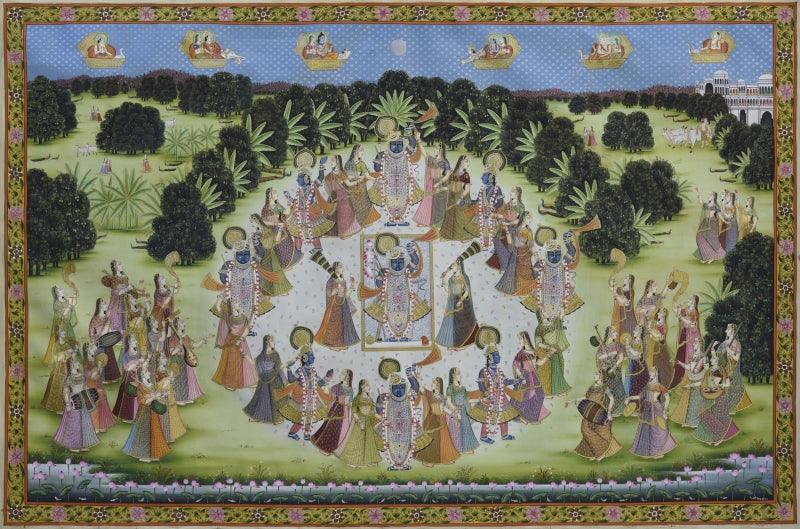
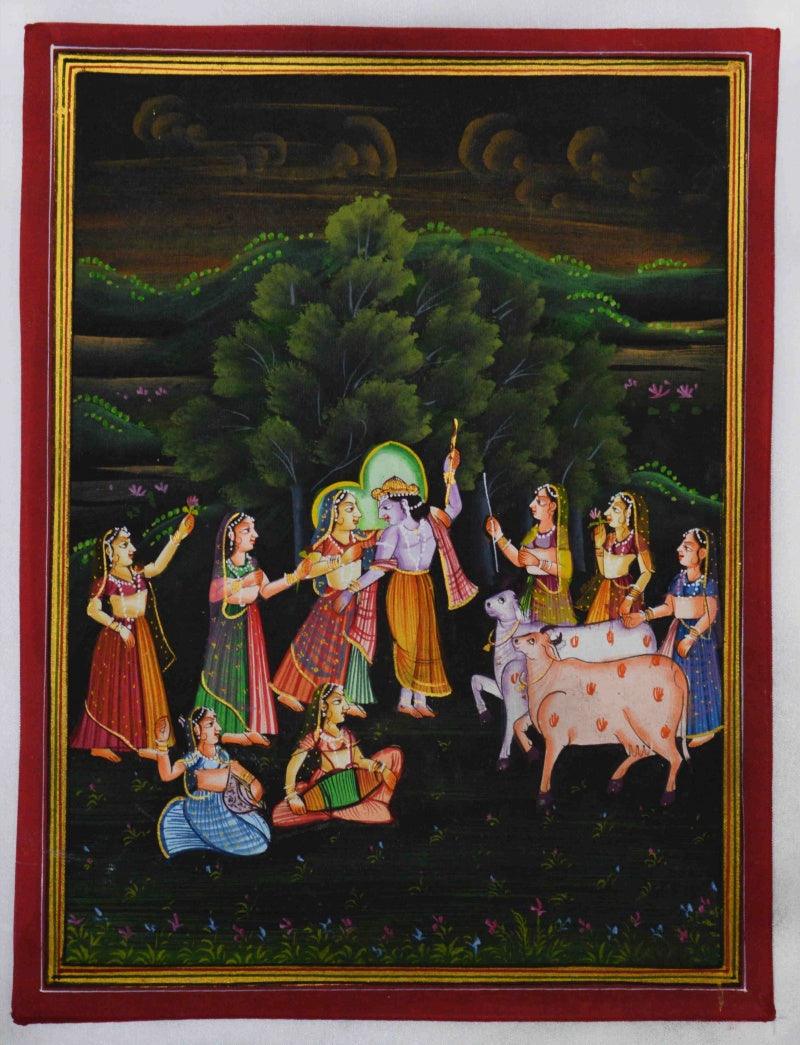
Bathed in a saffron glow, the scene choreographs a pastoral reverie where music, labor, and leisure braid into a single communal rhythm—women poised between swing and dance, while the flautist’s breath becomes the unseen pulse that holds the tableau together. The composition’s gentle flatness and elongated figures lend the moment a timeless, folk-lyric stillness, yet the diagonal sweep of the flute and the suspended ropes introduce a quiet kinetic tension, as if joy must be continuously balanced. Animals occupy the center not as backdrop but as moral companions, suggesting a rural cosmos in which tenderness, sustenance, and devotion share the same warm light. Beneath the decorative patterning, the work reads as an ode to harmony—an idealized ecology of bodies and beings held together by song.
Delivery
You may also like