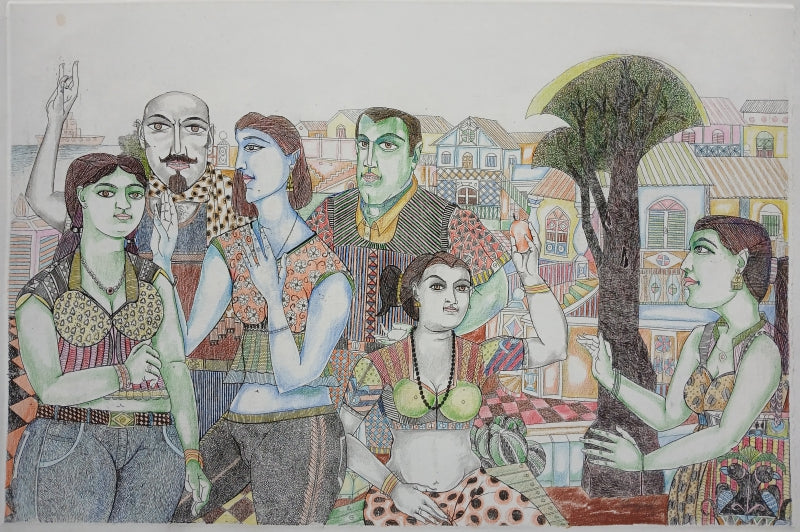
Untitled 21
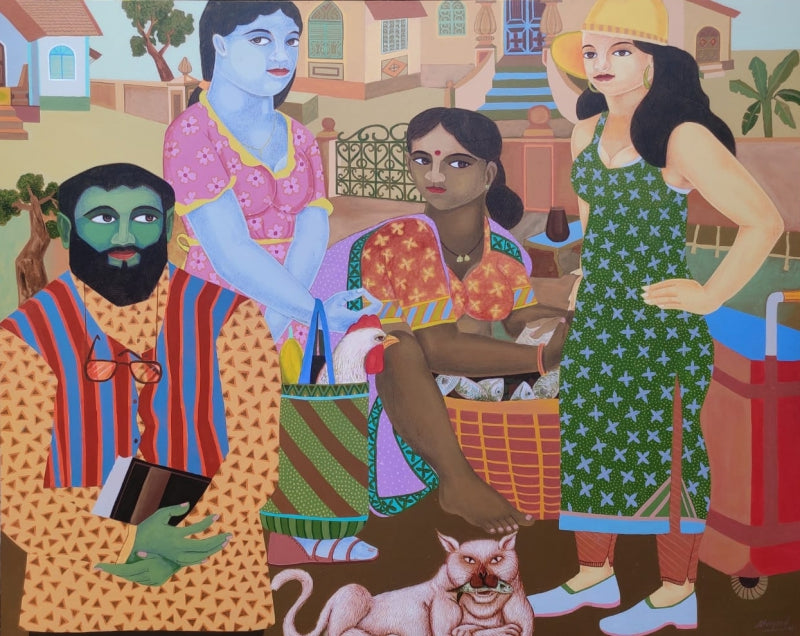
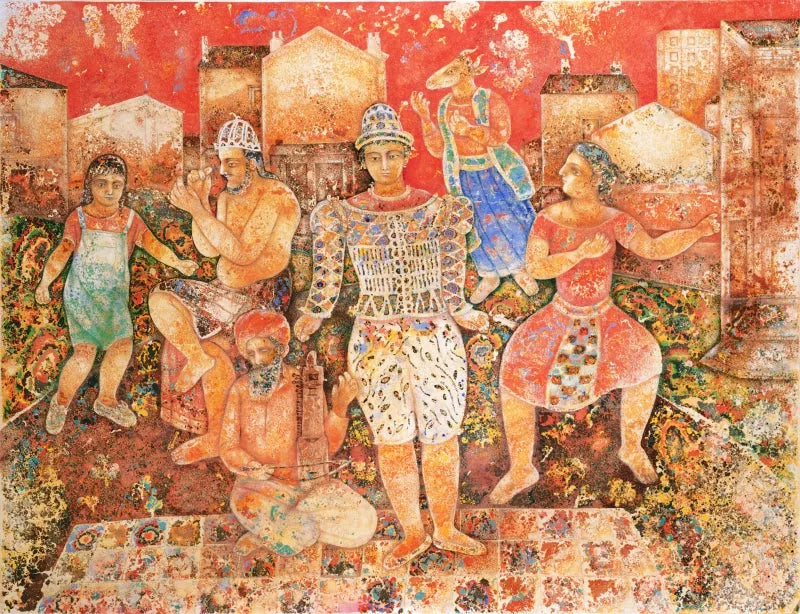
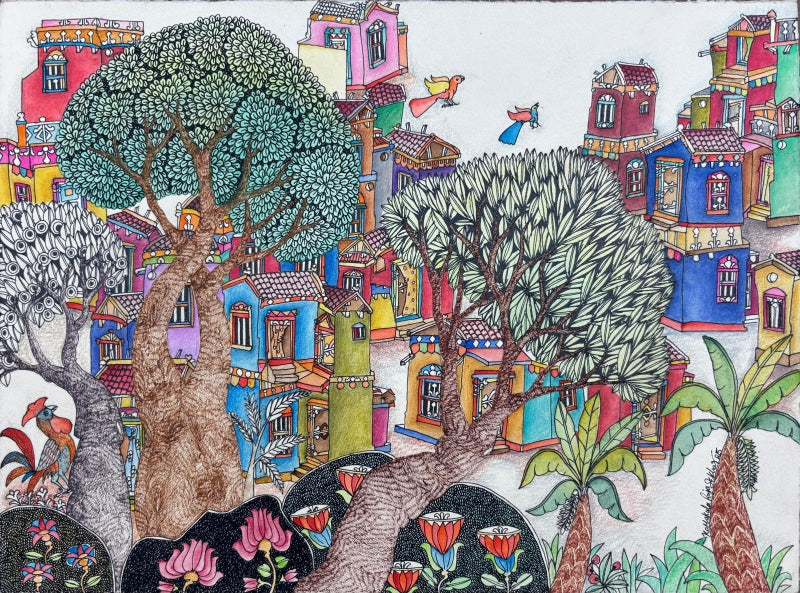
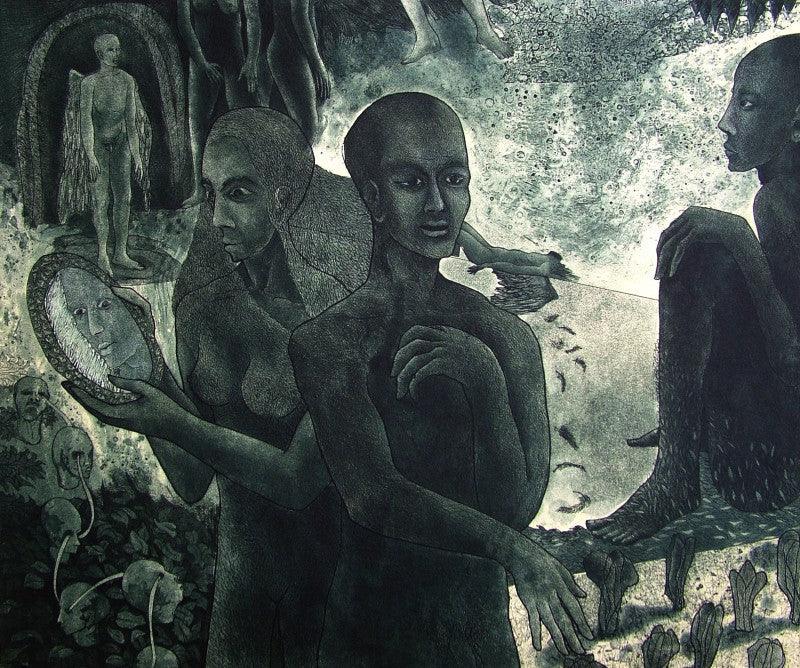
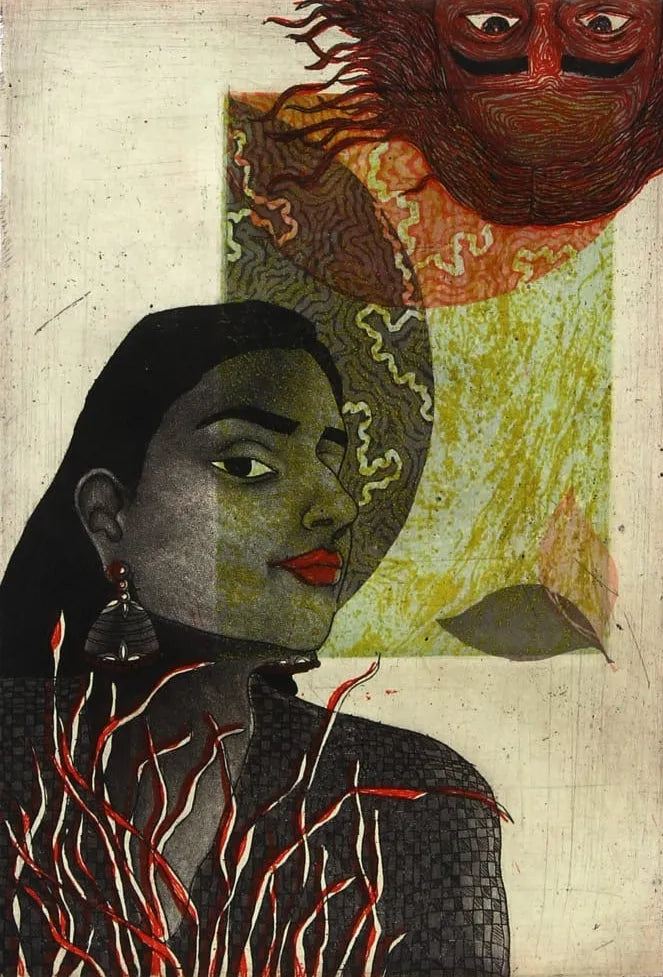
This densely orchestrated scene stages a quiet theatre of gazes and gestures, where stylized figures—rendered in cool greens and blues against a warm, patterned townscape—seem to negotiate intimacy, surveillance, and self-display. The flattened perspective and decorative linework compress private emotion into public space, turning balconies, windows, and rooftops into an ever-watching chorus that amplifies the drama without resolving it. A dark tree trunk anchors the composition like a moral axis, while the raised hands and angled profiles suggest interrupted conversations—desire, defiance, and suspicion braided into a single, suspended moment. Beneath its folk-inflected charm, the work reads as a meditation on social performance: how community becomes both shelter and stage, and how identity is continually rehearsed under the gaze of others.