Nandi Dance To The Divine Melody
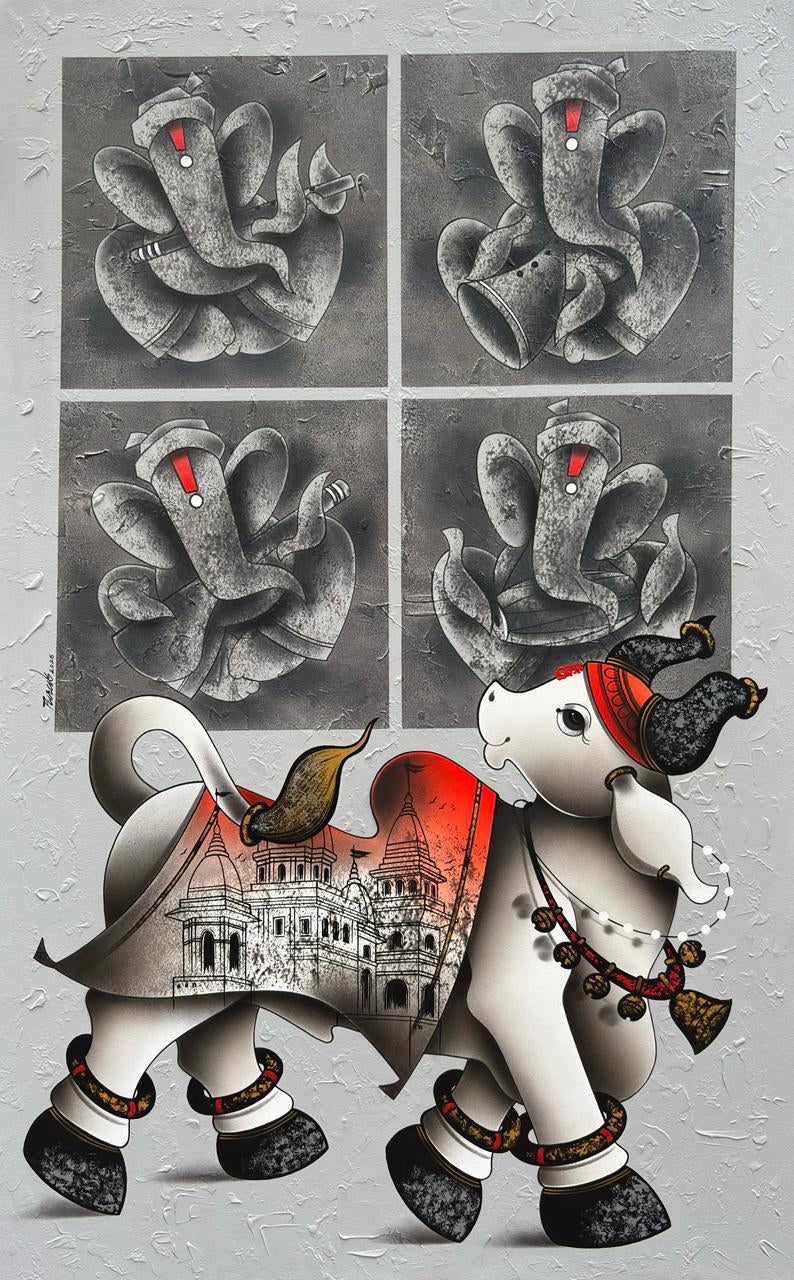
Arranged like a devotional grid, the four monochrome Ganeshas hover as etched memories—quiet, weathered, and almost fossilized—while the single figure below steps forward with theatrical certainty, carrying tradition on its back like a living shrine. The restrained greys and textured ground evoke time’s abrasion, punctured by sharp red marks that read as both sacred tilak and urgent alarm, insisting on presence amid erosion. Curving, sculptural forms create a gentle centrifugal rhythm around the deity’s trunk and limbs, yet the architectural silhouette within the draped cloth anchors the composition to place, suggesting heritage as something worn, borne, and continually reanimated. The work becomes a meditation on repetition and renewal: icons multiplied into thought, then condensed into a vivid embodiment that turns remembrance into movement.
Delivery
You may also like