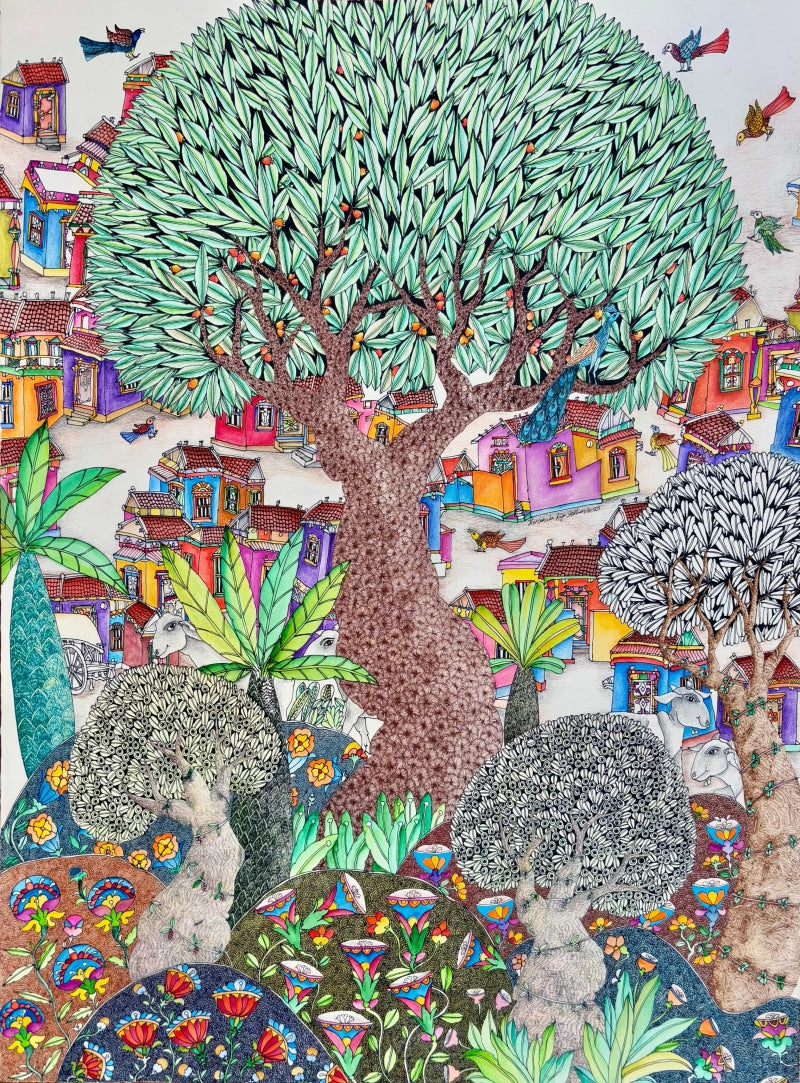
Untitled 6
₹125,000
Out of stockchecking live price…
Size
30x22Type
OriginalMaterial
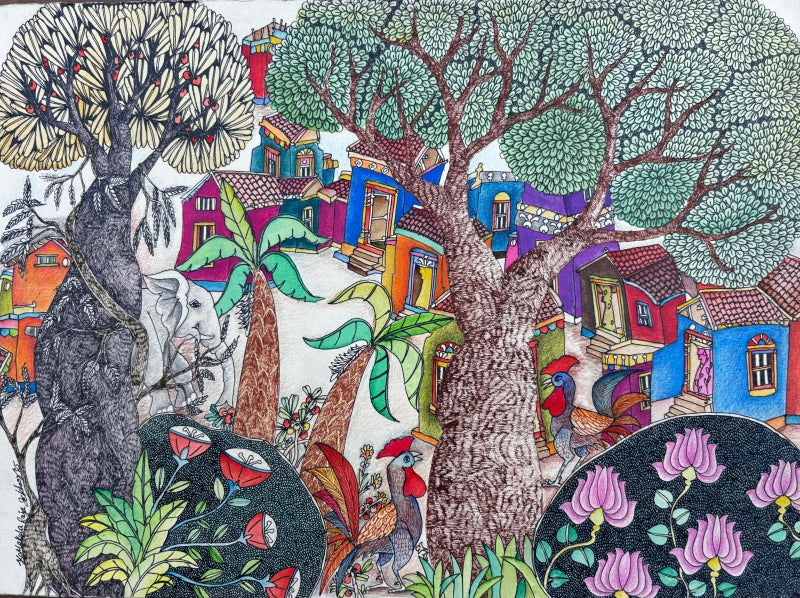
PaperA monumental tree rises like a benevolent axis, its dense canopy forming a protective dome that gathers the village’s bright, jewel-toned houses into a single breathing organism. The meticulous patterning—leaf upon leaf, blossom upon blossom—turns the landscape into a woven manuscript, where abundance is not merely decorative but a lived rhythm of care and continuity. Birds and quiet animals circulate at the edges of domestic life, suggesting an ecology of watchfulness in which nature and habitation are not opposites but interdependent forms of shelter. The flattened, luminous space reads as memory rather than reportage: a pastoral cosmology where color becomes devotion and the everyday is elevated into fable.
Delivery
You may also like
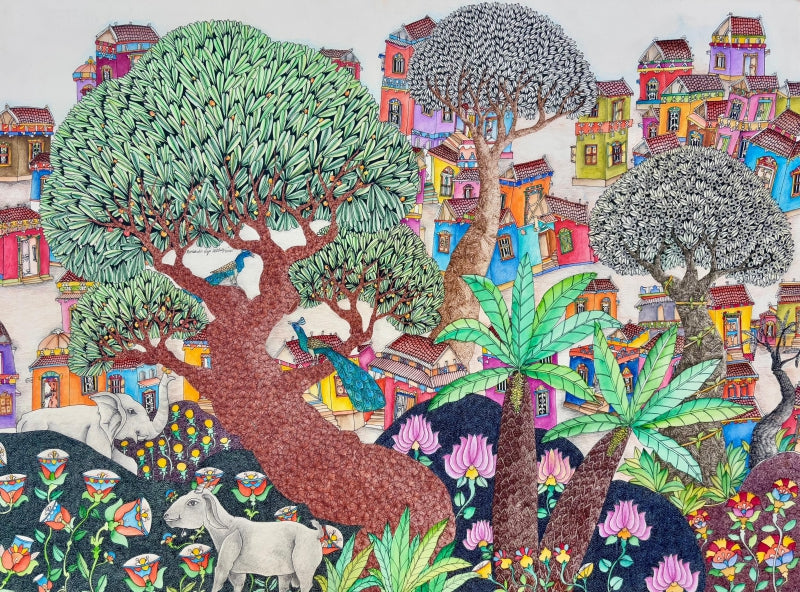
Untitled 5
Artzolo
₹125,000
out of stock
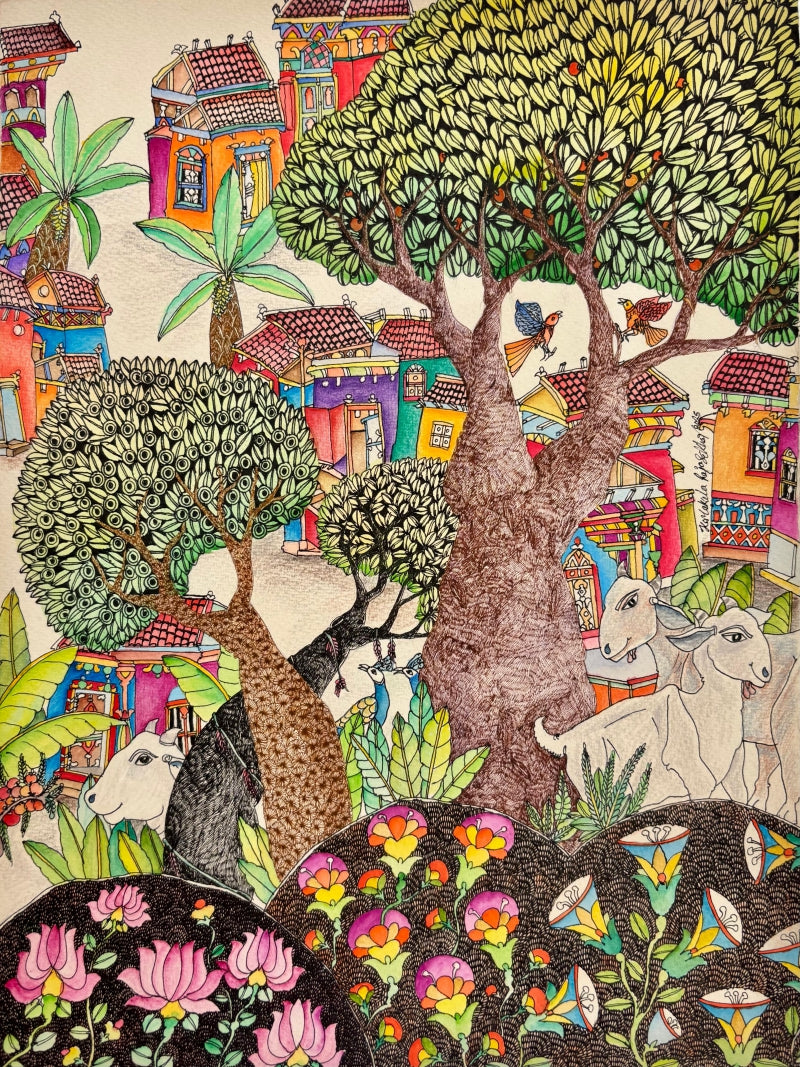
Untitled 16
Artzolo
₹45,000
out of stock
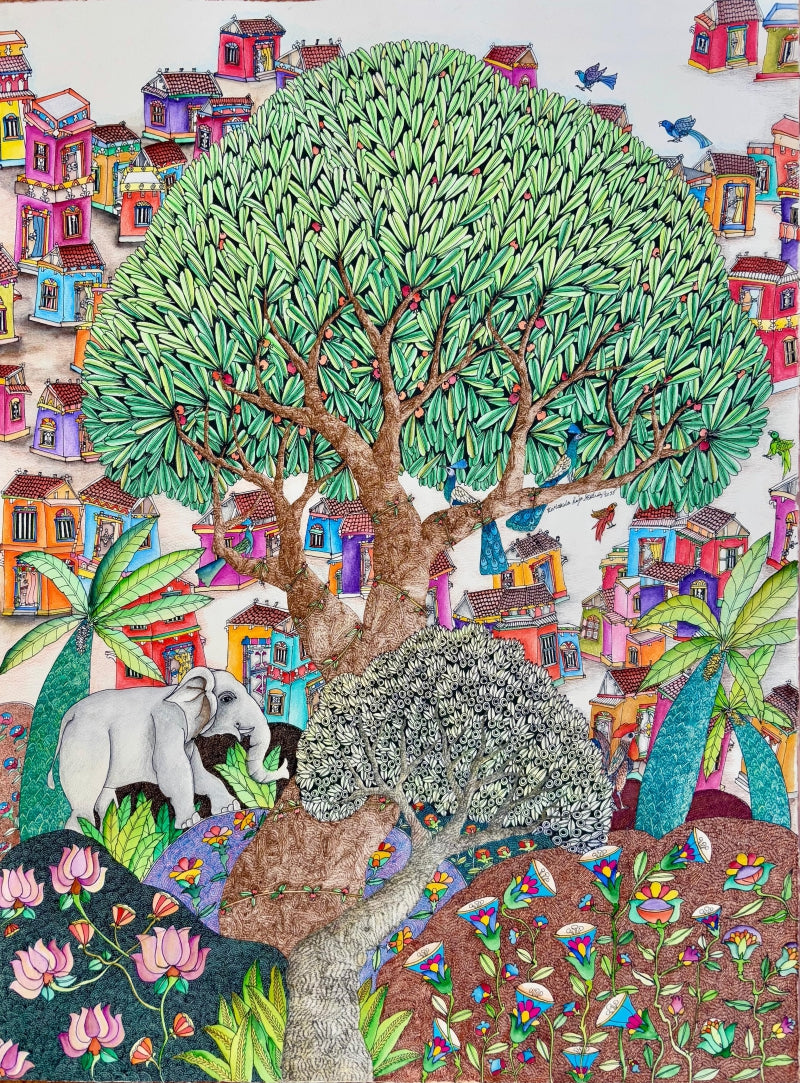
Untitled 8
Artzolo
₹125,000
out of stock
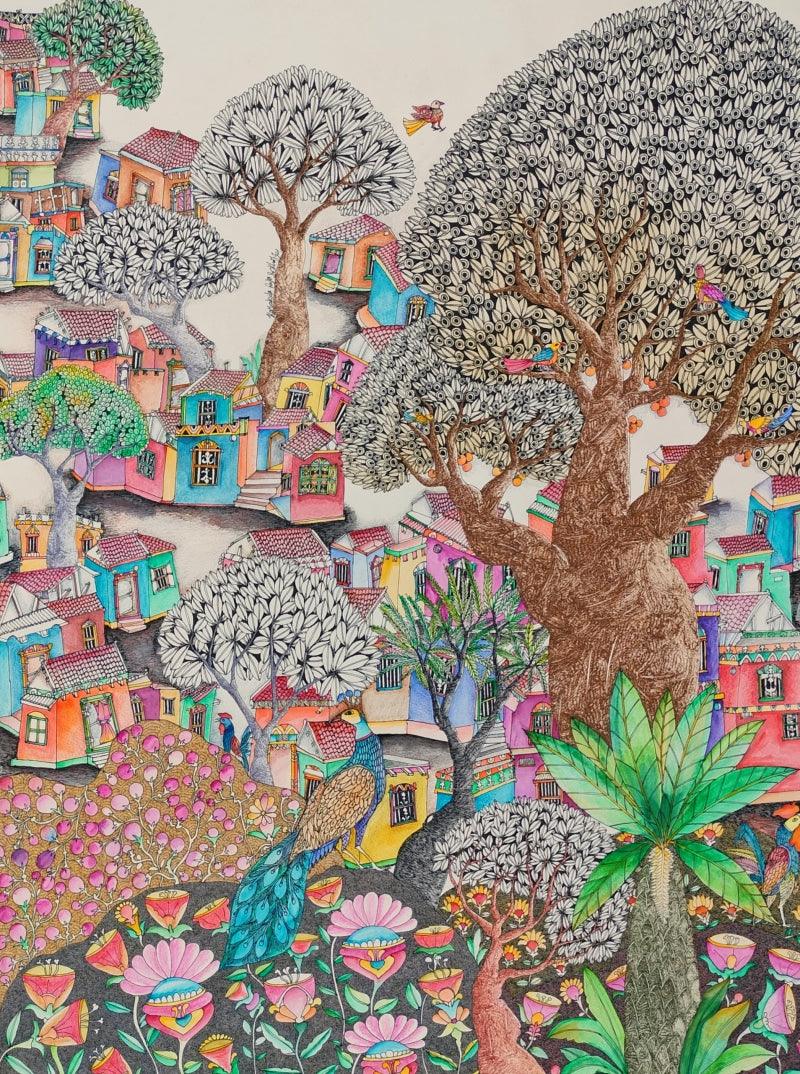
Untitled 2 (A Verdant Village)
Artzolo
₹120,000
out of stock
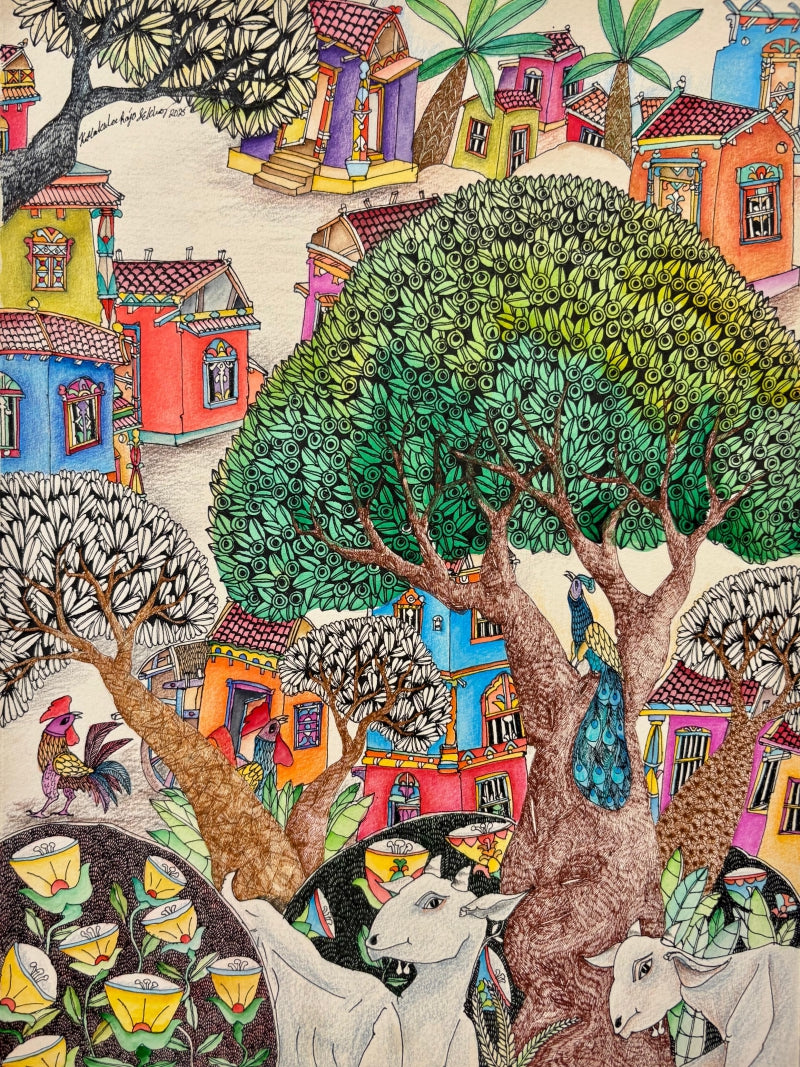
Untitled 15
Artzolo
₹45,000
out of stock
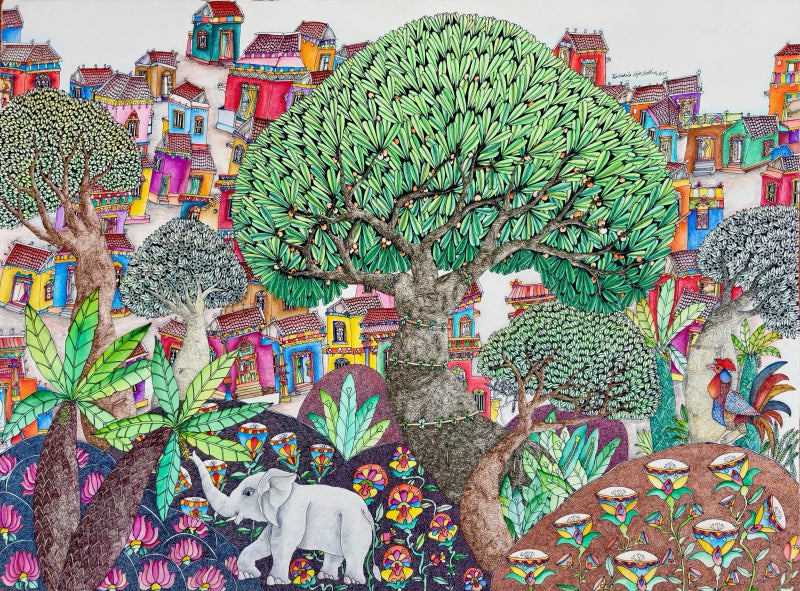
Untitled 7
Artzolo
₹125,000
out of stock
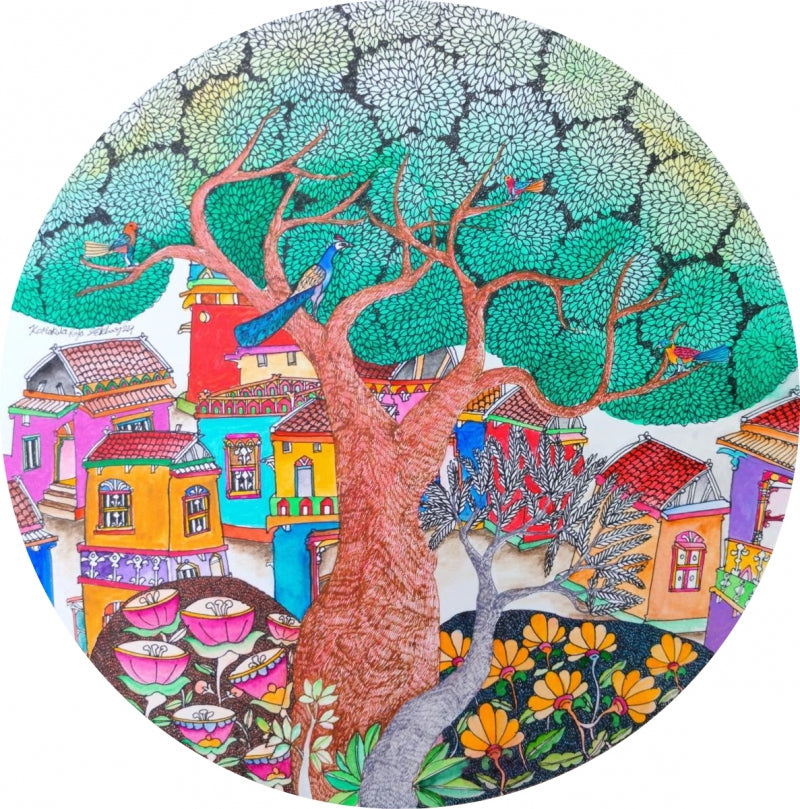
Untitled 13 (A Village Beneath the Canopy)
Artzolo
₹70,000
out of stock
Untitled 52
Artzolo
₹0