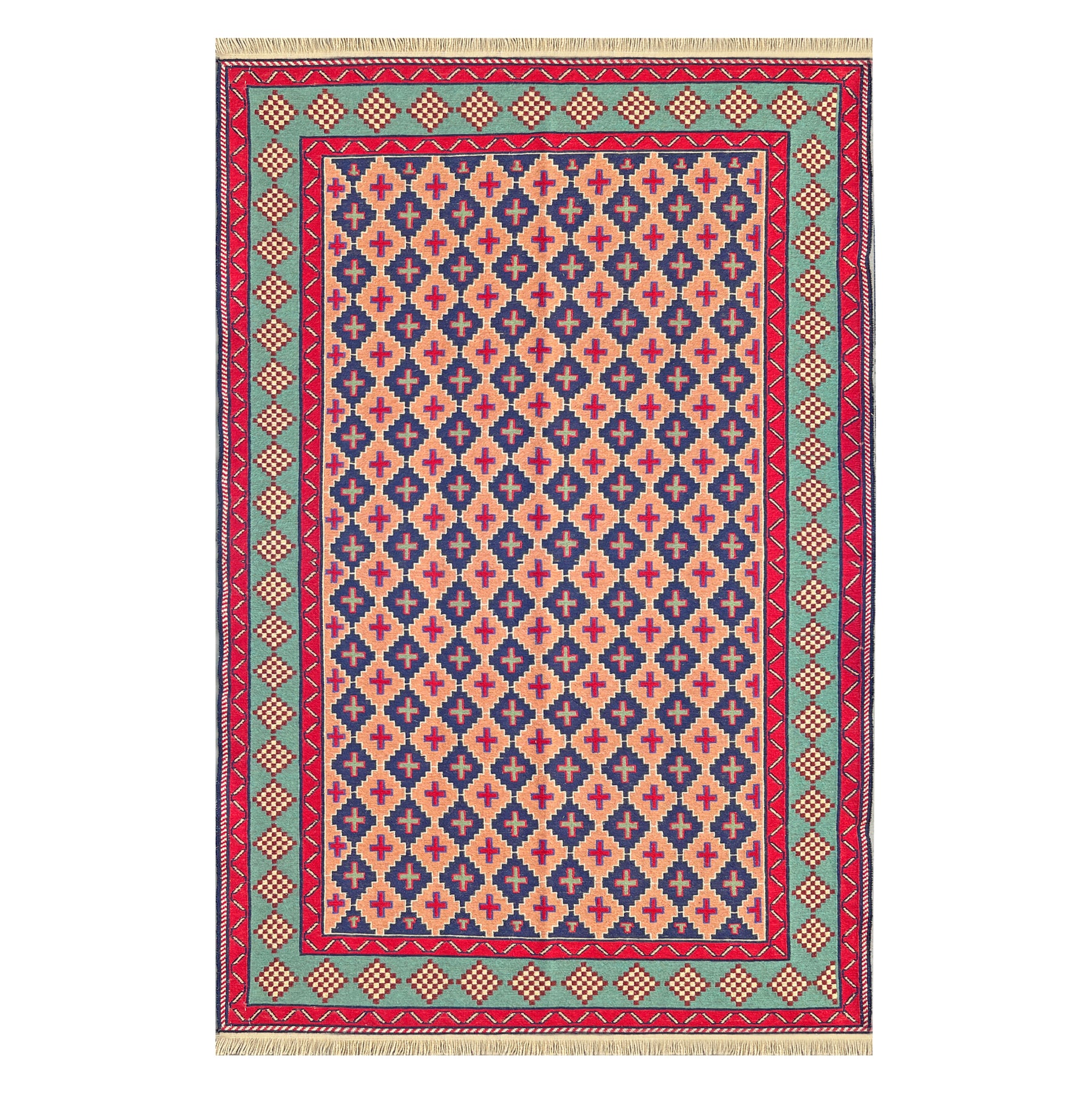
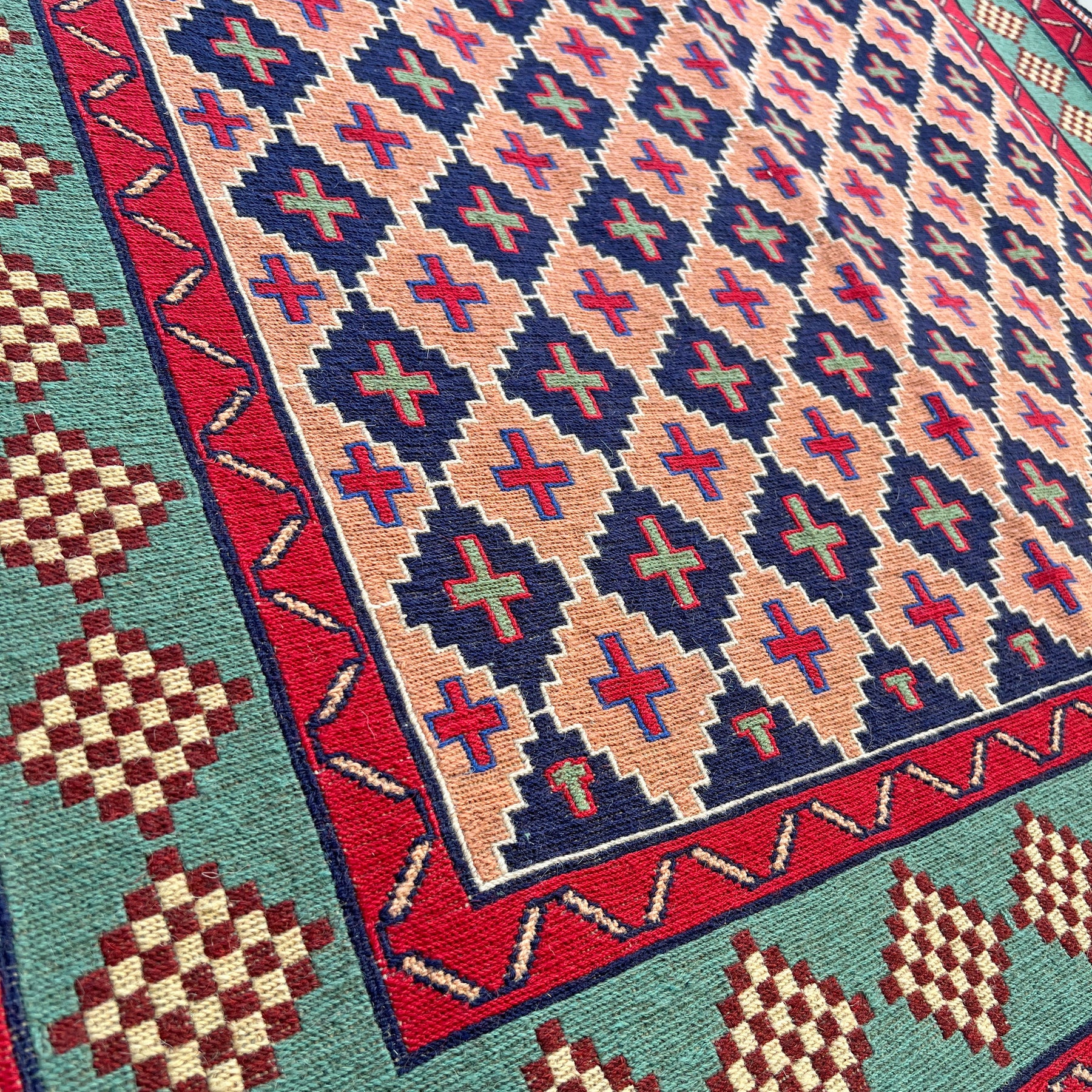
Rang Jaal Somak One-OF-A-Kind-Afghan Rug
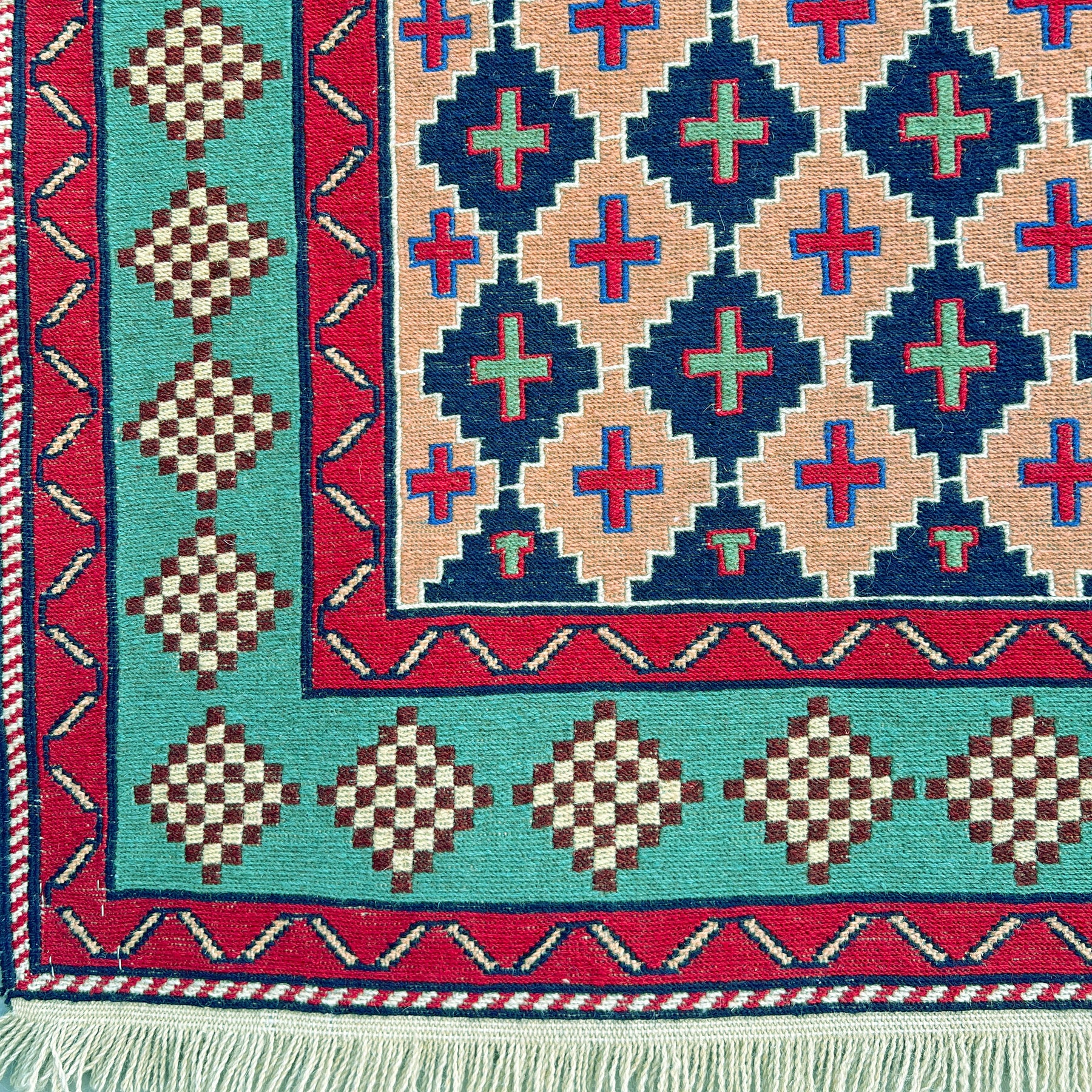
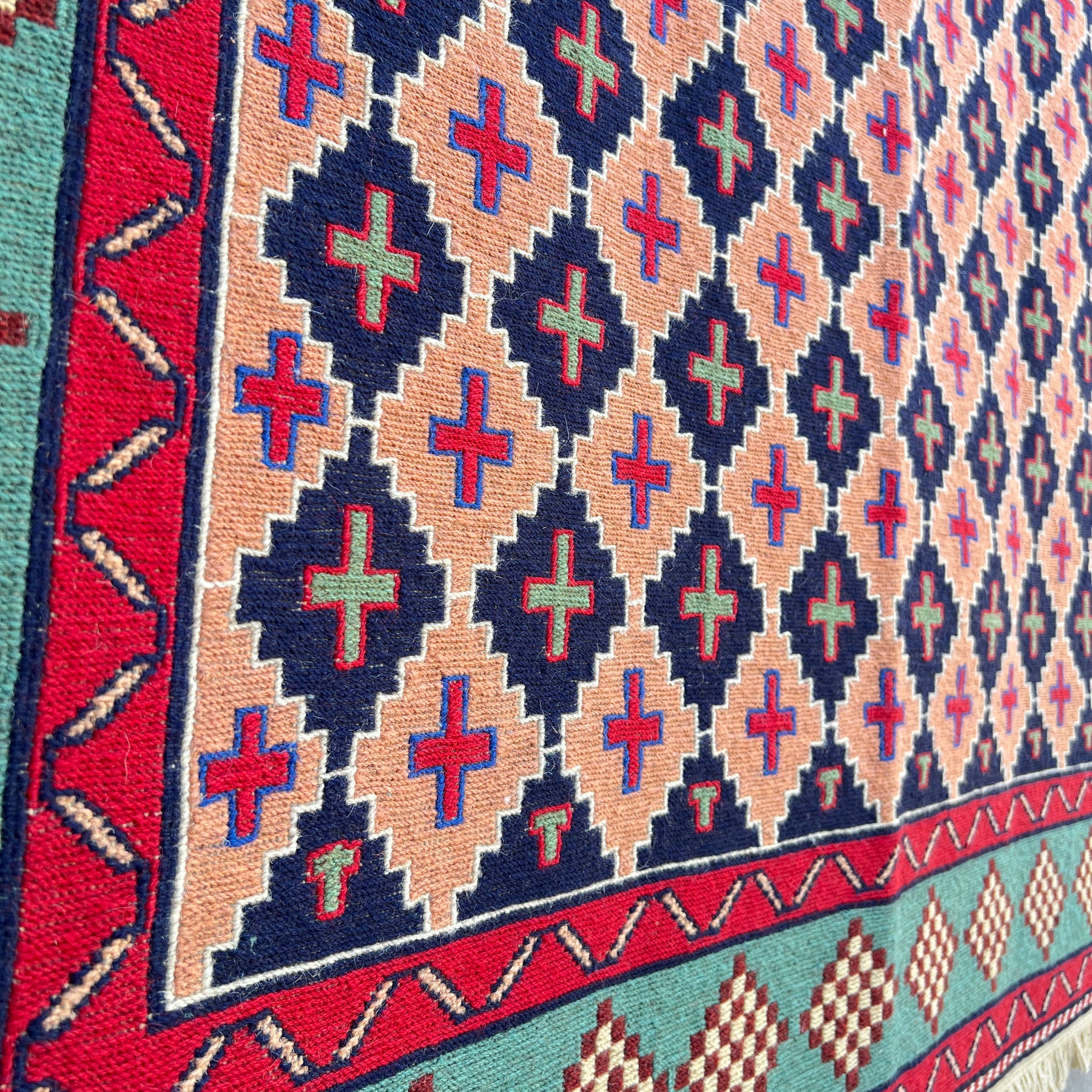
A Tabriz Somak of ivory ground and precise allover navy quatrefoil repeat — the soumak technique, with its Caucasian roots and Silk Road history, giving the surface a depth and texture that flat-weave cannot produce.
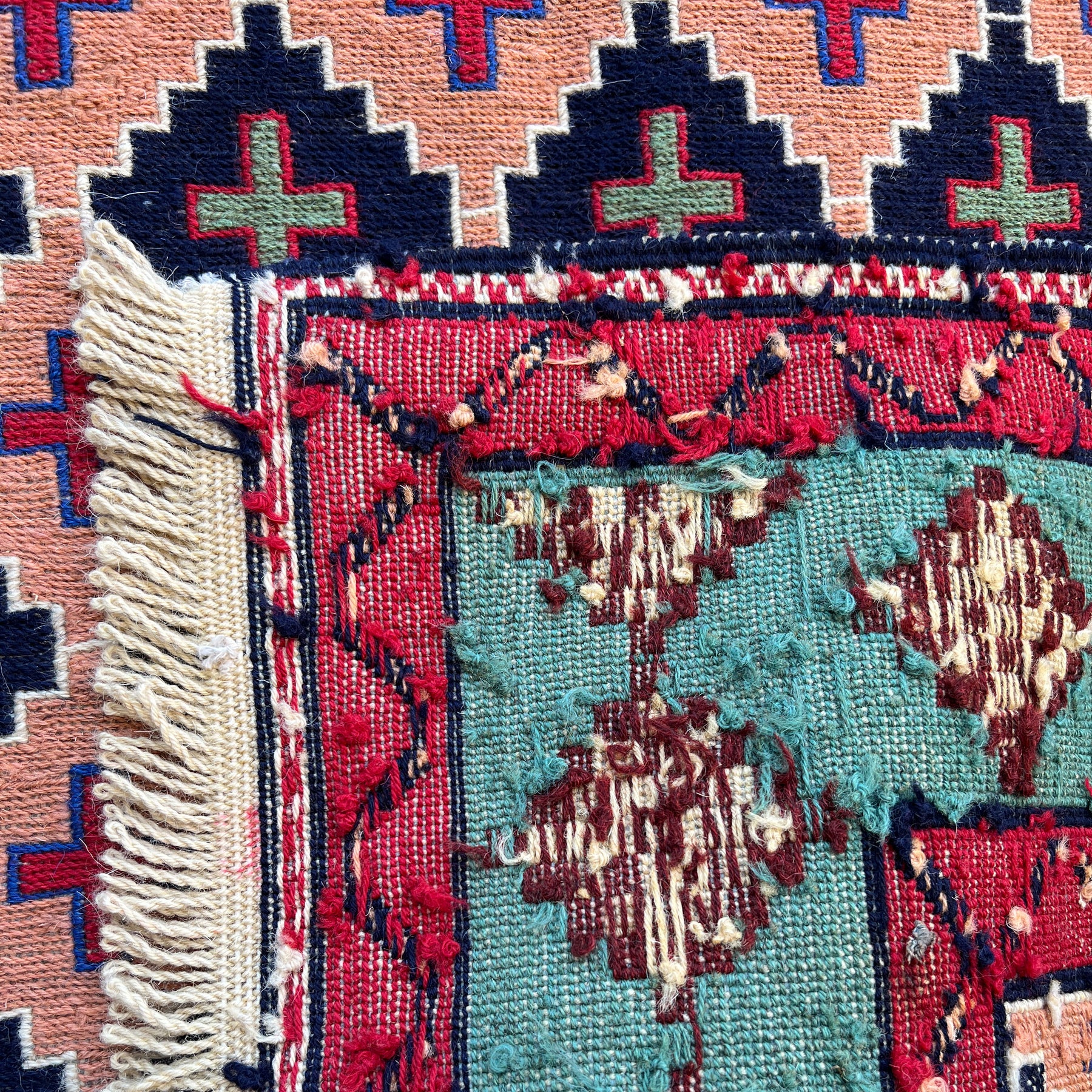
The soumak is not a kilim. It is older, structurally distinct, and produces a surface that is thicker, more textured, and more durable than the slit-woven tapestry — achieved by wrapping coloured weft threads over and under the warp rather than simply interlocking them, creating the characteristic raised, herringbone-like passages visible at the weft lines. The technique travelled the Silk Road from the Caucasus into Persia and Central Asia over centuries, and in Tabriz — the city that has been a weaving and trading centre since the Safavid period of the sixteenth century — it arrived in the hands of Turkmen craftspeople who brought their geometric gul-based vocabulary with them. The ivory field of this piece, covered in a precise allover repeat of four-petalled quatrefoil devices in deep navy and madder red, has the graphic regularity of tilework and the tactile presence that only the soumak technique produces. Woven entirely in wool.
A hand-woven rug is an investment piece. With proper care it will last a lifetime and become a cherished heirloom. Each knot in this collection is tied by hand by nomadic tribesmen, making every piece entirely one of a kind.
Variations in colour and tone — known as abrash — are a hallmark of authentic handmade rugs, particularly tribal and vintage pieces. Wear and age only add to their beauty.
| Origin | Tabriz region |
| Tribe | Turkmen |
| Technique | Soumak (wrapped-weft weave) |
| Material | Wool |
| One of a kind | Yes |
Coupons
Delivery
You may also like