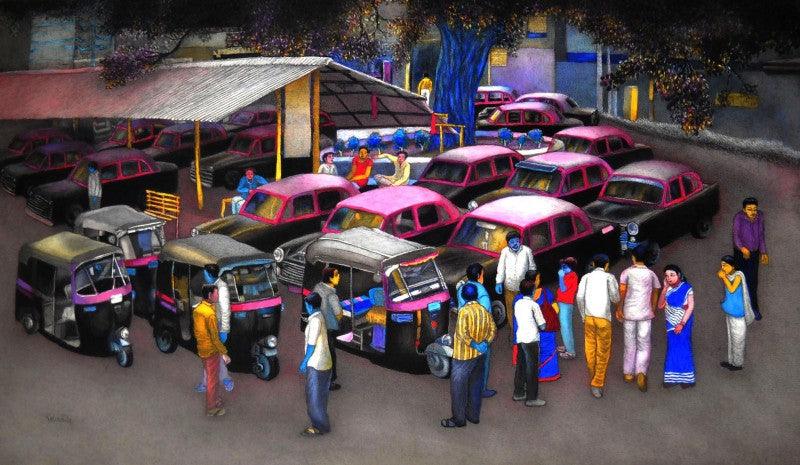
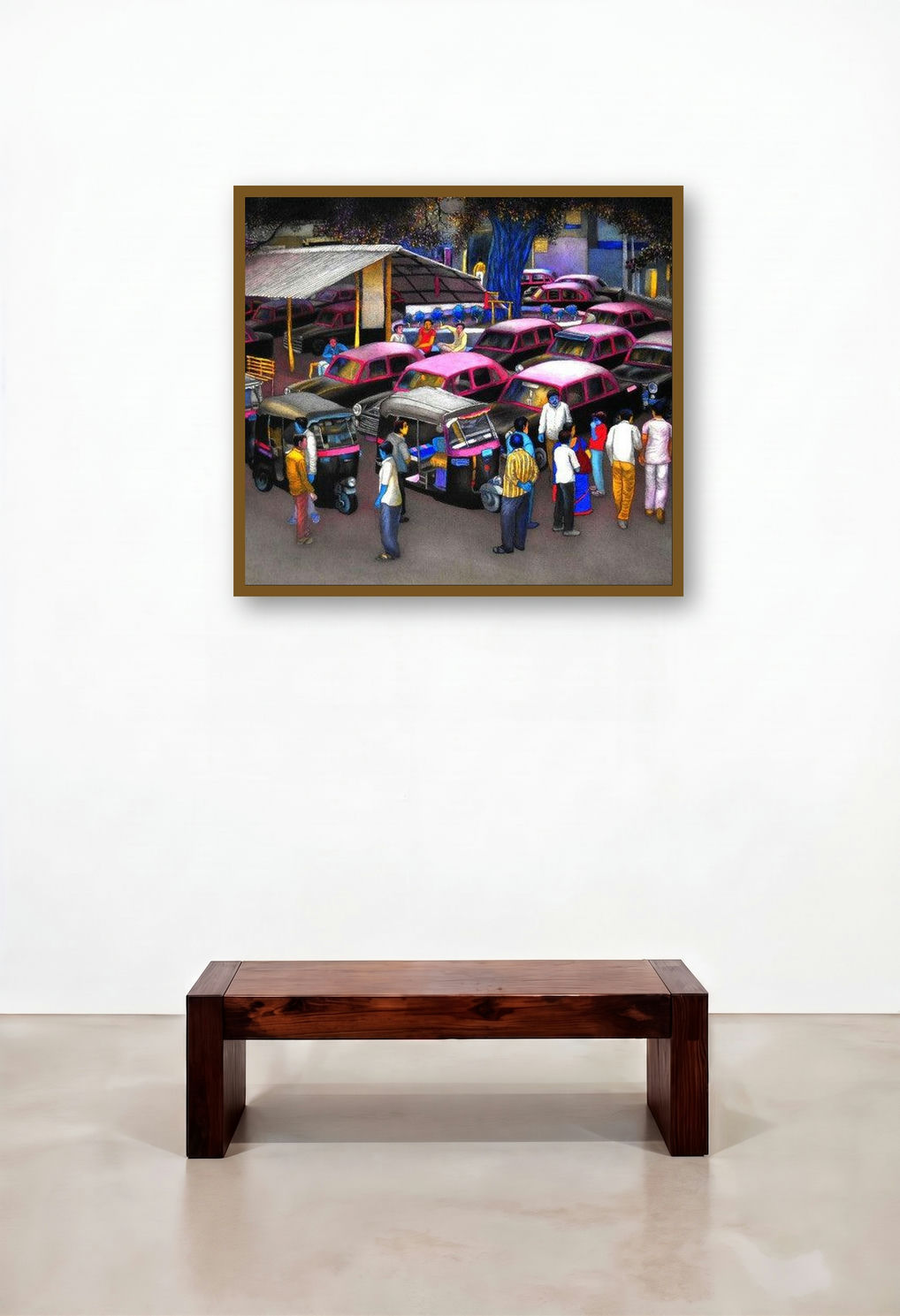
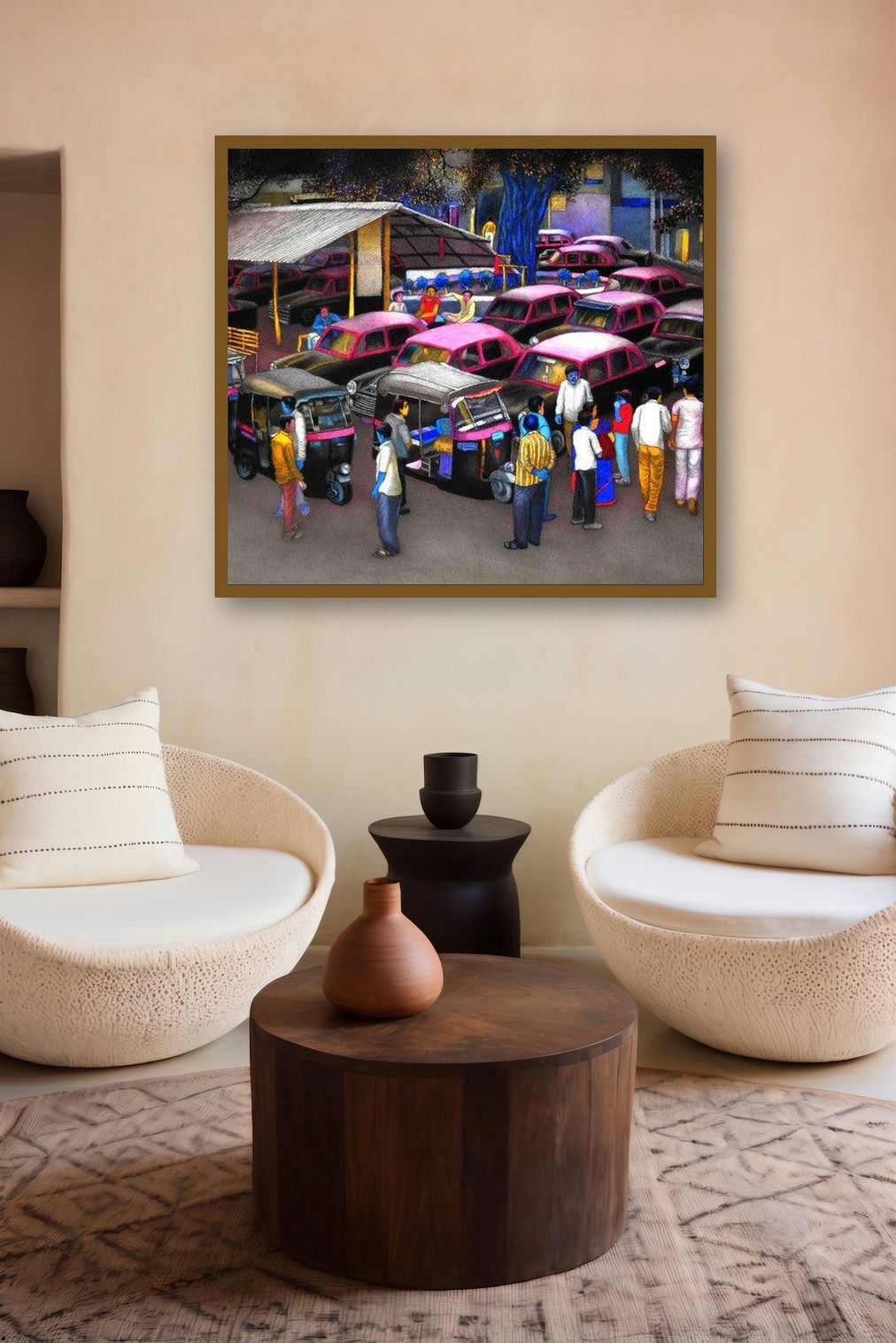
Vehicles Stand Point 2 (Taxi Stand)
₹10,000
● In stock · ★ 5.0 (7)checking live price…
Size
31x39Type
OriginalMaterial
CanvasThe scene choreographs an urban pause—taxis and rickshaws packed tightly under a low shelter—where movement is implied more by anticipation than by speed. Saturated pinks and violets flare against soot-dark ground, turning ordinary vehicles into luminous blocks of rhythm while the clustered figures become the true architecture of the work: a social geometry of waiting, bargaining, and shared direction. The deep, twilight-like palette compresses space and quiets the street into a single communal chamber, suggesting that in the city’s machinery it is human presence—standing, watching, negotiating—that keeps the pulse alive.
Delivery
You may also like
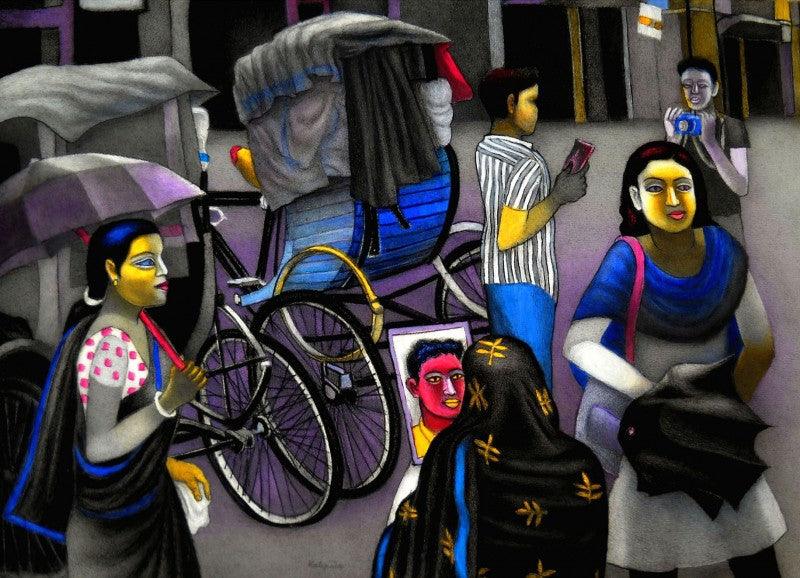
Taken Picture Of Dearest Friend (Street Scene)
Artzolo
₹75,000
★ 5.0 (14)
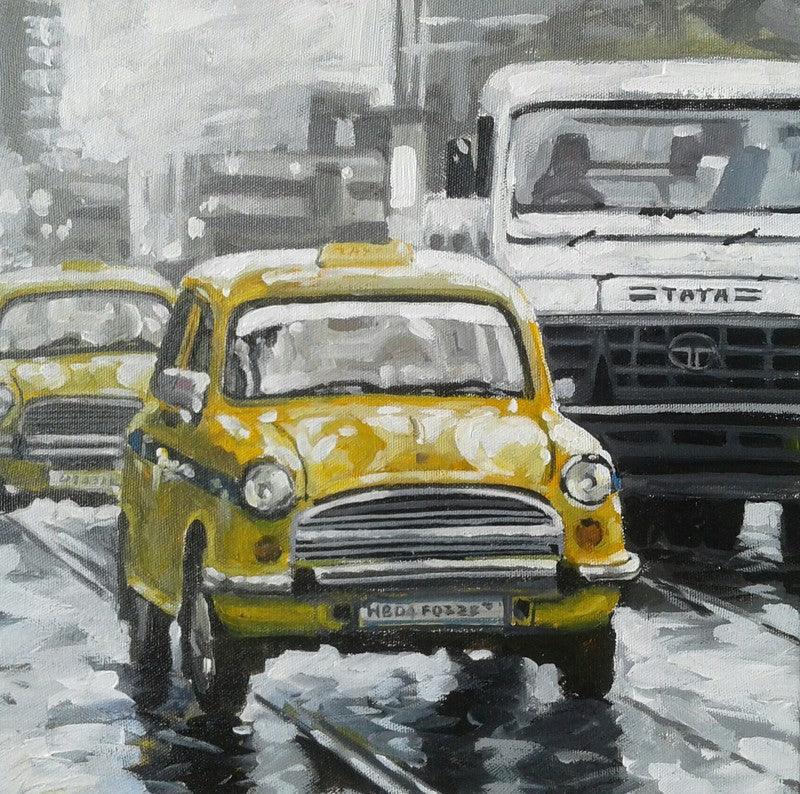
Kolkata 12 (A Rainy Ride in Kolkata)
Artzolo
₹10,000
★ 4.0 (11)
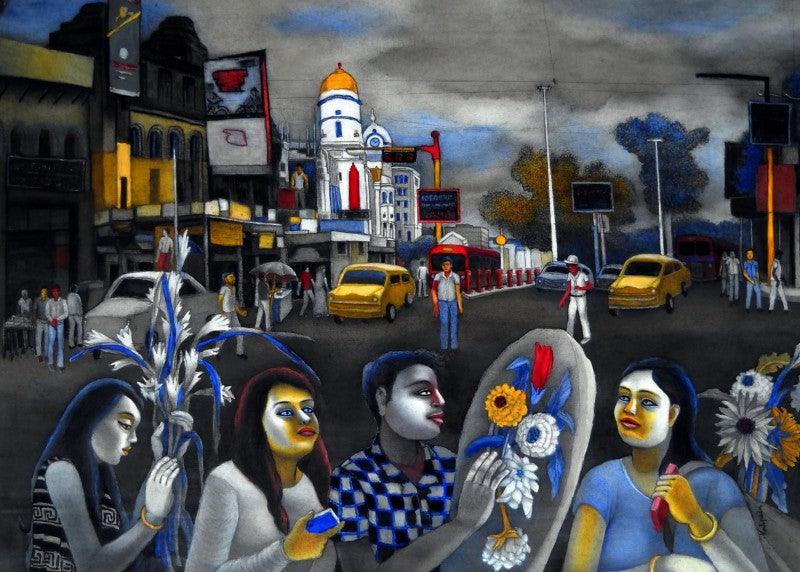
They Are Going To Celebration (Kolkata Street Scene)
Artzolo
₹100,000
★ 5.0 (6)
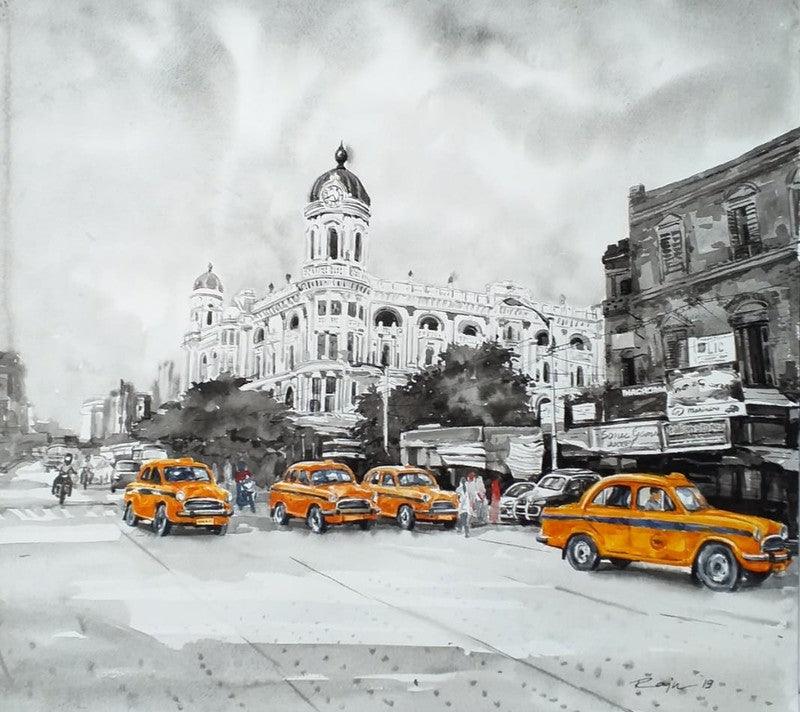
Kolkata 8 (A Cityscape in Black and Yellow)
Artzolo
₹20,000
★ 5.0 (13)
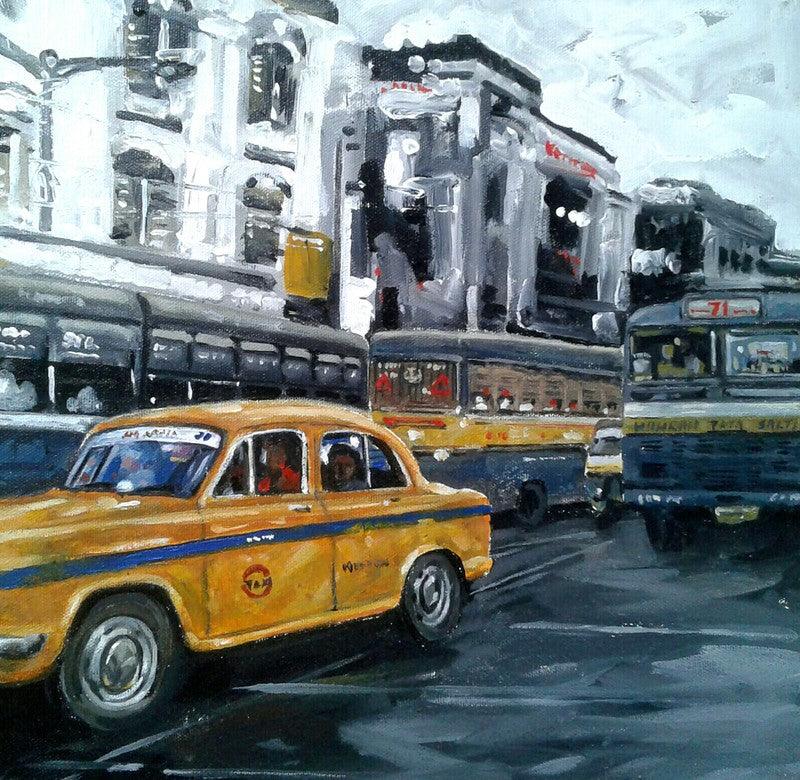
Kolkata 10 (A Day in Kolkata)
Artzolo
₹10,000
★ 4.0 (5)
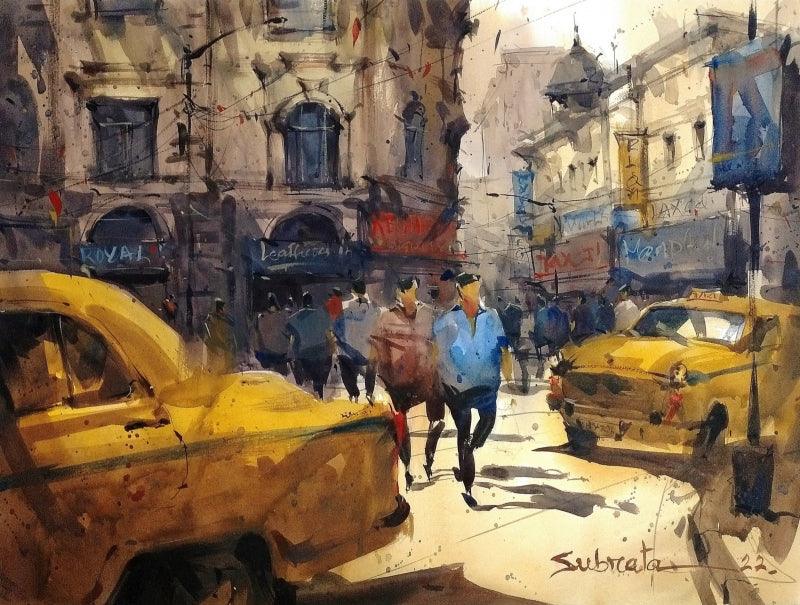
Kolkata City (Urban Vitality)
Artzolo
₹75,000
★ 5.0 (15)
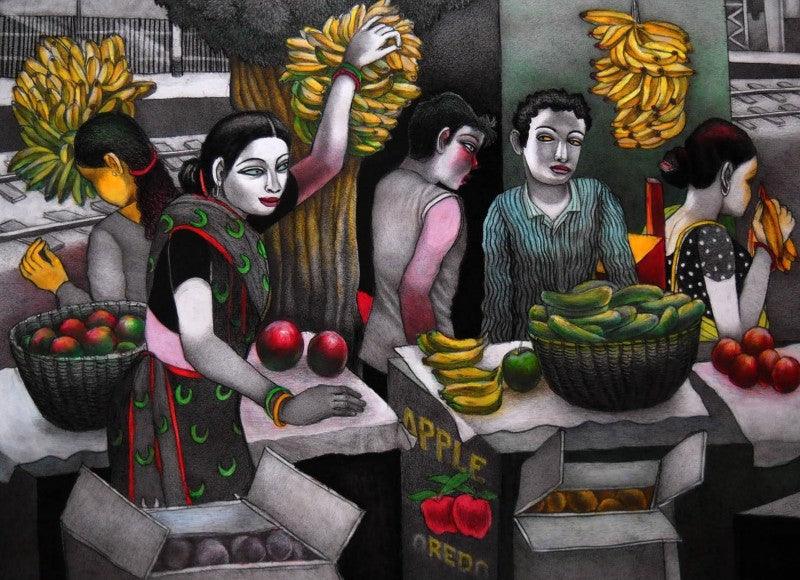
Reciprocal (Fruit Market Scene)
Artzolo
₹75,000
★ 5.0 (6)
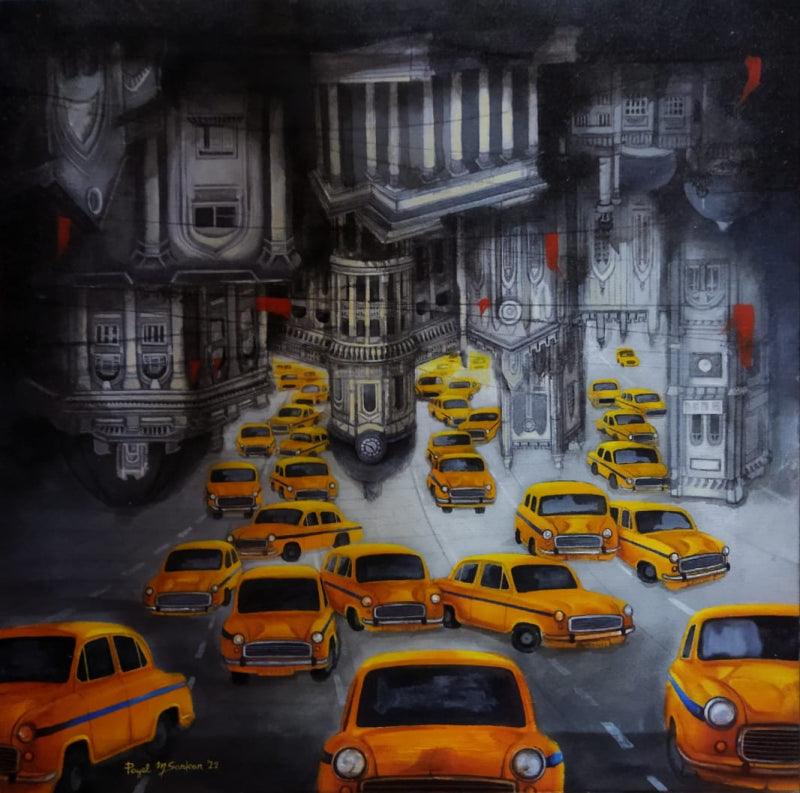
Kolkata My City 10 (Kolkata Cityscape with Taxis)
Artzolo
₹35,000
★ 5.0 (7)