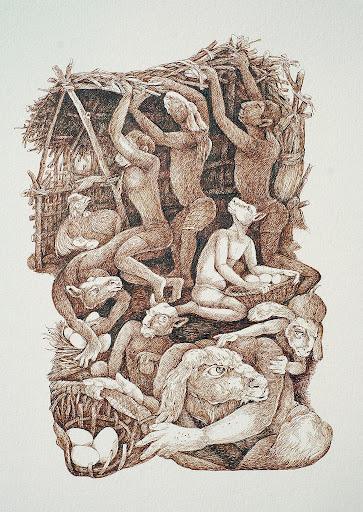
Untitled 2 (Burnt Seinna)
₹45,000
Out of stockchecking live price…
Size
11x8Type
OriginalMaterial
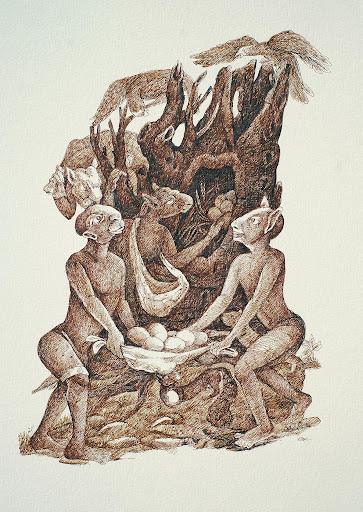
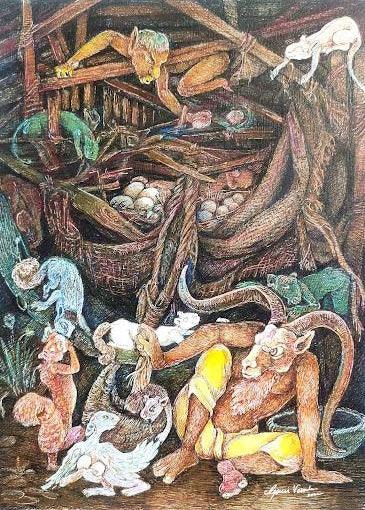
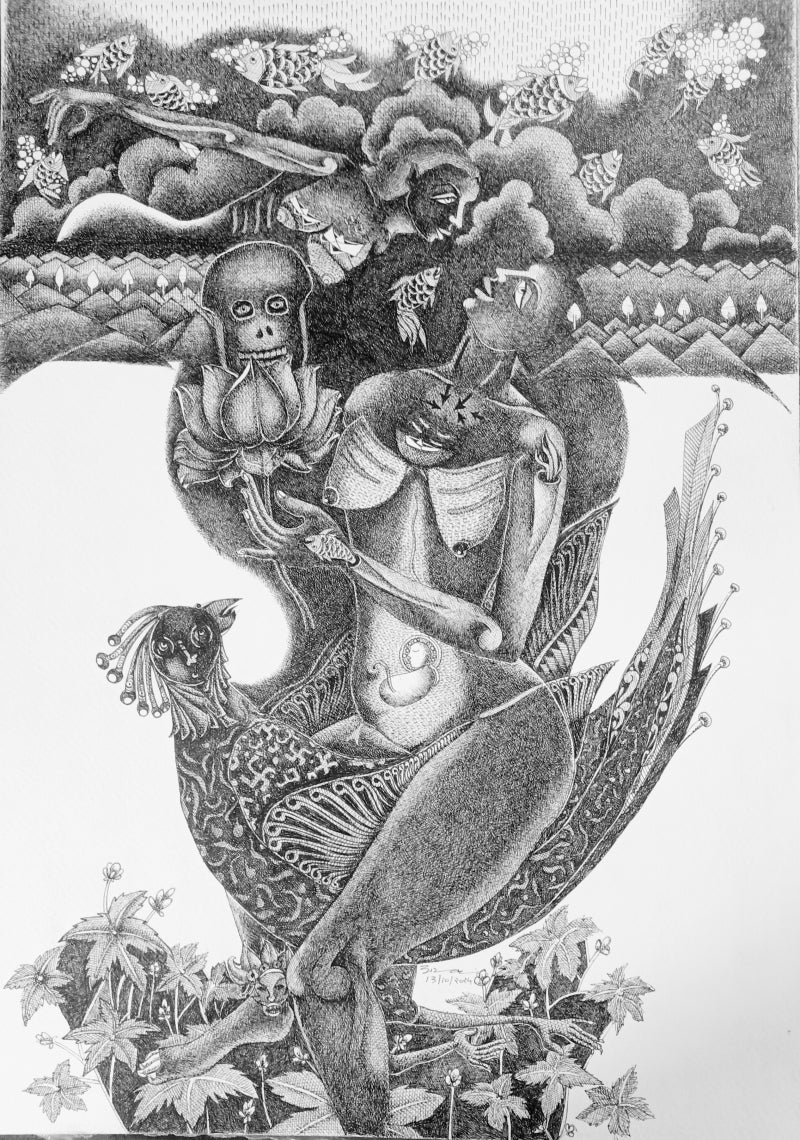
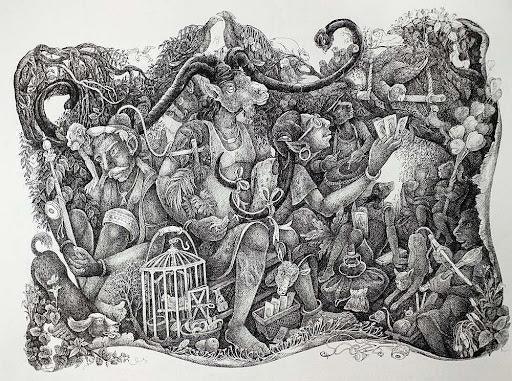
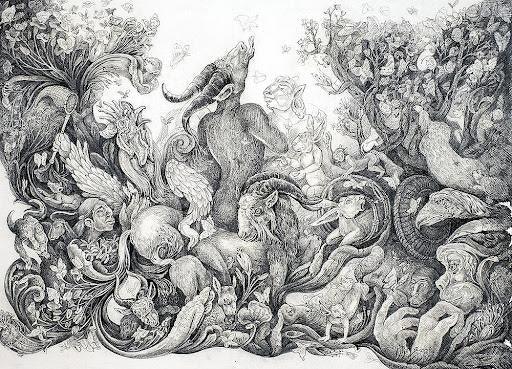
PaperThe composition reads like a dense reliquary of rural myth—bodies, beasts, and woven shelter interlocked in a single organism, where labor and desire are indistinguishable from survival. Rendered in earthy monochrome, the careful crosshatching turns flesh into terrain and straw into architecture, dissolving the boundary between human presence and the animal world that sustains it. The upward thrust of raised arms and clustered torsos suggests both celebration and strain, as if the scene is suspended between fertility rite and the daily burden of provision. In its compressed space, intimacy becomes communal, and the hut functions less as a home than as a symbolic womb holding an entire ecology of need, care, and appetite.