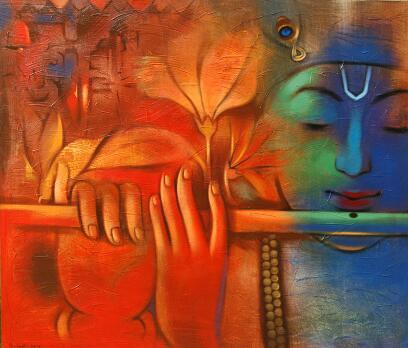
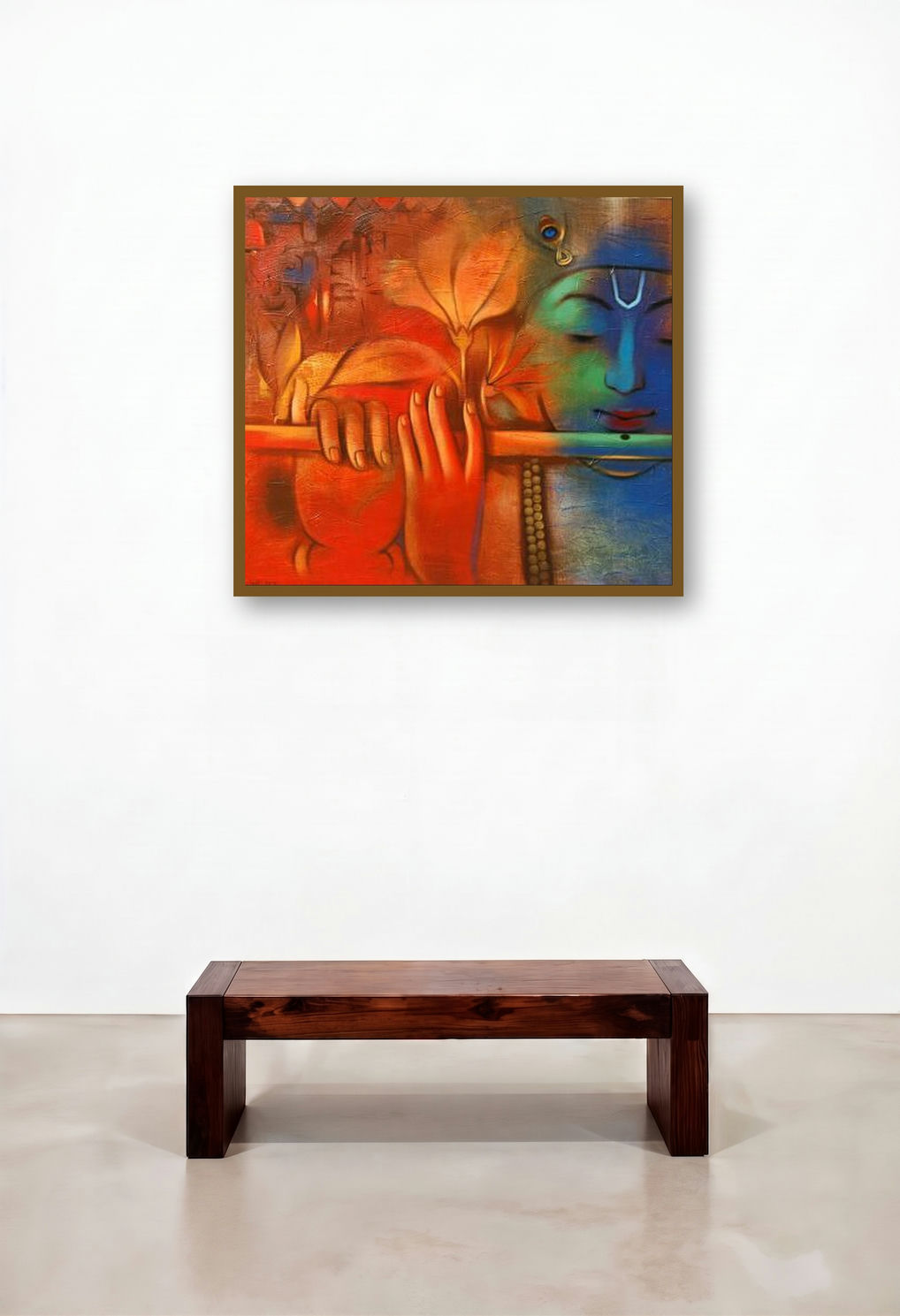
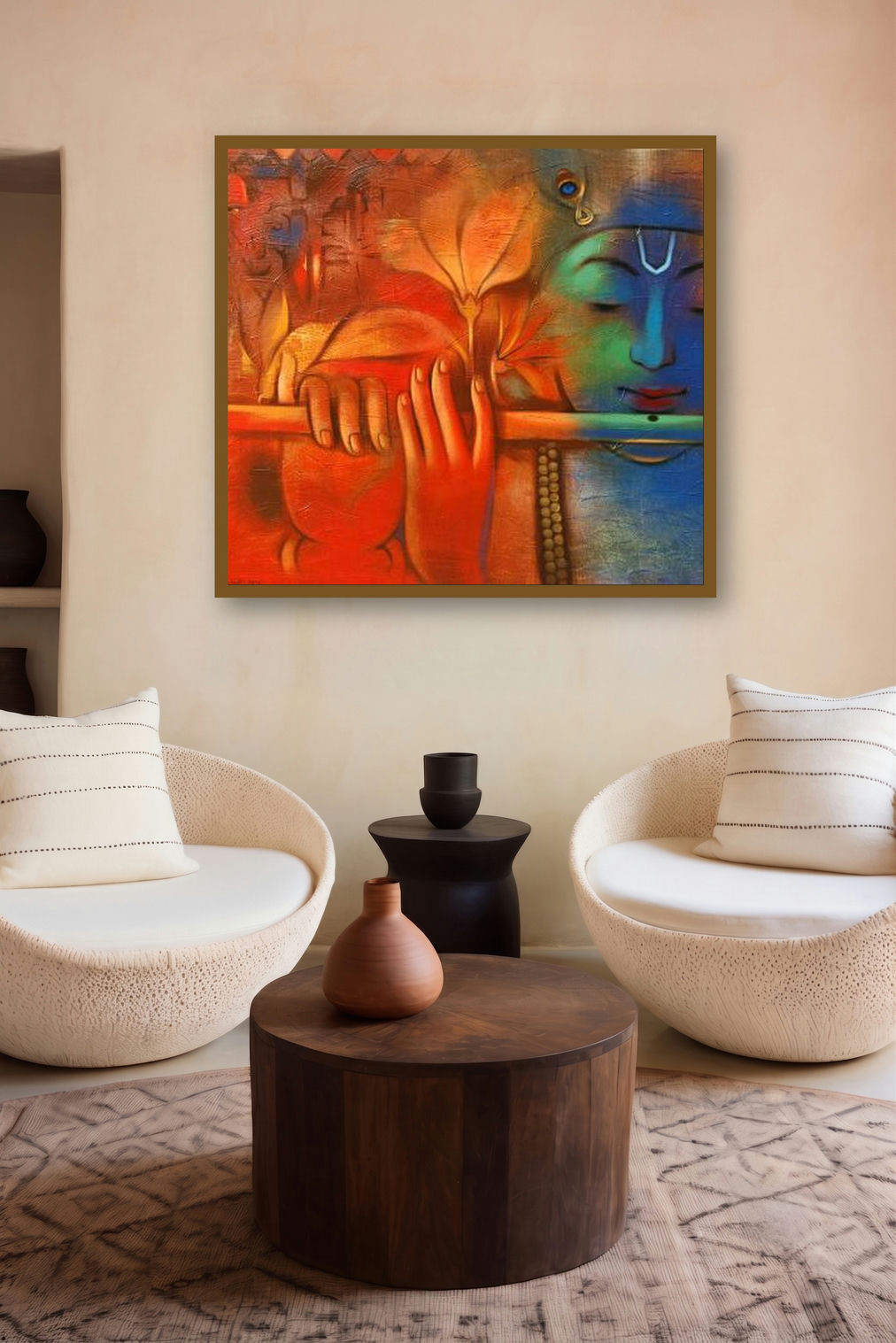
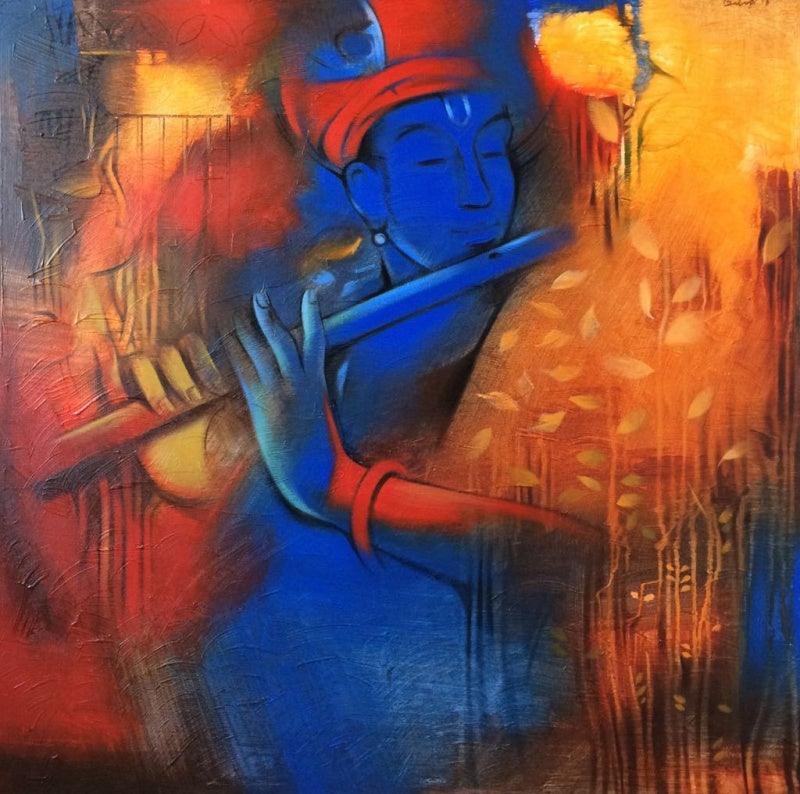
Krishna Playing Flute 4 (Flute of Enchantment)
₹60,000
● In stock · ★ 5.0 (8)checking live price…
Size
36x42Type
OriginalMaterial
CanvasThe composition stages an intimate meeting of opposites: a blue, inward-looking visage holds stillness while warm saffron fields press in like breath and fire, binding the scene in devotional tension. The flute becomes both axis and threshold—cradled by tender hands—suggesting sound as a form of touch that unites the sensuous and the sacred. Petal-like forms and soft halos of light dissolve the background into reverie, so the figure reads less as portrait than as presence, an icon of calm consciousness amid the fever of desire. Color here functions as theology: heat and coolness interlace to imply that peace is not the absence of longing, but its transfiguration.
Delivery
You may also like
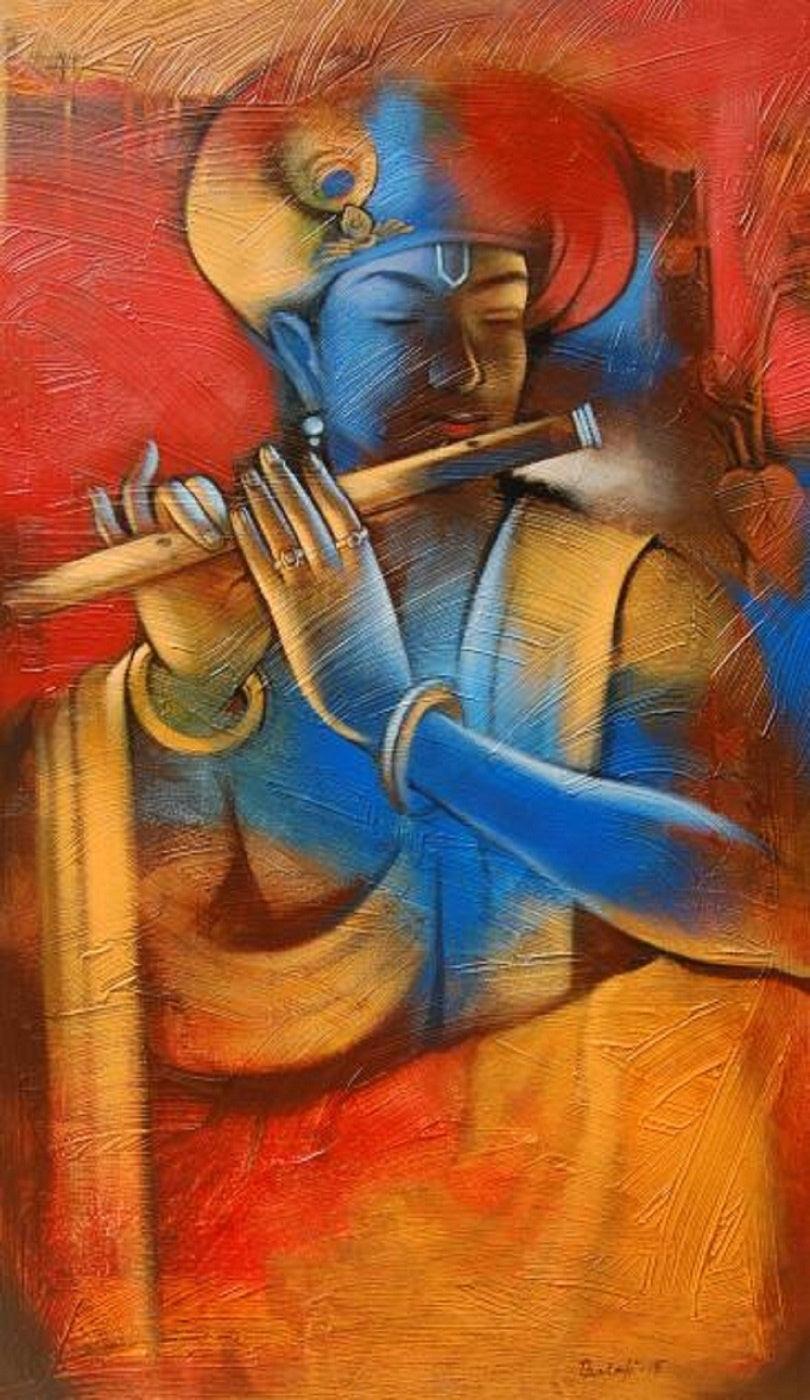
Krishna Playing Flute 1 (Divine Melody)
Artzolo
₹50,000
★ 4.0 (5)
Krishna Playing Flute 5 (Enchanting Flute)
Artzolo
₹70,000
★ 4.0 (14)

Krishna Playing Flute 3 (Melody of the Divine)
Artzolo
₹60,000
★ 5.0 (6)

Krishna Playing Flute 7
Artzolo
₹60,000
★ 4.0 (9)

Radha Krishna 2
Artzolo
₹50,000
★ 5.0 (11)

Krishna Playing Flute 2 (Serenade of the Soul)
Artzolo
₹40,000
★ 5.0 (7)
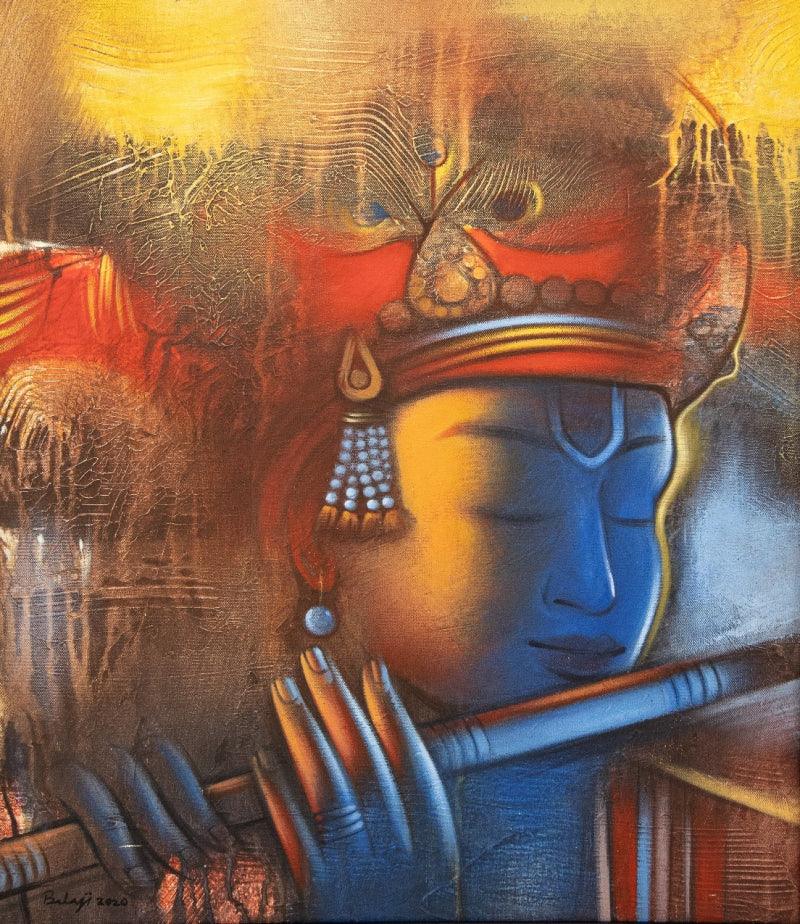
Krishna 2 (Flute Meditation)
Artzolo
₹0
out of stock
★ 5.0 (13)

Radha Krishna 1
Artzolo
₹70,000
★ 5.0 (7)