Radha Krishna 2
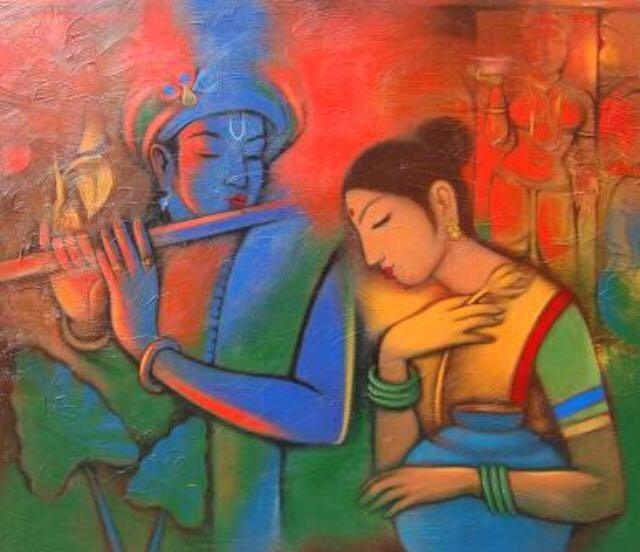
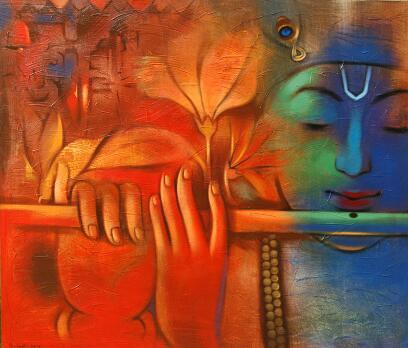
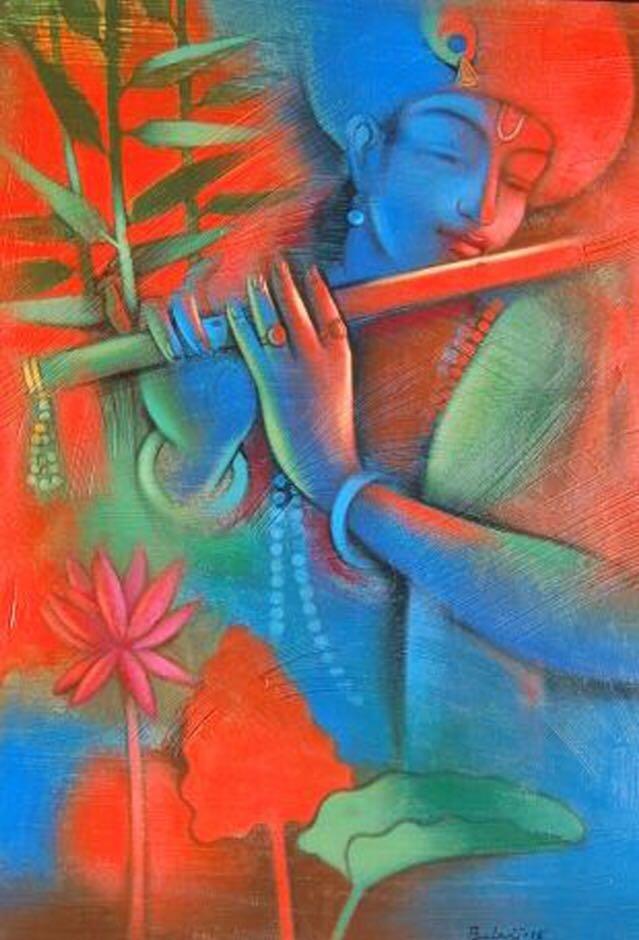
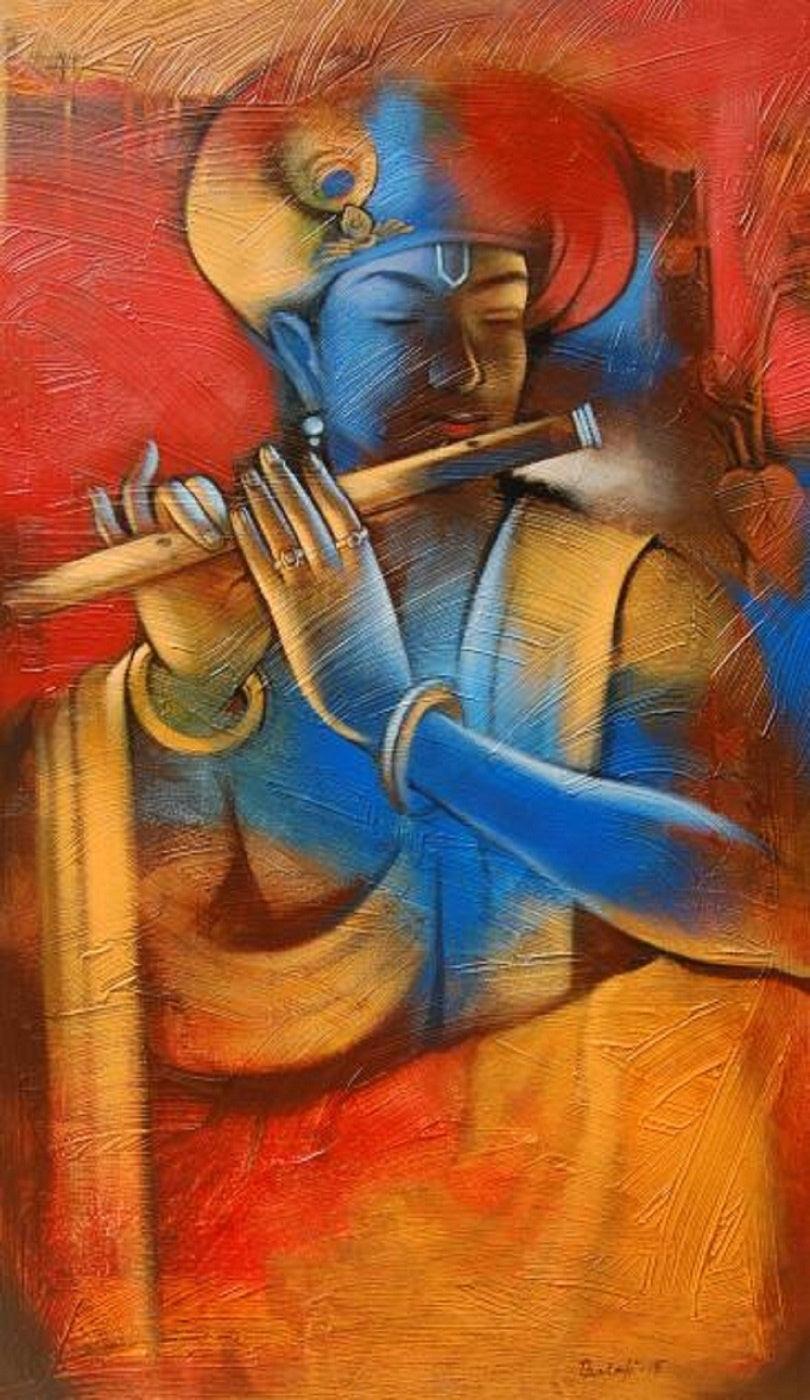
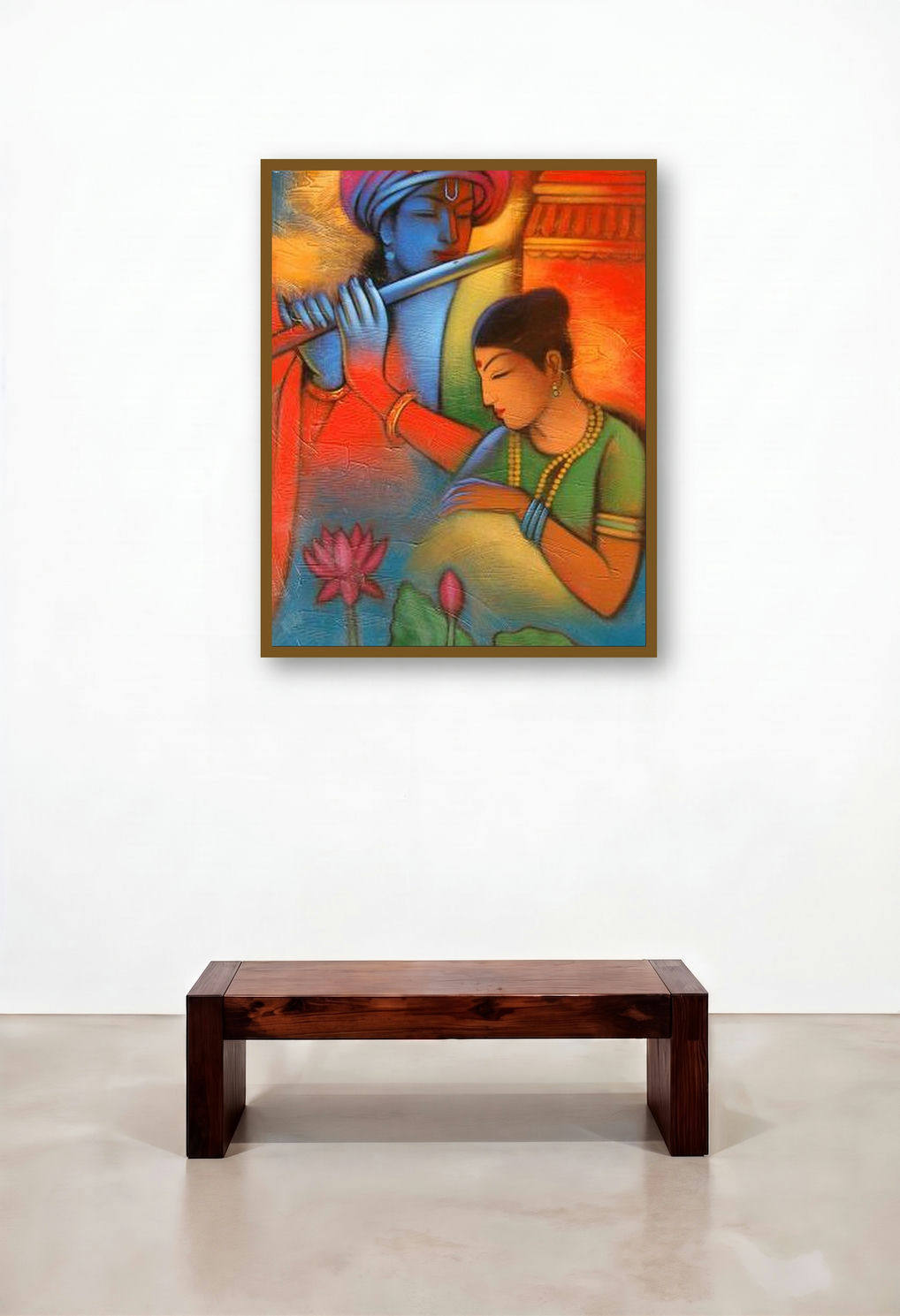
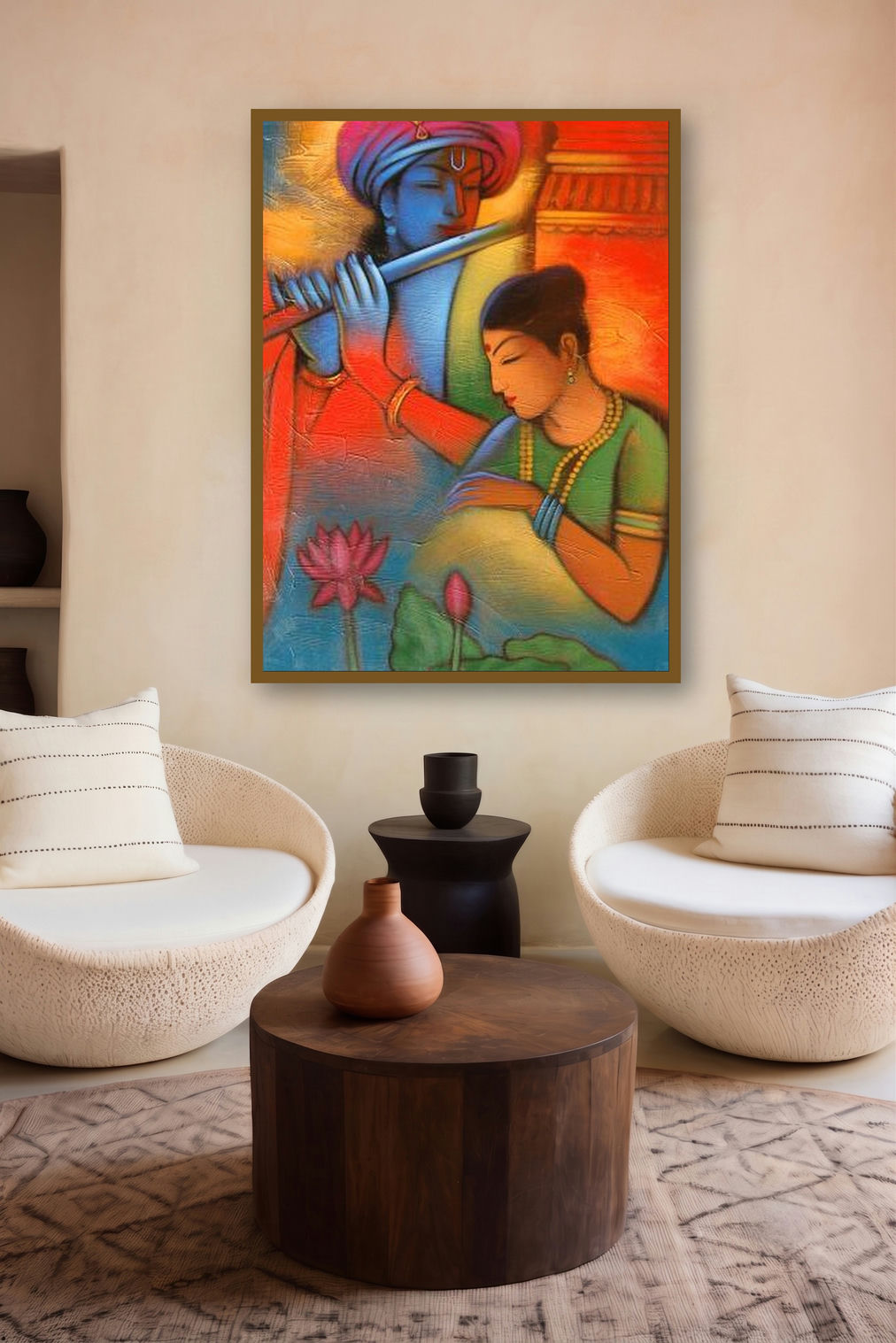
The painting stages an intimate devotional quietude: the blue-skinned flautist, crowned with a jewel-toned turban, becomes a vertical axis of stillness while the woman leans into him, her closed eyes translating sound into inward surrender. Warm saffron and ember reds glow like sanctified air, pressing against the cooler blues and greens so that longing and solace coexist in a single breath of color. The diagonal flute acts as a gentle threshold between the worldly and the spiritual, guiding the viewer from the lotus—an emblem of awakening—toward a tenderness that feels both human and mythic. In its softened contours and tactile surface, the work suggests that love here is not possession but refuge, a melody capable of holding time in suspension.
Delivery
You may also like