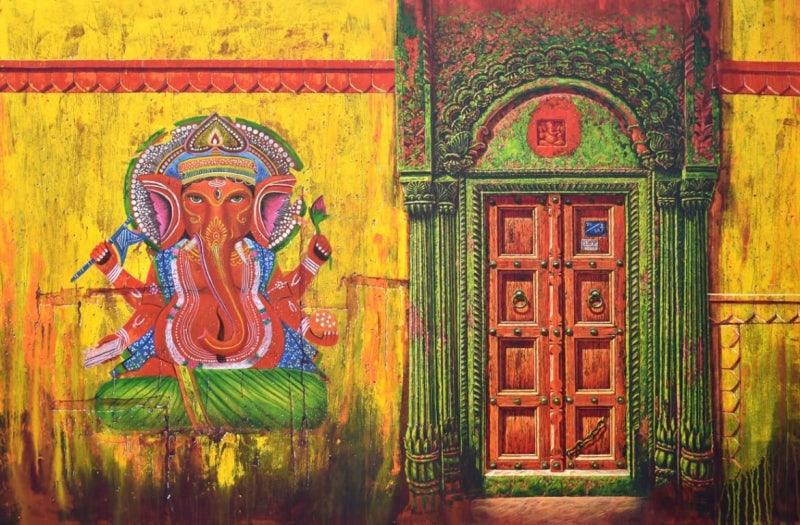
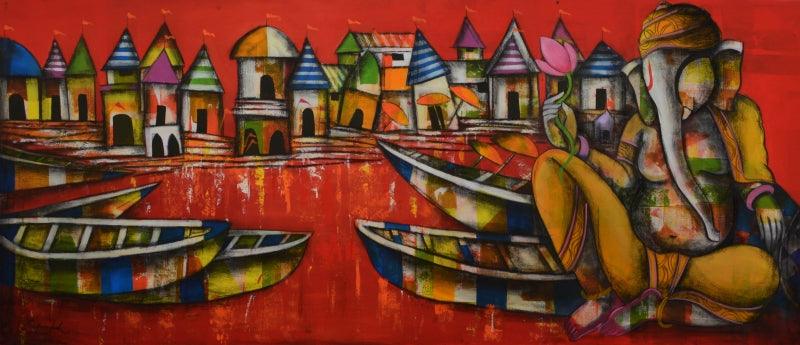
Varanasi 19 (Divine Protection)
₹270,000
Out of stock · ★ 4.0 (14)checking live price…
Size
48x72Type
OriginalMaterial
CanvasSet against a sun-baked wall of ochres and turmeric yellows, the vivid Ganesha emerges like a protective apparition—both intimate and monumental—his reds and blues vibrating with devotional immediacy. The composition pivots between the painted deity and the heavily ornamented doorway, a quiet dialogue between the porous realm of faith and the sealed threshold of the everyday. Weathered textures and dripping patina suggest time’s slow erasure, yet the icon persists, implying that sanctity is not housed behind doors but inscribed onto public surfaces. In this tension of openness and enclosure, the work reads as a meditation on guardianship, passage, and the enduring choreography of belief in lived urban space.
Delivery
You may also like
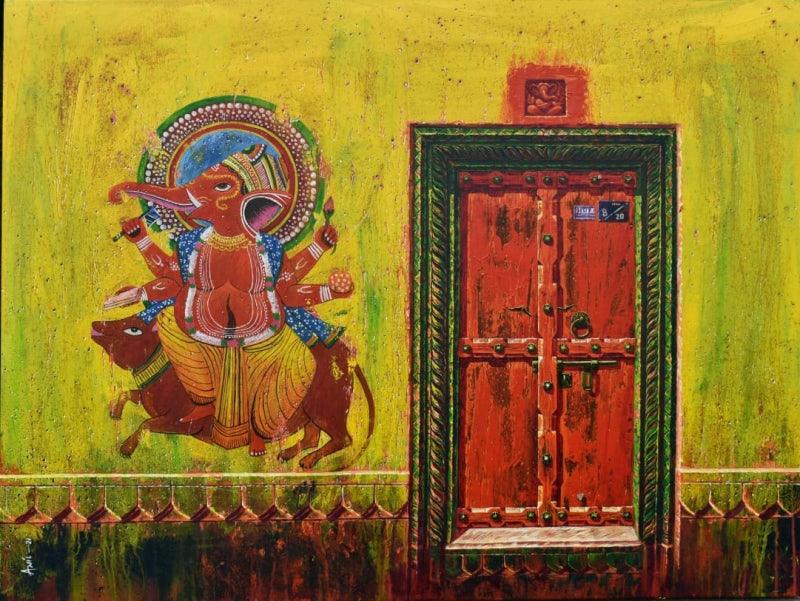
Lord Ganesha (Divine Protection)
Artzolo
₹145,000
out of stock
★ 4.0 (10)
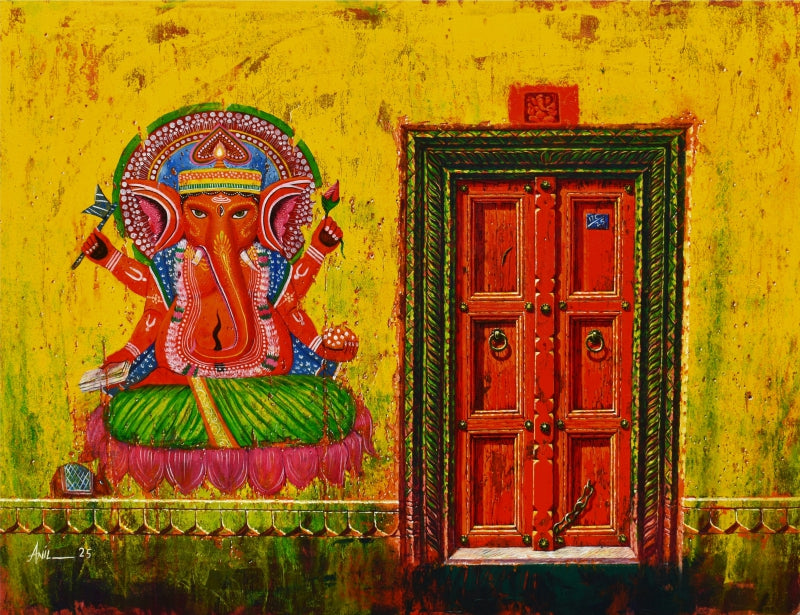
Varanasi 62 (Ganesha)
Artzolo
₹180,000
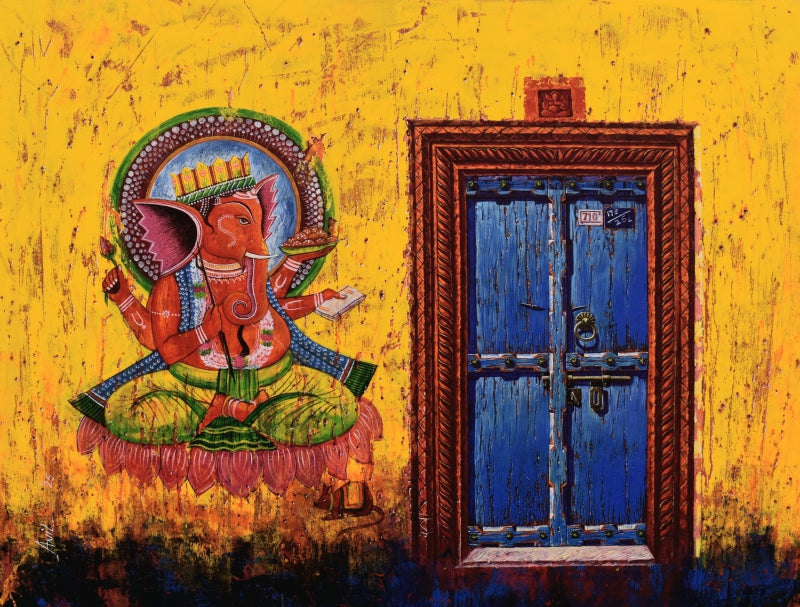
Varanasi 67 (Ganesha)
Artzolo
₹180,000
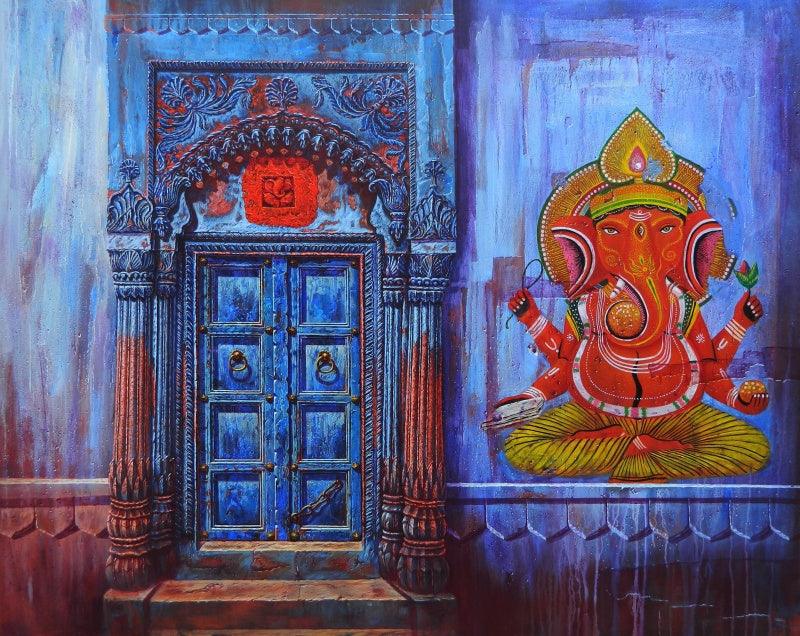
Door (Ganesha's Blue Sanctuary)
Artzolo
₹200,000
out of stock
★ 4.0 (13)
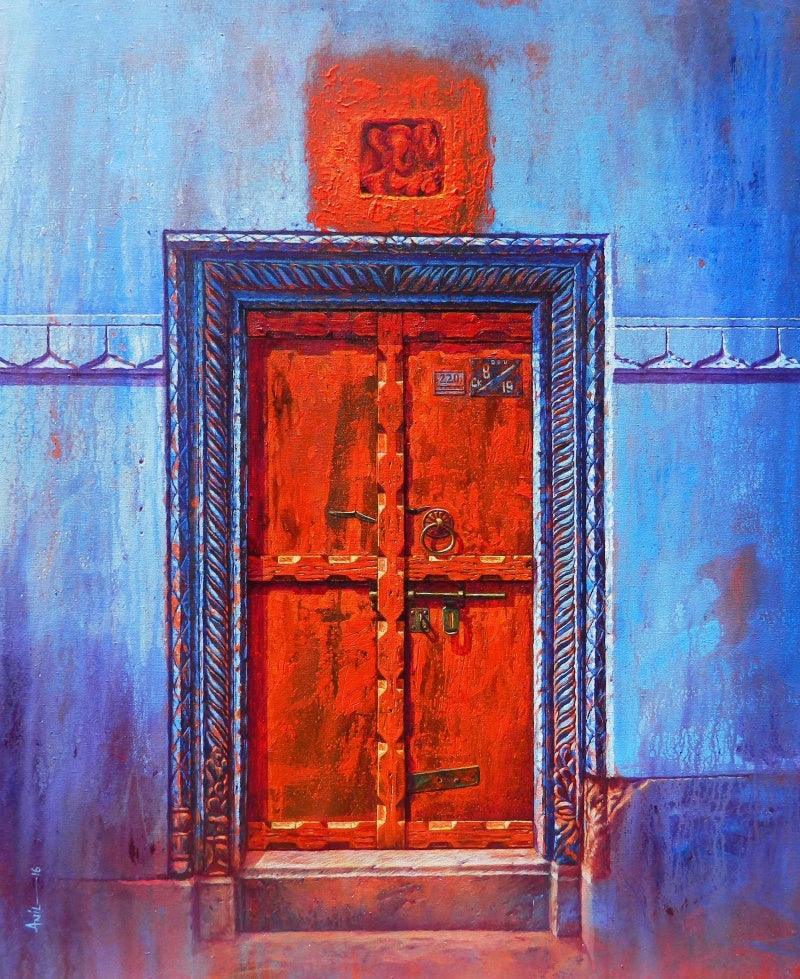
Varanasi 3 (Passage Through Blue)
Artzolo
₹115,000
★ 4.0 (10)
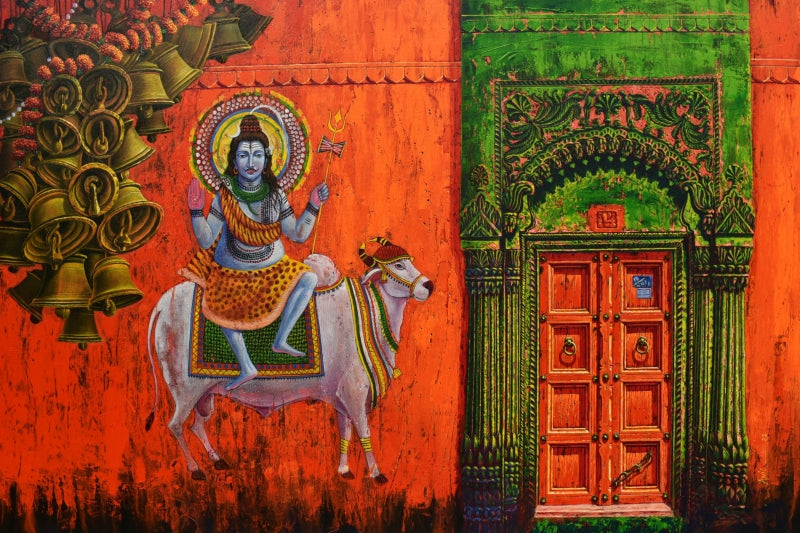
Varanasi 52
Artzolo
₹360,000
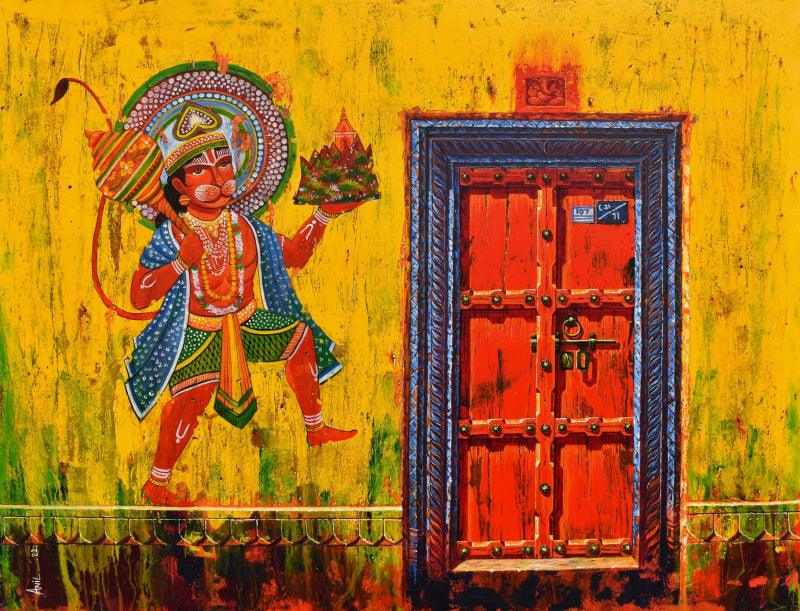
Door 30 (Hanuman's Vigil)
Artzolo
₹145,000
out of stock
★ 4.0 (5)
Ganesha In Banaras 2022 (Divine Wisdom Ganesha by the River)
Artzolo
₹109,000
out of stock
★ 5.0 (7)