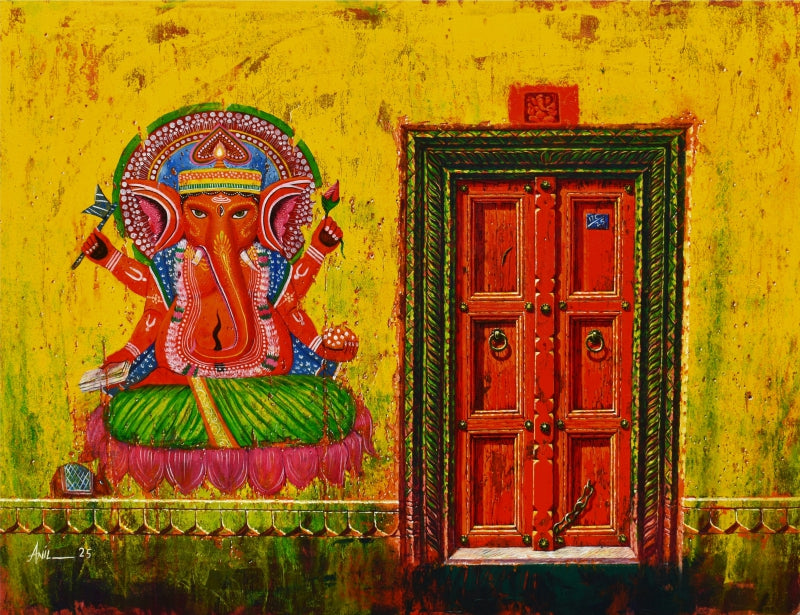
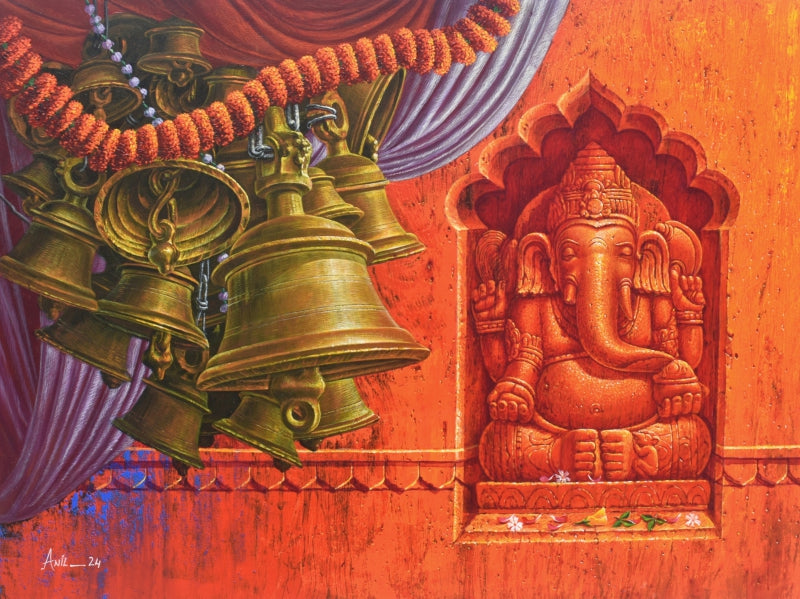
Varanasi 62 (Ganesha)
₹180,000
● In stockchecking live price…
Size
36x48Type
OriginalMaterial
CanvasSet against a weathered ochre wall, the radiant figure of Ganesha blooms like a living mural—its saturated reds, greens, and jewel-like ornamentation insisting on presence while the surrounding patina speaks of time, dust, and daily devotion. Opposite, the scarlet door stands as a disciplined geometry of thresholds and permissions, its metal rings and bolt quietly echoing ritual hardware, suggesting that faith is both an opening and a guarded interior. The composition’s lateral tension—icon on one side, passage on the other—creates a dialogue between the seen and the sought, where auspiciousness becomes not merely an image but a protective atmosphere that sanctifies the act of crossing.
Delivery
You may also like
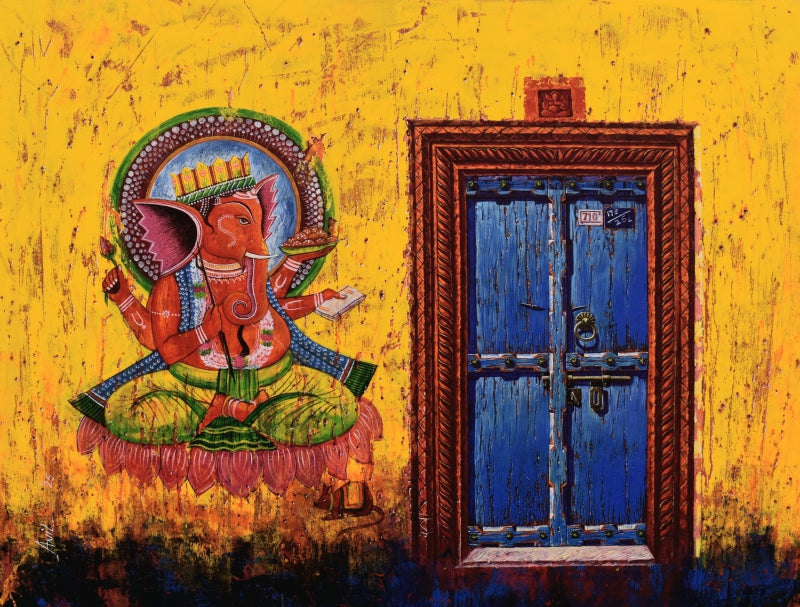
Varanasi 67 (Ganesha)
Artzolo
₹180,000
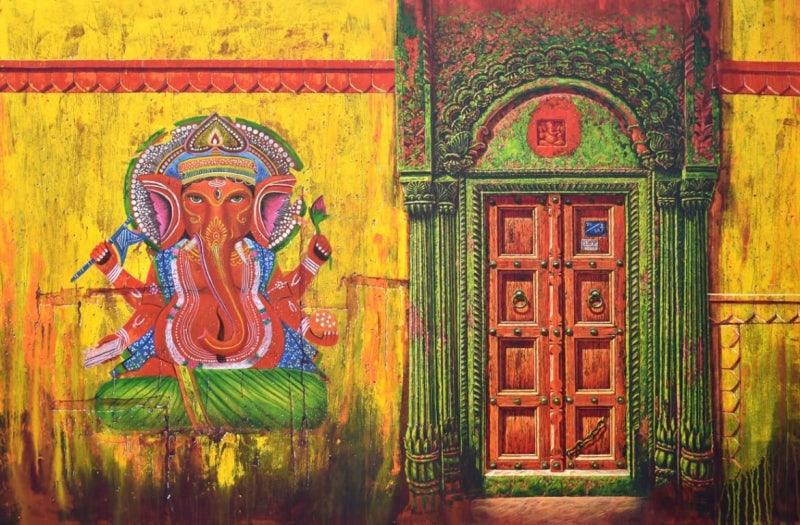
Varanasi 19 (Divine Protection)
Artzolo
₹270,000
out of stock
★ 4.0 (14)
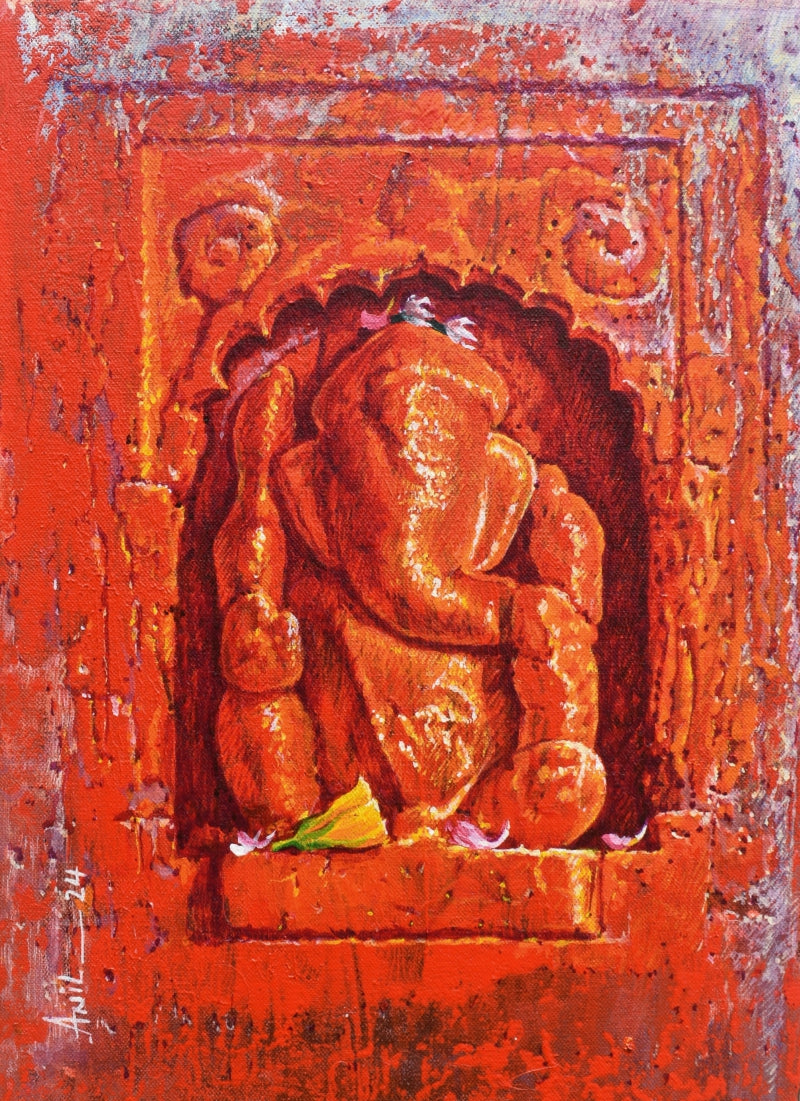
Aradhana 70 (Ganesha)
Artzolo
₹22,500
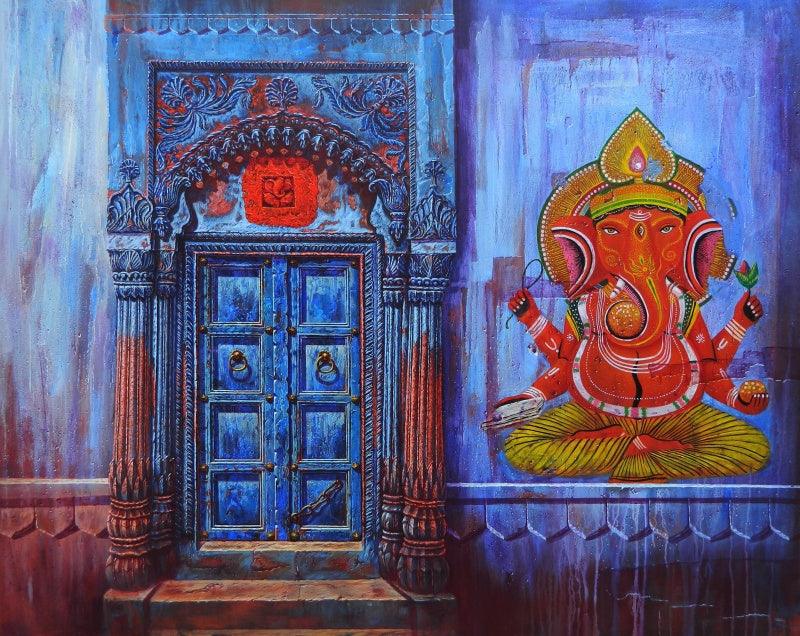
Door (Ganesha's Blue Sanctuary)
Artzolo
₹200,000
out of stock
★ 4.0 (13)
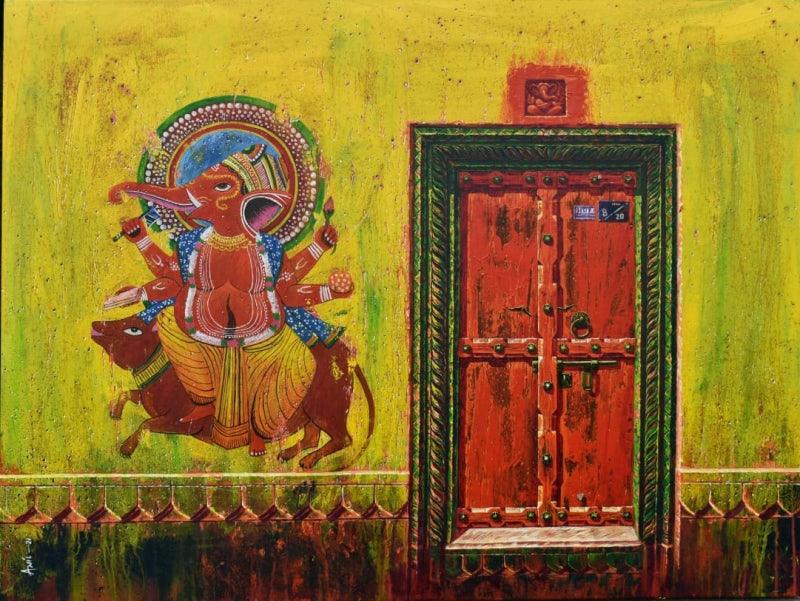
Lord Ganesha (Divine Protection)
Artzolo
₹145,000
out of stock
★ 4.0 (10)
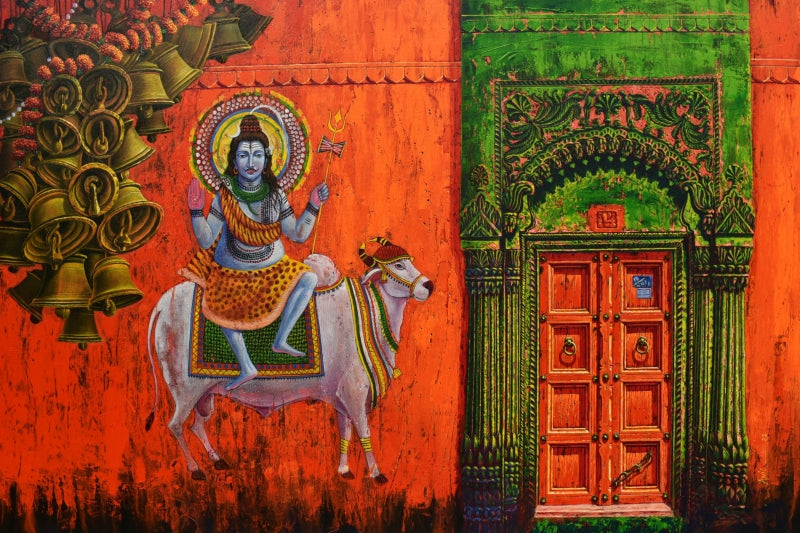
Varanasi 52
Artzolo
₹360,000
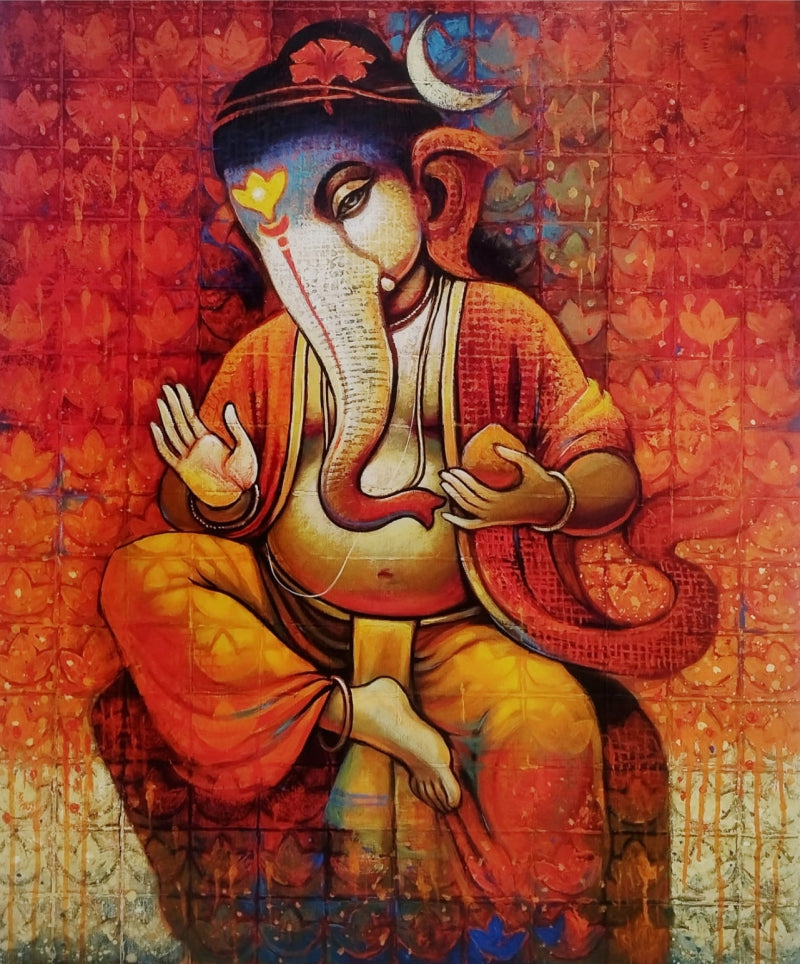
Ganesha
Artzolo
₹90,000
Aradhana 79 (Ganesha)
Artzolo
₹180,000