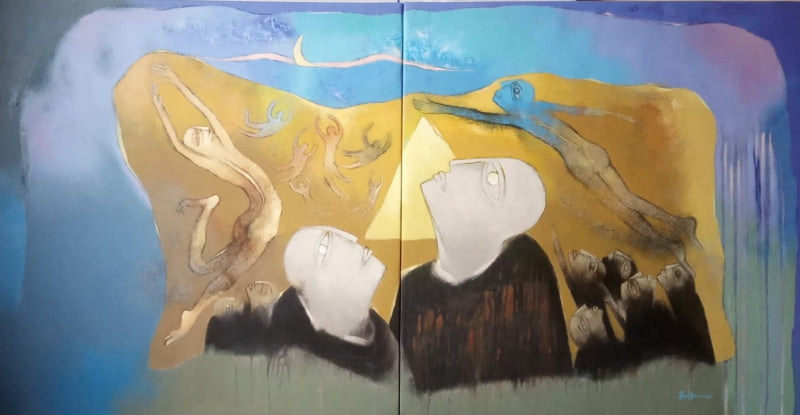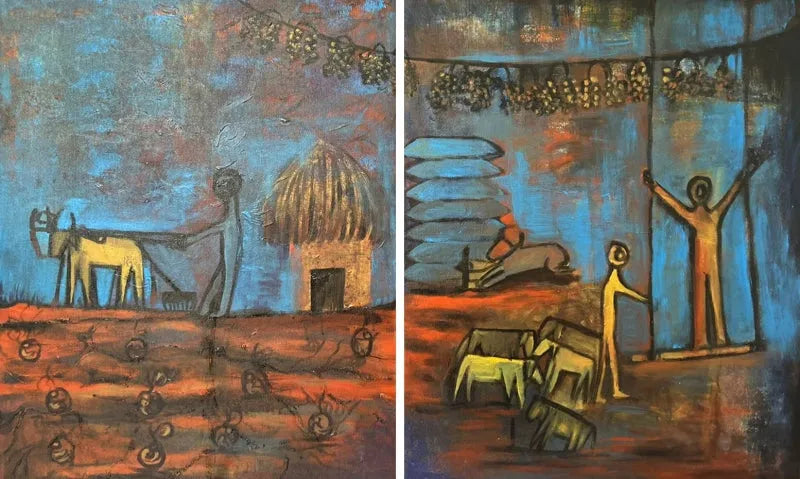
Untold Stories 2 (Diptych) (Rural Rhythms)
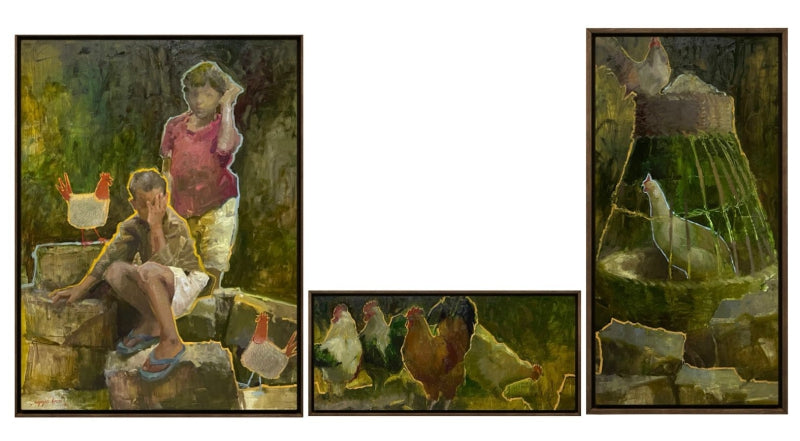
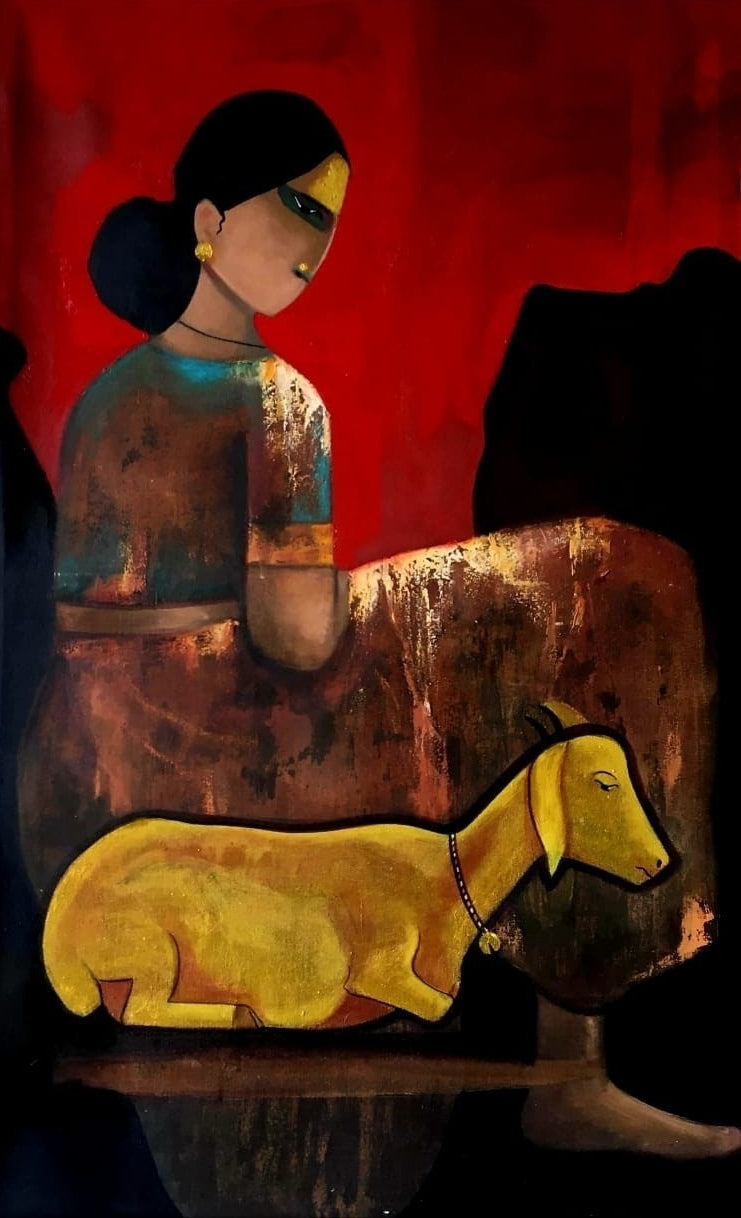
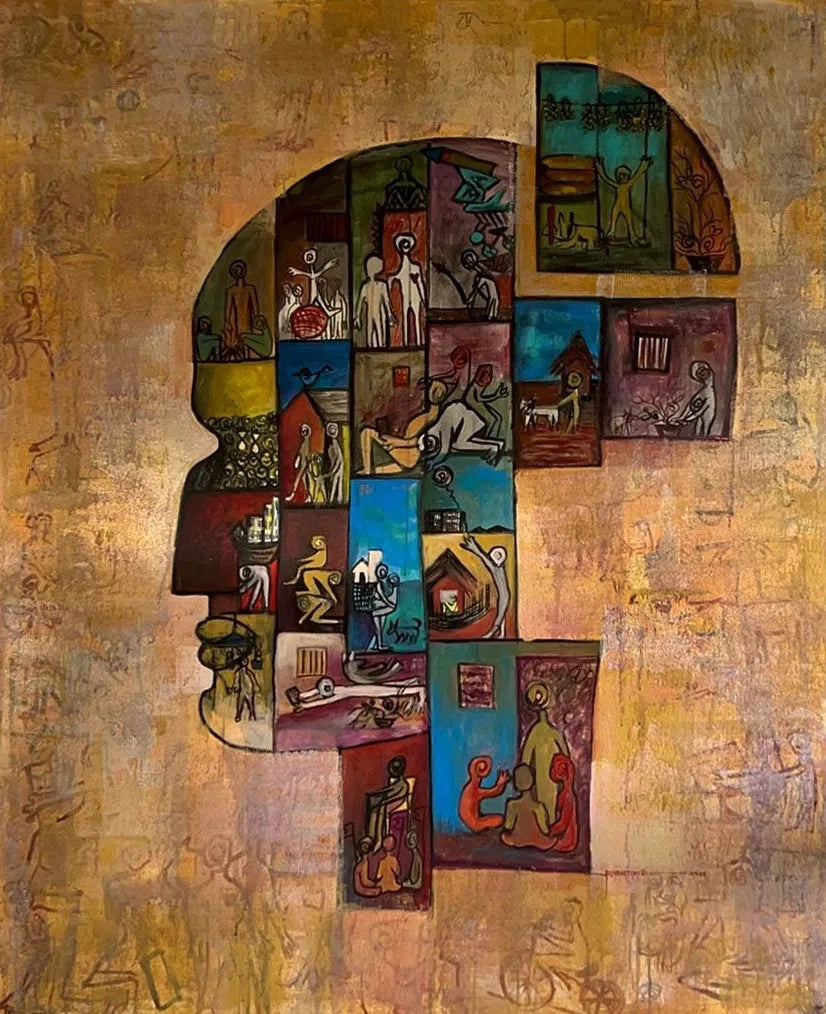
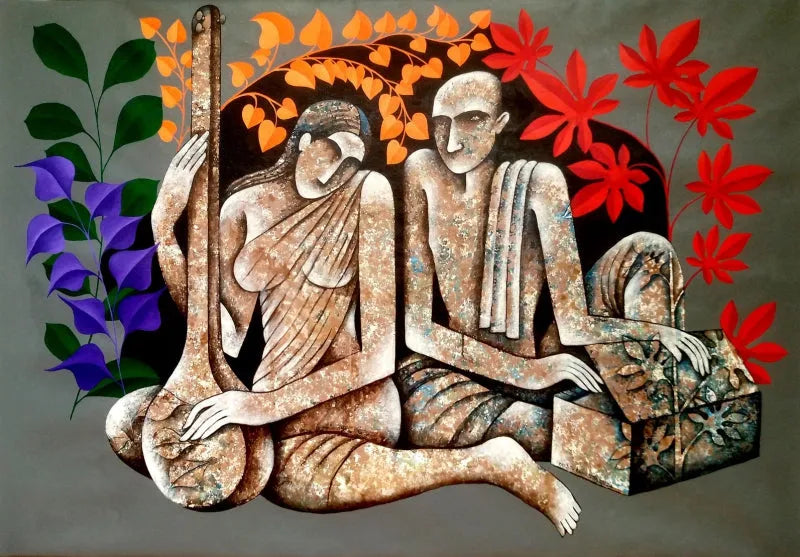
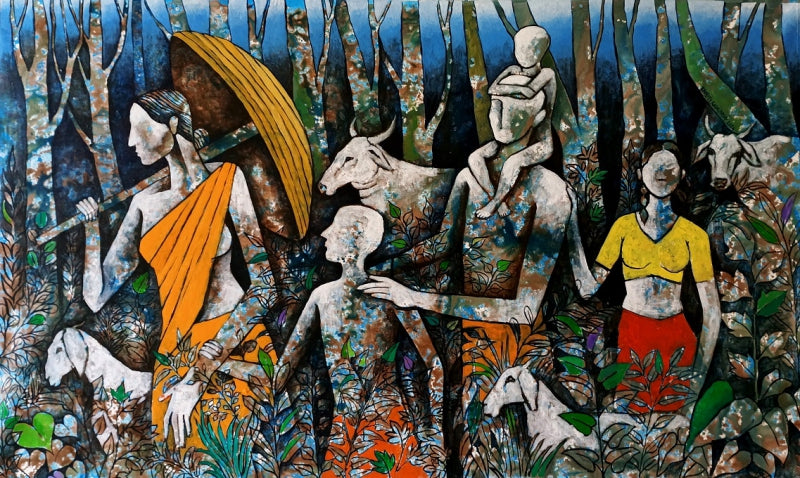
Set against a bruised, twilight-blue atmosphere, the work reads like a remembered village—its figures reduced to archetypal silhouettes, yet charged with quiet ceremony. The composition divides lived experience into two registers: on one side, the intimate labor of tending animal and home; on the other, the communal space where bodies lift upward, as if calling to harvest, prayer, or resilience itself. Rusted reds and soot-dark outlines ground the scene in earth and smoke, while the scattered, glowing dots above act like suspended seeds or constellations—suggesting that hope is not an escape from hardship, but something cultivated within it. The painterly abrasion and simplified forms turn narrative into myth, allowing everyday survival to assume the dignity of a rite.
Delivery
You may also like