Yeh Kaun Sa Modh Hai Umar Ka 12
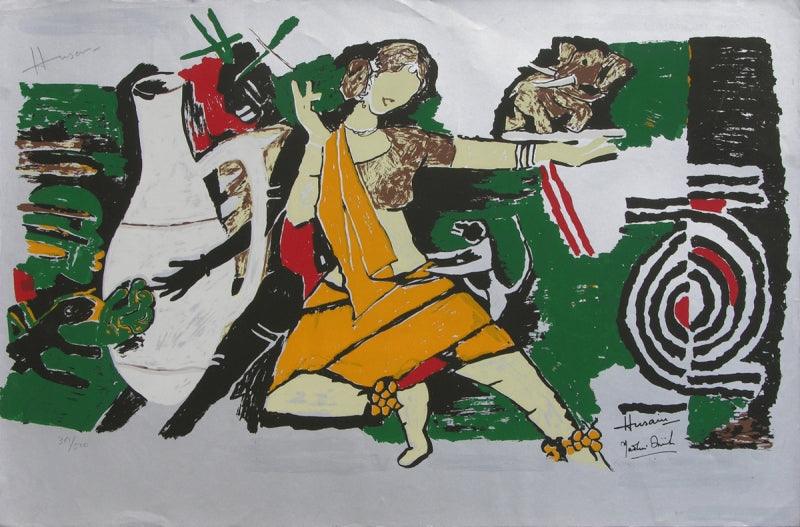
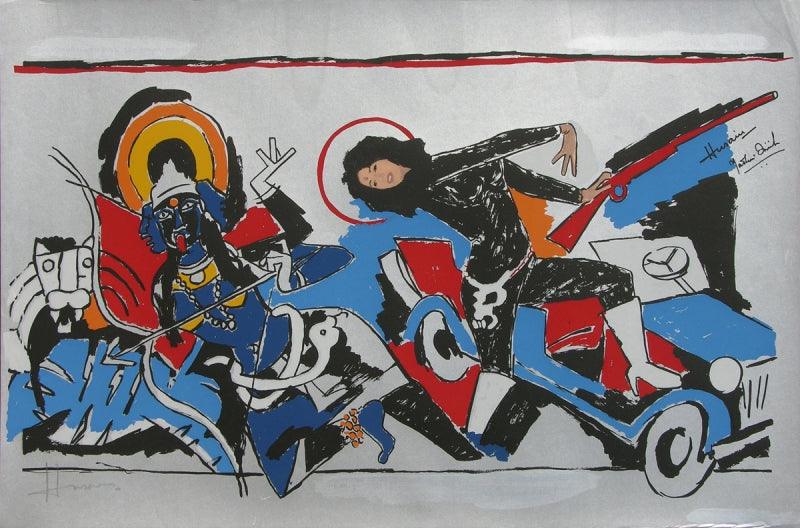
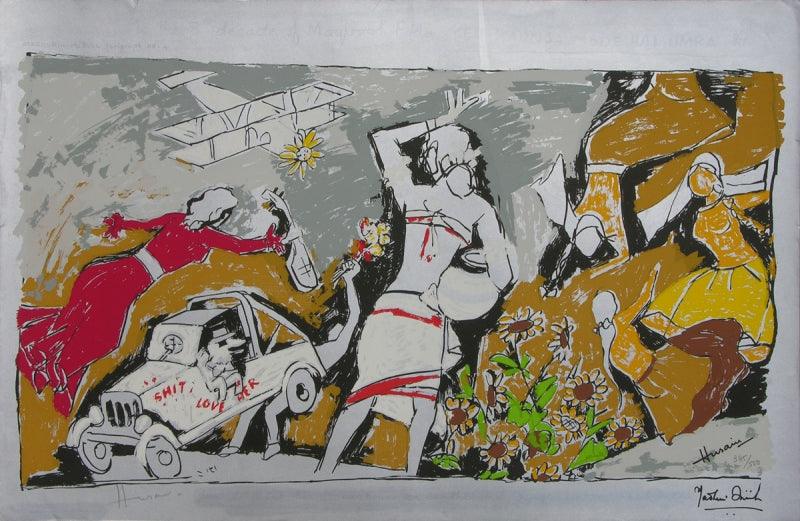
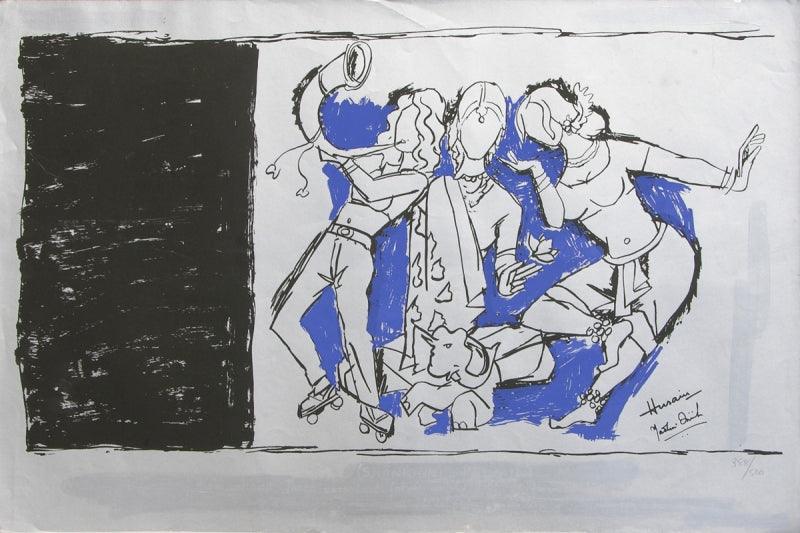
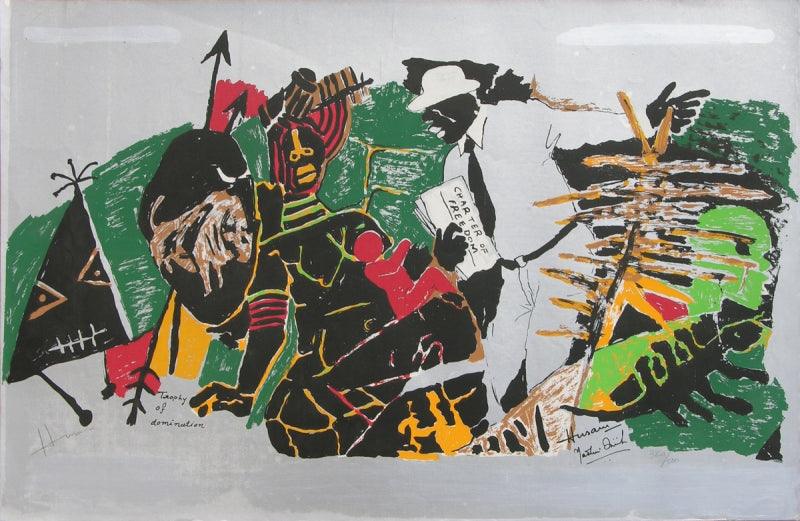
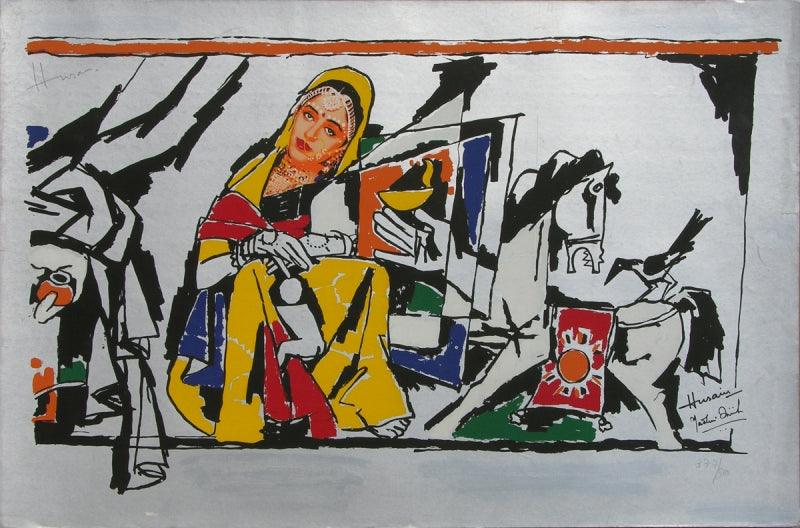
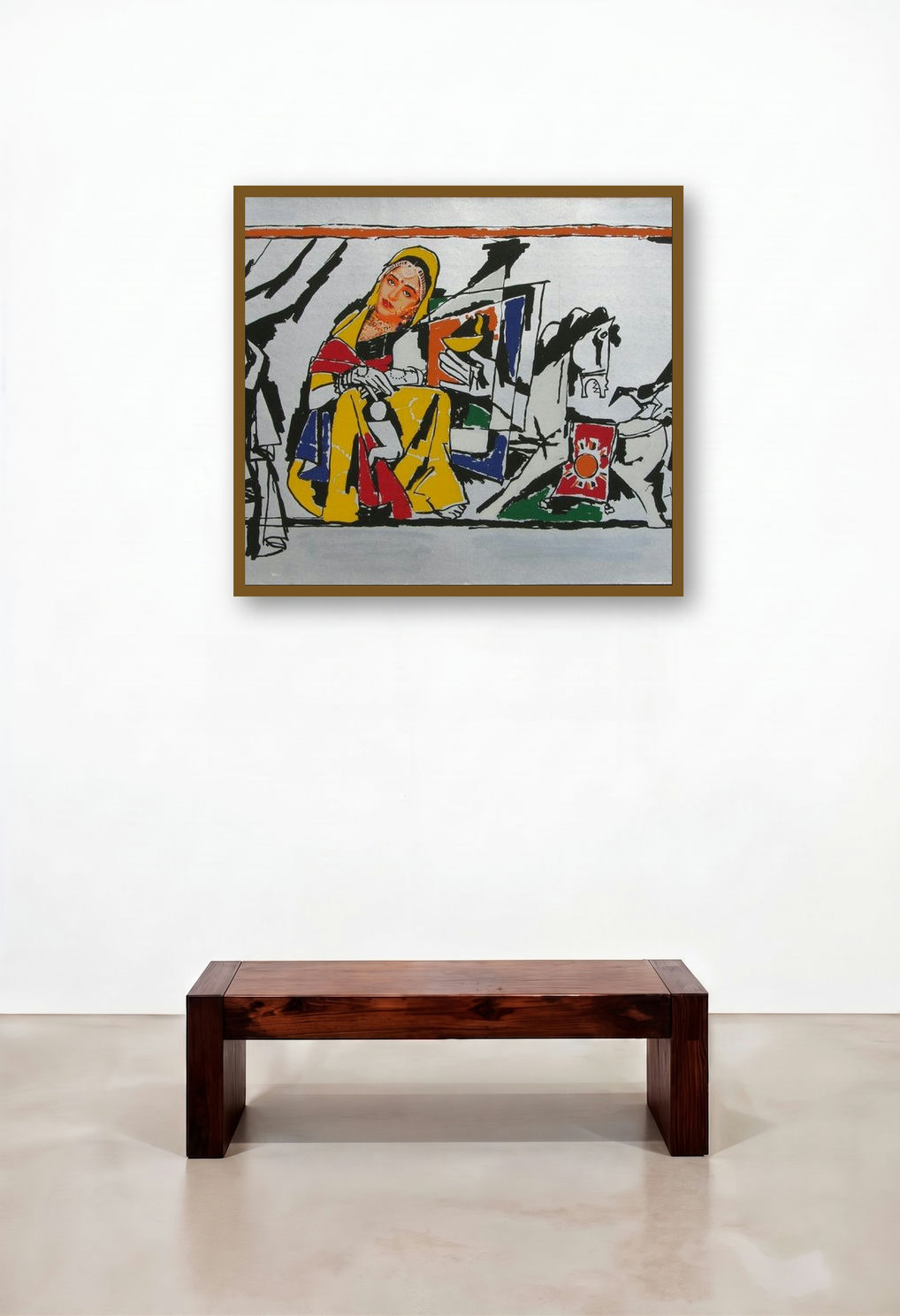
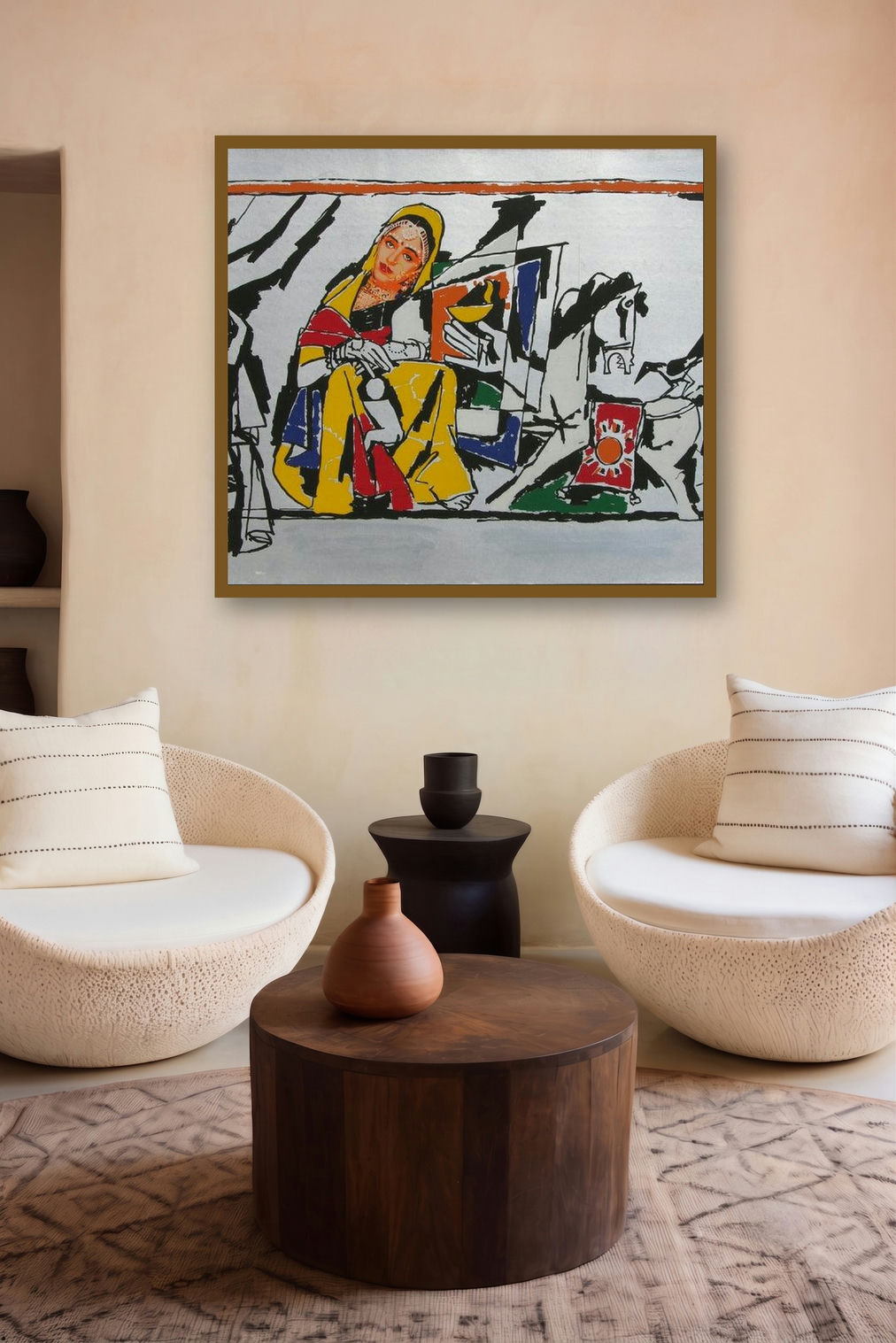
This composition stages a quiet, ornamented feminine presence against a fractured theatre of black calligraphic strokes, as if intimacy is being held together inside a world that keeps breaking into symbols. The woman’s saffron and gold drapery becomes the painting’s emotional hearth—warm, devotional, and human—while the surrounding angular figures and banner-like forms read as social noise, ritual signage, and memory fragments pressing in from the margins. Color is rationed like breath: concentrated around the face and cloth, it insists on dignity and interior life amid a deliberately unsettled space where narrative feels both folk and modernist. The work ultimately suggests a poetics of resilience—beauty not as decoration, but as a sustaining force that endures within disorder.
Delivery
You may also like