Bathing Time (The Cosmic Bath)
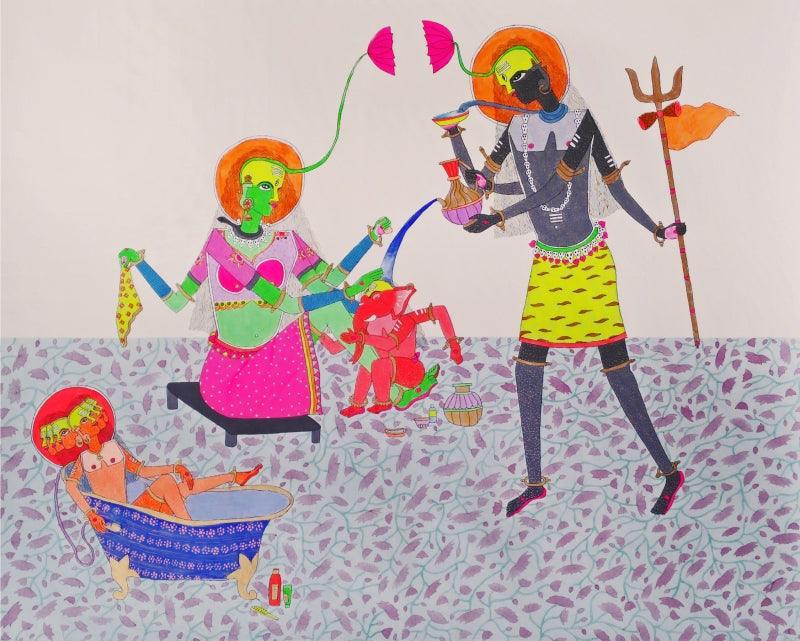
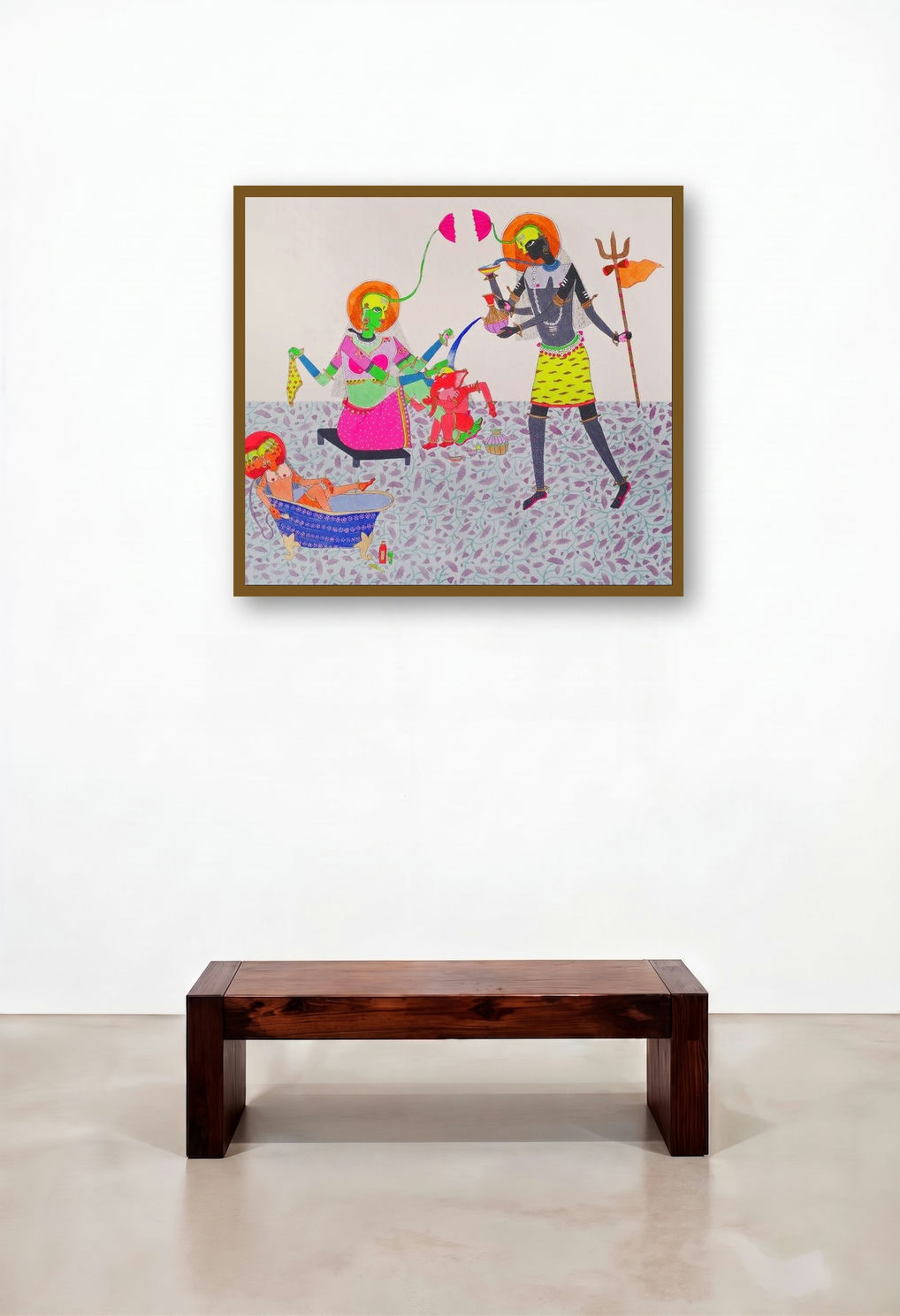
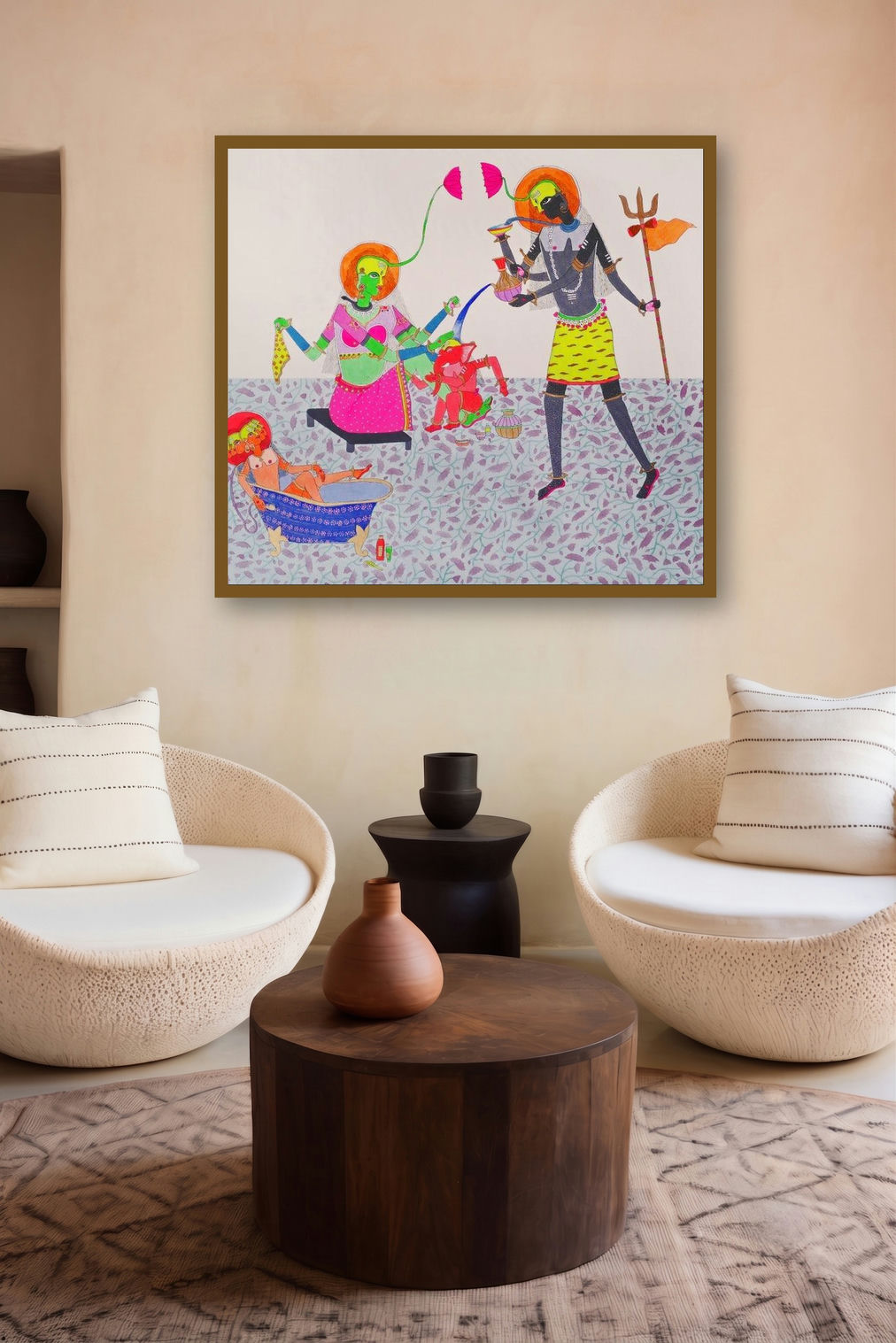
Set against an expansively quiet ground, the scene stages a domestic theatre where the sacred and the everyday trade places—haloes hover above figures who nonetheless bathe, offer, and gesture with the immediacy of lived ritual. Acid greens, hot pinks, and ember oranges strike like devotional pigments, flattening space into a patterned field where bodies read as icons and actions as symbols, each contour sharpened into deliberate sign. The trident, vessel, and small attendant figure form a subtle chain of power and care, suggesting that divinity here is not distant but negotiated through tenderness, service, and bodily vulnerability. In its playful disproportion and ornamental line, the work proposes a mythic intimacy: holiness as something worn lightly, performed daily, and continually remade within the home.
Delivery
You may also like