Divine Judgement (The Cosmic Judge)
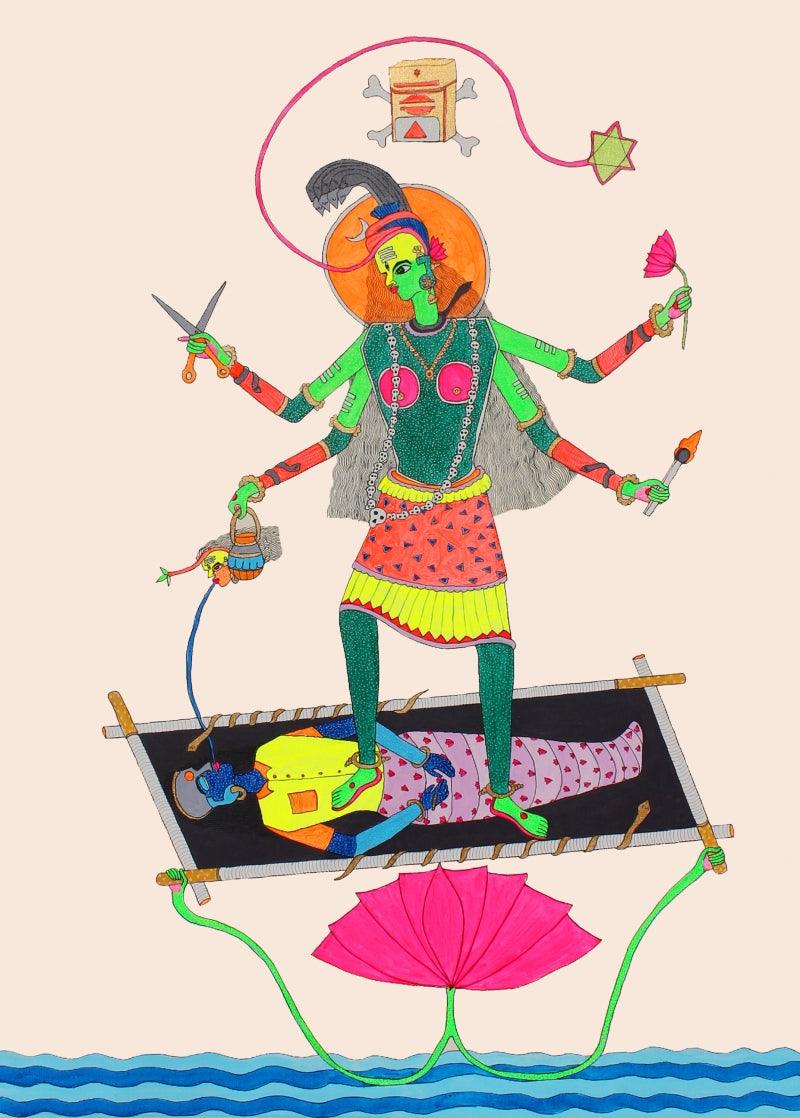
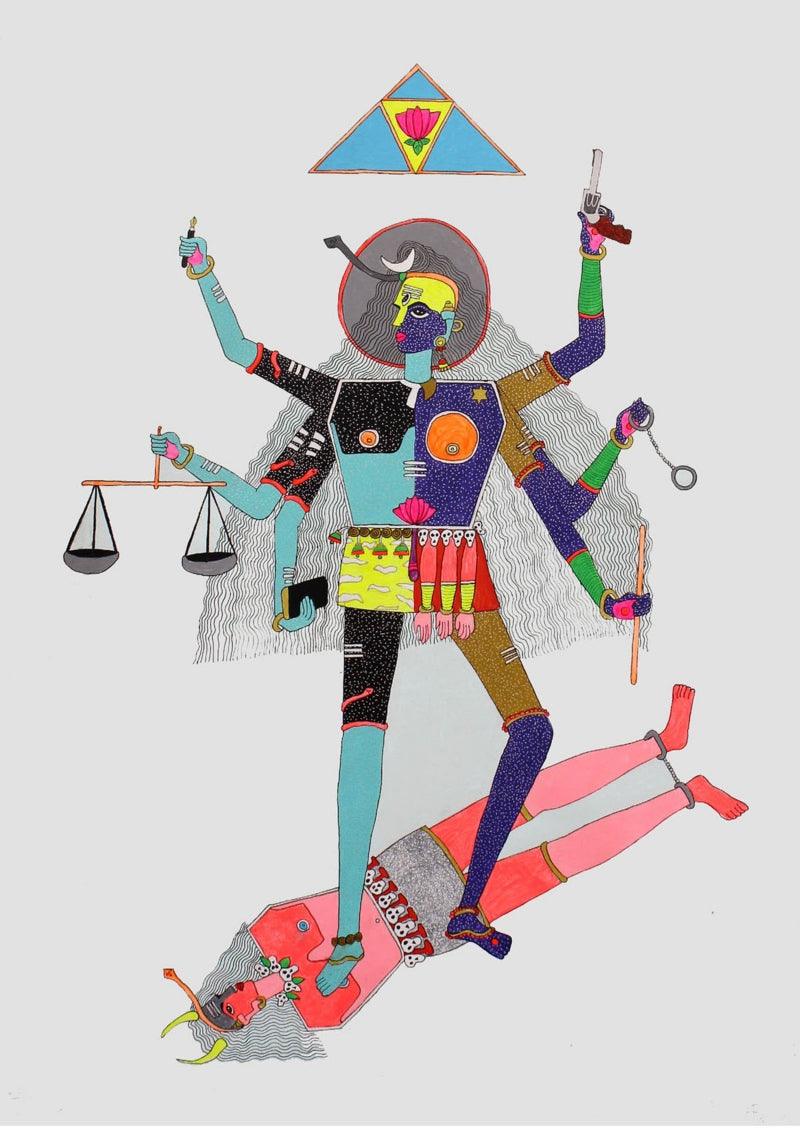
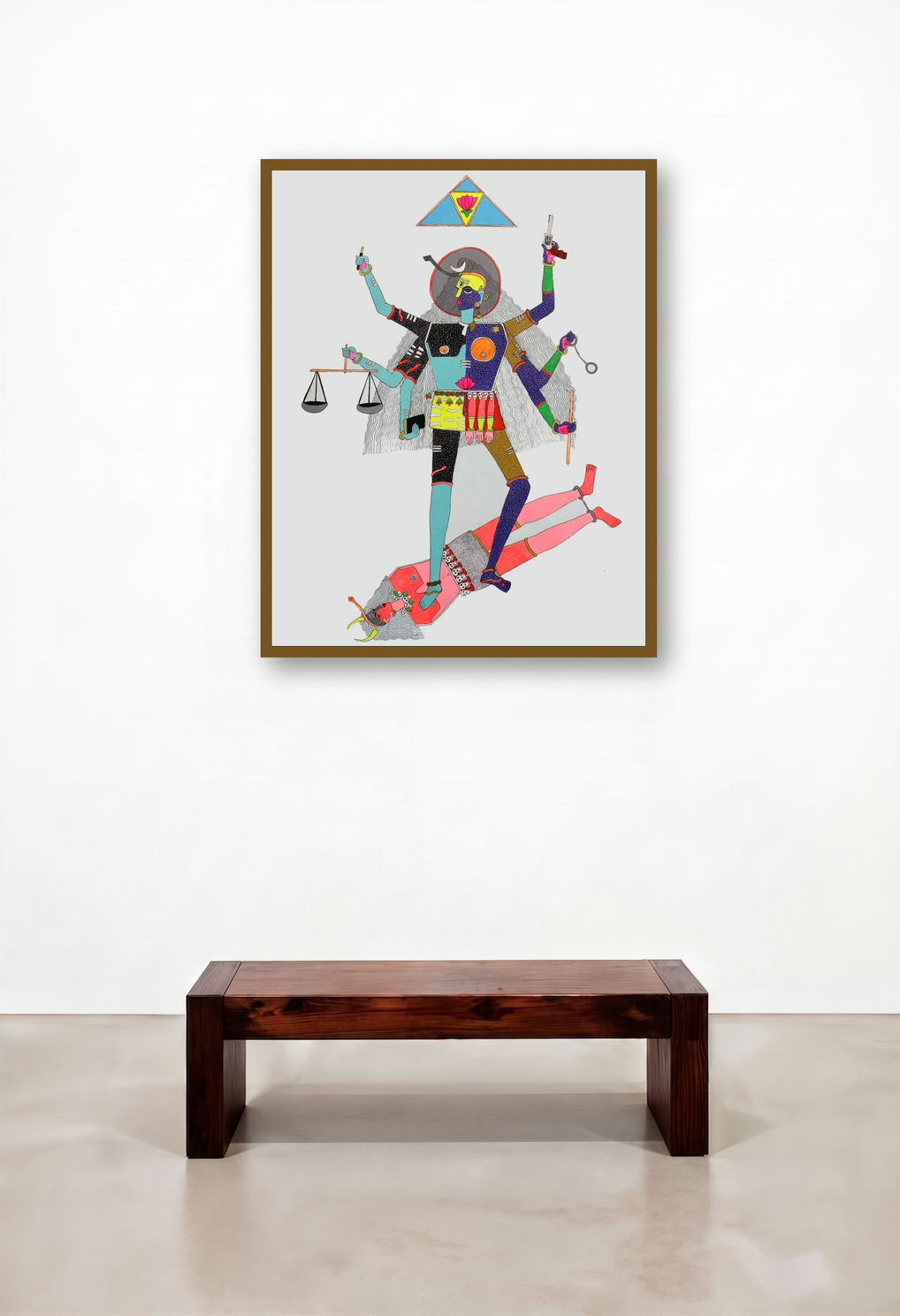
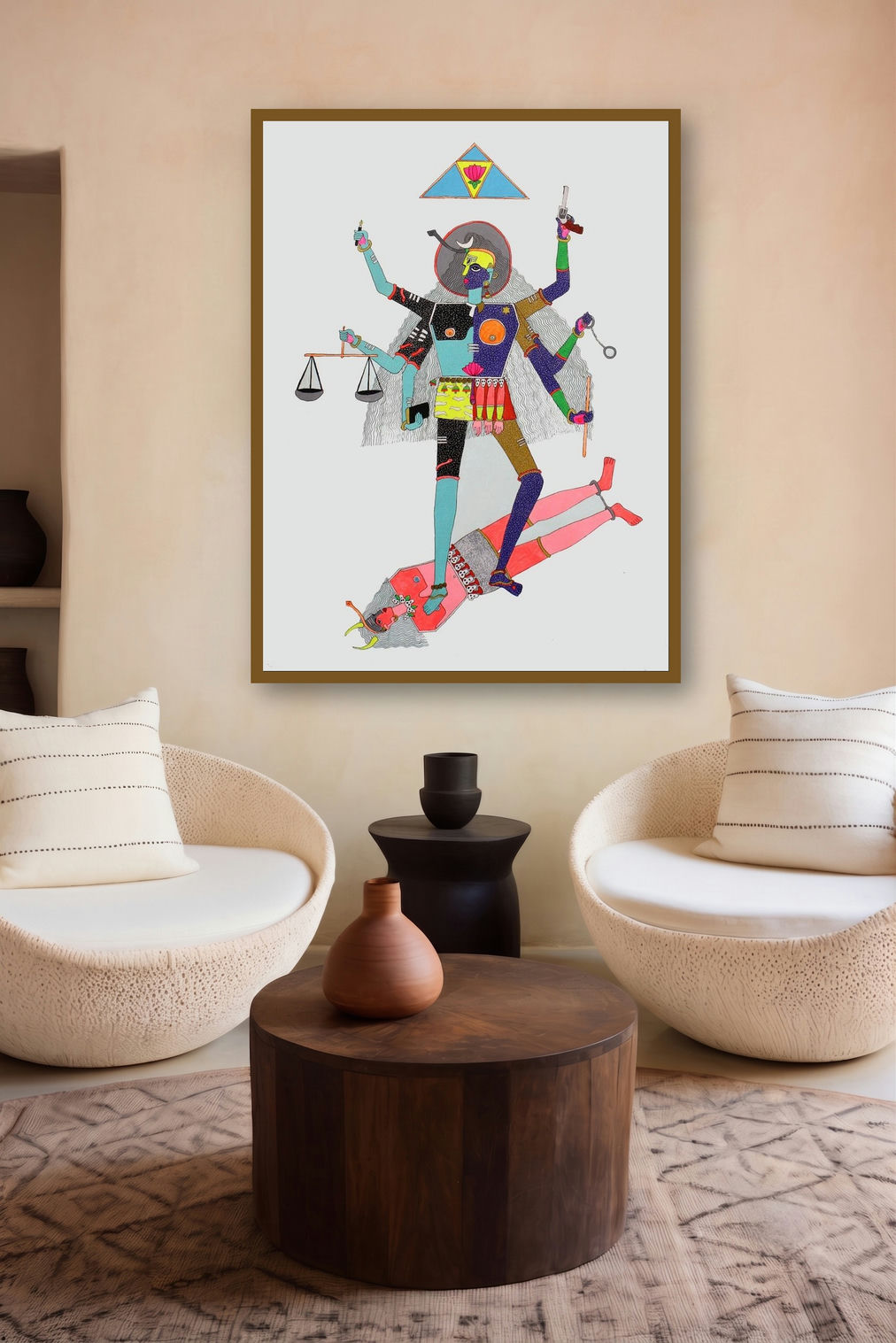
A many-armed, haloed figure stands like a living tribunal, its body assembled from contrasting fields of pattern and color that suggest identity as a patchwork of roles—protector, judge, captor, and witness. The spare white ground turns each object into a charged symbol: scales hover with fragile equilibrium, a raised blade and pistol sharpen the moral edge, while a dangling cuff hints at the thin line between order and coercion. Beneath the poised stance, the subdued body becomes both offering and consequence, transforming the scene into a meditation on power’s double nature—its promise of balance, and its appetite for sacrifice. The crisp contours and folk-like ornamentation lend the drama an iconographic clarity, as though myth has been drafted into the language of modern authority.
Delivery
You may also like