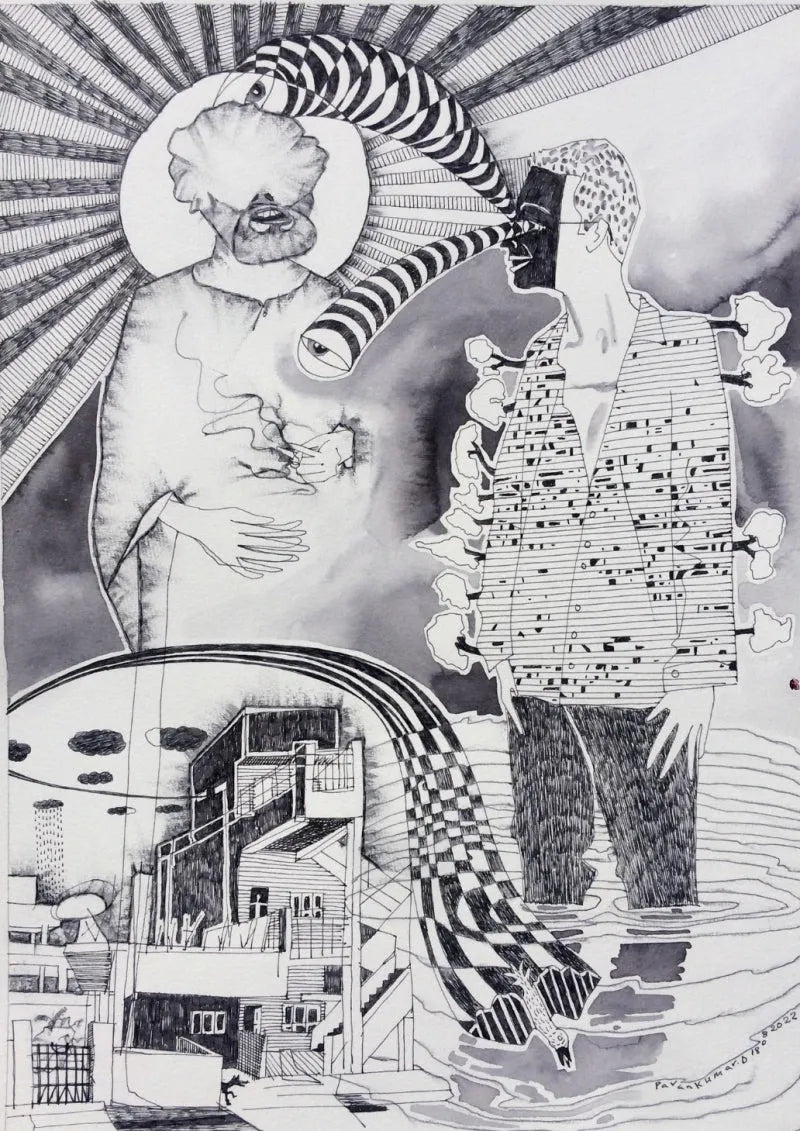
Looking At Brain Heart (A Cosmic Dialogue)
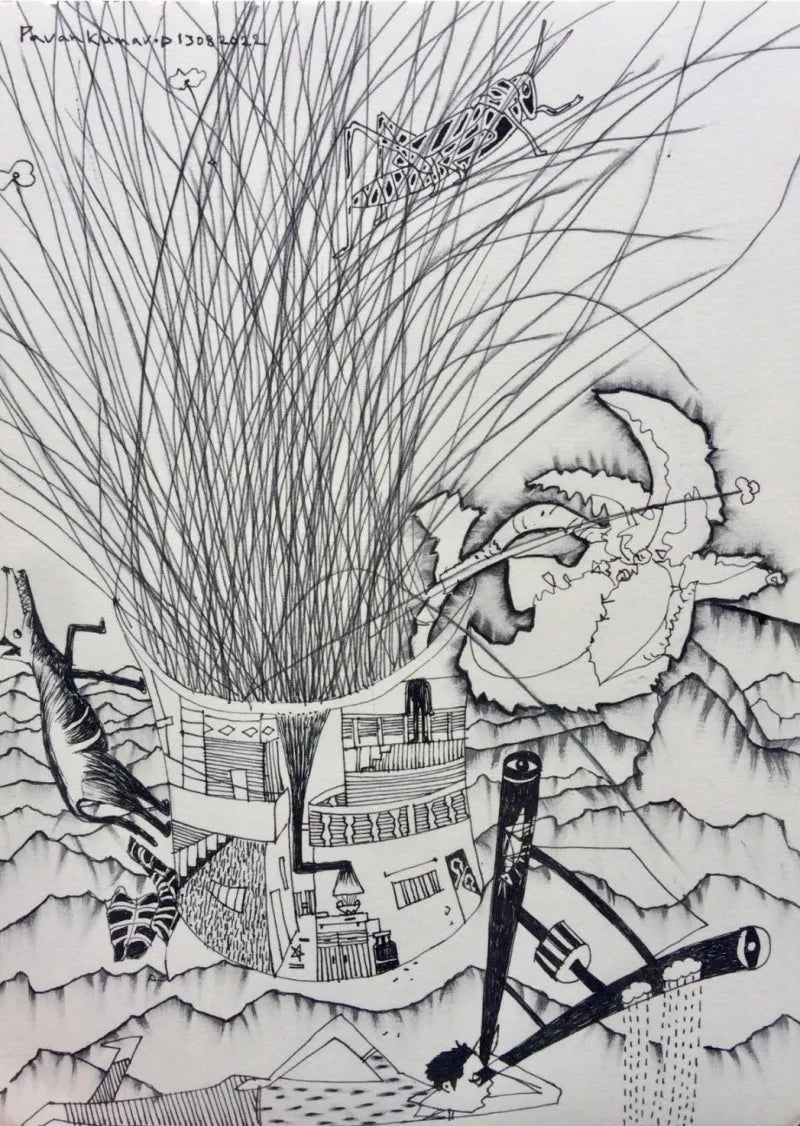
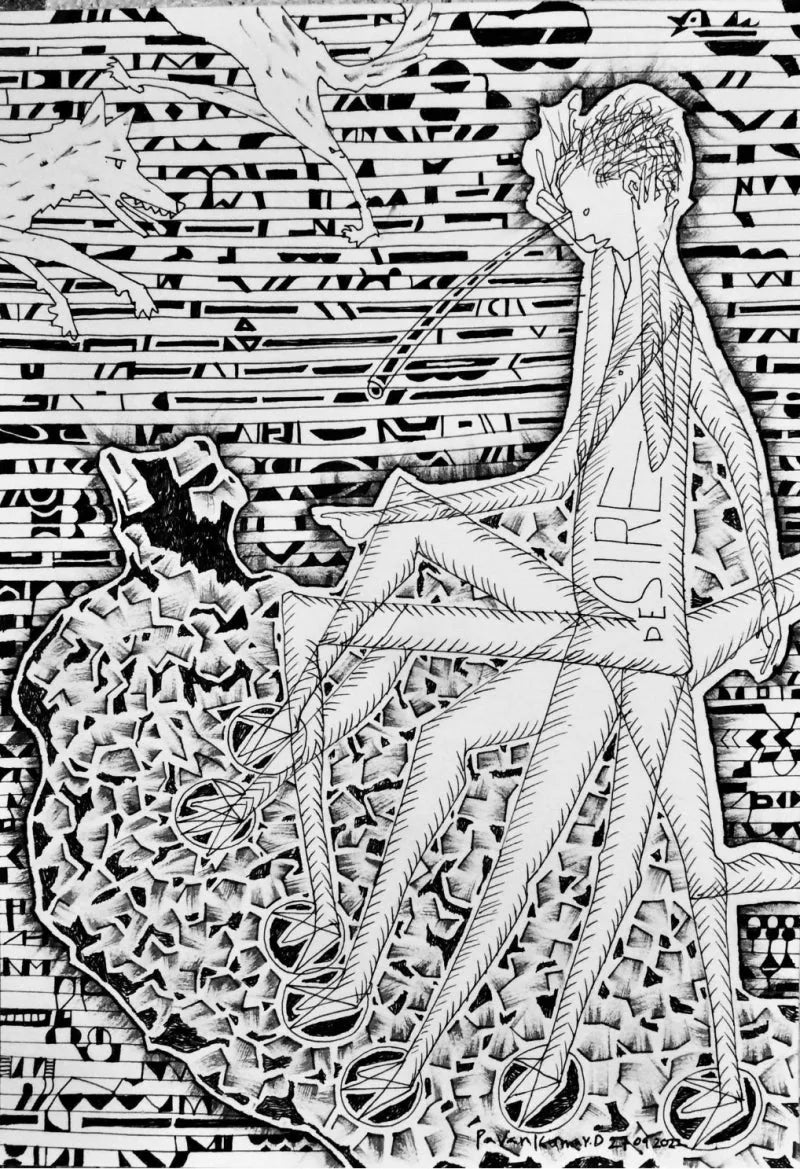
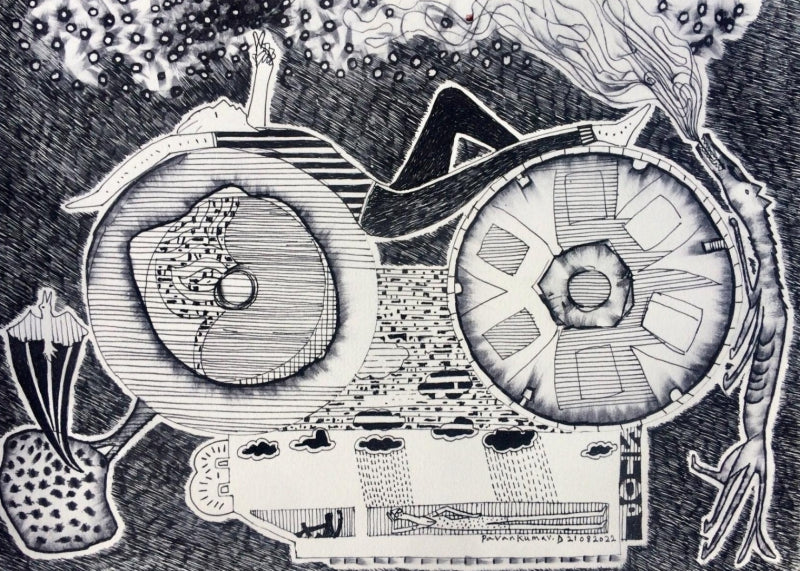
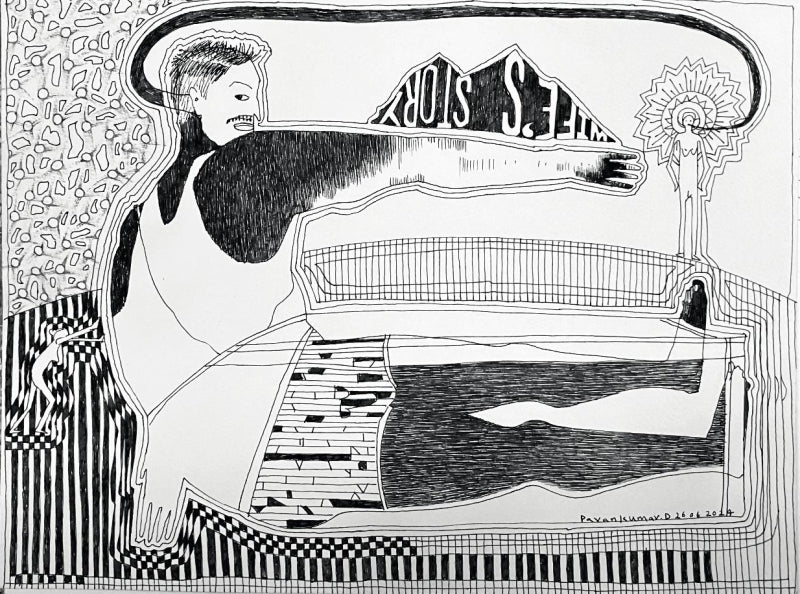
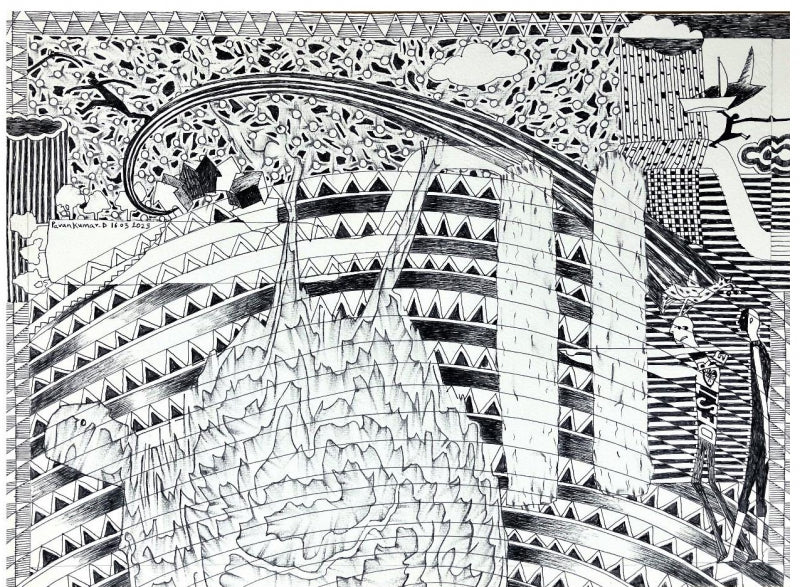
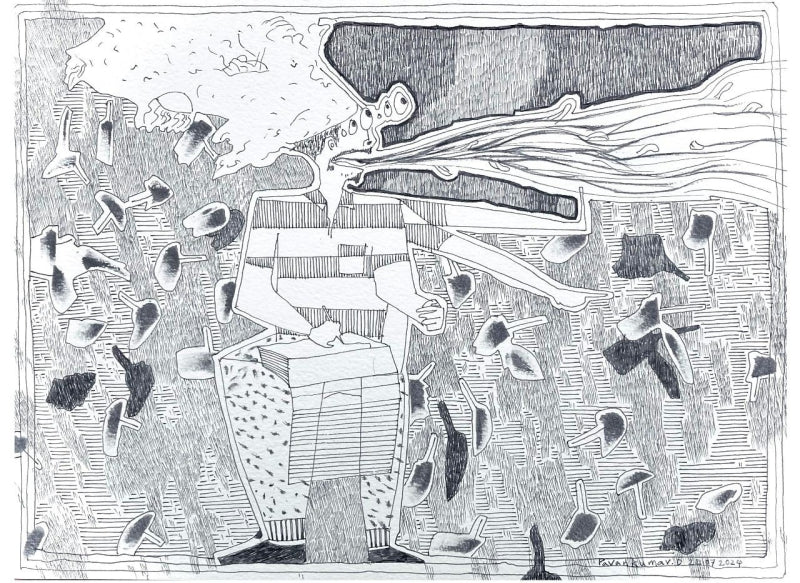
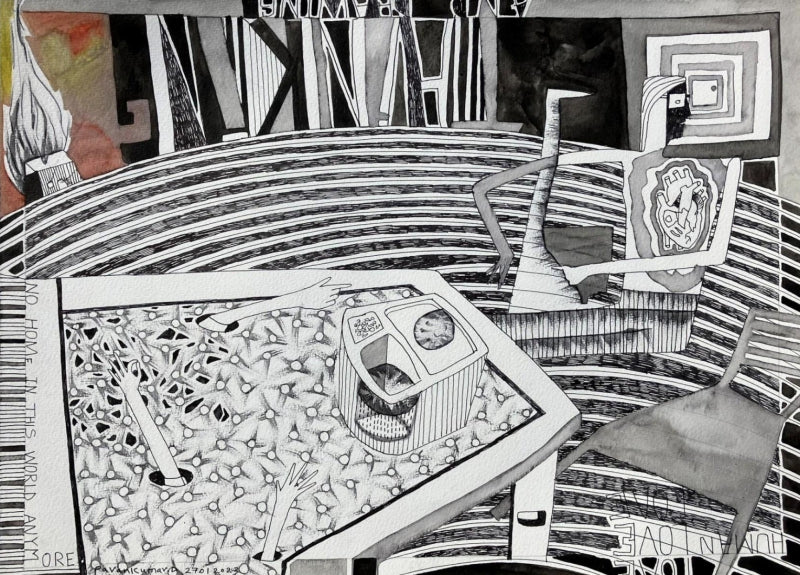
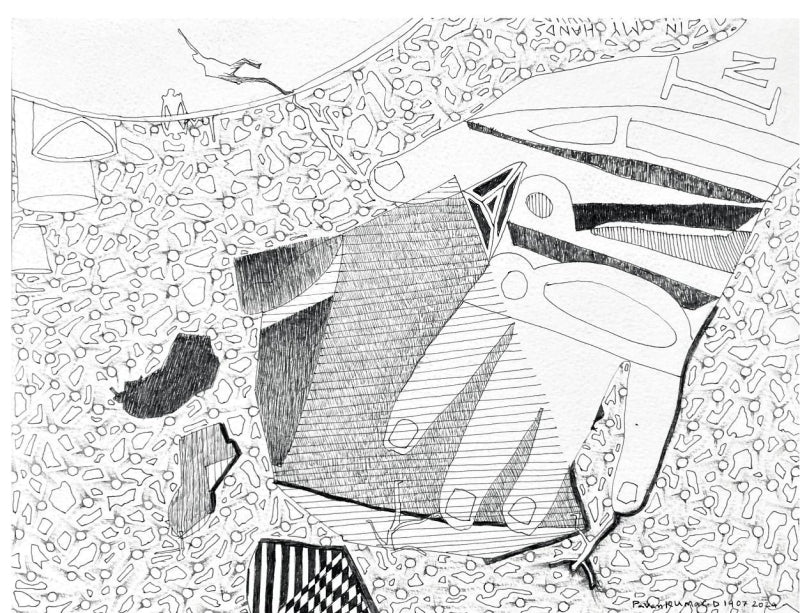
Rendered in austere ink and diluted washes, the composition stages a tense dialogue between inner vision and external architecture: a haloed, half-erased figure radiates like a private sun, while a second body—gridded, punctured, and city-like—stands as a living façade of habitation and exposure. The striped, ocular tendrils that bridge the two figures function as both conduit and surveillance, suggesting perception as an invasive force that binds intimacy to control. Below, the carefully drafted buildings anchor the dreamlike scene to civic reality, as if the psyche’s weather—clouds, tides, and spillages of gray—were flooding the orderly geometry of modern life. The work ultimately reads as a portrait of subjecthood under scrutiny: the self illuminated, the self engineered, and the fragile passage between them.
Delivery
You may also like