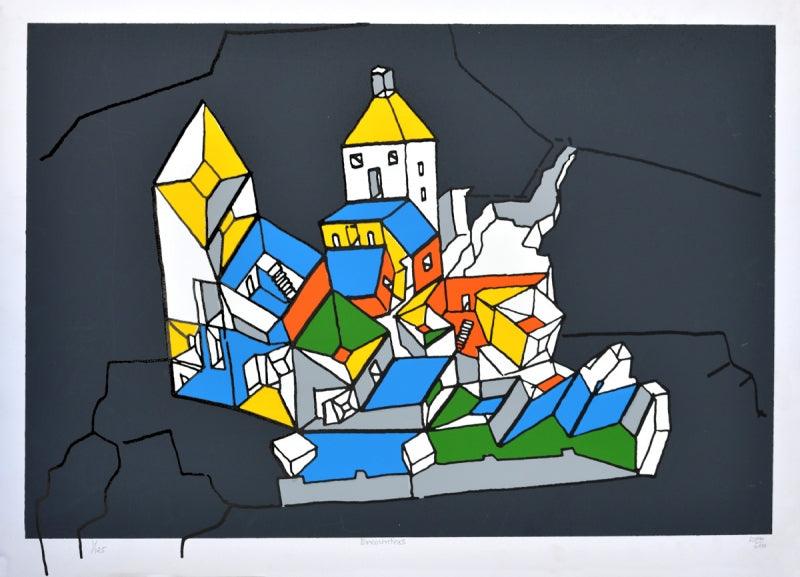
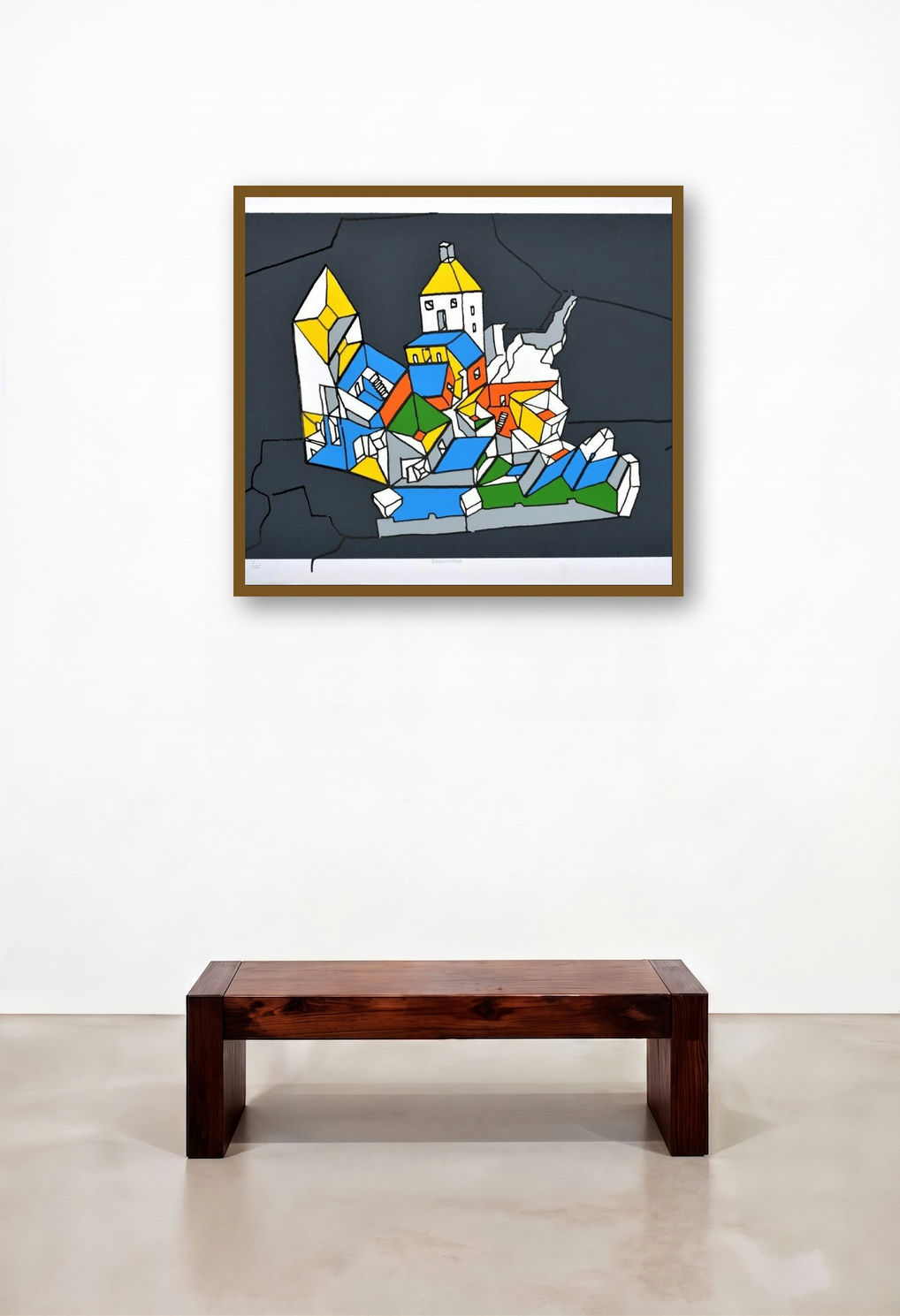
Encounters (Geometric Cityscape)
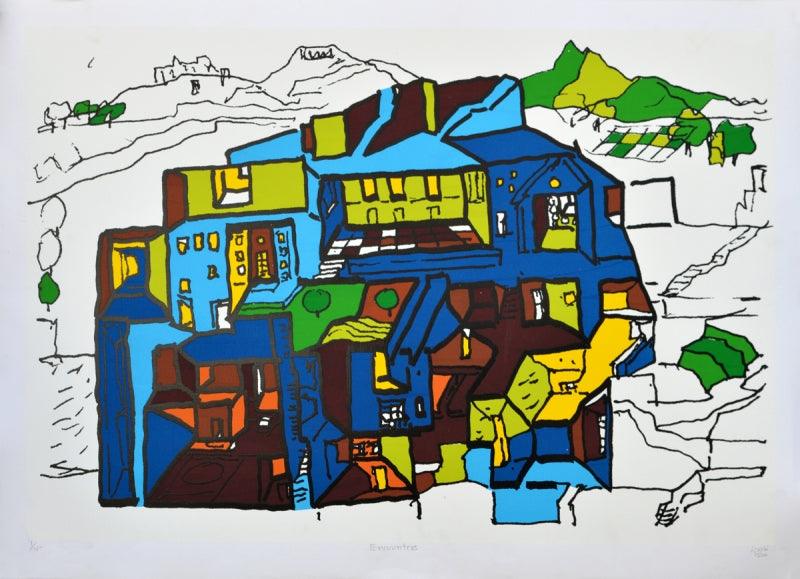
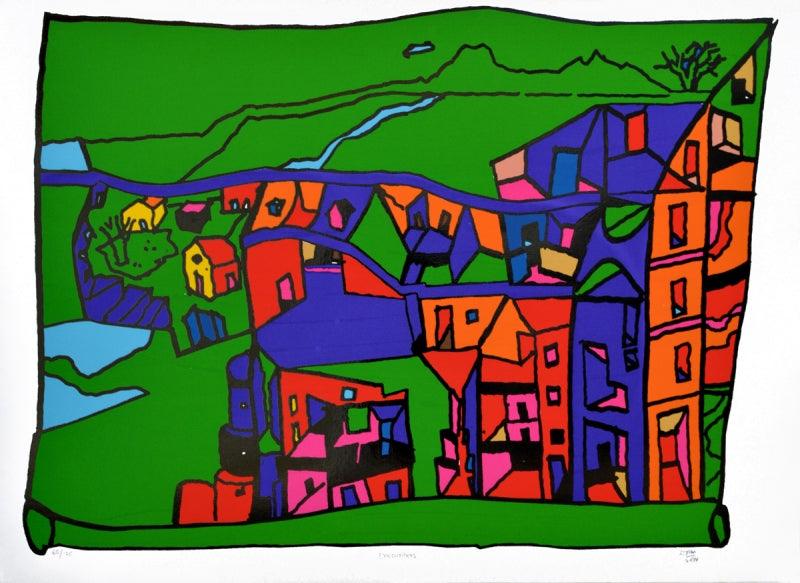
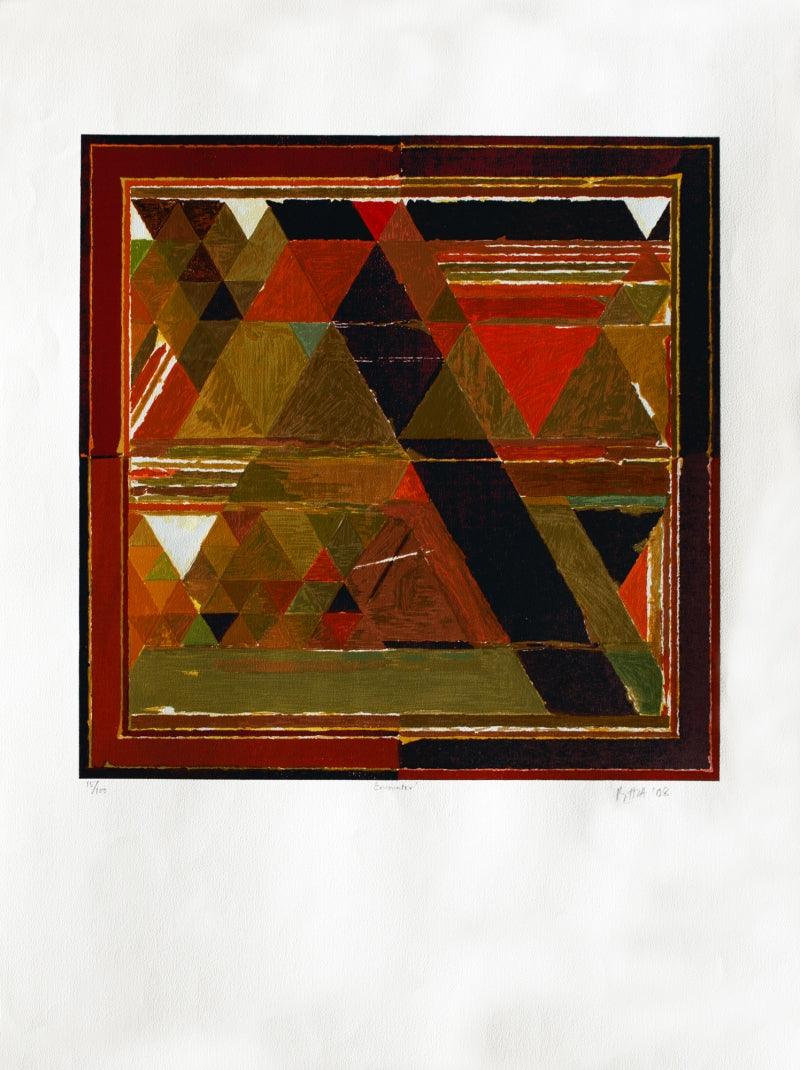
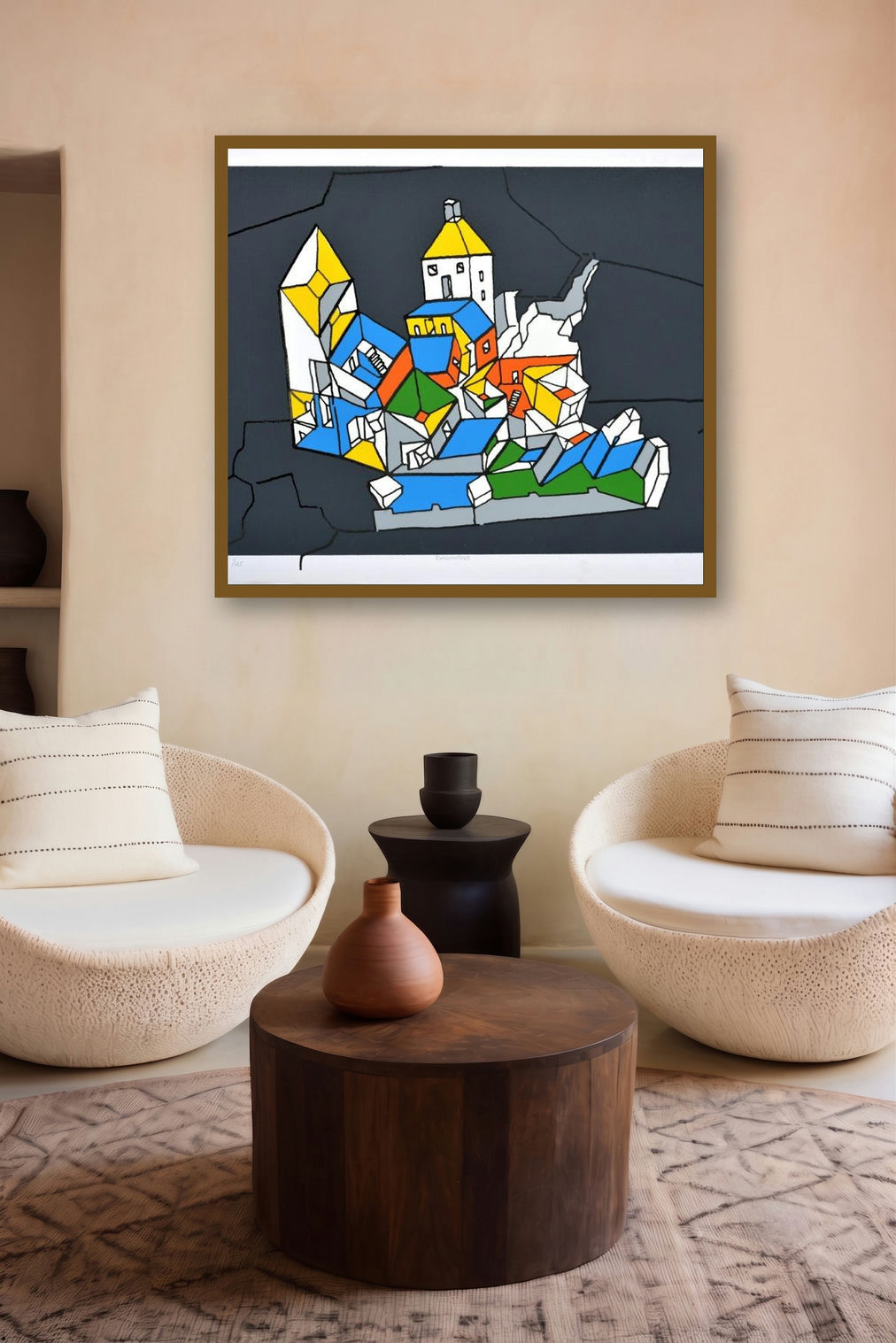
A compact citadel of fractured geometry rises from a dark, tectonic ground, its white planes and hard black contours reading like architecture remembered in shards rather than built in continuity. Vivid blocks of cobalt, ochre, vermilion, and green act as emotional load‑bearers—patches of lived warmth held in tension against the surrounding void—so that light feels less natural than constructed, as if assembled from facets. The composition compresses space into interlocking wedges and stair-stepped passages, suggesting a community both resilient and precarious, perched on the edge of collapse yet insistently ordered. In this interplay of ruin and clarity, the work becomes a meditation on how cities—and selves—recompose after fracture, turning instability into a new grammar of belonging.
Delivery
You may also like