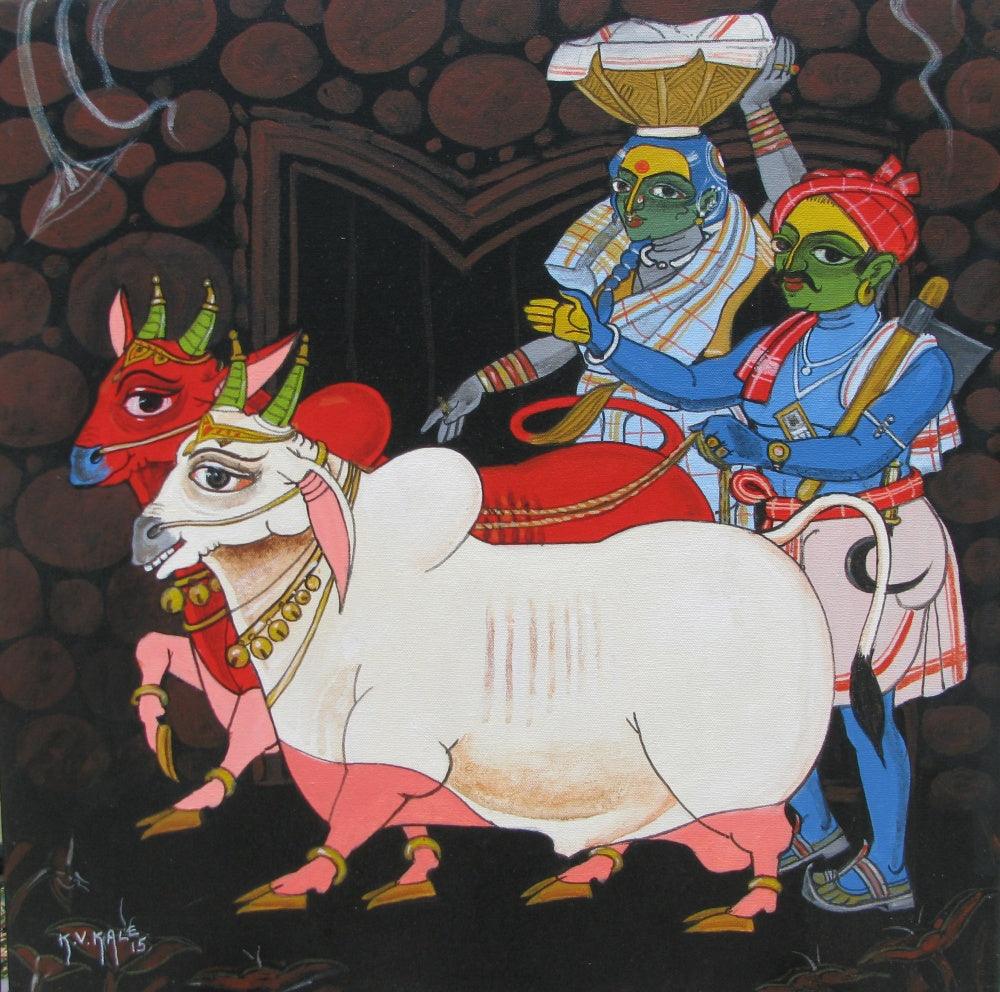
Family (The Village Procession)
₹35,000
● In stock · ★ 4.0 (6)checking live price…
Size
24x24Type
OriginalMaterial
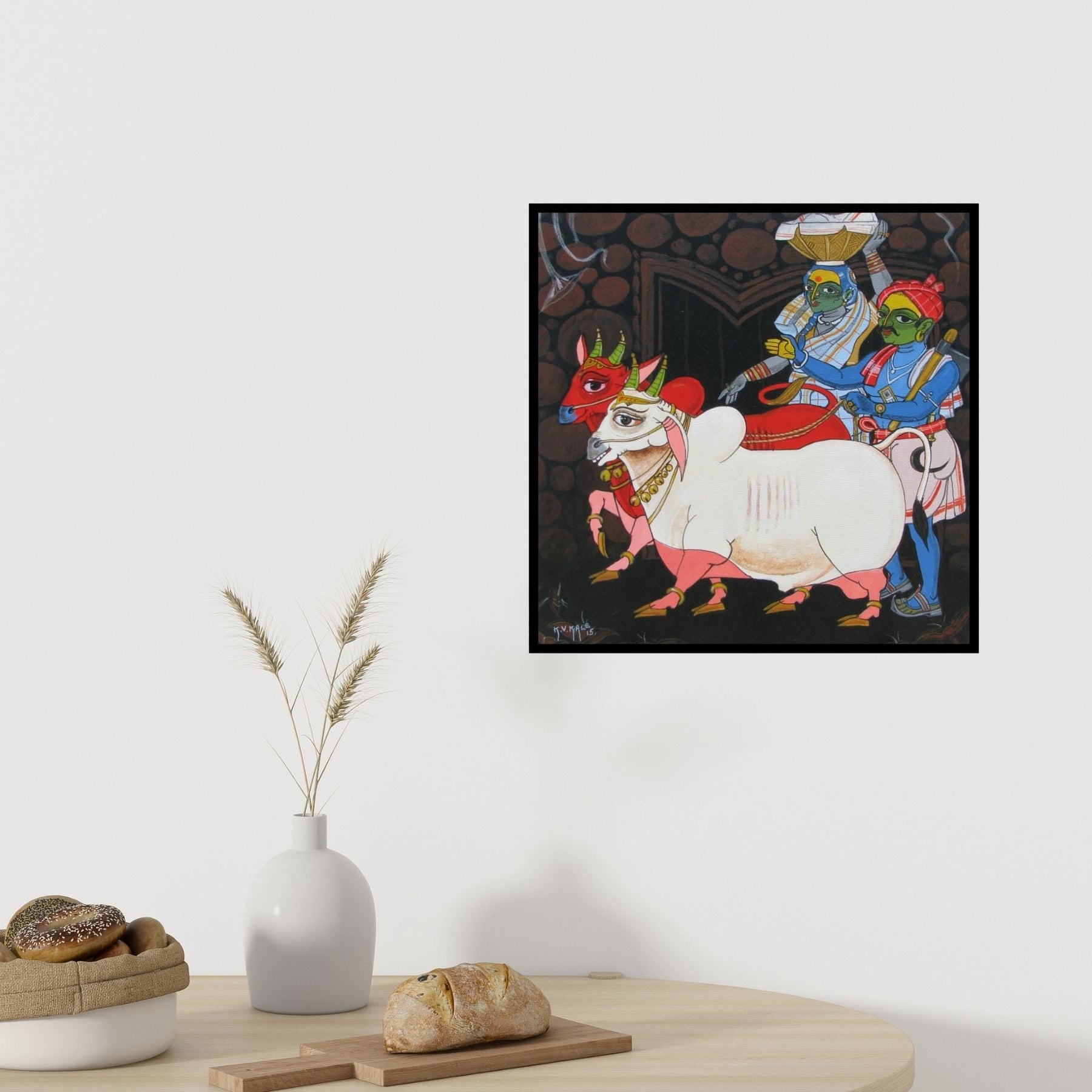
CanvasAgainst a cavernous, ember-dark ground, the luminous white bull becomes a moving altar—its rounded body and jeweled harness sanctifying labor as ritual and turning the everyday into procession. The flattened, stylized figures, with their decisive outlines and saturated reds, blues, and greens, create a rhythmic choreography of guidance and resistance: one hand restrains, another directs, while the animal’s forward-leaning gait suggests both duty and dignified will. Light is not naturalistic here but symbolic—concentrated in the bull’s pale mass and the ornamented headgear—so the scene reads as a folk epic where strength, caretaking, and power are braided into a single communal narrative.
Delivery
You may also like
Mother And Child (Maternal Bond)
Artzolo
₹80,000
★ 4.0 (6)
Procession Series 2 (Village Procession)
Artzolo
₹72,000
out of stock
Family
Artzolo
₹70,000
out of stock
★ 4.0 (9)
Cow Keeper
Artzolo
₹35,000
★ 4.0 (6)
Family (Rustic Journey)
Artzolo
₹180,000
★ 4.0 (8)
Village Life 5 (Sacred Bovine)
Artzolo
₹54,000
★ 5.0 (7)
My Family 2 (A Bovine Gathering)
Artzolo
₹265,000
out of stock
★ 4.0 (9)
Cow Family (A Bovine Family)
Artzolo
₹150,000
out of stock
★ 5.0 (14)