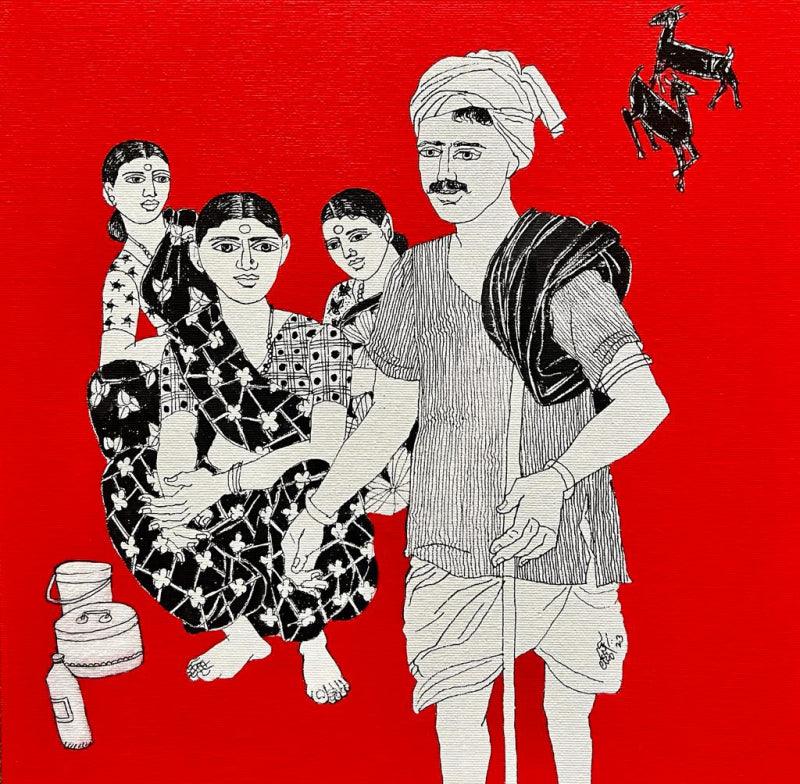
Song Of The Village 31
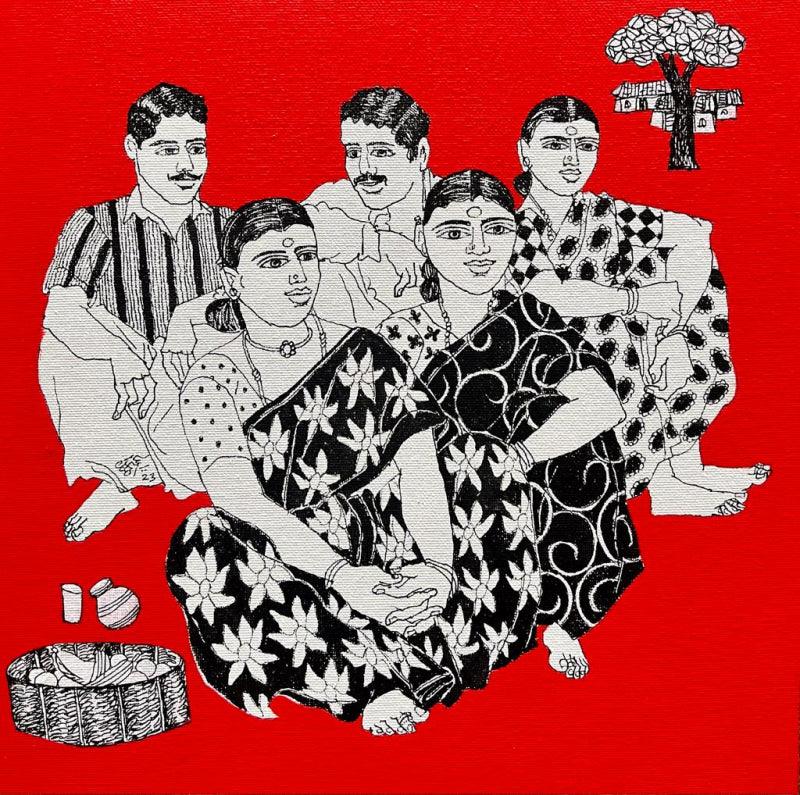
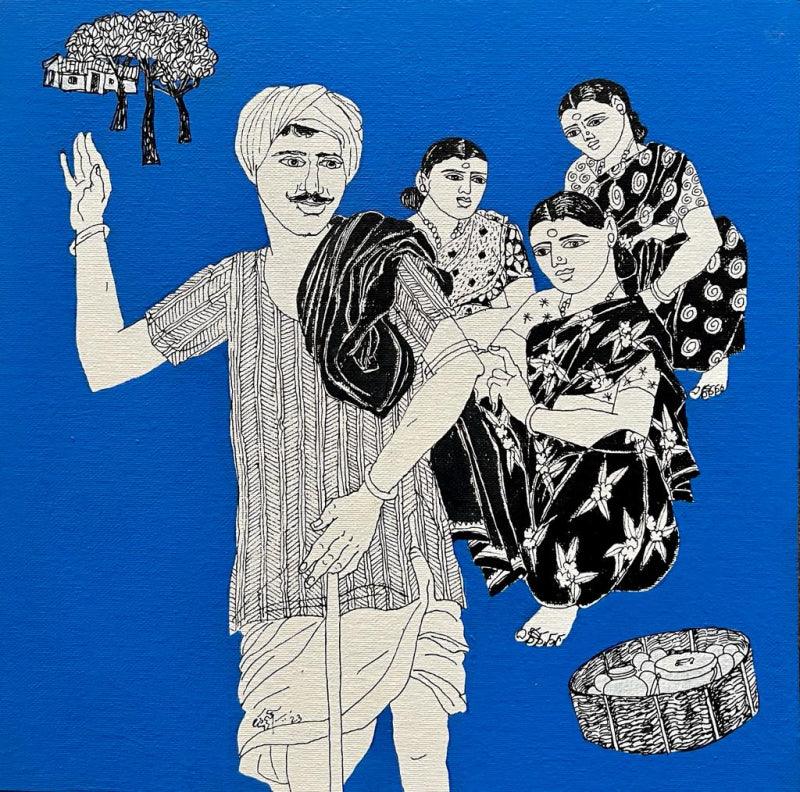
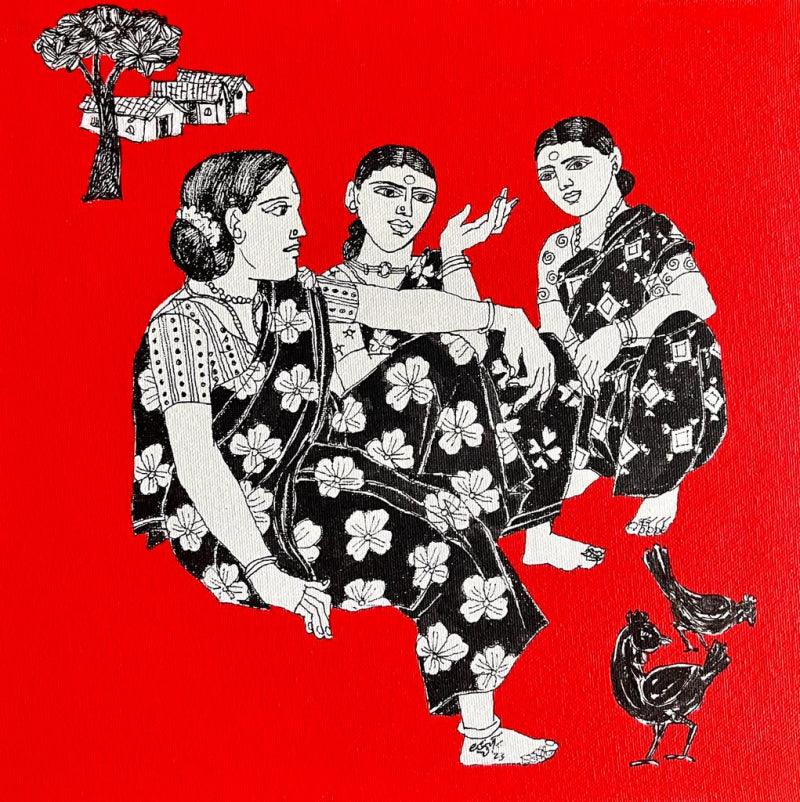
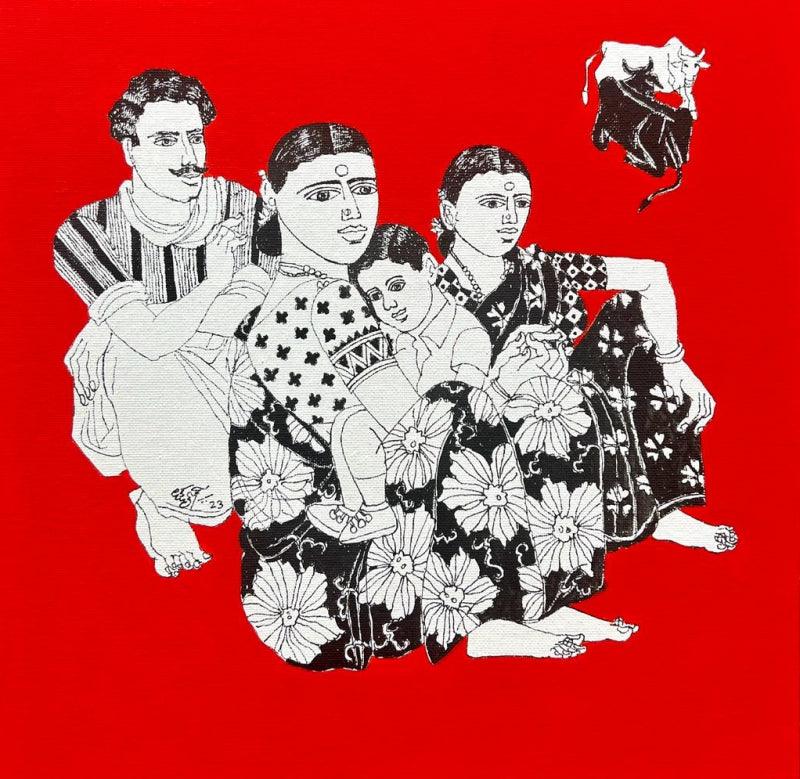
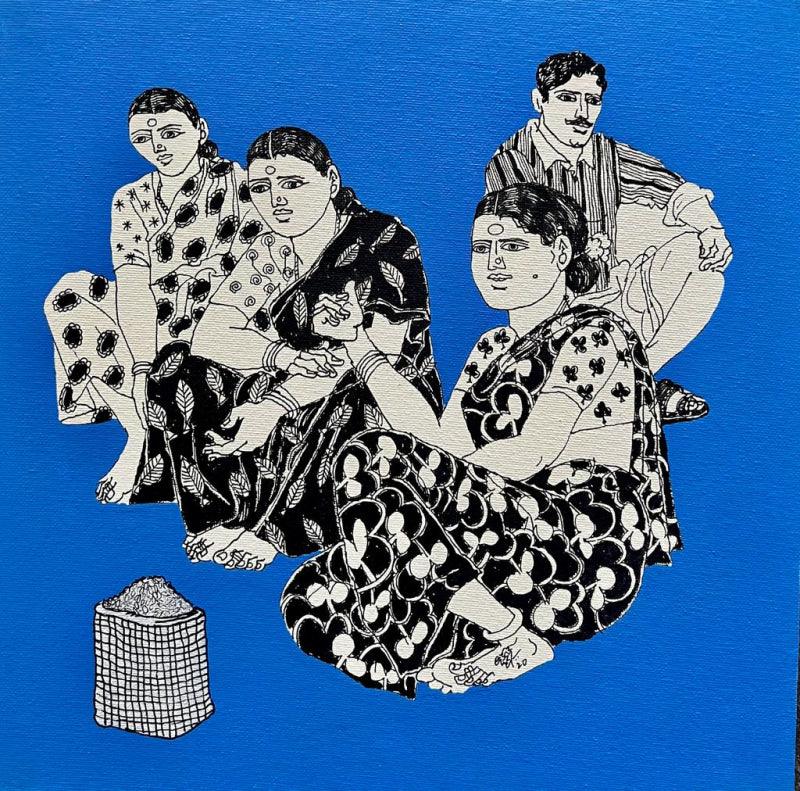
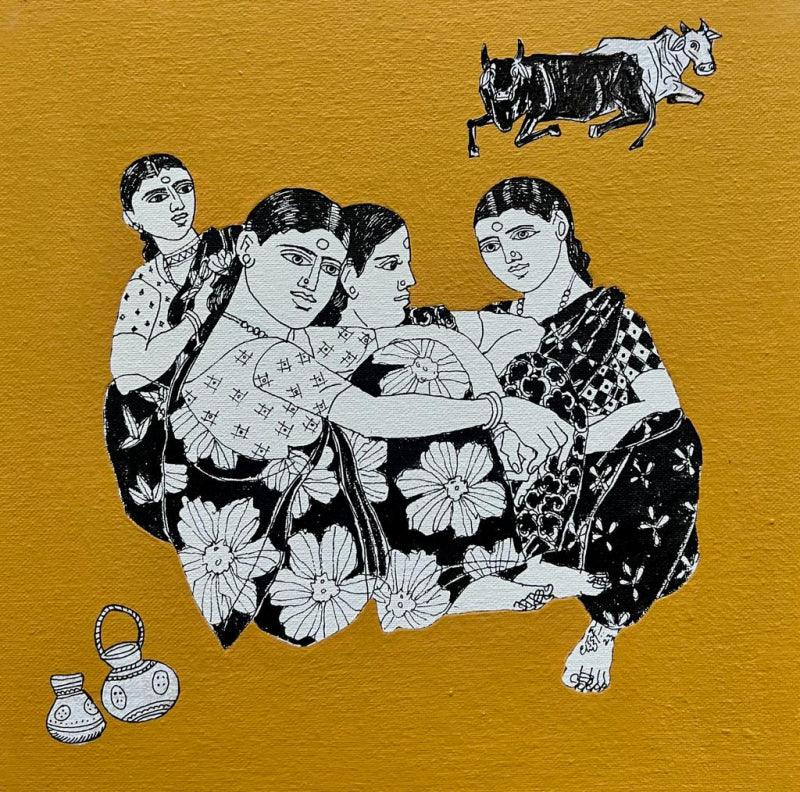
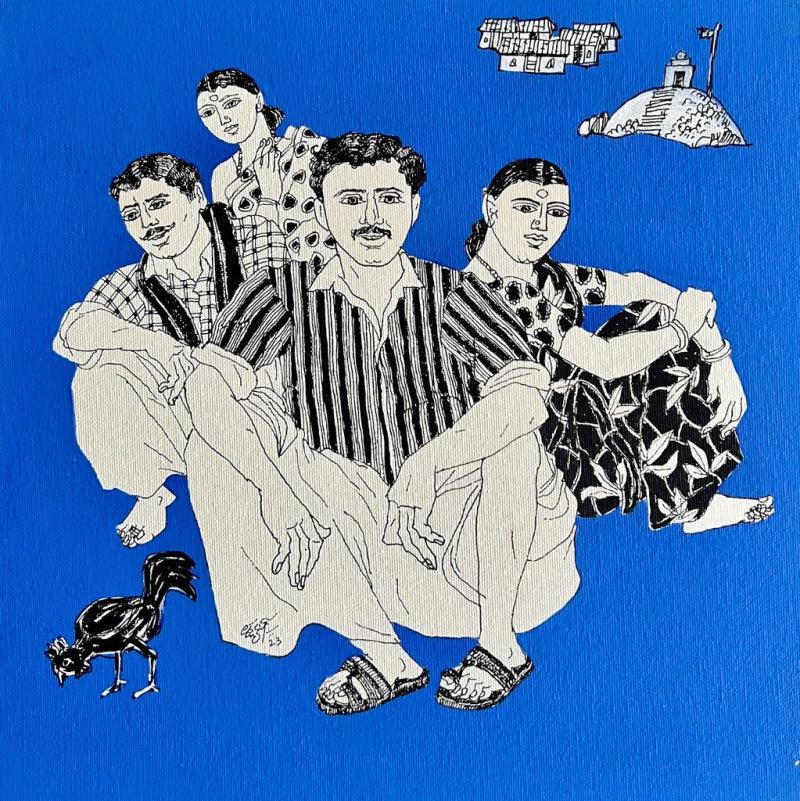
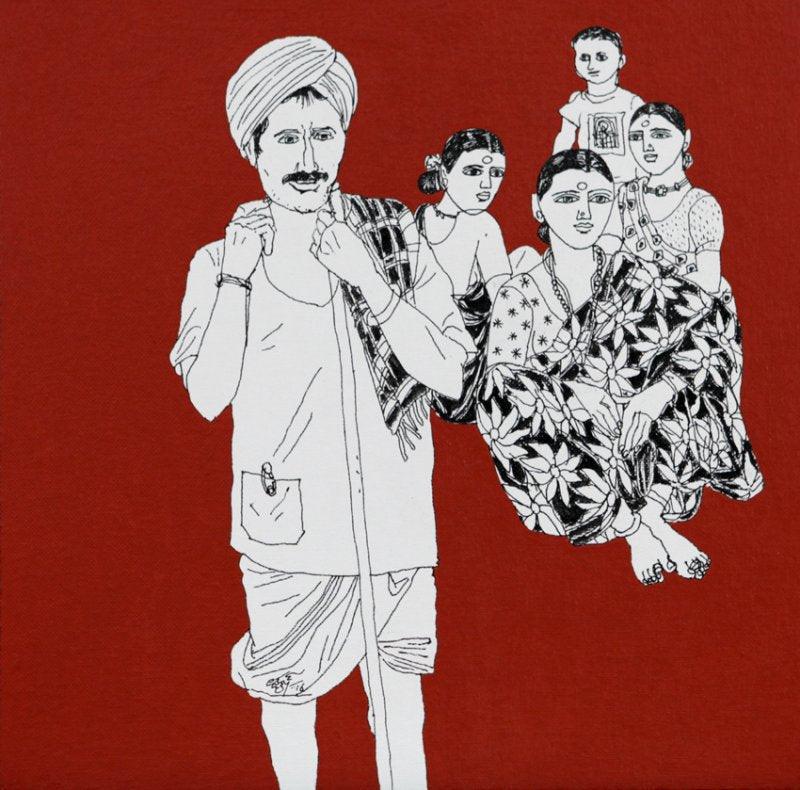
Against a field of unwavering red, the figures emerge in stark black-and-white as if memory has been etched into a single, insistent pulse—domestic, communal, and quietly charged. The central man, rendered with a measured solidity, becomes a hinge between private labor and public presence, while the women’s patterned textiles read like living maps of tradition, repeating rhythms that hold the scene together. Everyday vessels at the lower edge and the airborne animal forms above widen the narrative from the tactile to the emblematic, suggesting how survival, folklore, and desire circulate through ordinary life. The composition’s flatness is not simplification but insistence: a refusal of illusion that turns village intimacy into a bold icon of endurance.
Delivery
You may also like