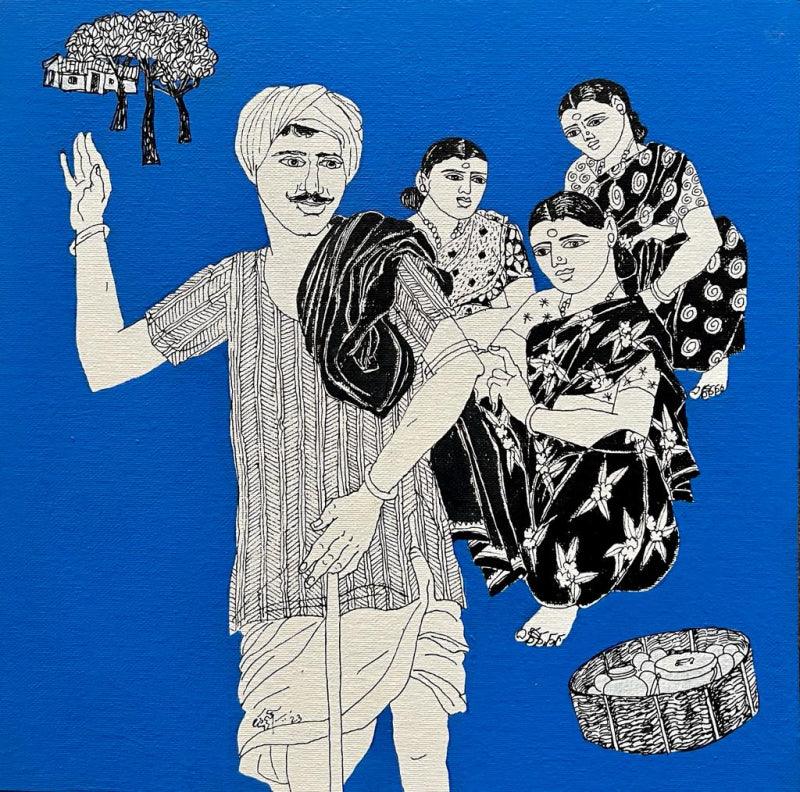
Song Of The Village 35
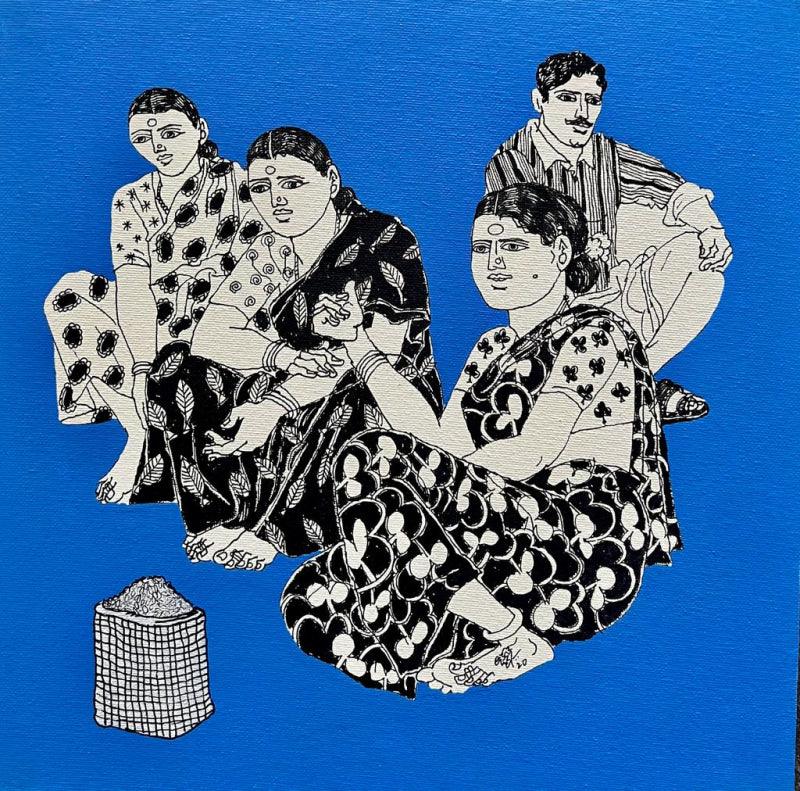
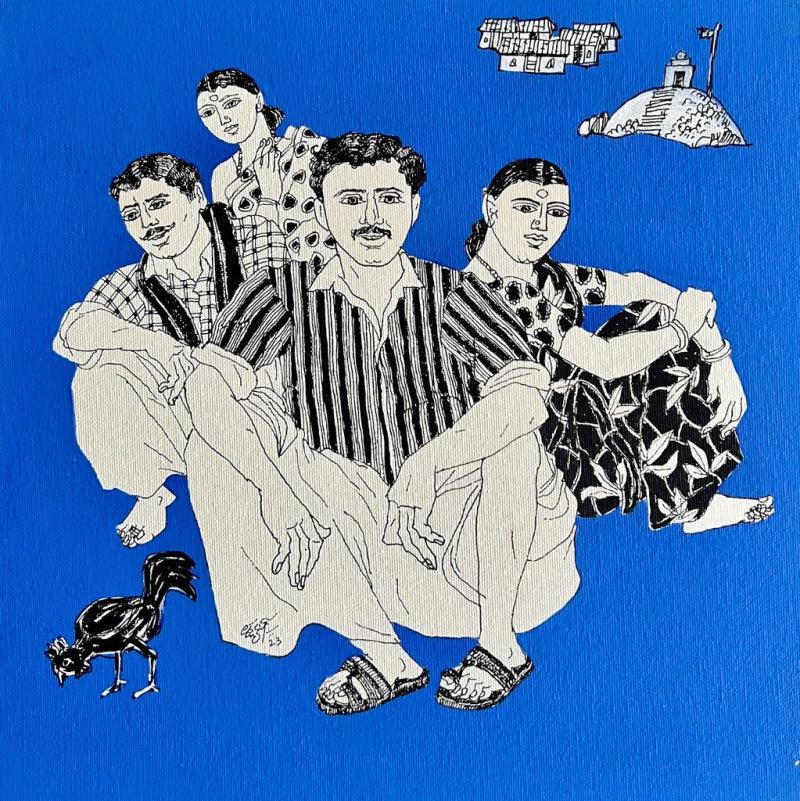
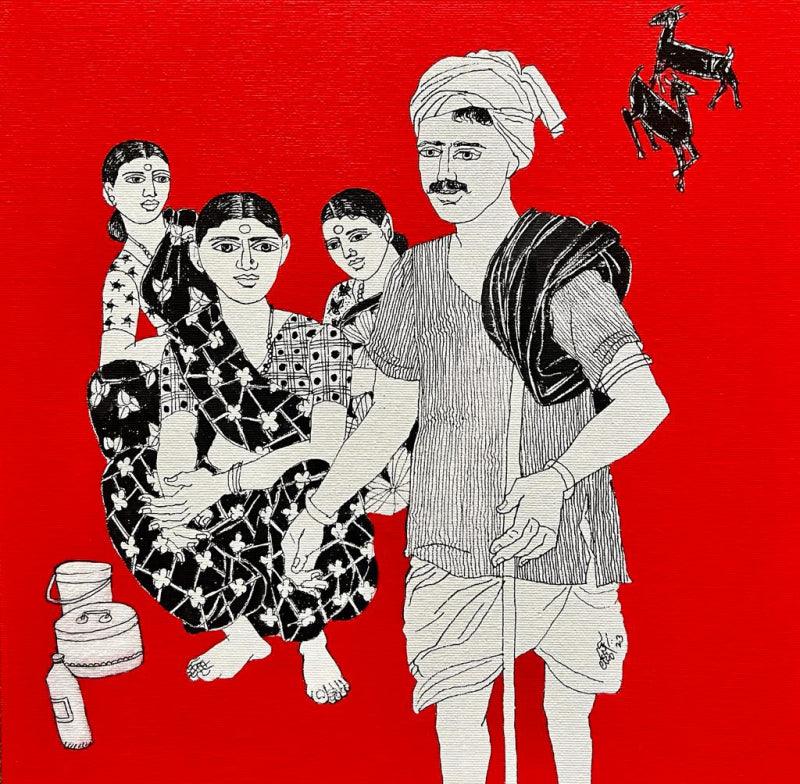
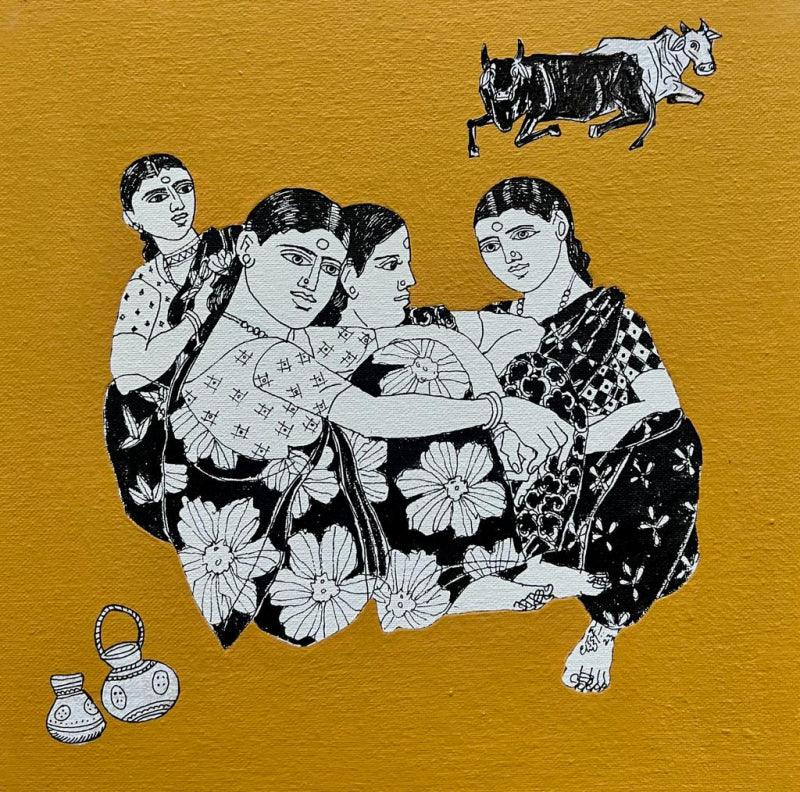
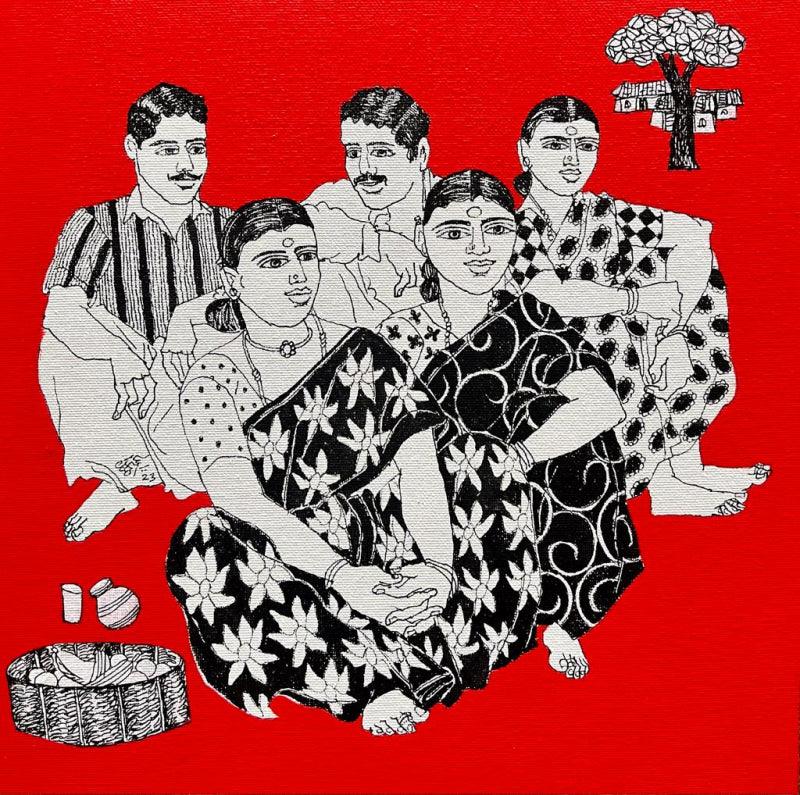
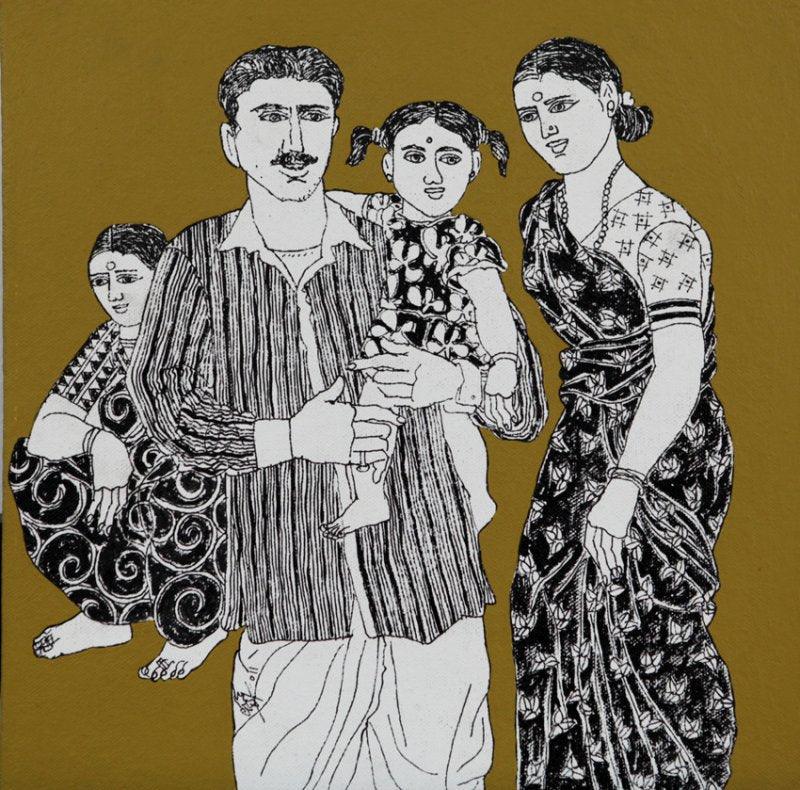
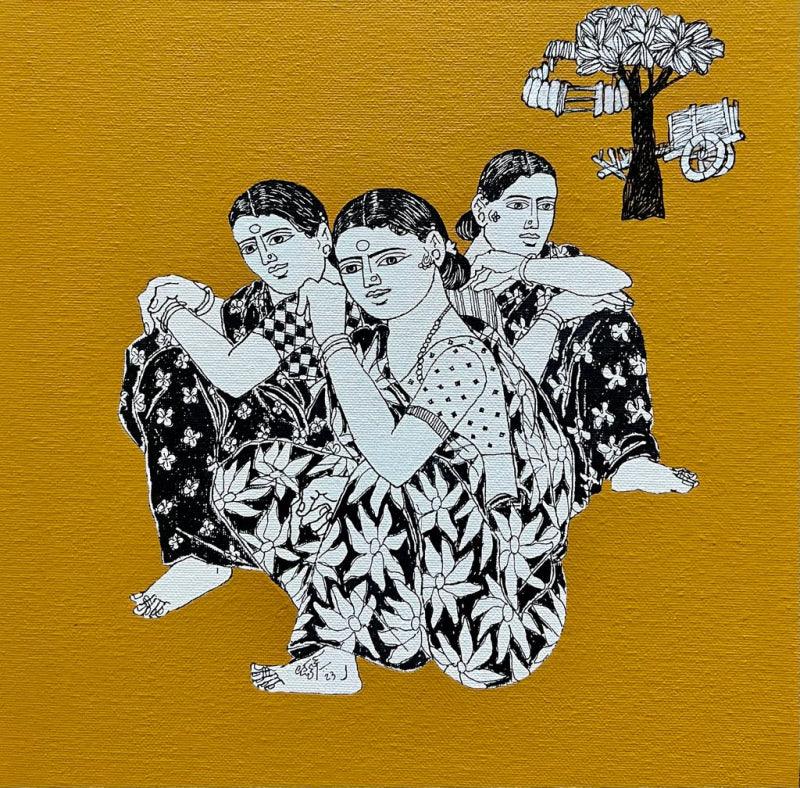
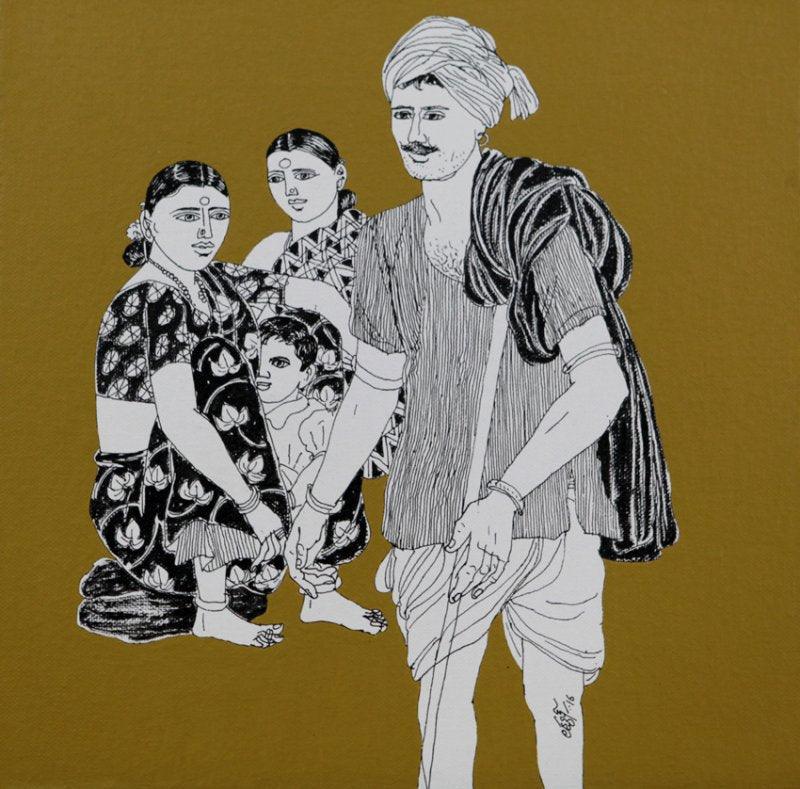
Against a velvety field of cobalt, the figures emerge in crisp black-and-white linework, as if memory itself has been etched into the surface—both intimate and emblematic. The man’s raised hand and forward stride set a rhythmic narrative of departure or labor, while the clustered women, rendered with intricate patterns and steady gazes, hold the counterweight of domestic endurance and communal witness. Small motifs—a distant house beneath trees, a woven basket—float like condensed symbols of place, sustenance, and belonging, turning everyday rural life into a quiet mythology of responsibility and care. The deliberate flattening of space refuses illusion, insisting instead on the dignity of presence and the timeless choreography of family roles.
Delivery
You may also like