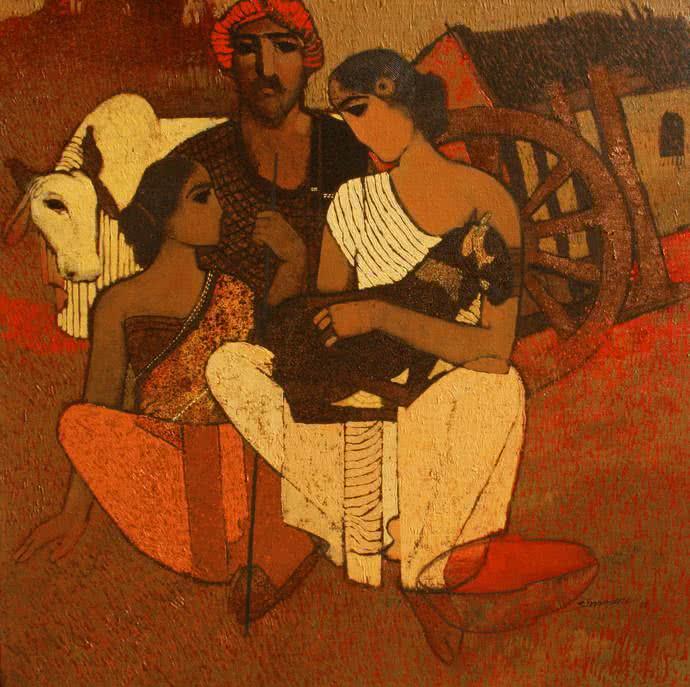
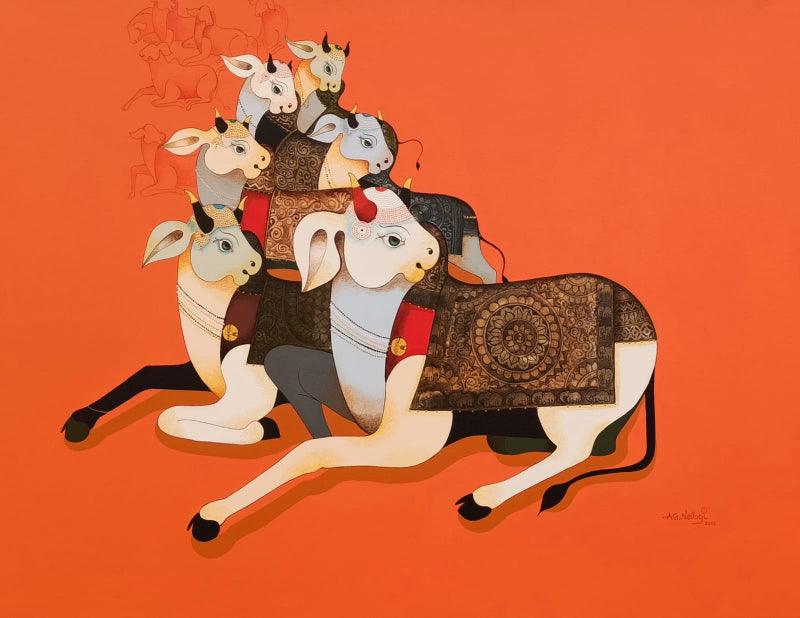
My Family
₹39,000
Out of stock · ★ 5.0 (8)checking live price…
Size
24x24Type
OriginalMaterial
CanvasIn an earthy palette of ochres, rusts, and soot-browns, the figures gather into a compact, intimate triangle—an archetype of family and labor held in quiet suspension. The woman’s pale drapery becomes the painting’s primary light-source, a soft moral illumination that steadies the darker, stoic male presence behind her and guides the eye toward the tender weight of the animal in her arms. Angular contours and flattened space compress the scene into a timeless, almost icon-like stillness, while the cartwheel and livestock insinuate a rural cycle of work, dependence, and endurance. What emerges is not anecdote but devotion: a portrait of survival where care is the most radical form of wealth.
Delivery
You may also like
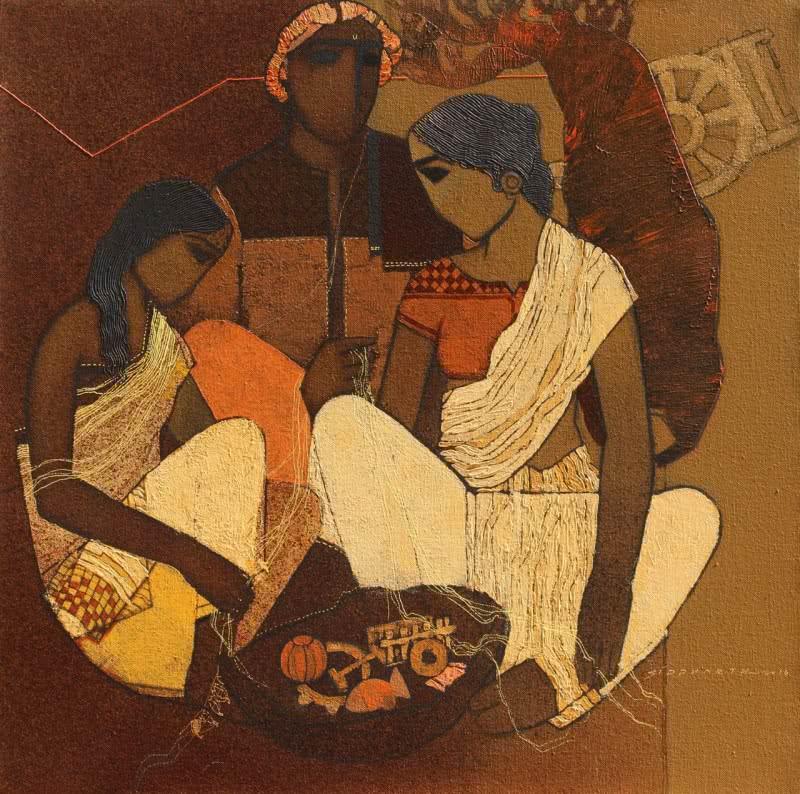
Family 1
Artzolo
₹64,000
out of stock
★ 4.0 (5)
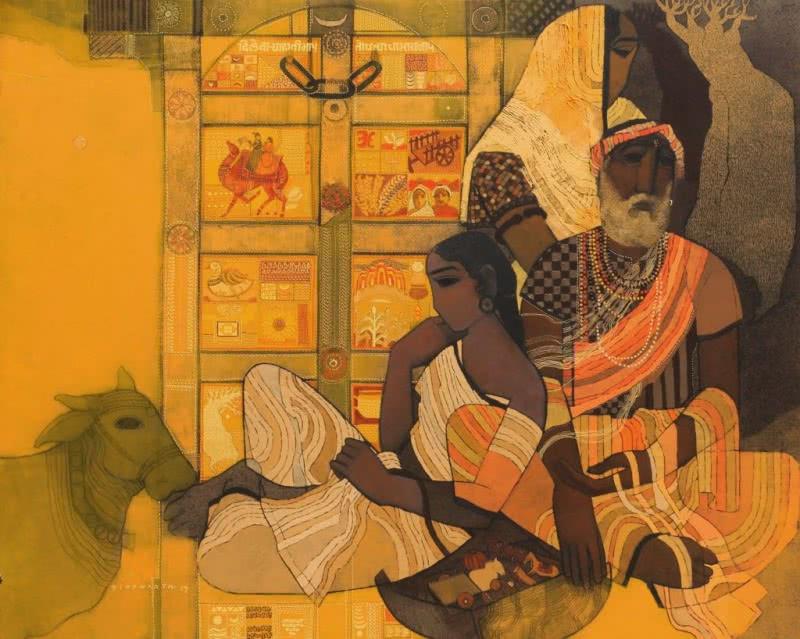
Family 1
Artzolo
₹286,000
out of stock
★ 5.0 (14)
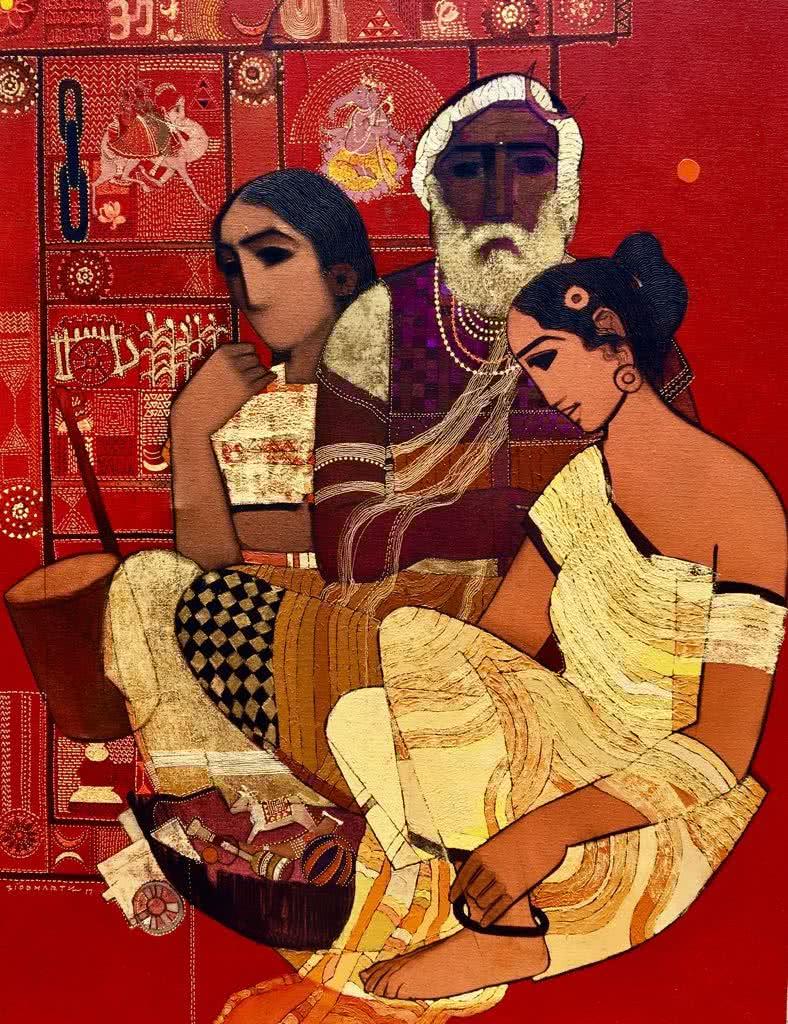
Family
Artzolo
₹172,000
out of stock
★ 5.0 (13)
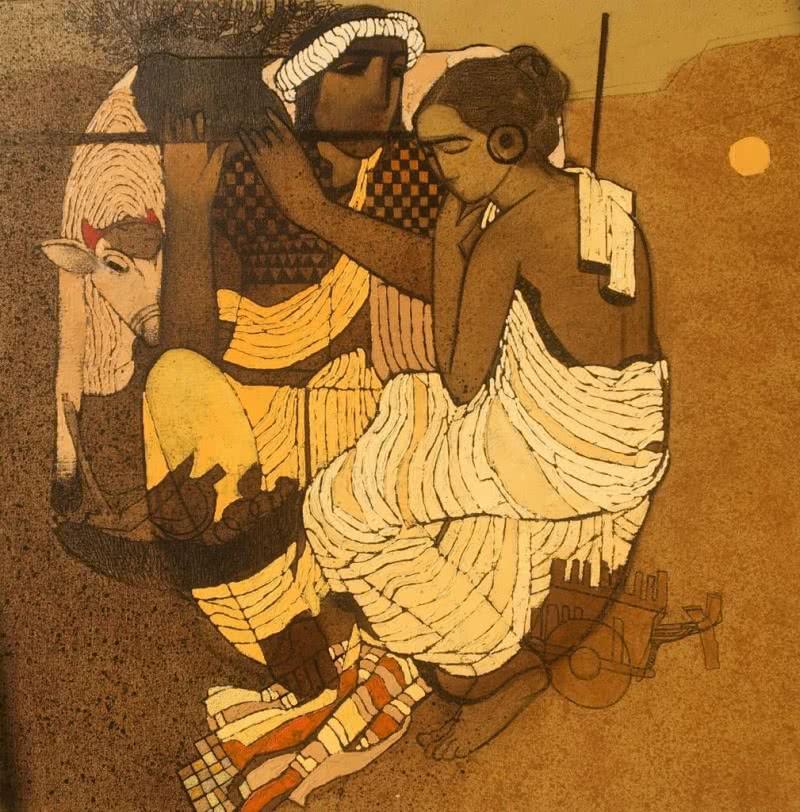
Village 5
Artzolo
₹65,000
out of stock
★ 5.0 (14)
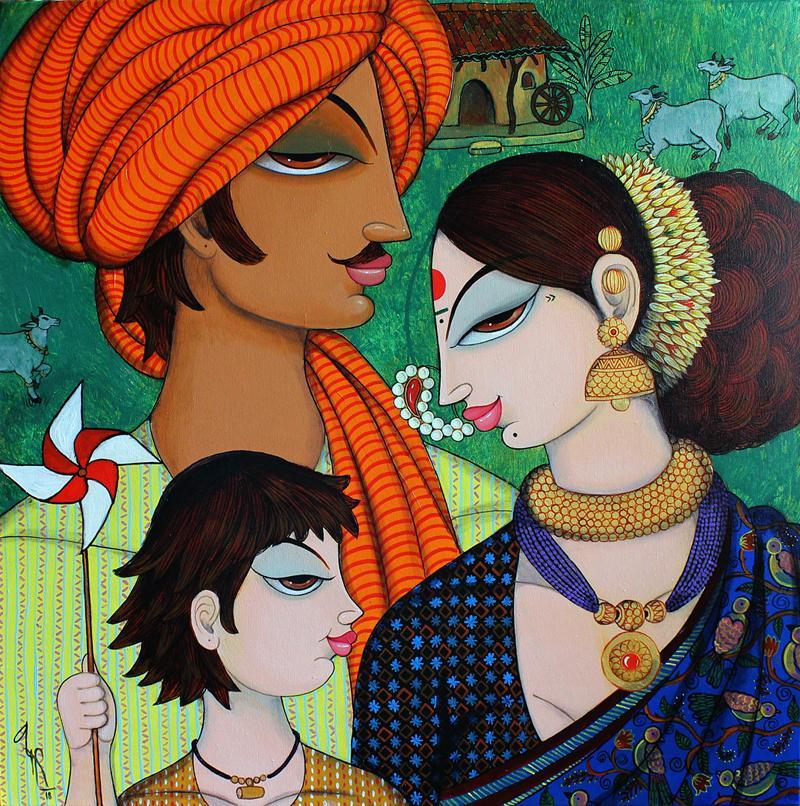
Family
Artzolo
₹70,000
out of stock
★ 4.0 (9)
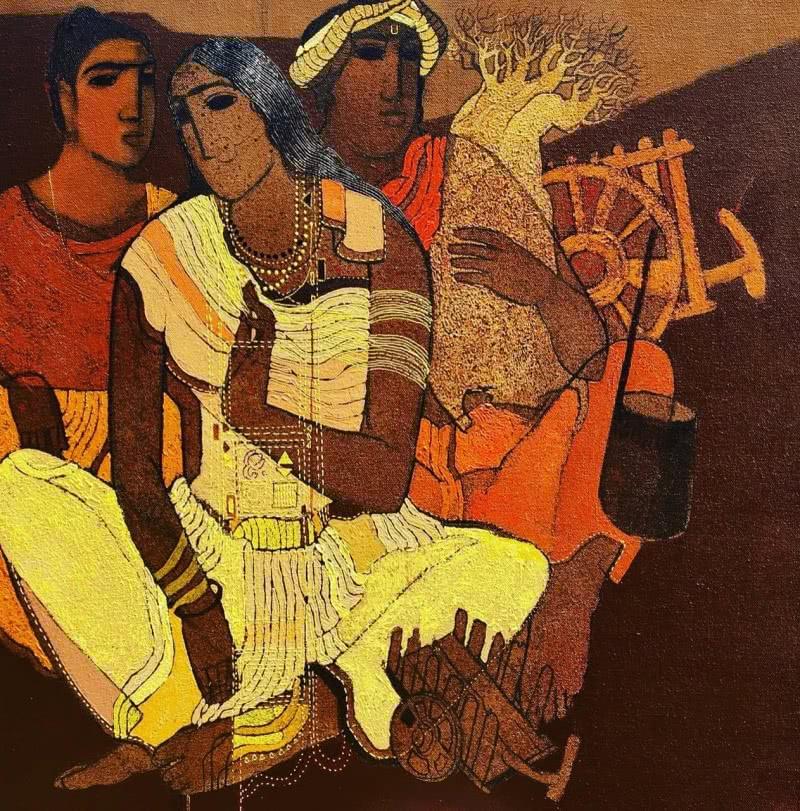
Village 3
Artzolo
₹96,000
out of stock
★ 5.0 (13)
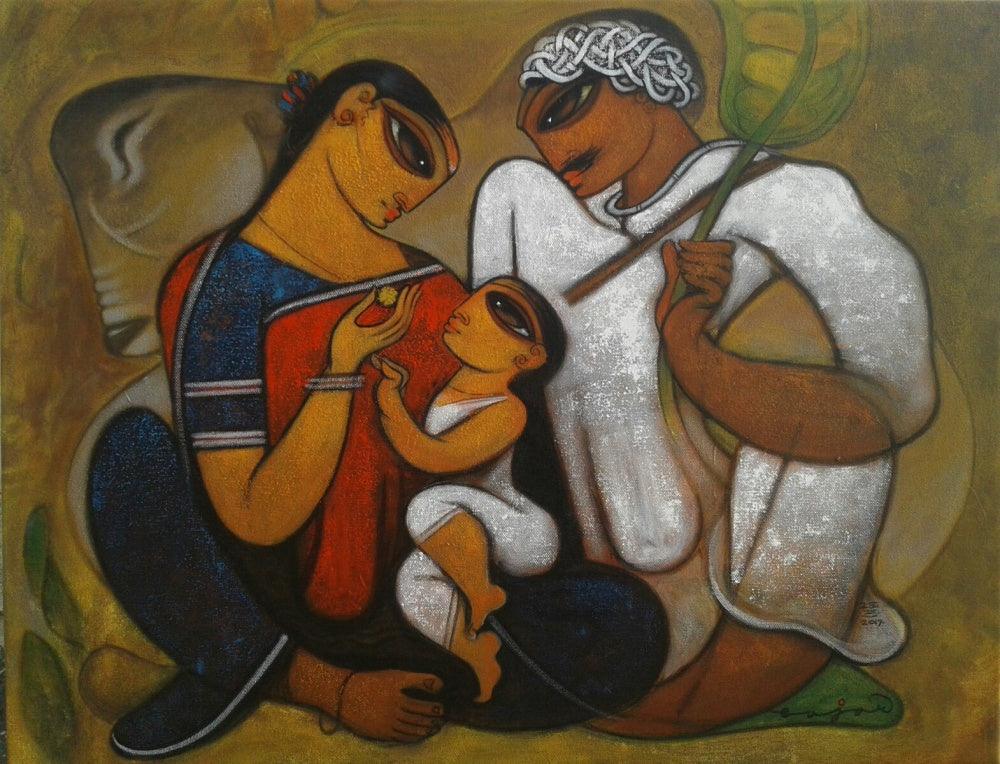
Family 4
Artzolo
₹72,000
out of stock
★ 4.0 (12)
My Family
Artzolo
₹150,000
out of stock
★ 5.0 (13)