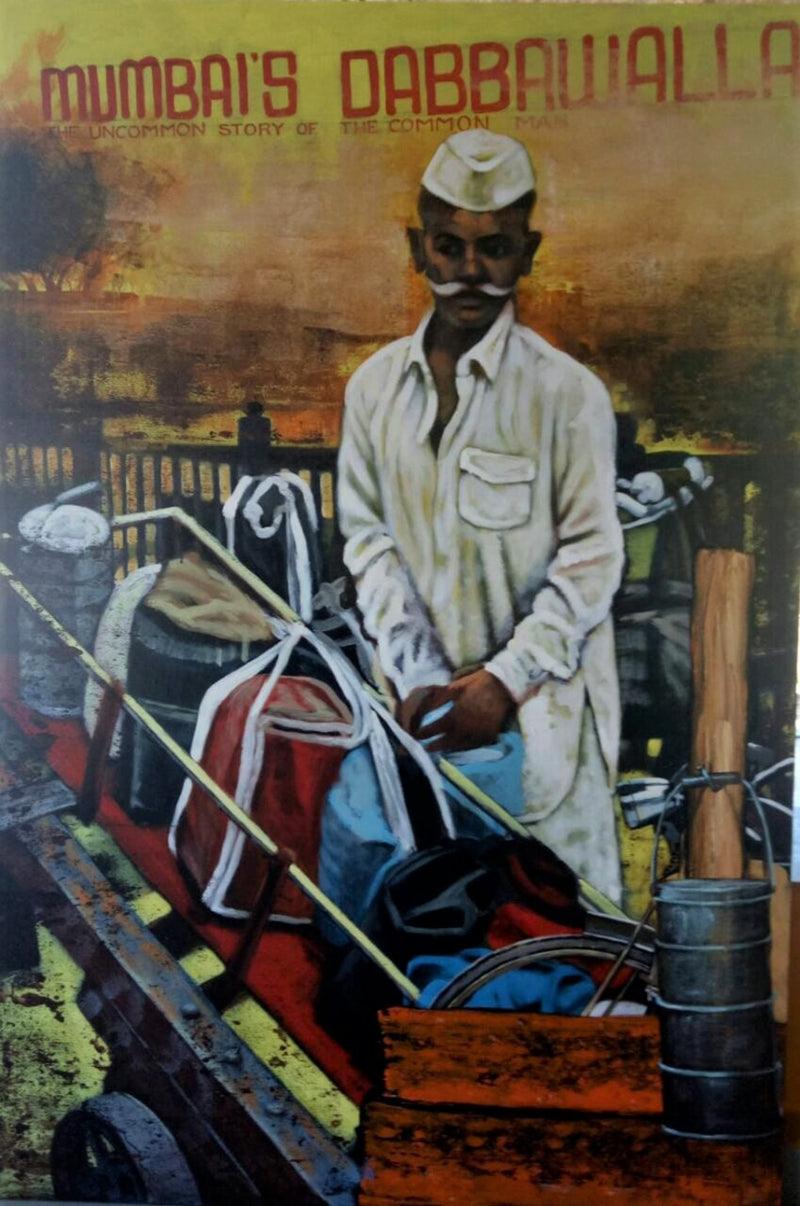
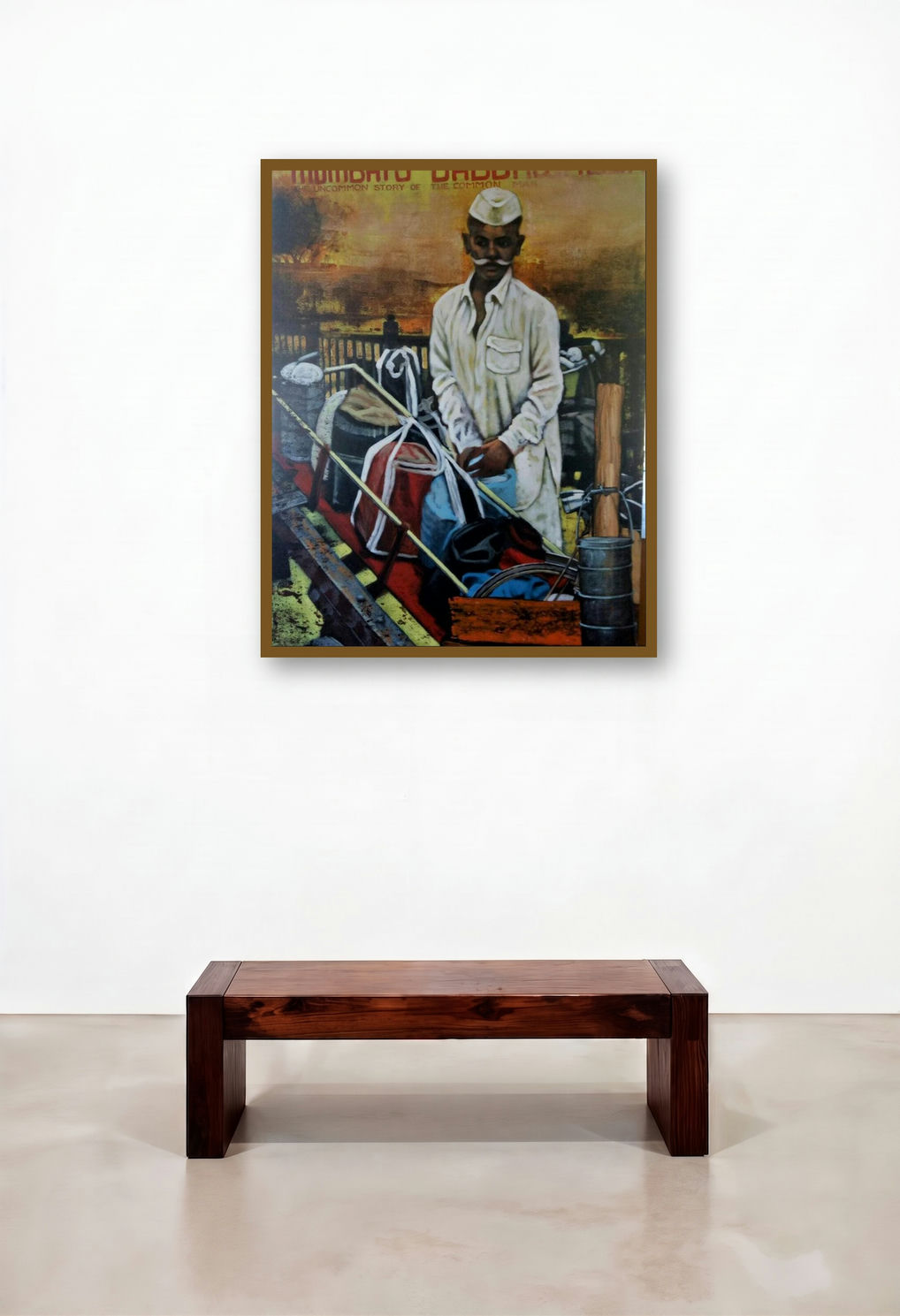
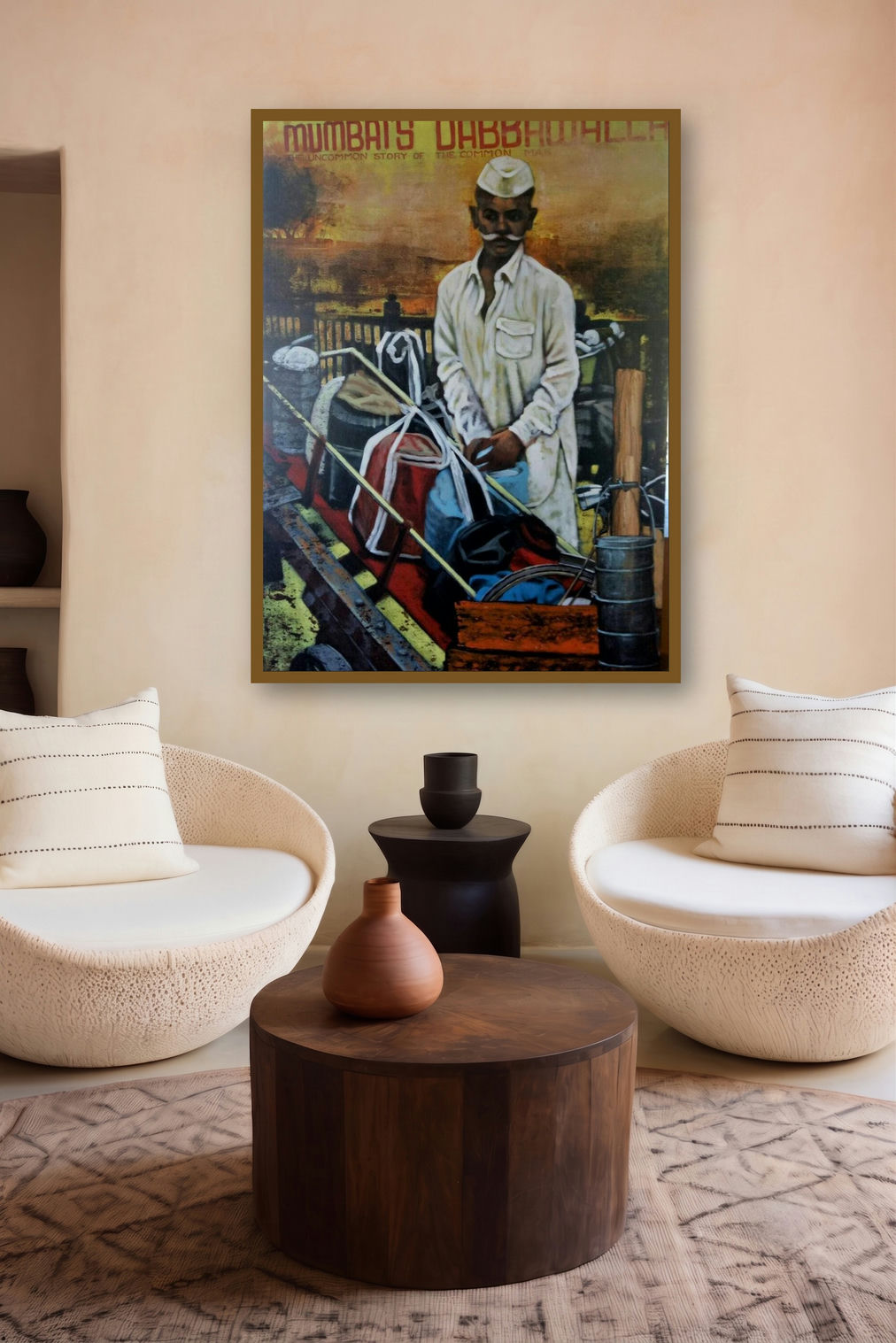
Dabbawala Series 1 (The Mumbai Dabbawala)
₹430,000
● In stock · ★ 5.0 (14)checking live price…
Size
72x48Type
OriginalMaterial
CanvasSet against a bruised, smoky twilight, the solitary dabbawala stands like an anchor of quiet dignity amid the city’s restless machinery, his white uniform catching what little light remains as a moral counterpoint to the murk of urban exertion. The composition piles tiffins, bags, and metal vessels into a dense foreground—an architecture of labor—so that his stillness feels earned, almost ceremonial, in the face of ceaseless motion. Warm ochres and rusted reds suggest both heat and endurance, transforming a routine delivery into a portrait of invisible systems that hold a metropolis together. In this calibrated balance of clarity and haze, the work elevates the “common man” into a custodian of trust, precision, and communal sustenance.
Delivery
You may also like
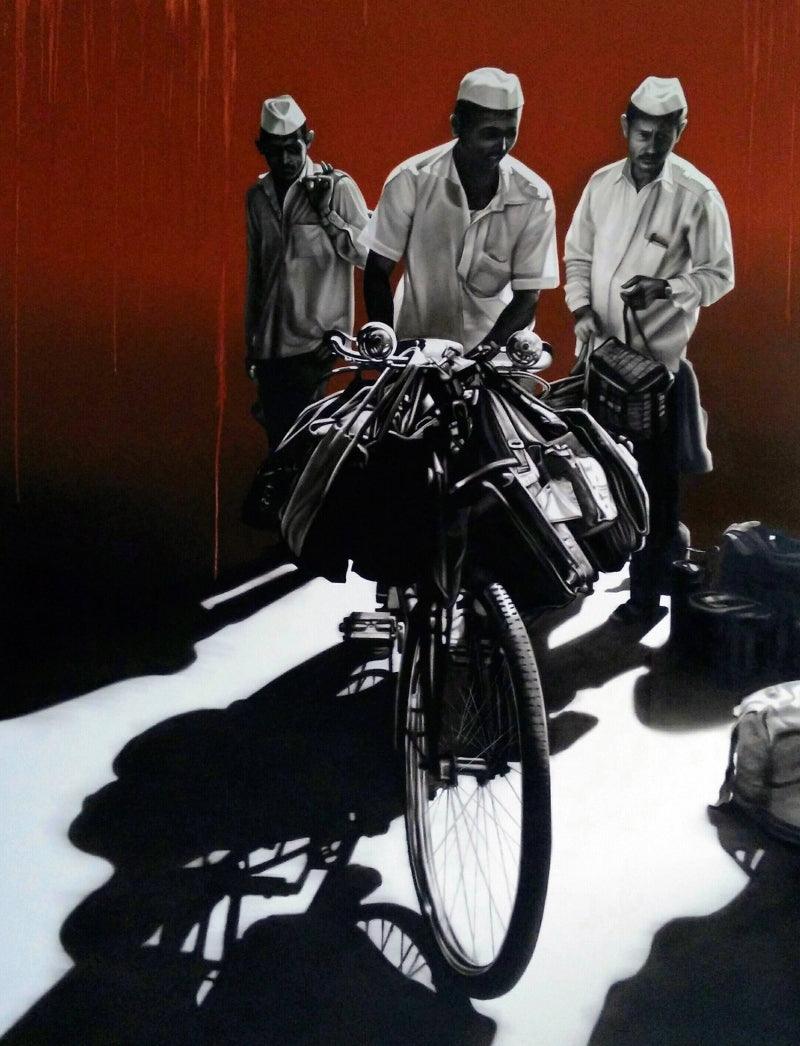
Mumbai Dabba Wala
Artzolo
₹380,000
★ 5.0 (12)
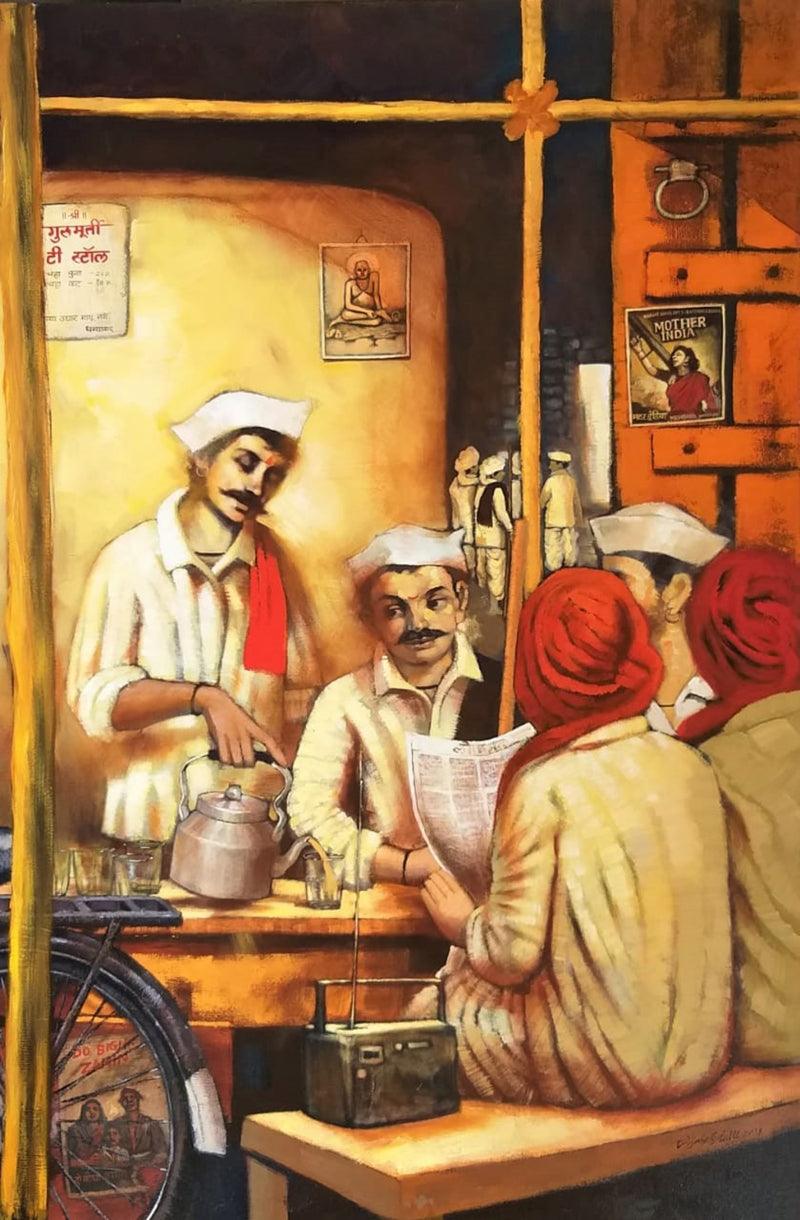
Chaiwala Series 1 (The Chai Wallah)
Artzolo
₹435,000
★ 5.0 (9)
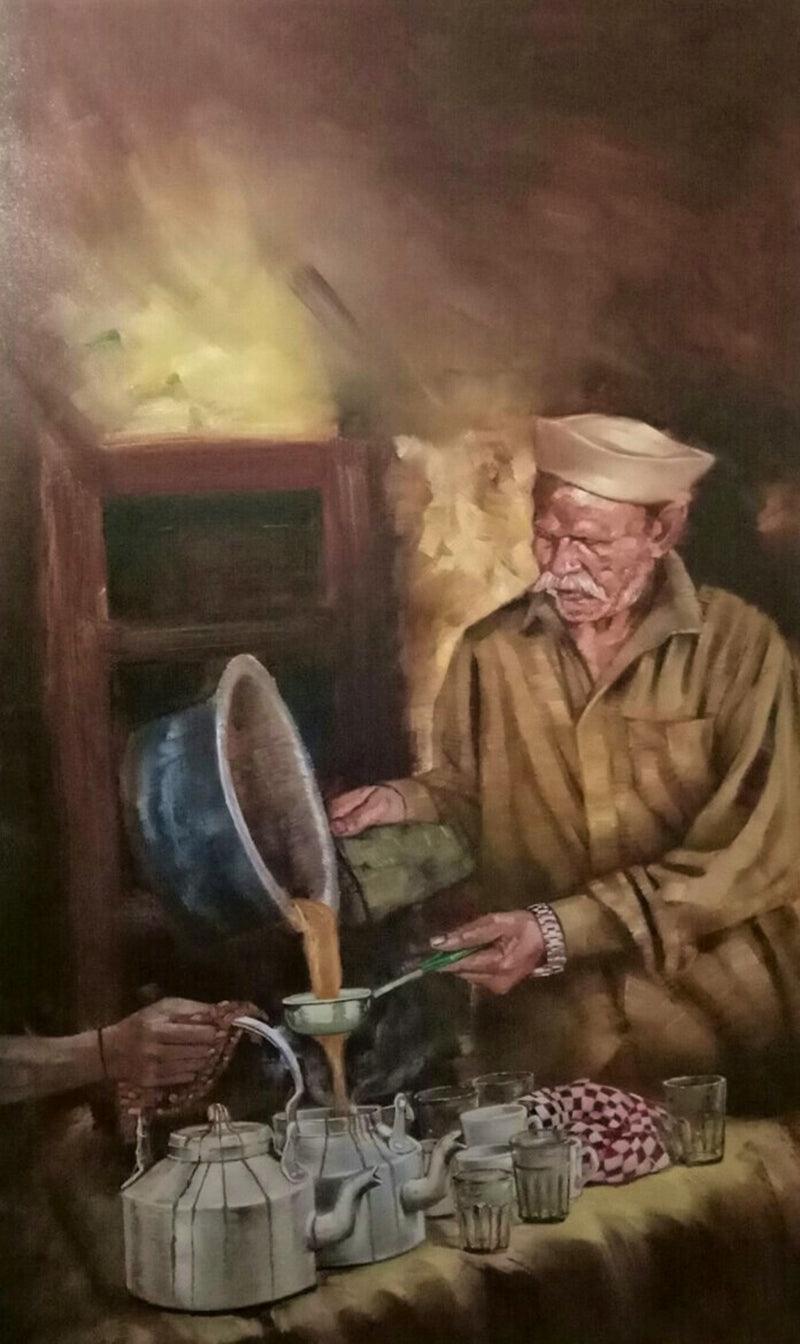
Chaiwala Series 2 (The Heart of Mumbai's Lunchtime)
Artzolo
₹270,000
★ 4.0 (11)
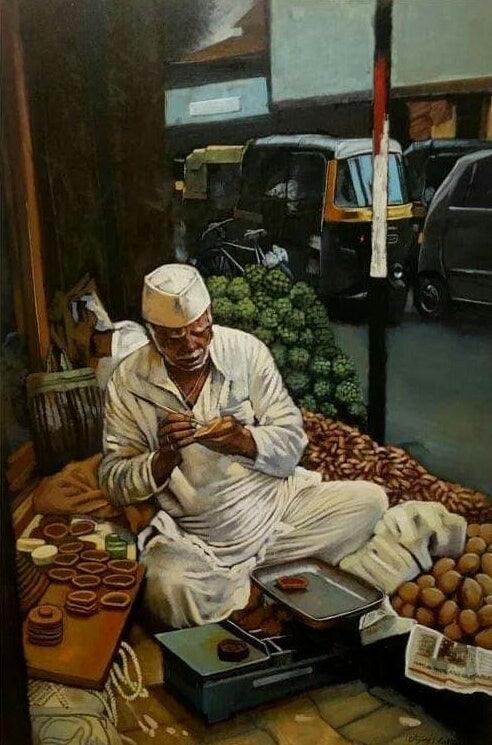
Untitled
Artzolo
₹430,000
★ 5.0 (13)
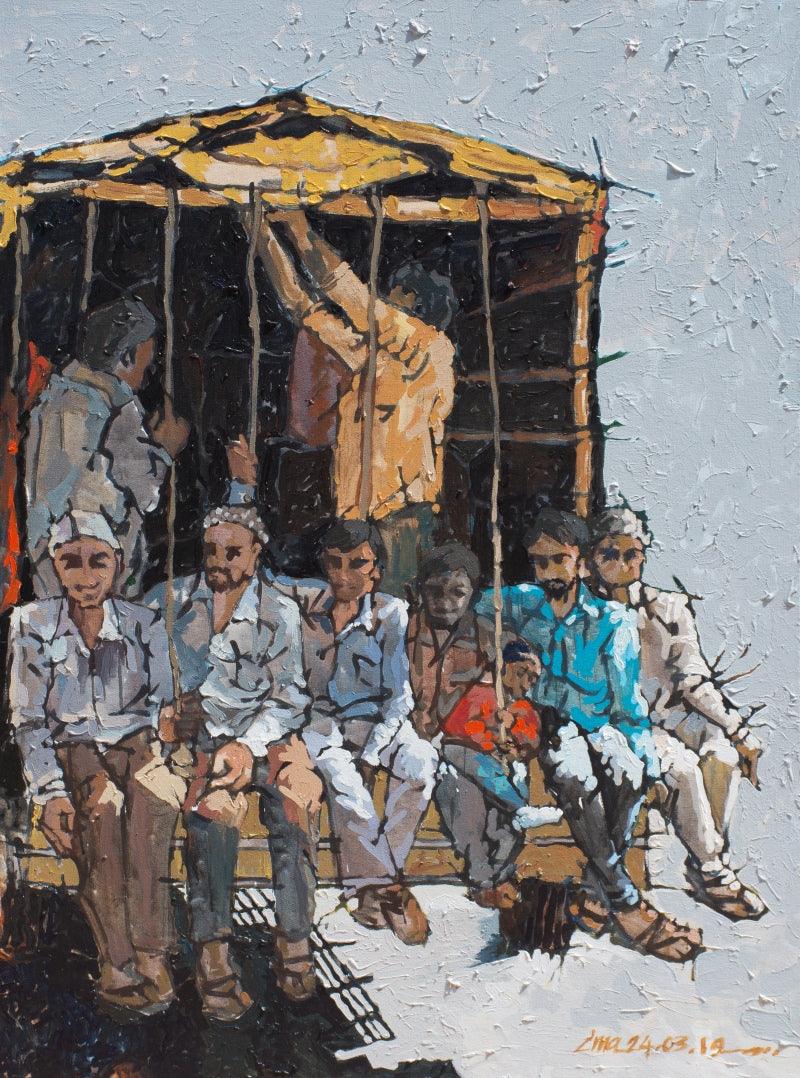
Jata Yeta 2 (The Daily Commute)
Artzolo
₹48,000
★ 5.0 (6)
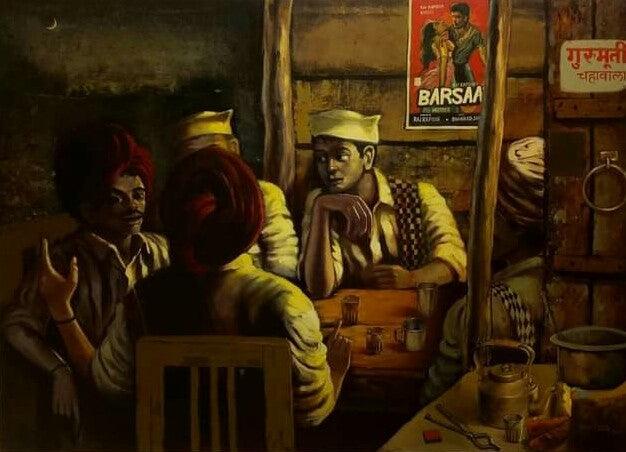
Chaiwala Series 1 (A Lively Tea Stall)
Artzolo
₹630,000
★ 5.0 (6)
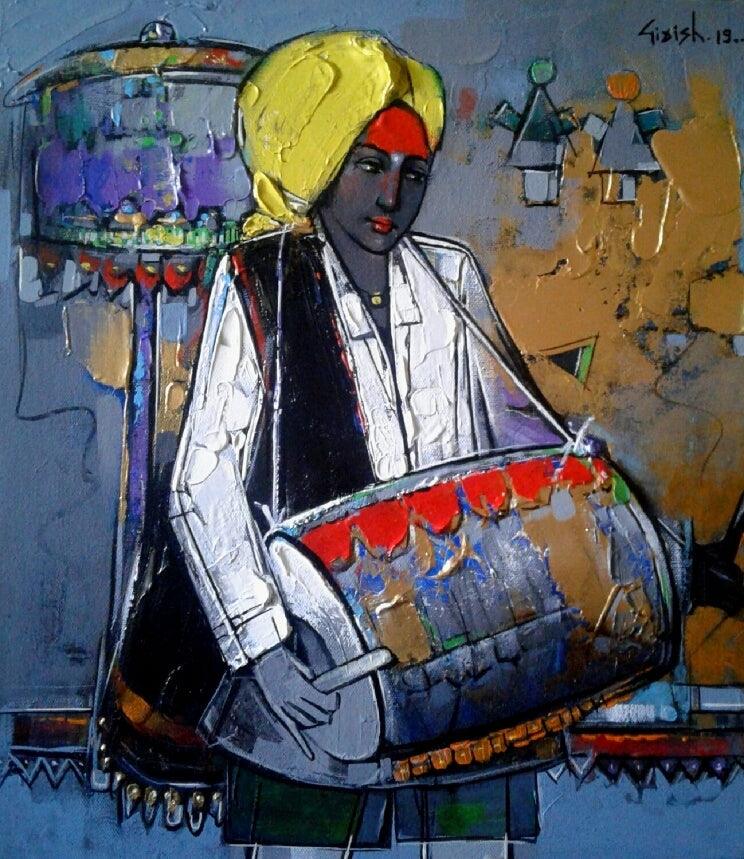
Untitled 6 (The Dhol Player)
Artzolo
₹22,000
out of stock
★ 4.0 (11)
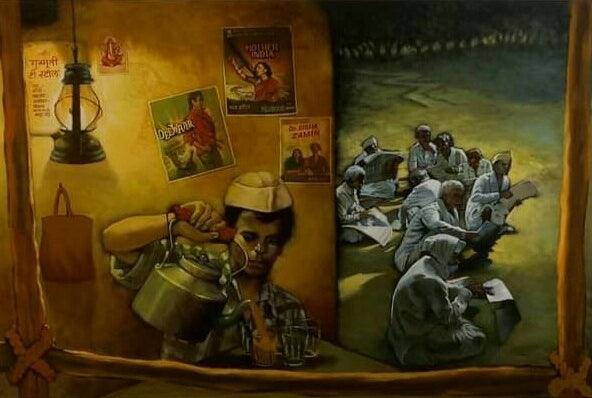
Chaiwala Series 2 (A Moment of Tranquility)
Artzolo
₹430,000
★ 5.0 (8)