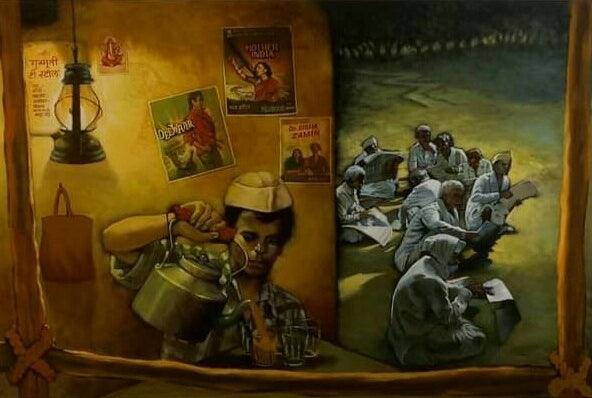
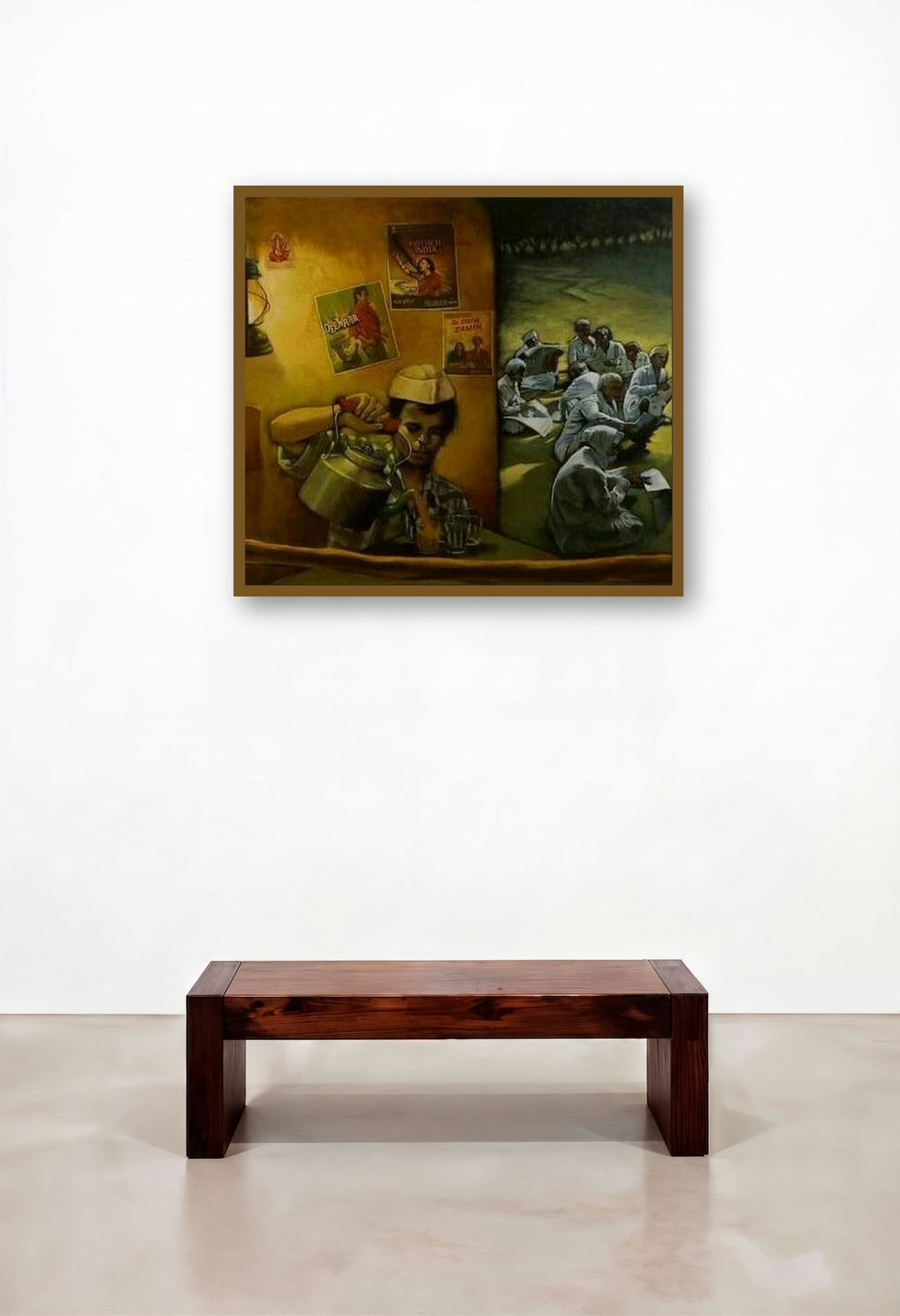
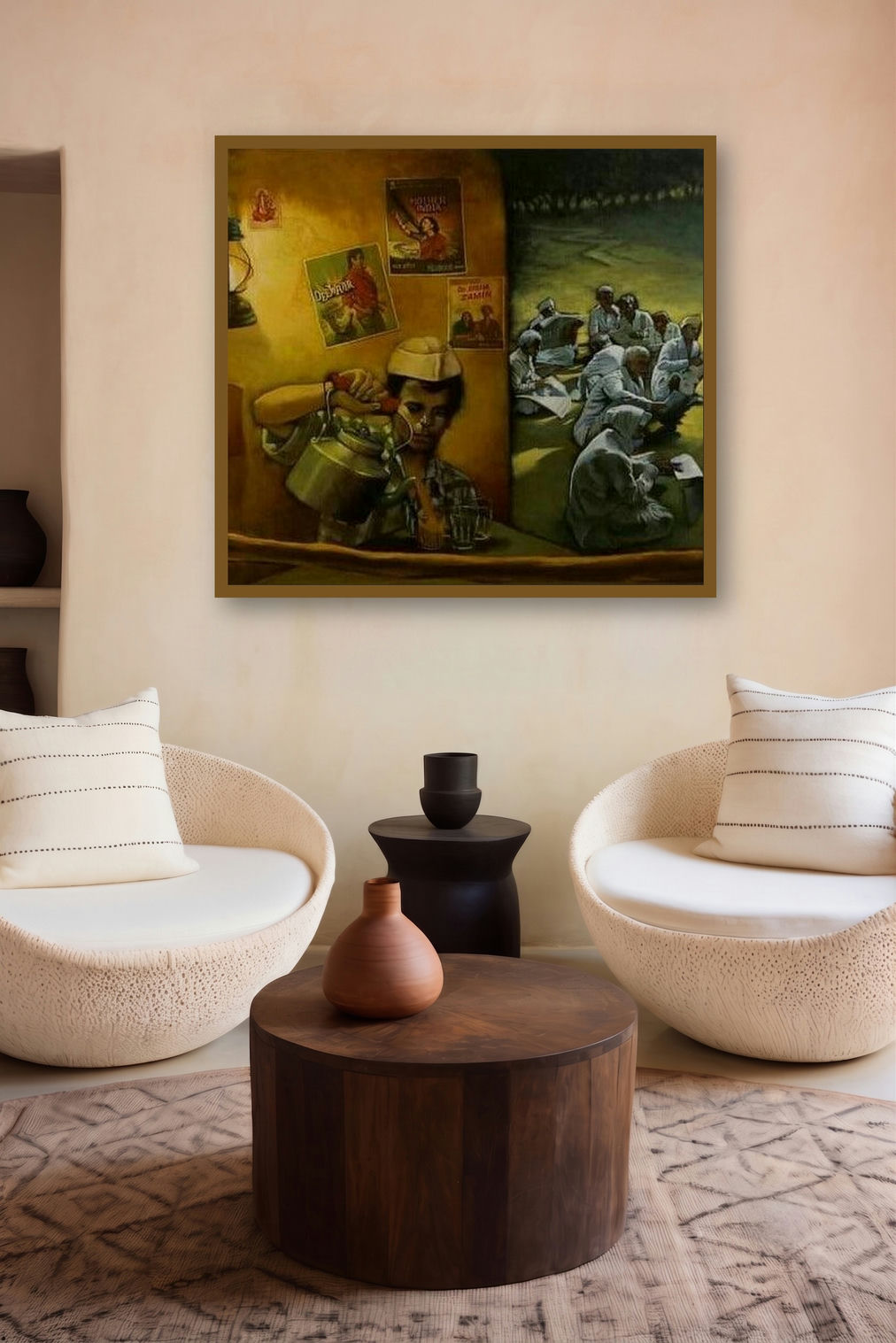
Chaiwala Series 2 (A Moment of Tranquility)
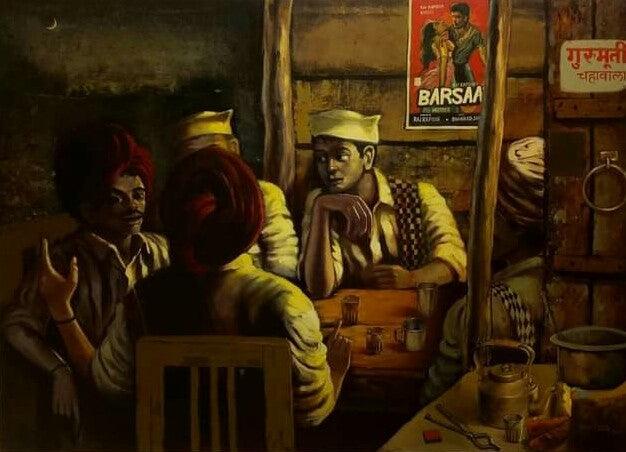
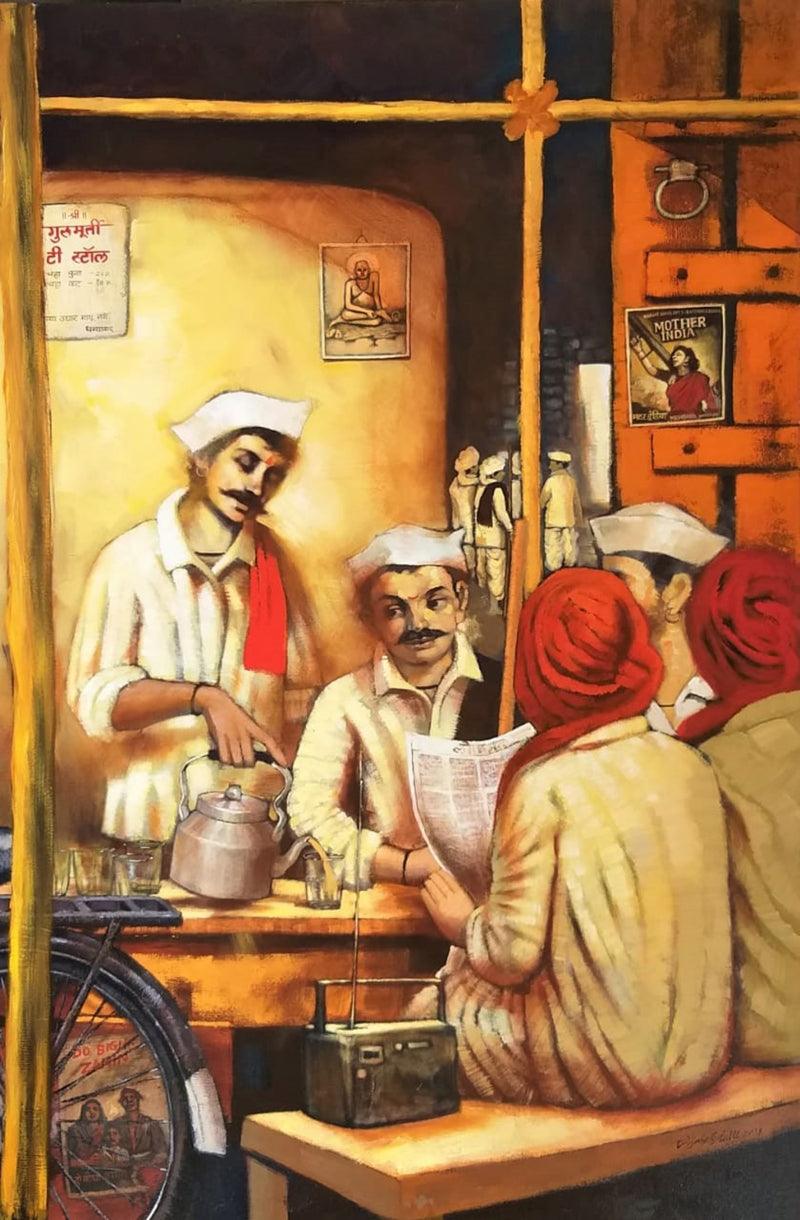
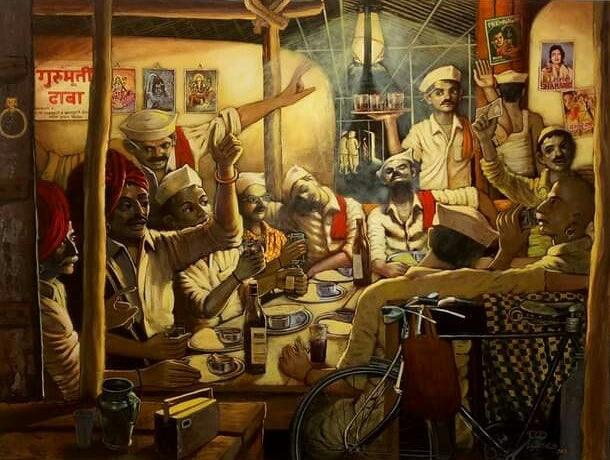
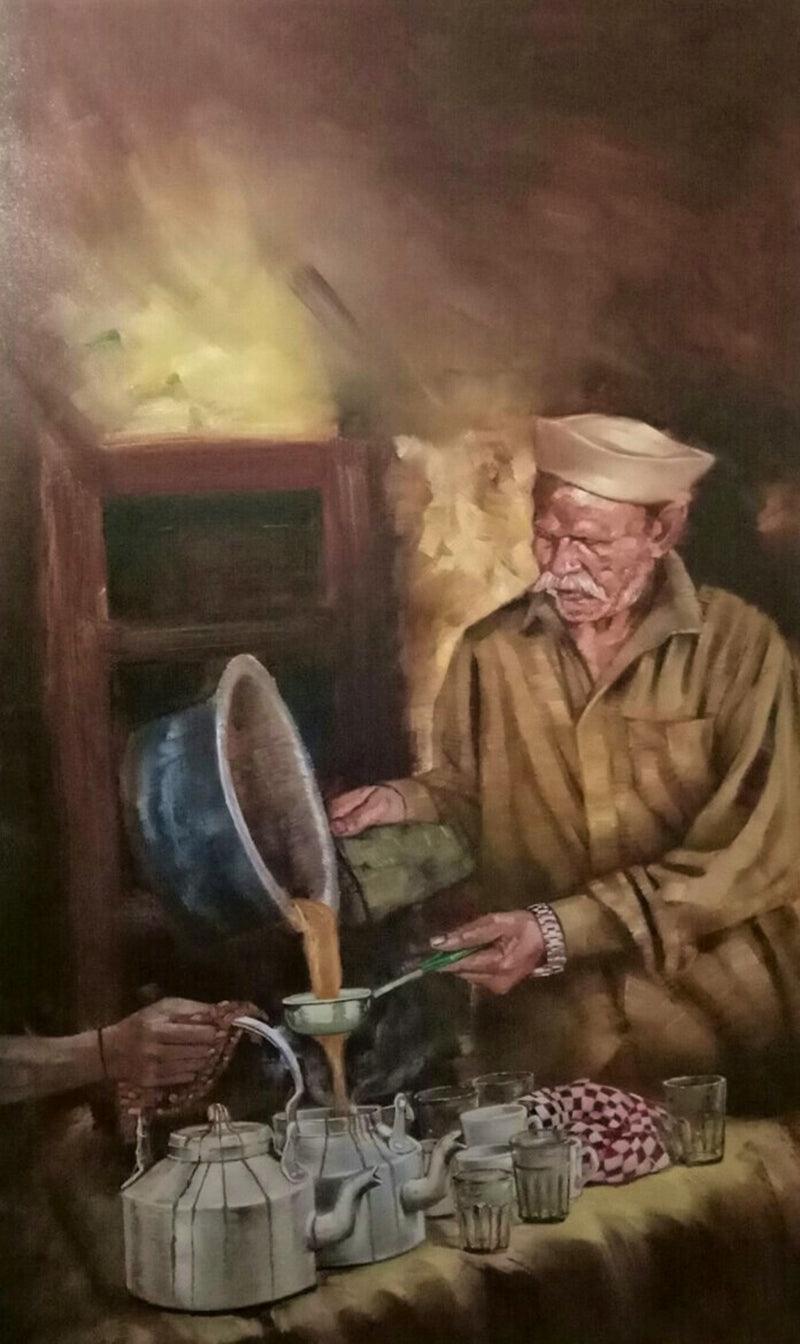
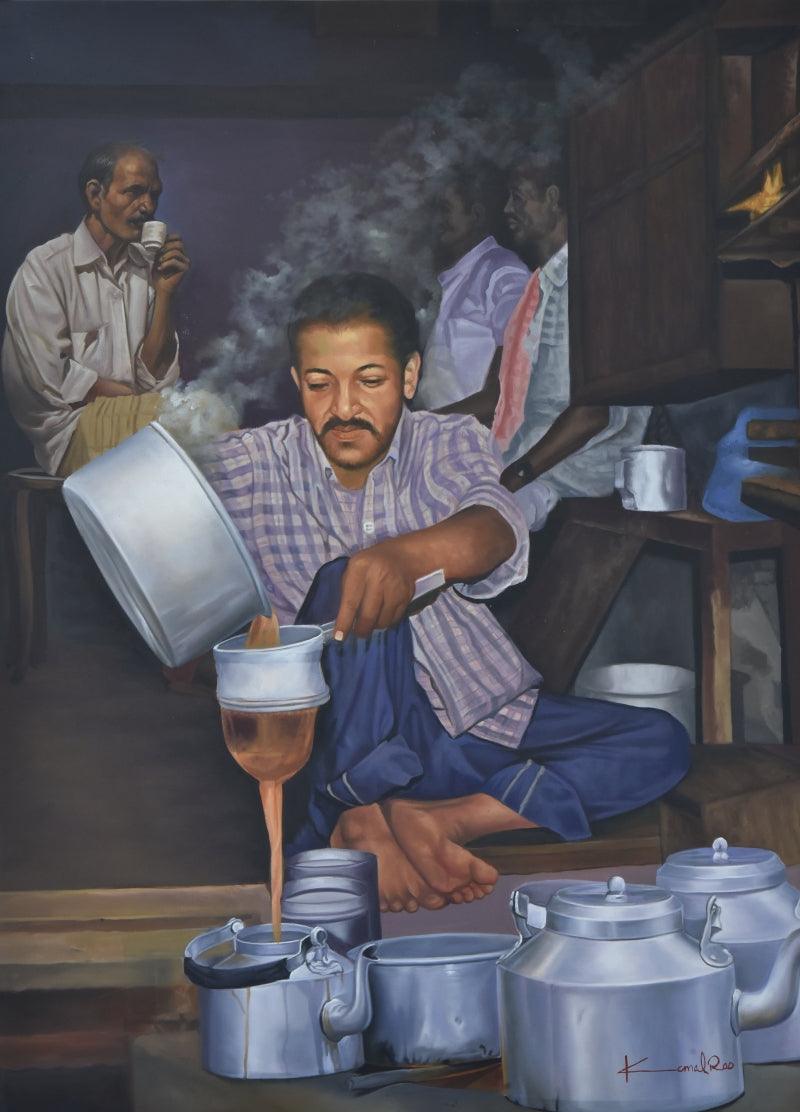
Framed like a memory held at the edge of vision, the painting juxtaposes a solitary tea vendor—caught in the warm, lamp-lit intimacy of his stall—with a distant gathering of men hunched over papers in the greenish dusk, as if public discourse has drifted just beyond the threshold of daily labor. Ochres and browns thicken the foreground into a tactile, domestic immediacy, while the cooler, shadowed background loosens into a communal murmur, turning space itself into a metaphor for social distance and aspiration. Posters and handwritten notices act as quiet witnesses—small proclamations of culture, politics, and entertainment—suggesting how grand narratives seep into ordinary routines without ever fully relieving their weight. The kettle’s poised pour becomes a suspended gesture of service and endurance, implying that even the simplest transaction contains an entire economy of waiting, listening, and belonging.
Delivery
You may also like