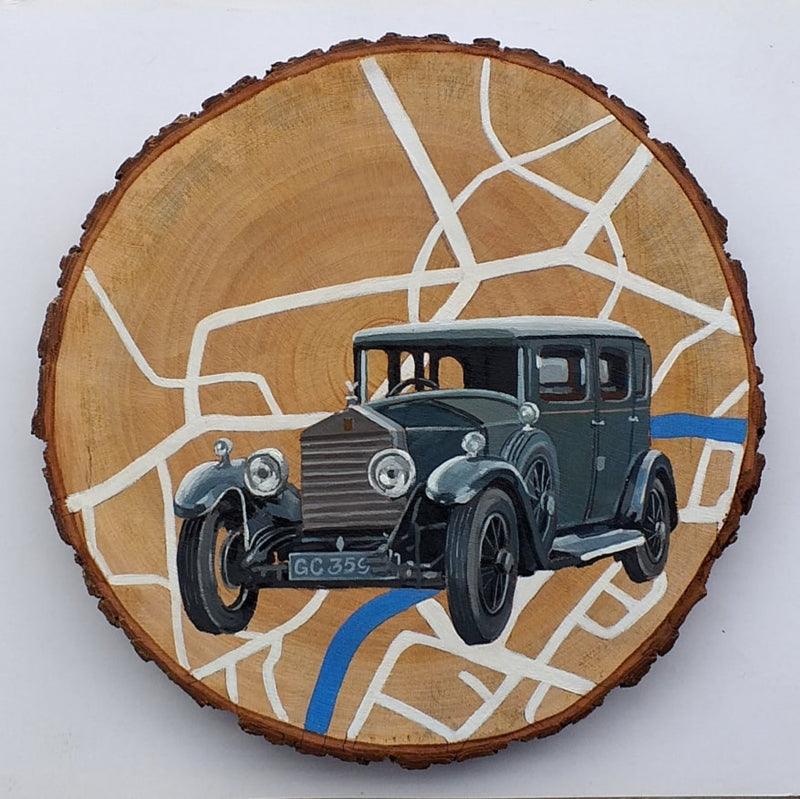
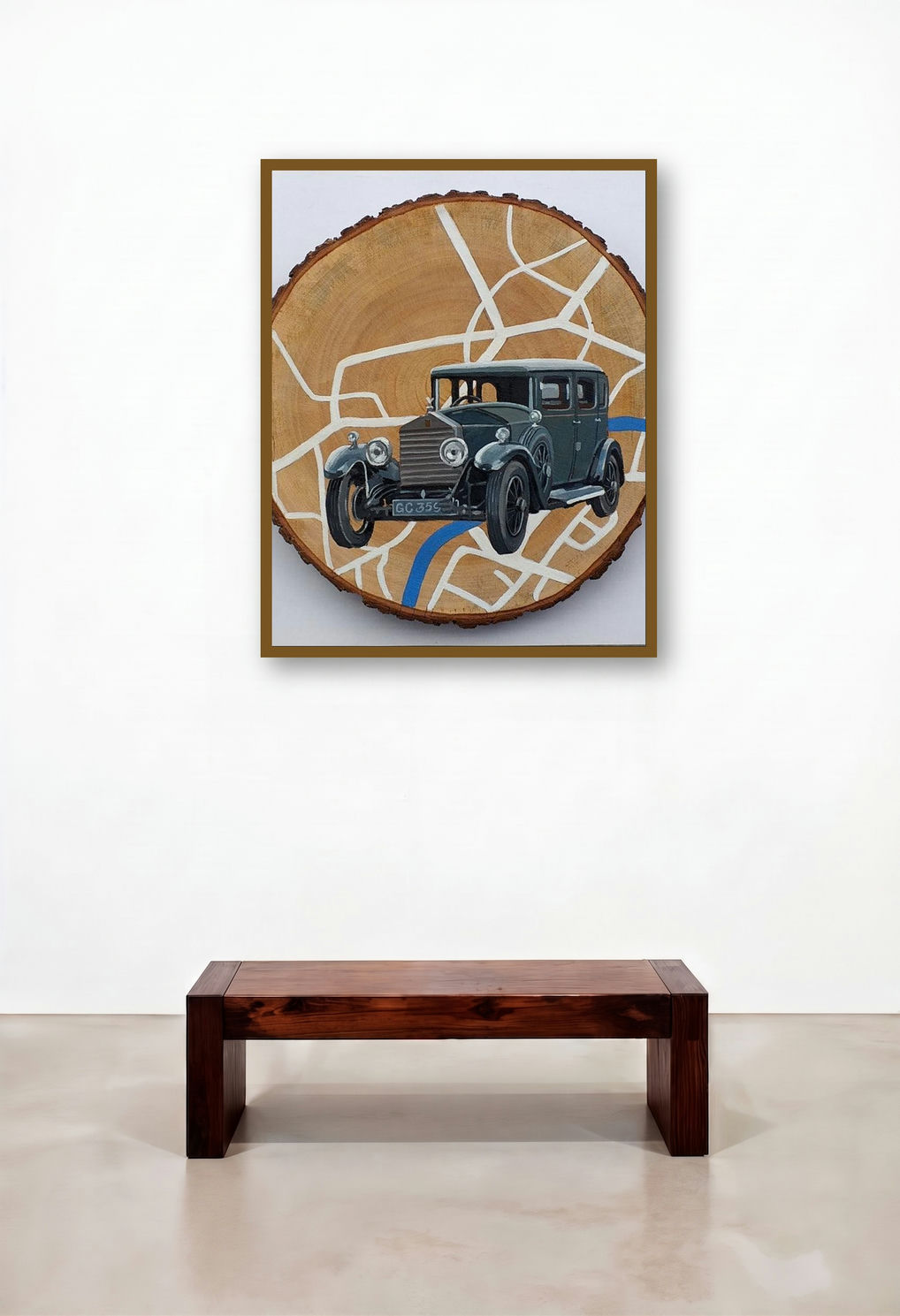
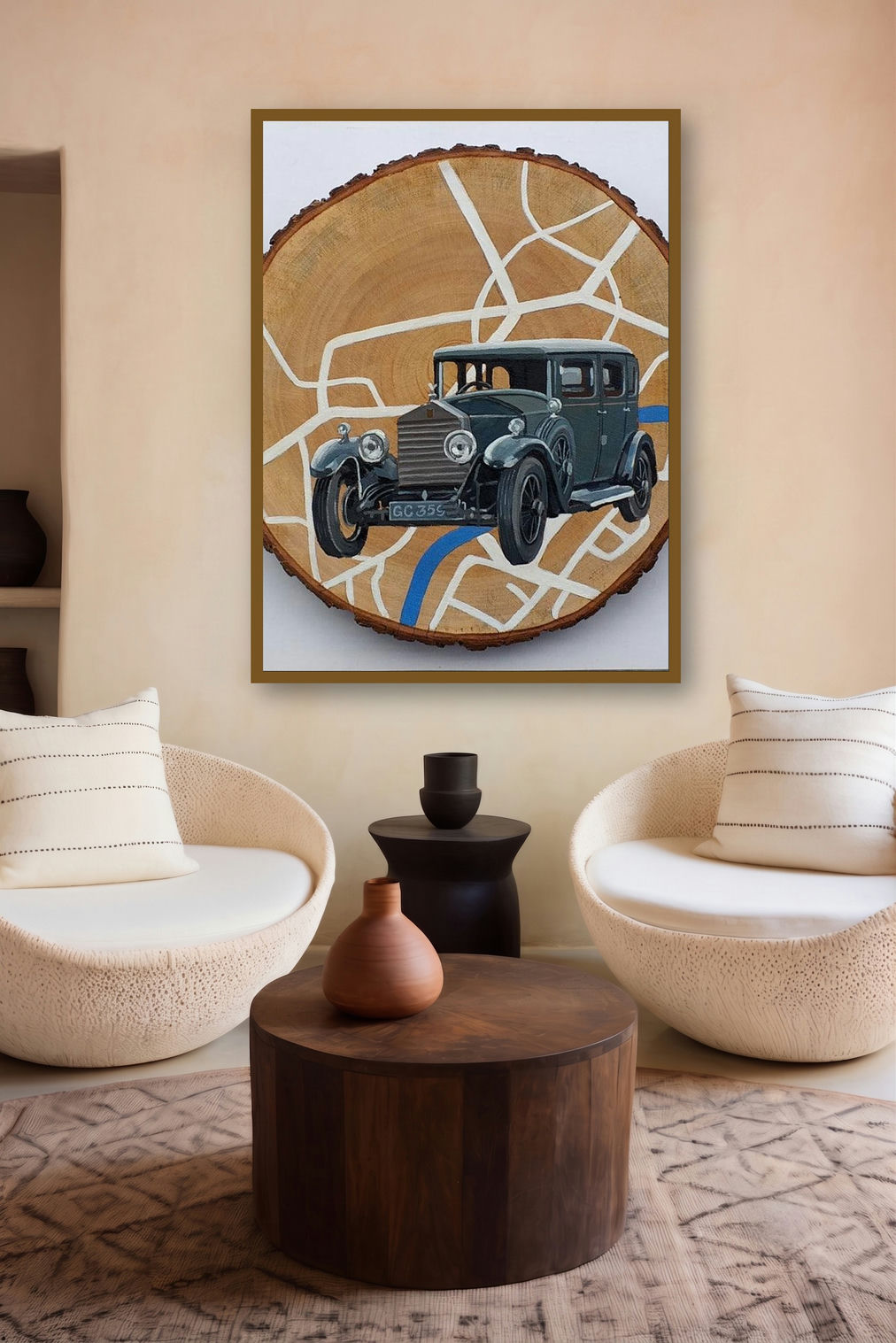
Vintage Car (A Journey Through Time)
₹7,500
● In stock · ★ 4.0 (11)checking live price…
Size
10x10Type
OriginalMaterial
WoodSet against the raw concentric rings of a wood-slice “time capsule,” the vintage automobile arrives like a polished artifact of modernity, its steel-gray body rendered with crisp realism and a quiet, dignified weight. Behind it, a spare network of white routes and a single cobalt bend read as both map and memory—an abstract geography that turns travel into a lived interior landscape rather than a literal destination. The composition stages a dialogue between organic growth and engineered speed, suggesting that every forward motion is traced atop older cycles, and that progress is always haunted—gently—by the grain of what came before.
Delivery
You may also like
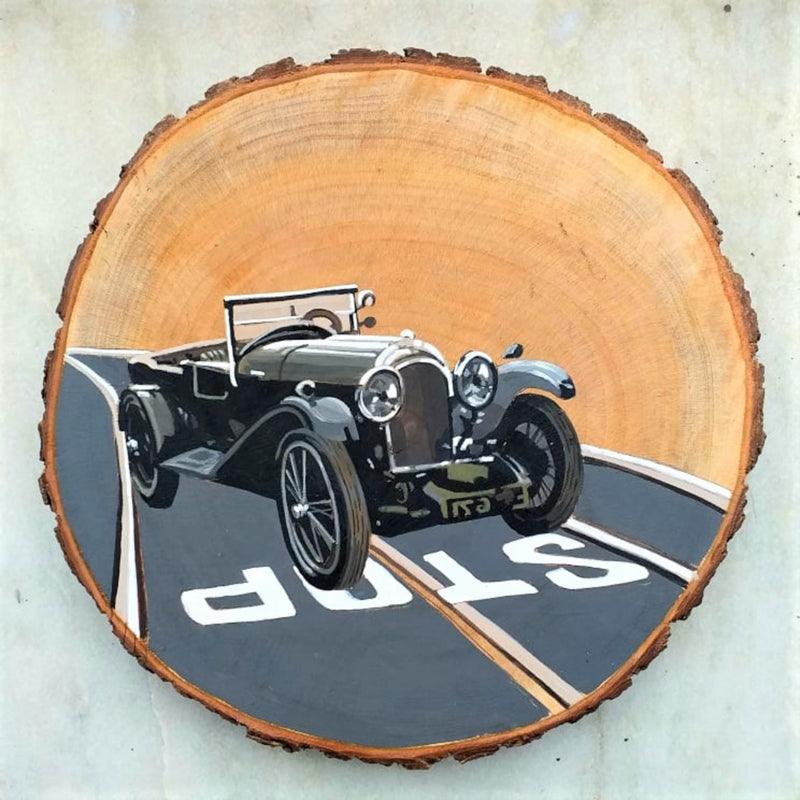
Old Hertiage
Artzolo
₹15,000
out of stock
★ 5.0 (7)
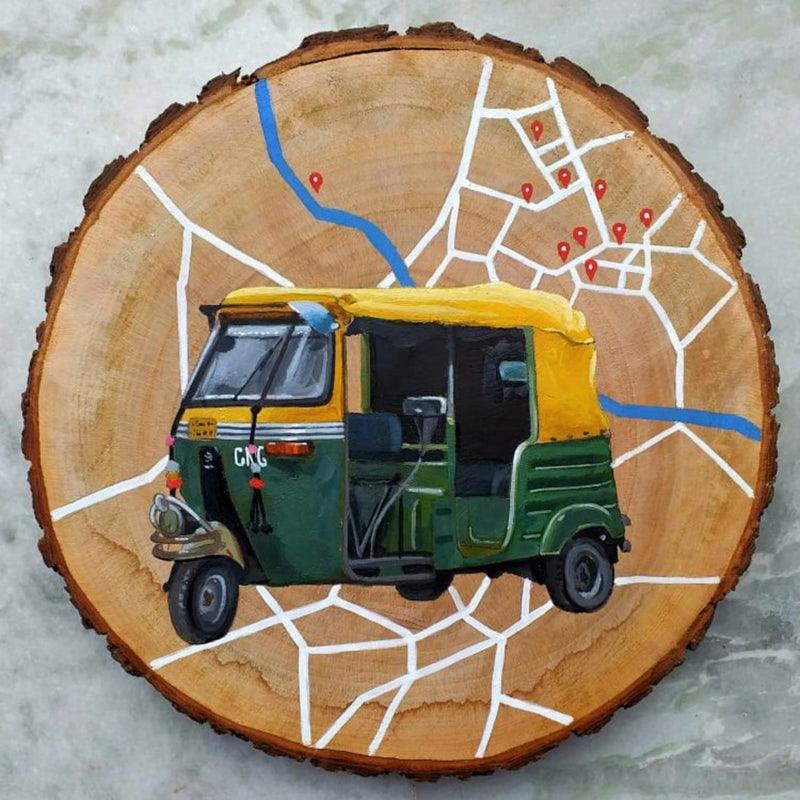
Autorickshaw
Artzolo
₹15,000
out of stock
★ 5.0 (13)
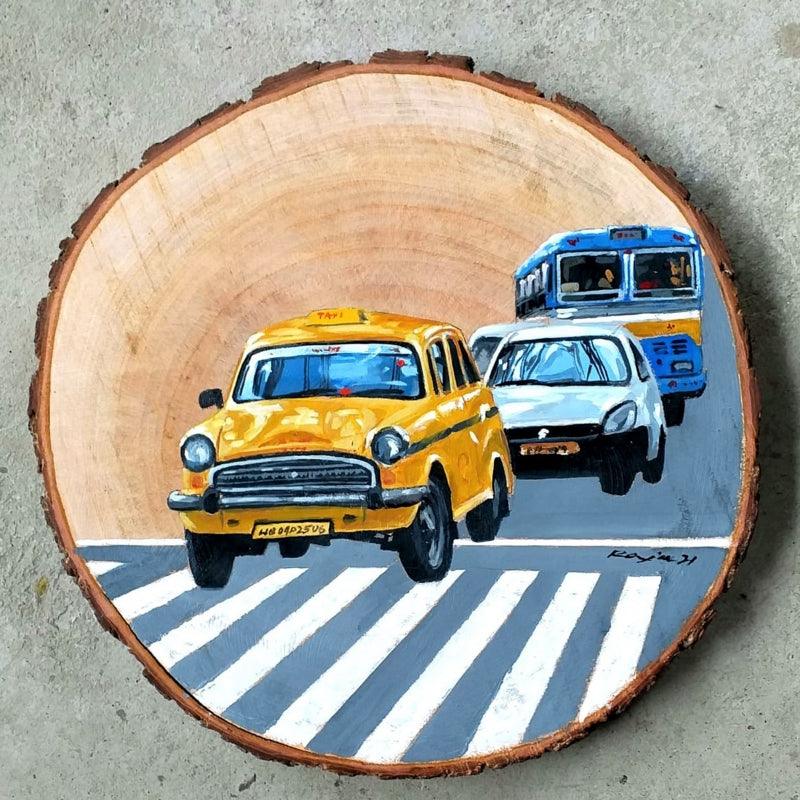
Untitled 2
Artzolo
₹15,000
out of stock
★ 5.0 (12)
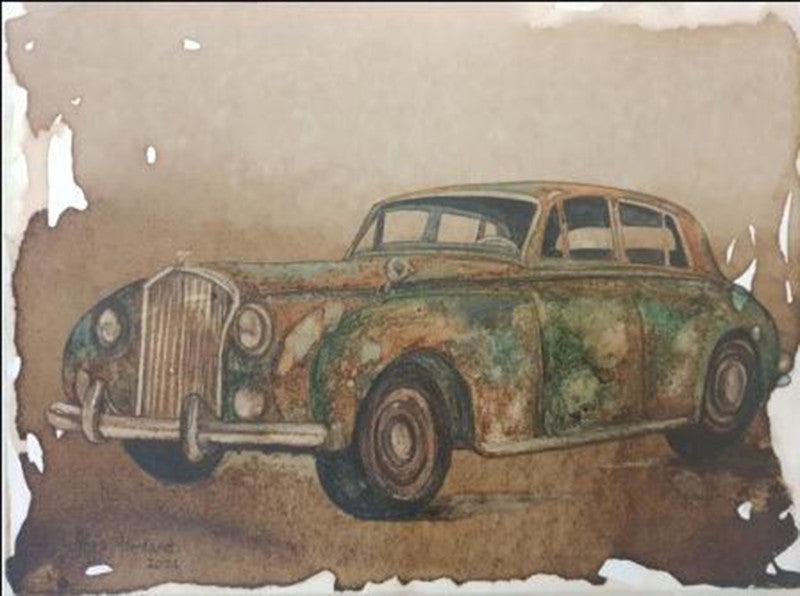
Vintage Car 1 (Faded Glory)
Artzolo
₹65,000
★ 5.0 (11)
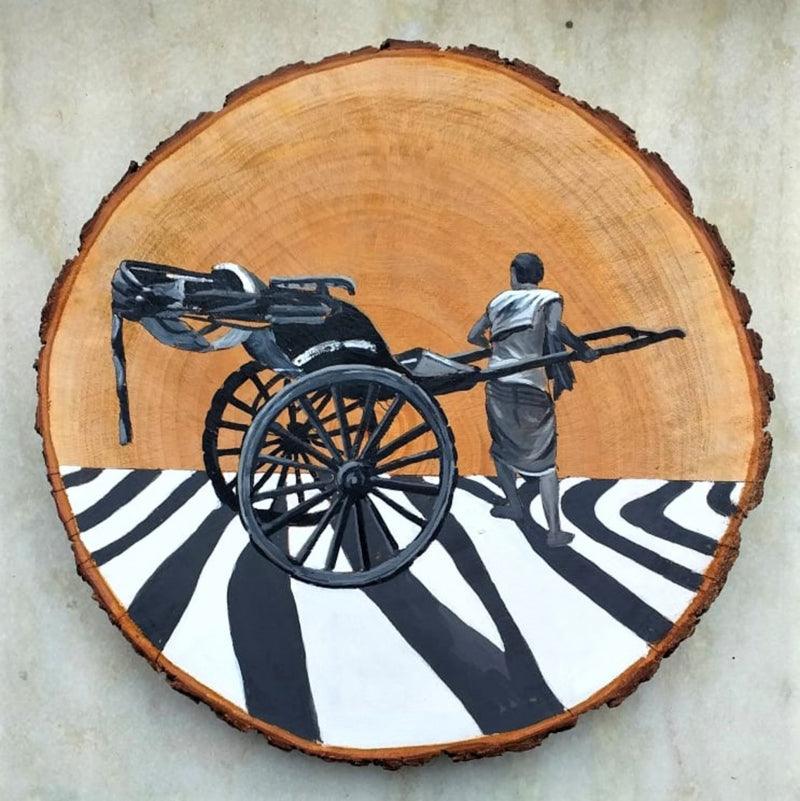
Untitled 3
Artzolo
₹15,000
out of stock
★ 5.0 (9)
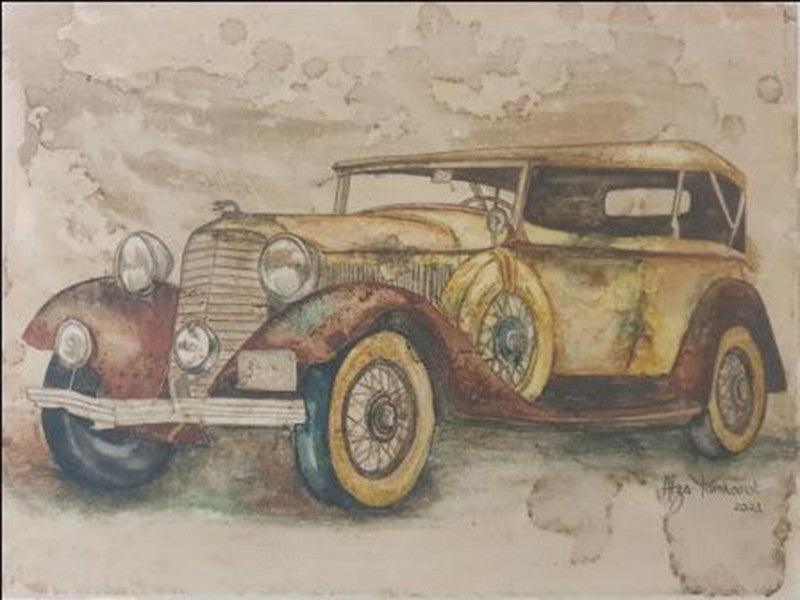
Vintage Car 2 (Rust and Repose)
Artzolo
₹65,000
★ 4.0 (5)
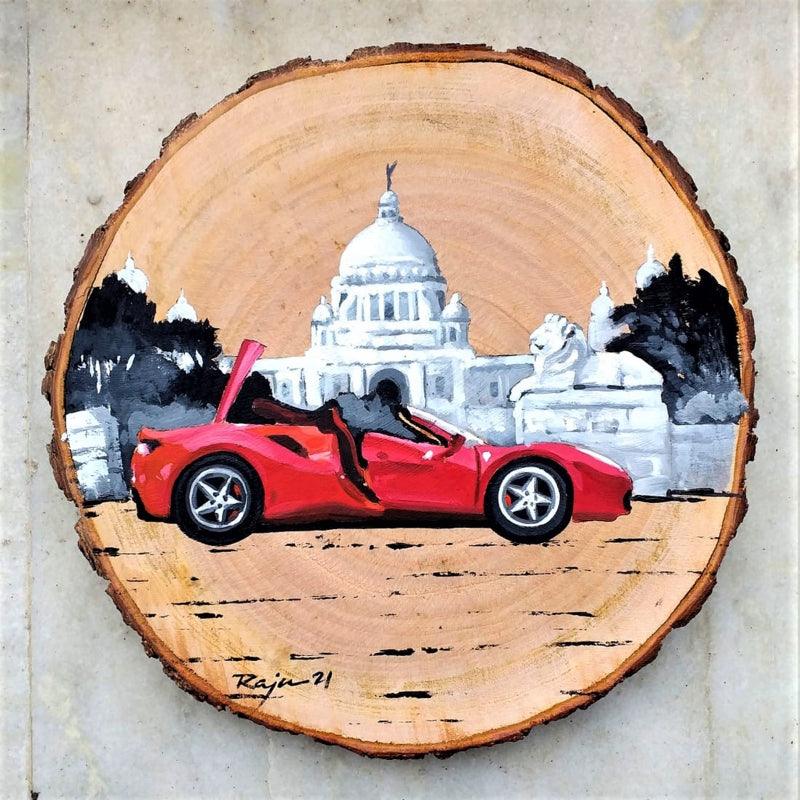
Untitled
Artzolo
₹15,000
out of stock
★ 4.0 (9)
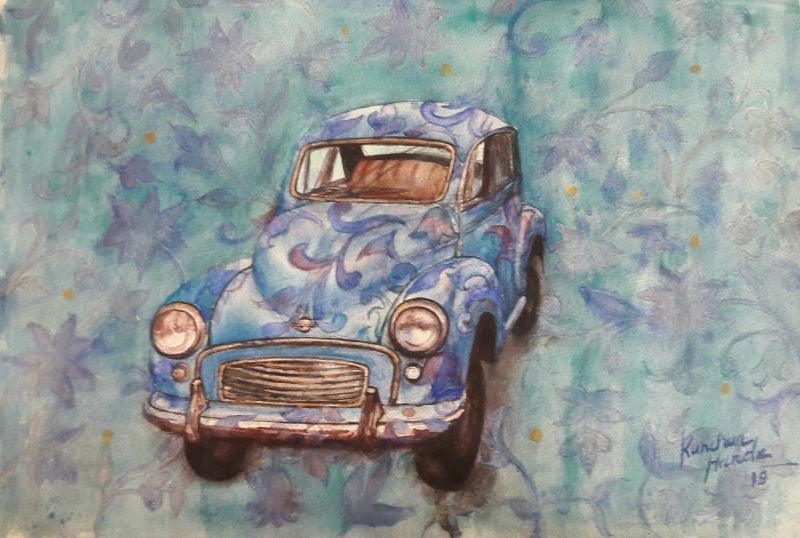
Vintage Series 3 (Floral Fantasy Car)
Artzolo
₹15,000
★ 4.0 (14)