Kawa Maliky one-of-a-kind-afghan rug
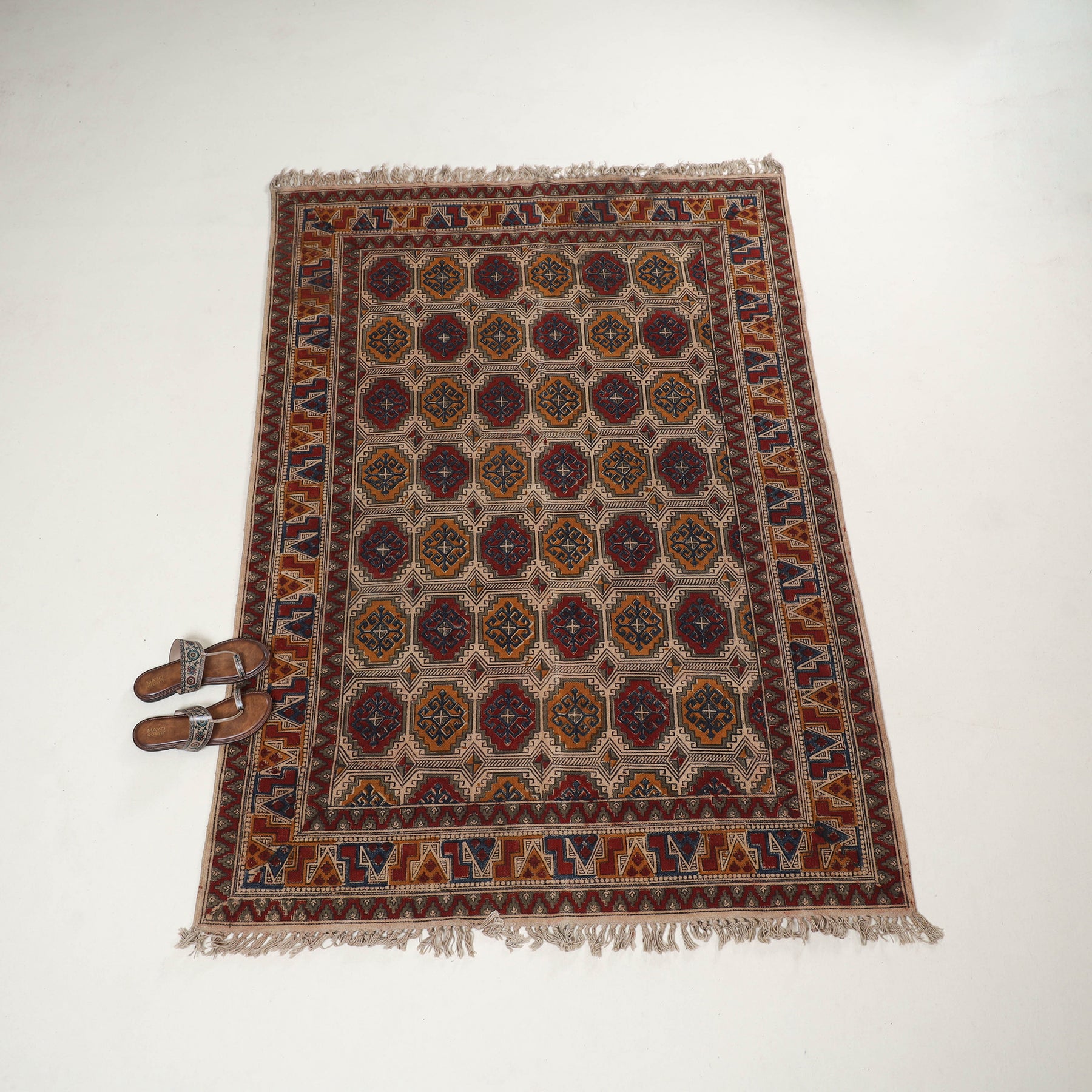
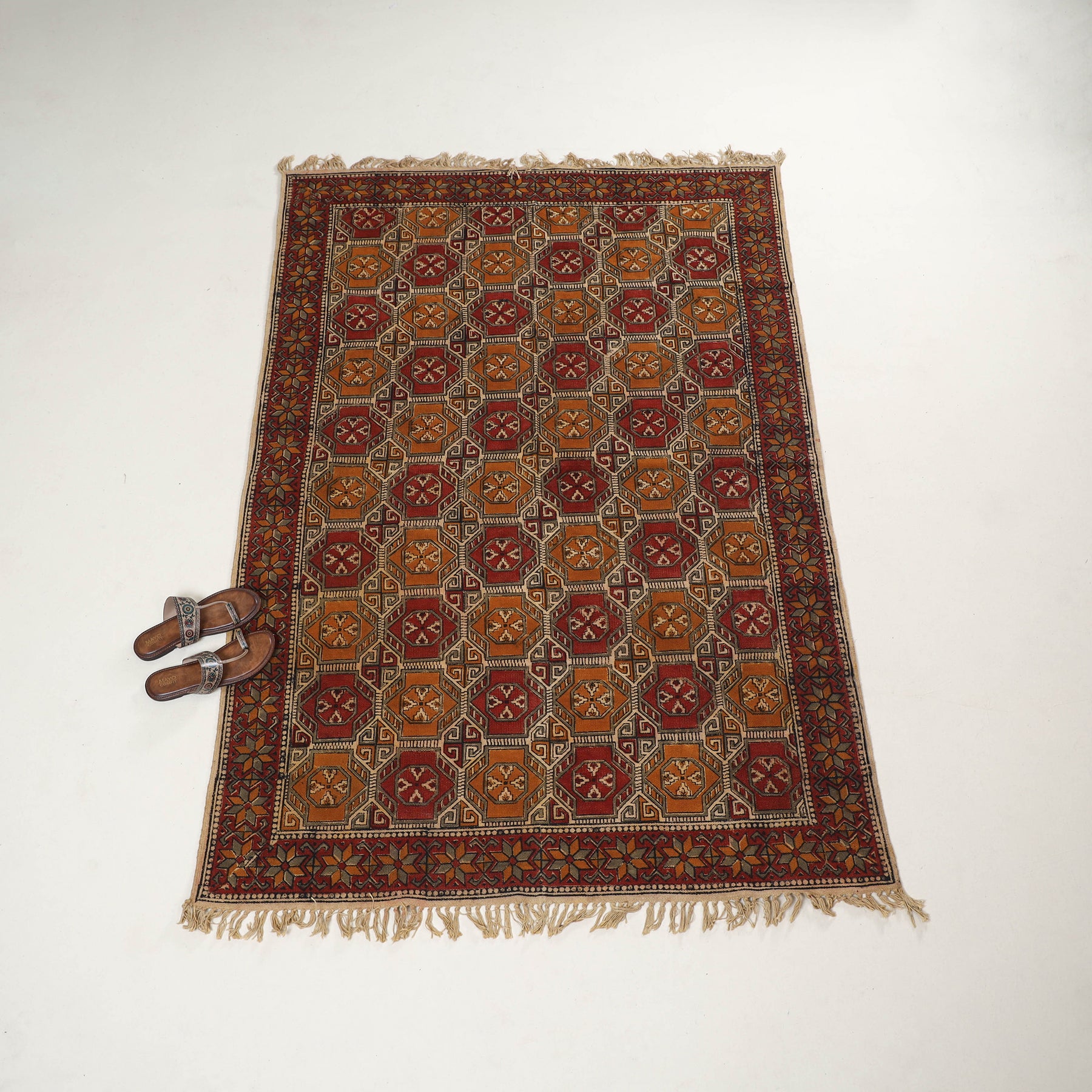
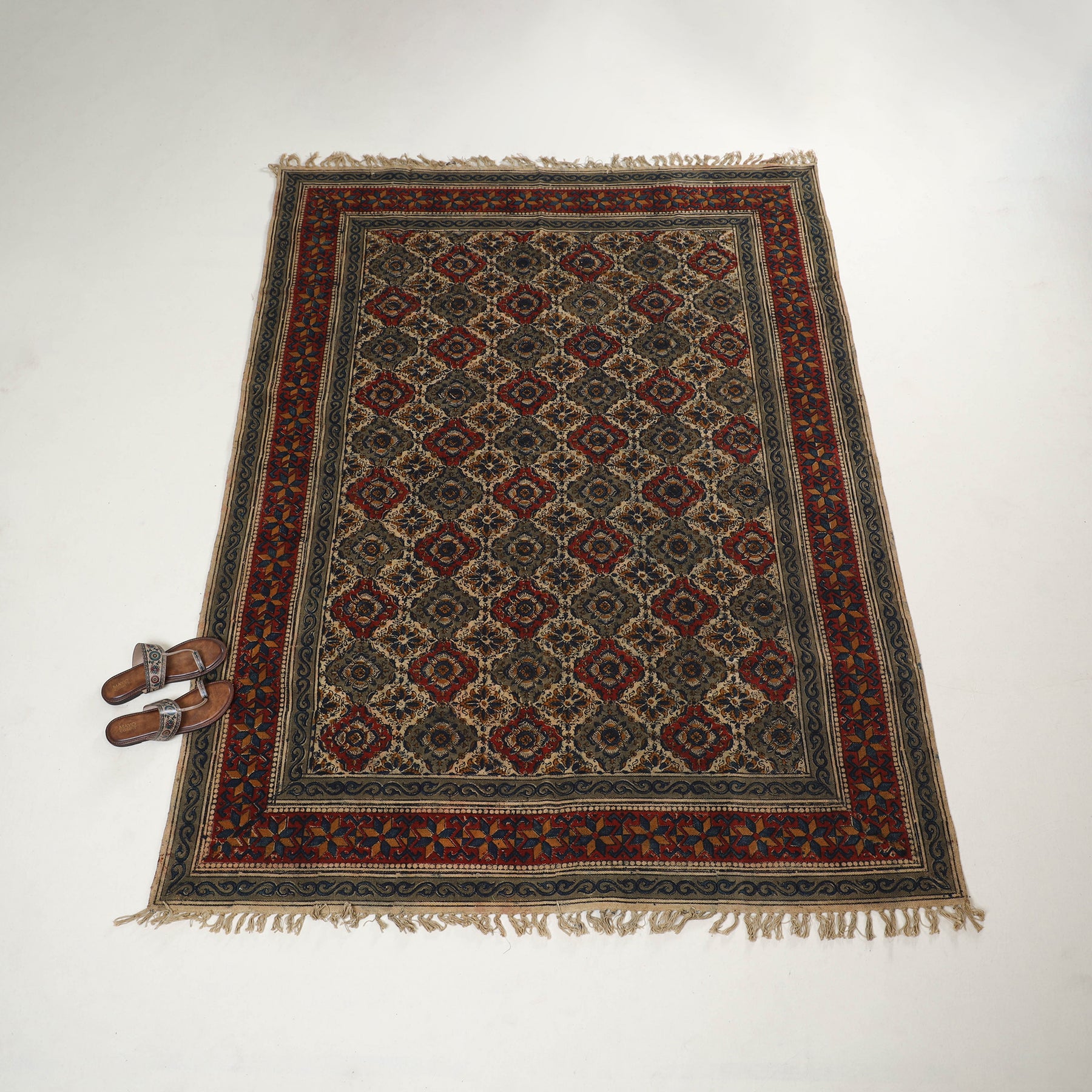
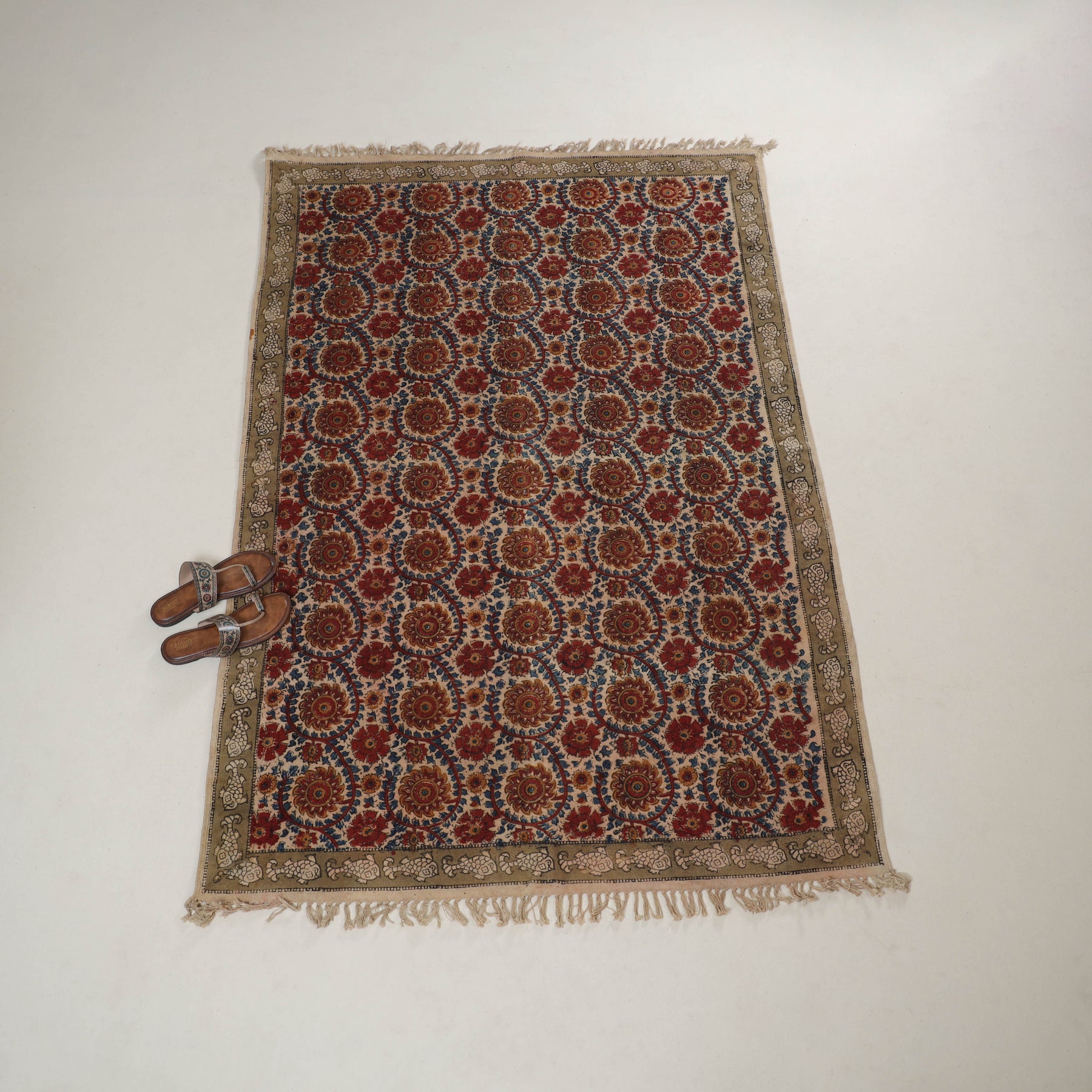
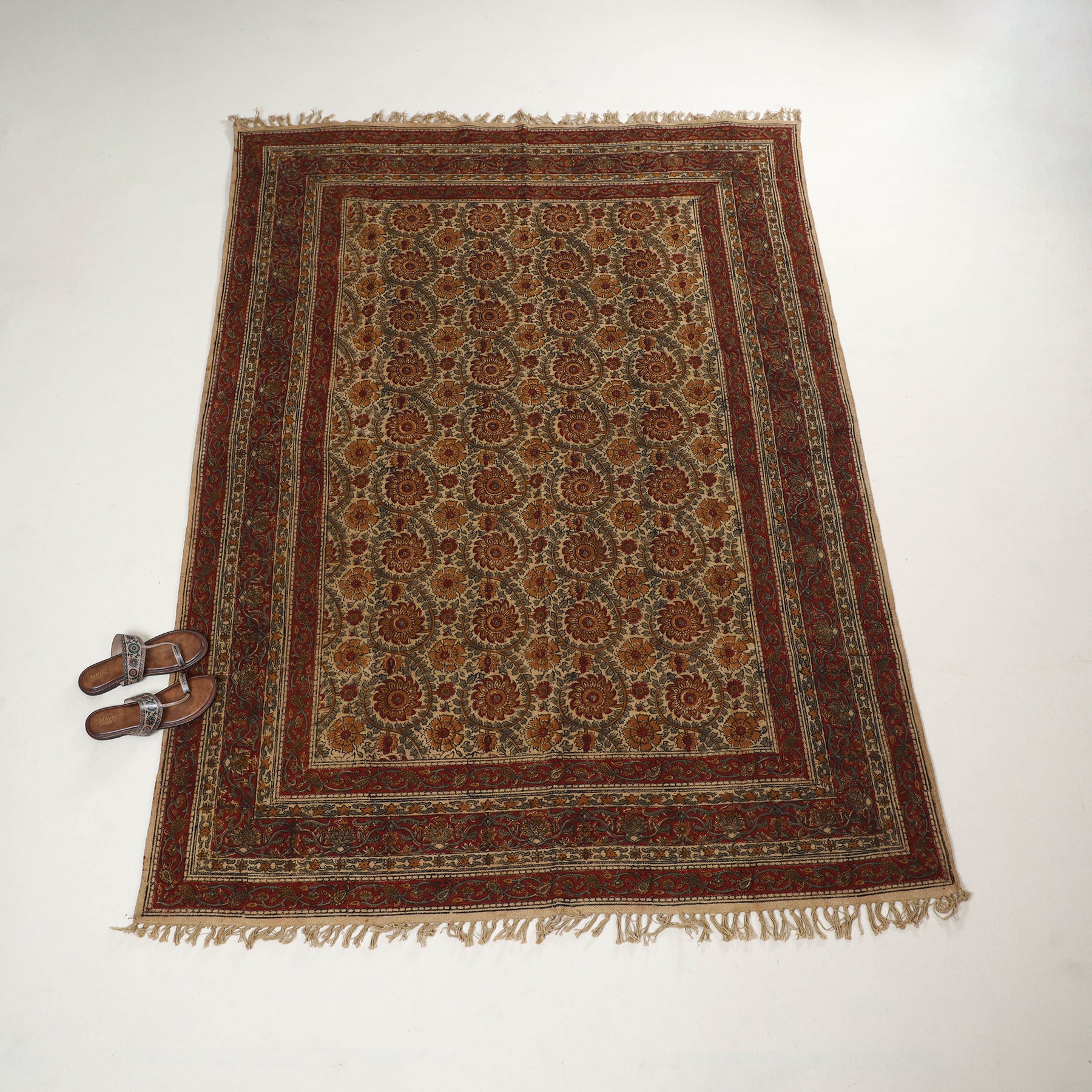
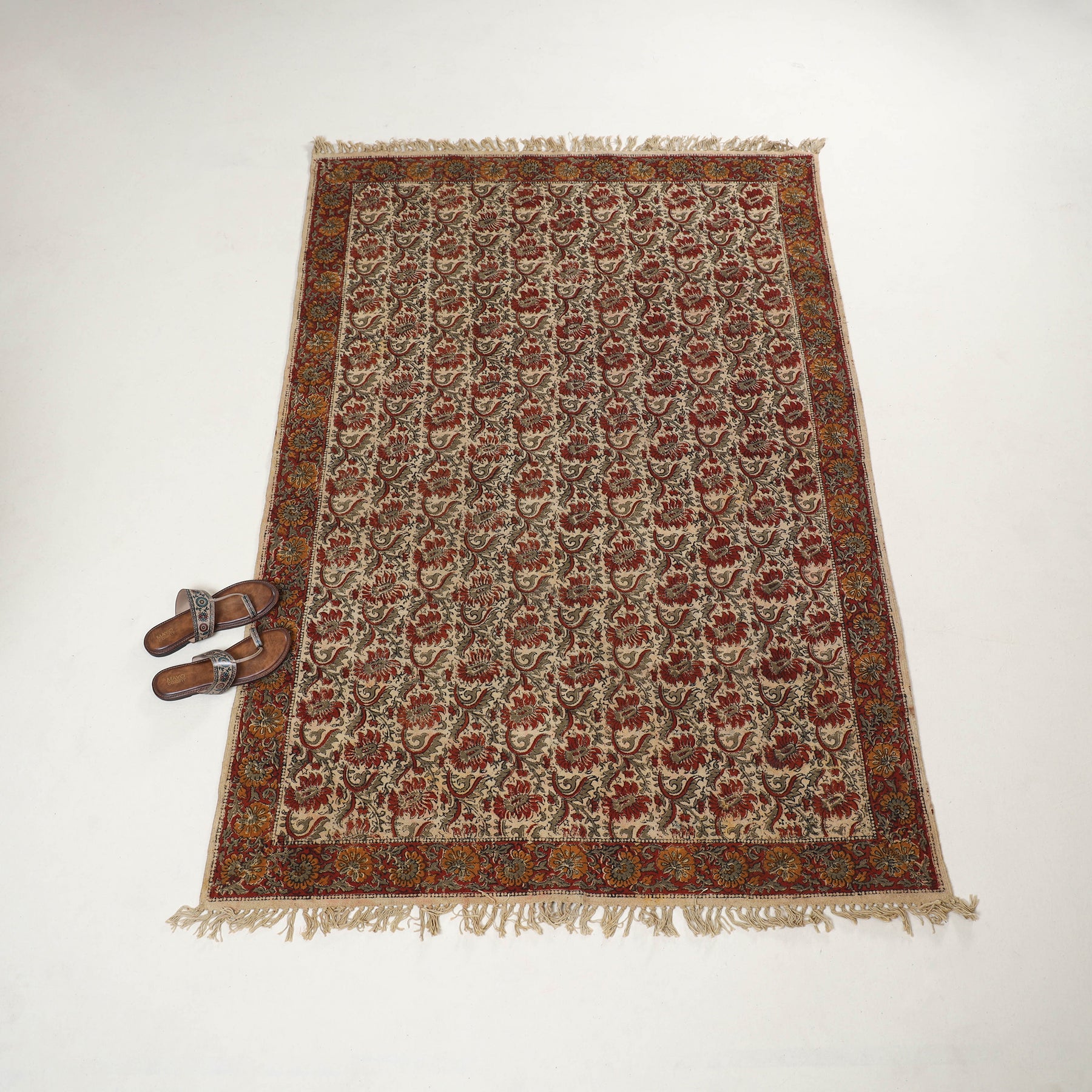
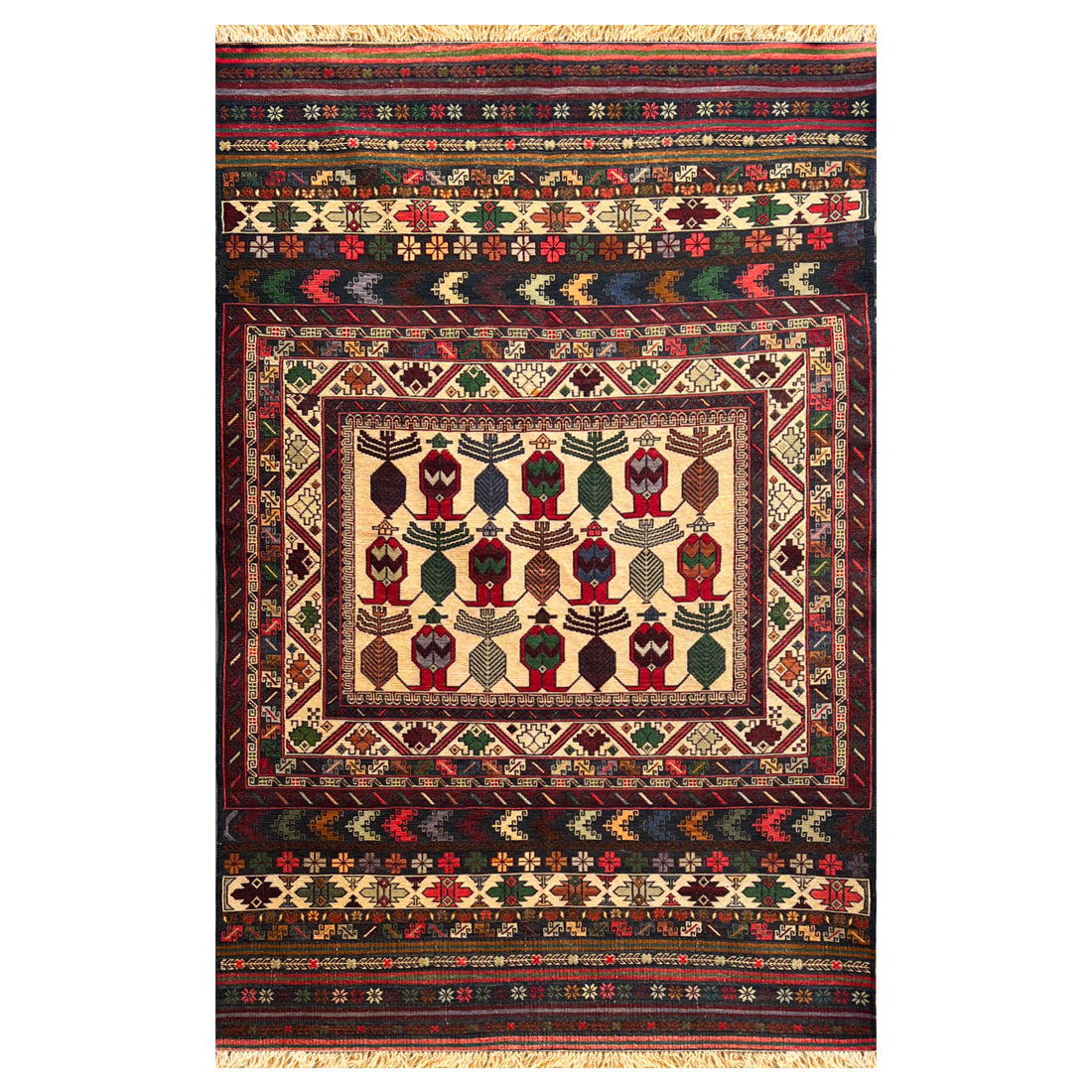
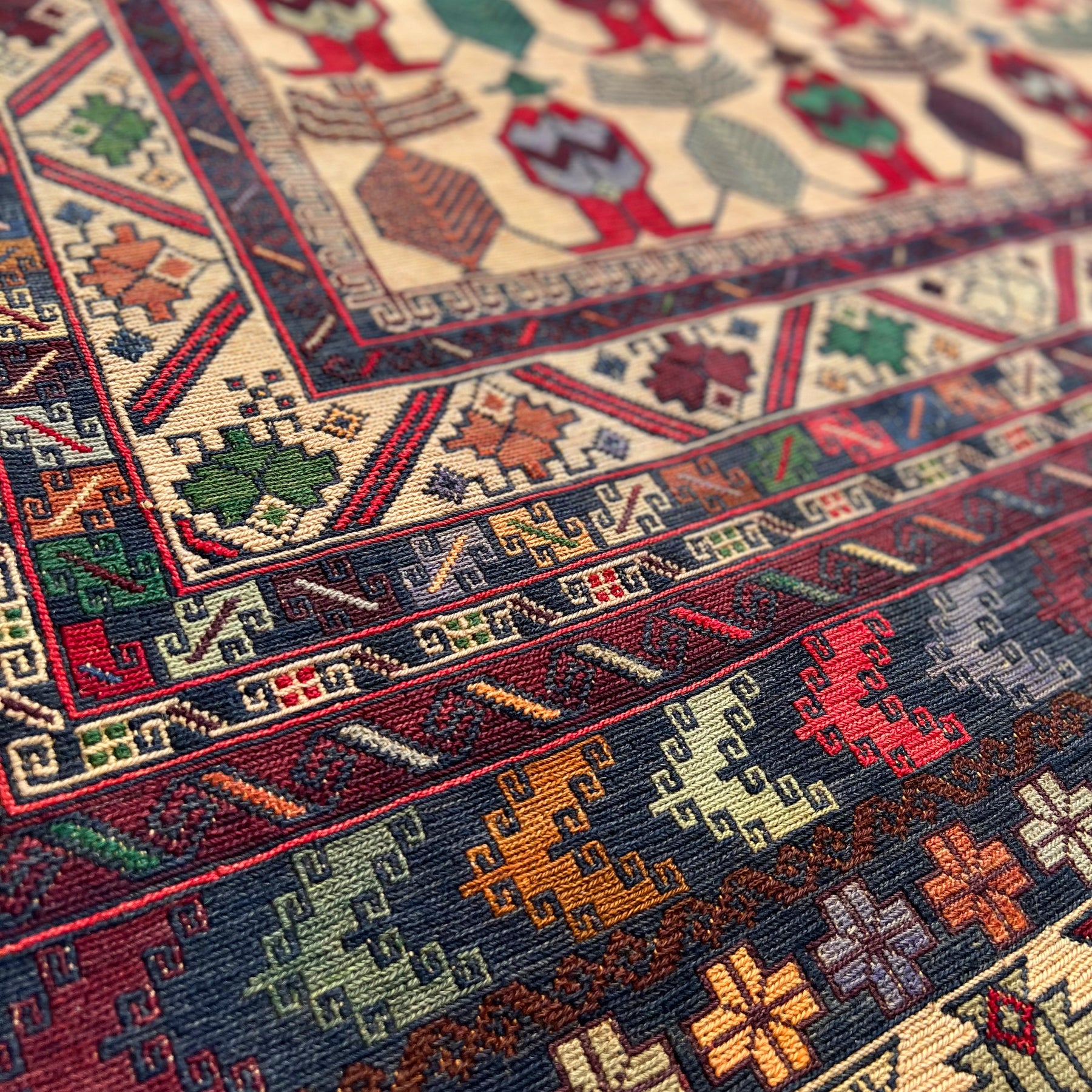
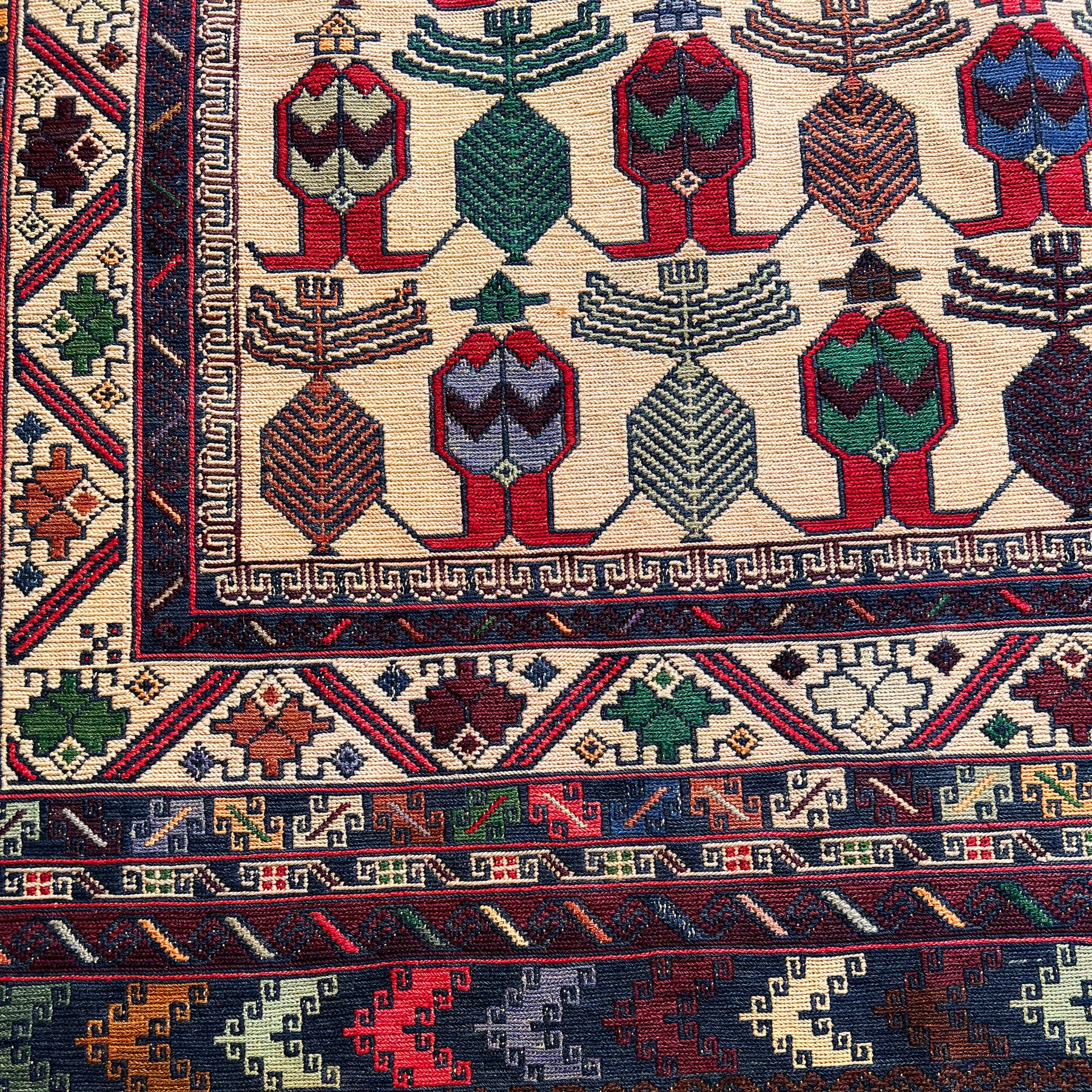
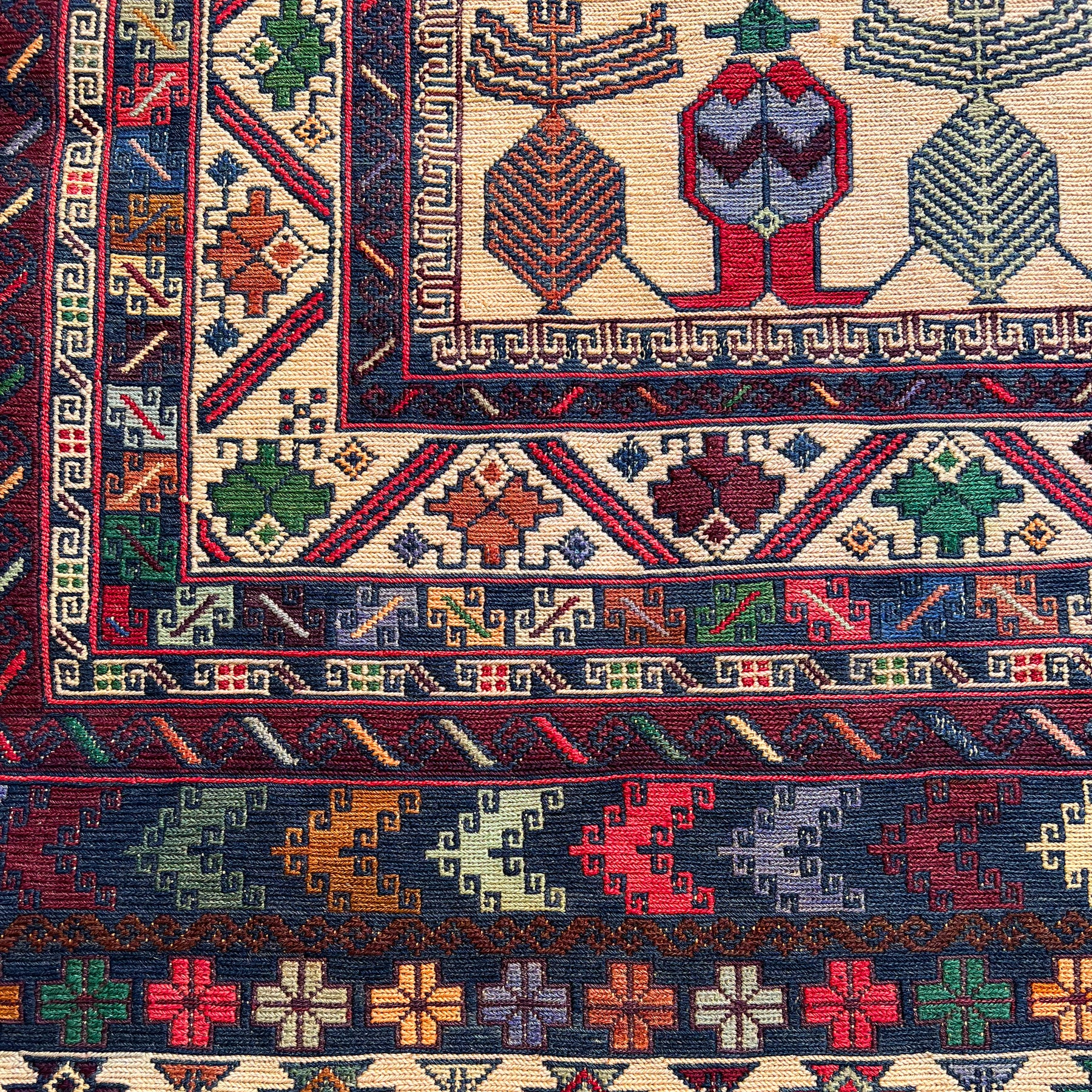
A Herat Maliky flatweave of warm ivory central field and vivid dark-ground border panels — a composition built from two distinct weaving traditions in the same piece.
The central field is arranged in an allover repeat of stylised tree forms — each one a distinctive device with a wide spreading base and branching upper body — worked across the ivory ground in alternating colours: deep navy, forest green, crimson, amber-brown, teal-grey. The repeat is formally regular but the colour of each individual tree shifts through the sequence, the polychromatic palette building across a structured grid in a way that reads as both disciplined and lively. The tree repeat is one of the older compositional formats in the Herat Afghan tradition, and in this open ivory-ground version it carries a freshness and informality that darker-field versions of the same type do not.
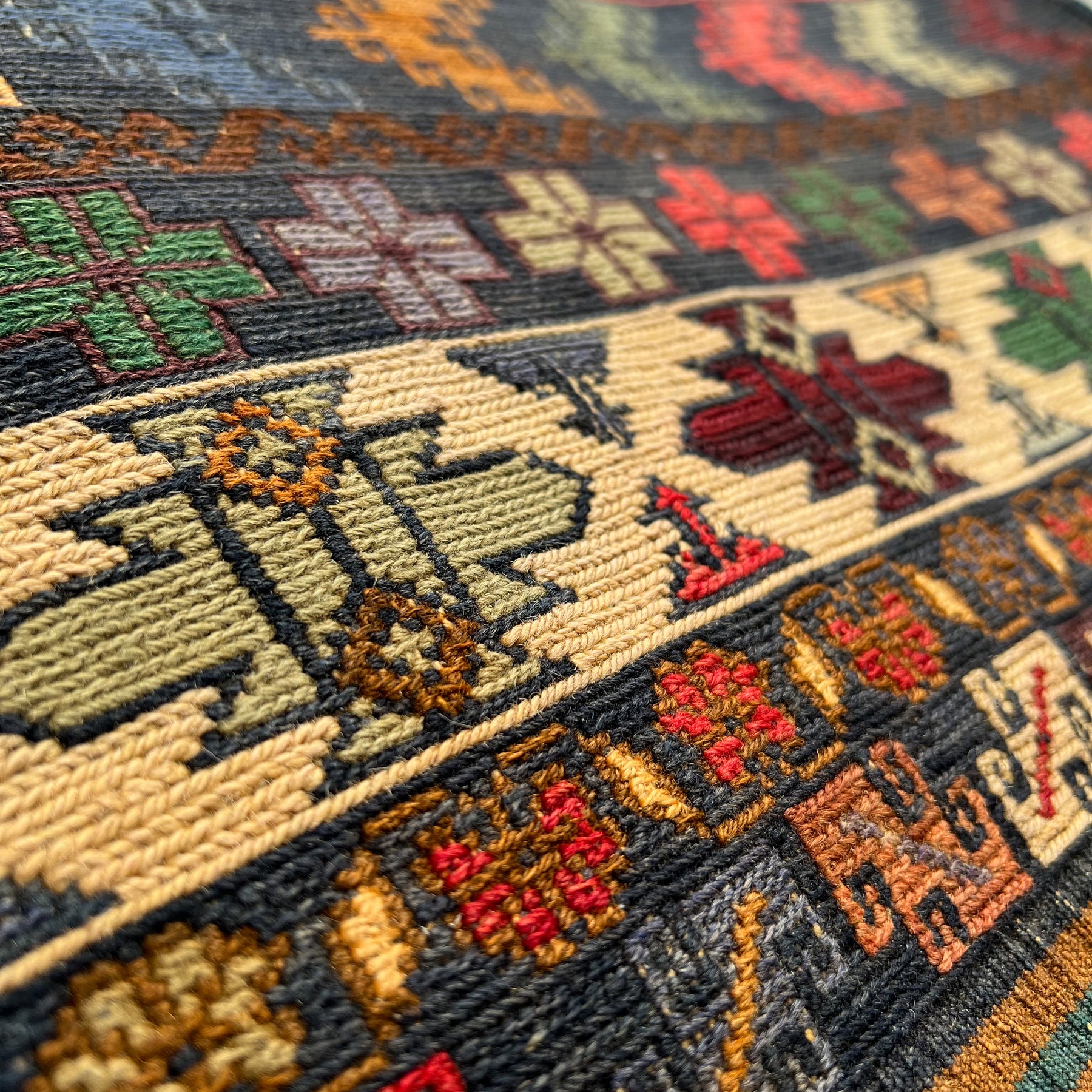
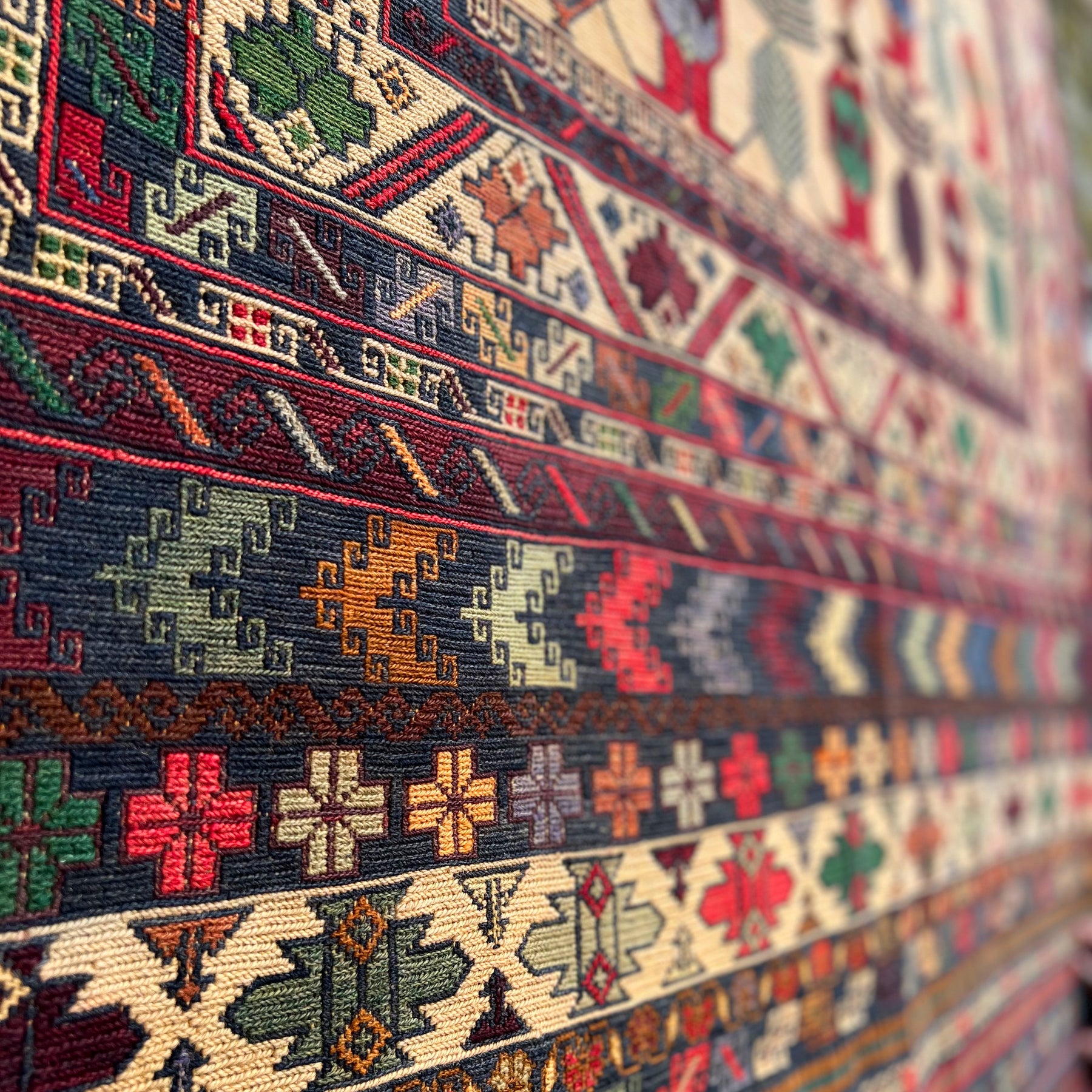
The surrounding panels — at head, foot, and along the lateral edges — are woven in a different register entirely: a dark charcoal-olive ground carrying bold multicolour chevron and arrow forms in orange, red, green, and teal, interspersed with bands of small star-rosette devices on ivory. The contrast between the open ivory central field and the dense vivid borders is the compositional logic of the piece: two different colour temperatures, two different densities, held together by the craft that produced both. Woven in wool by Turkmen craftspeople in Herat.
A hand-woven rug is an investment piece. With proper care it will last a lifetime and become a cherished heirloom. Each piece in this collection is made by hand, making every piece entirely one of a kind.
Variations in colour and tone — known as abrash — are a hallmark of authentic handmade rugs, particularly tribal and vintage pieces. Wear and age only add to their beauty.
| Origin | Herat, Afghanistan |
| Tribe | Turkmen (Maliky) |
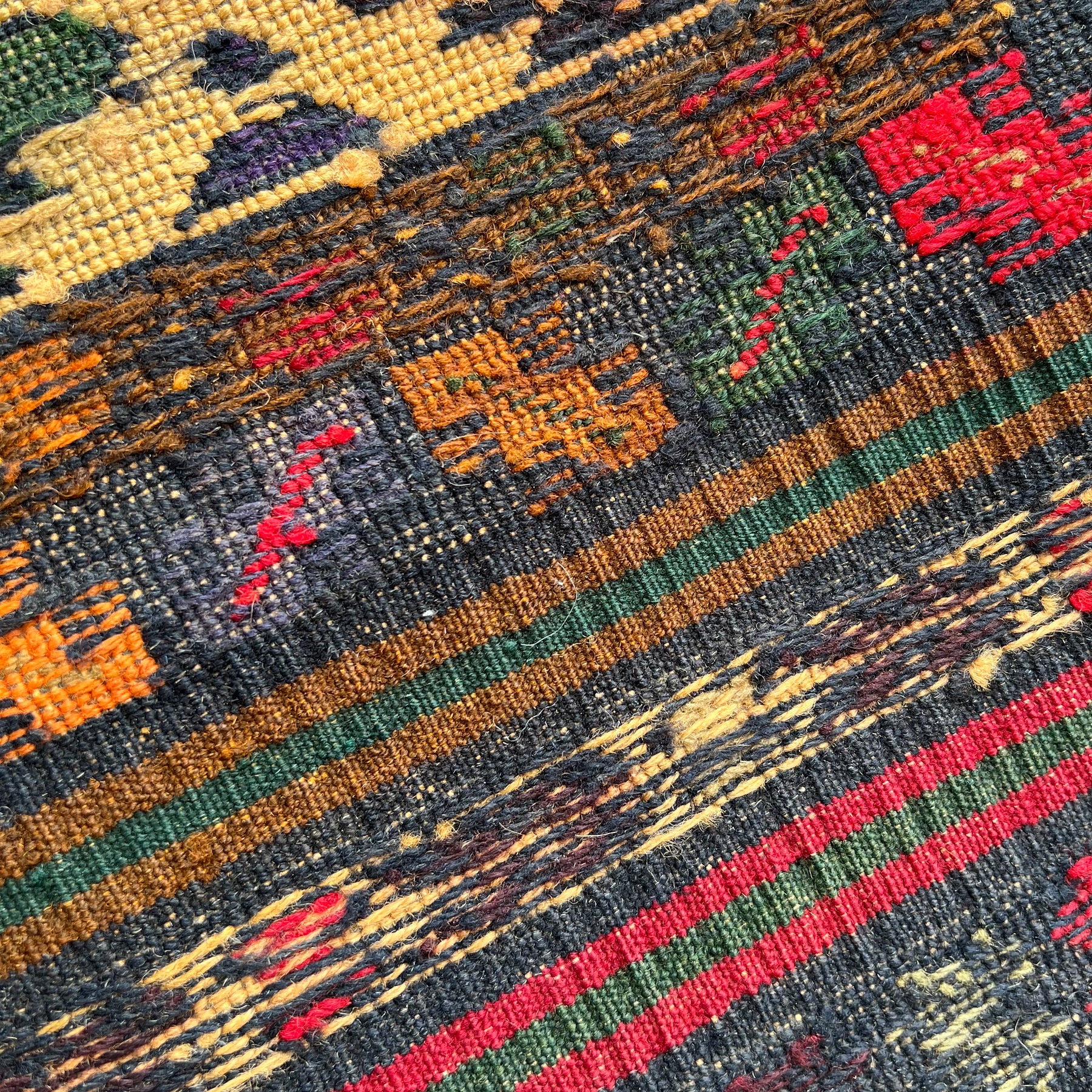
| Technique | Flatweave (mixed jajim and tapestry weave) |
| Material | Wool |
| One of a kind | Yes |
Coupons
Delivery
You may also like