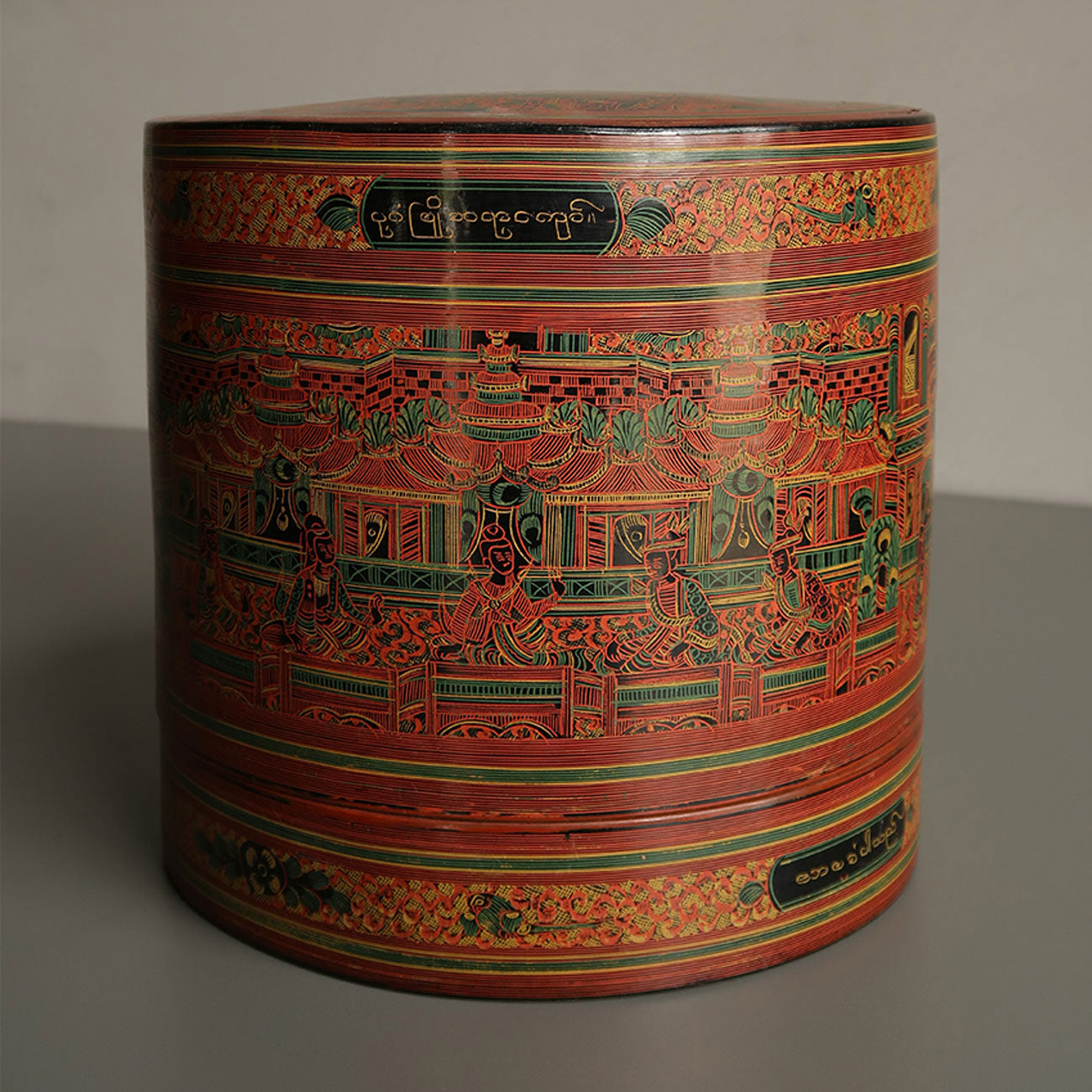
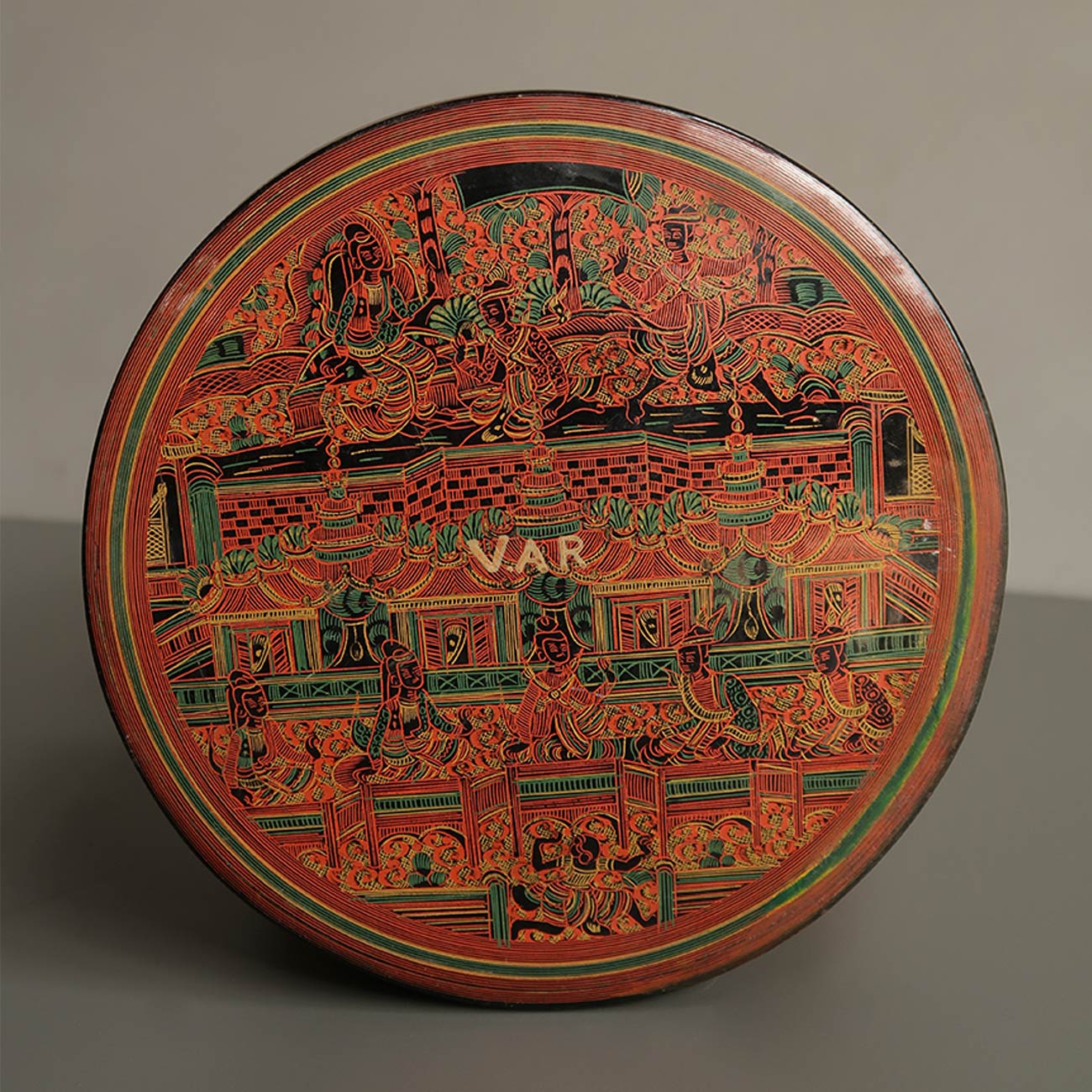
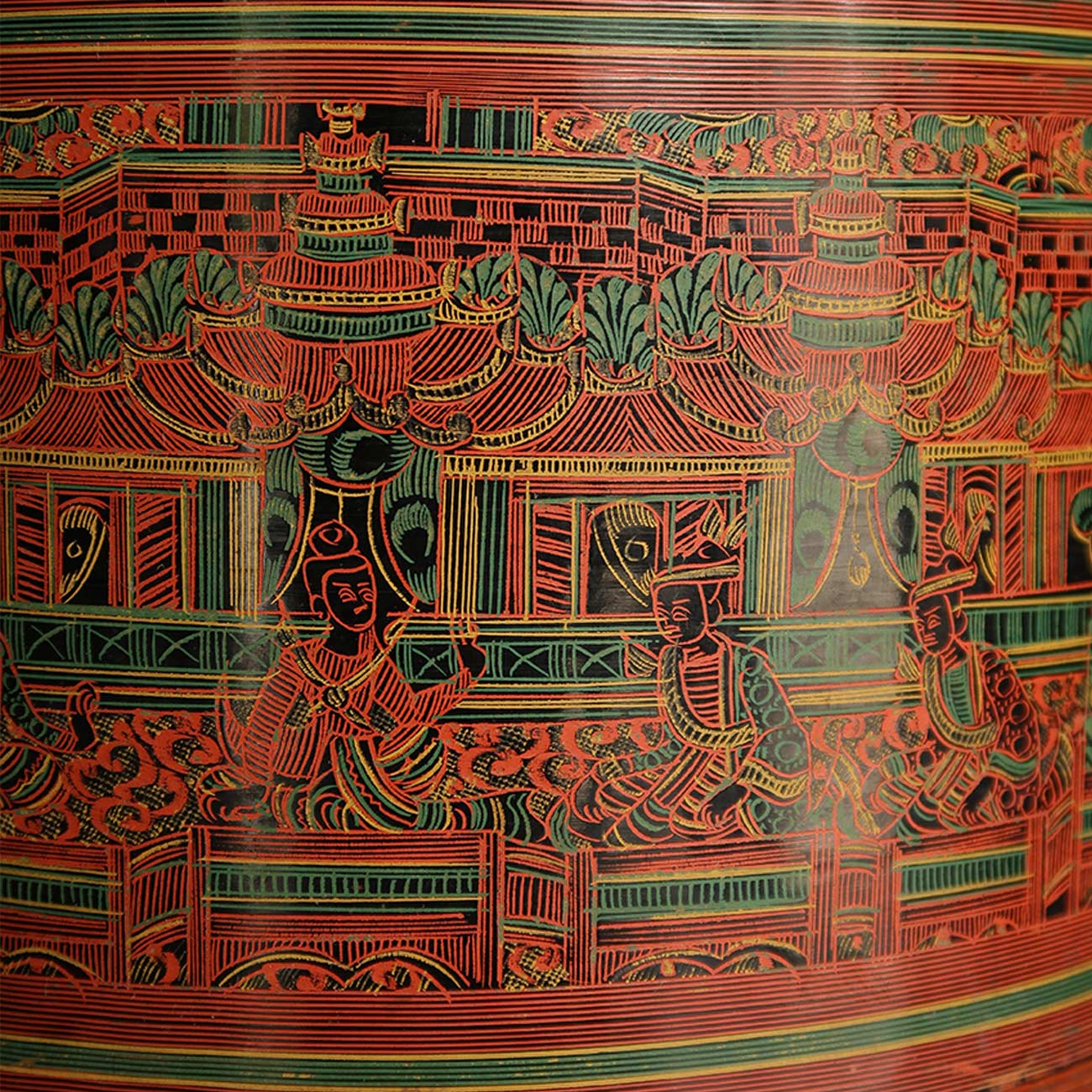
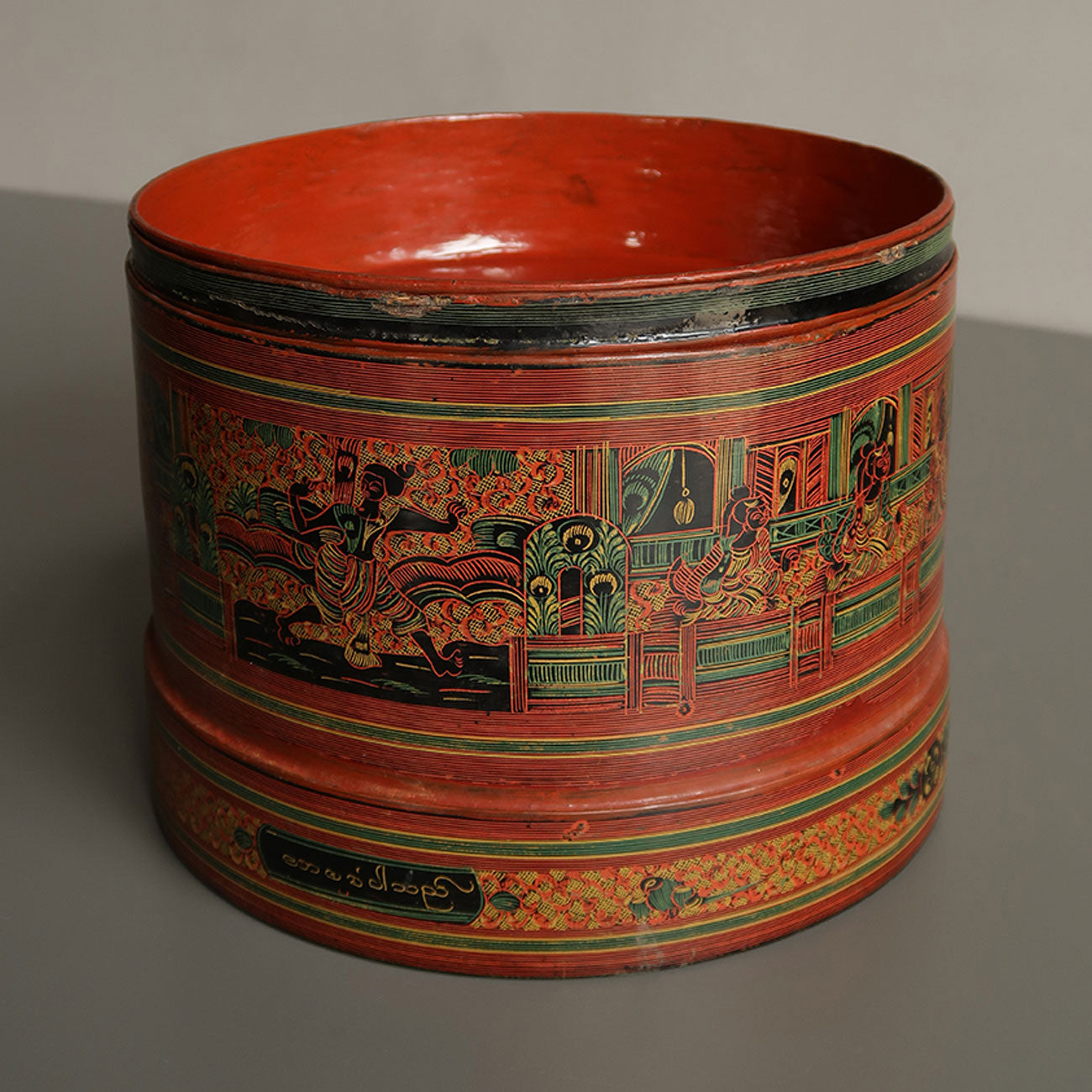
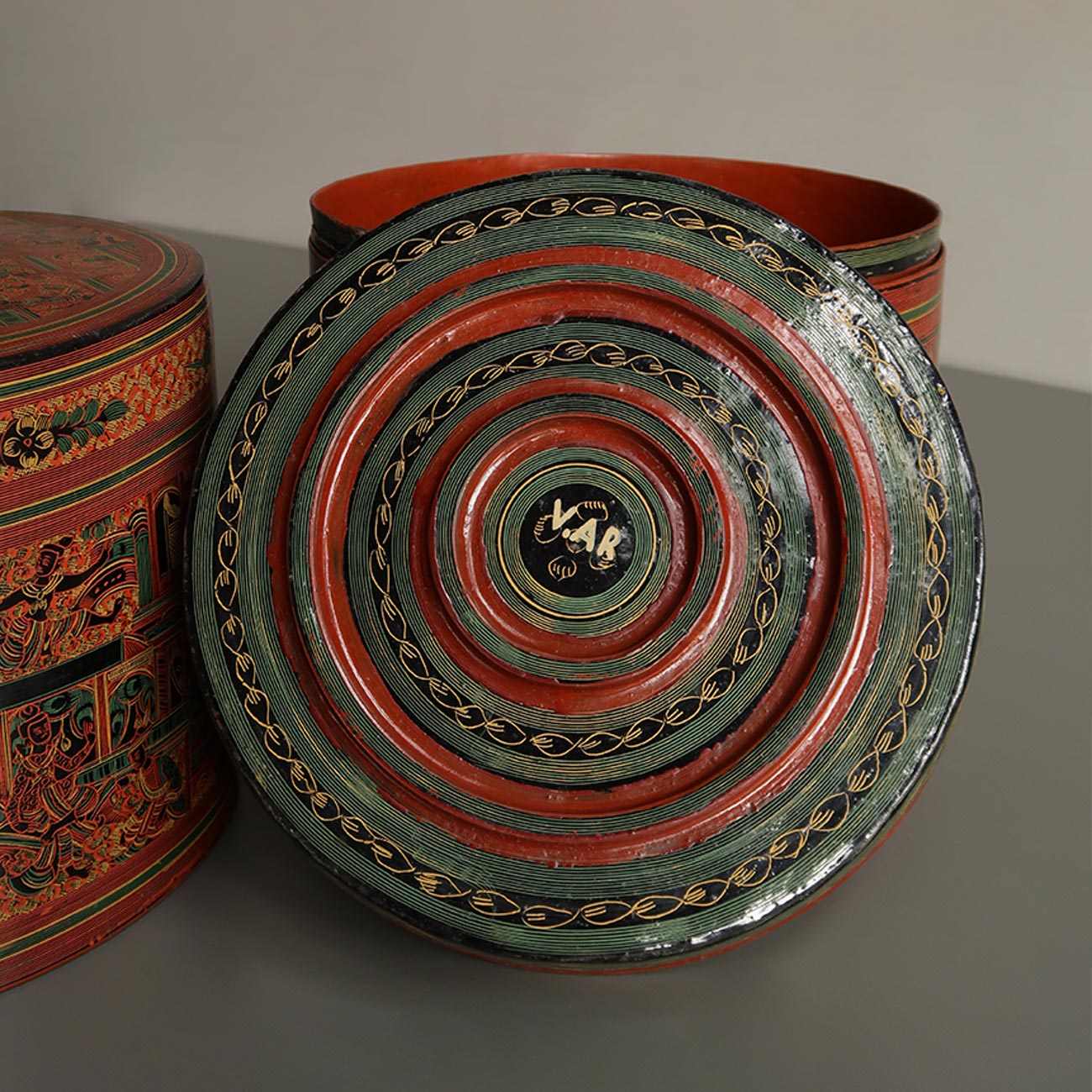
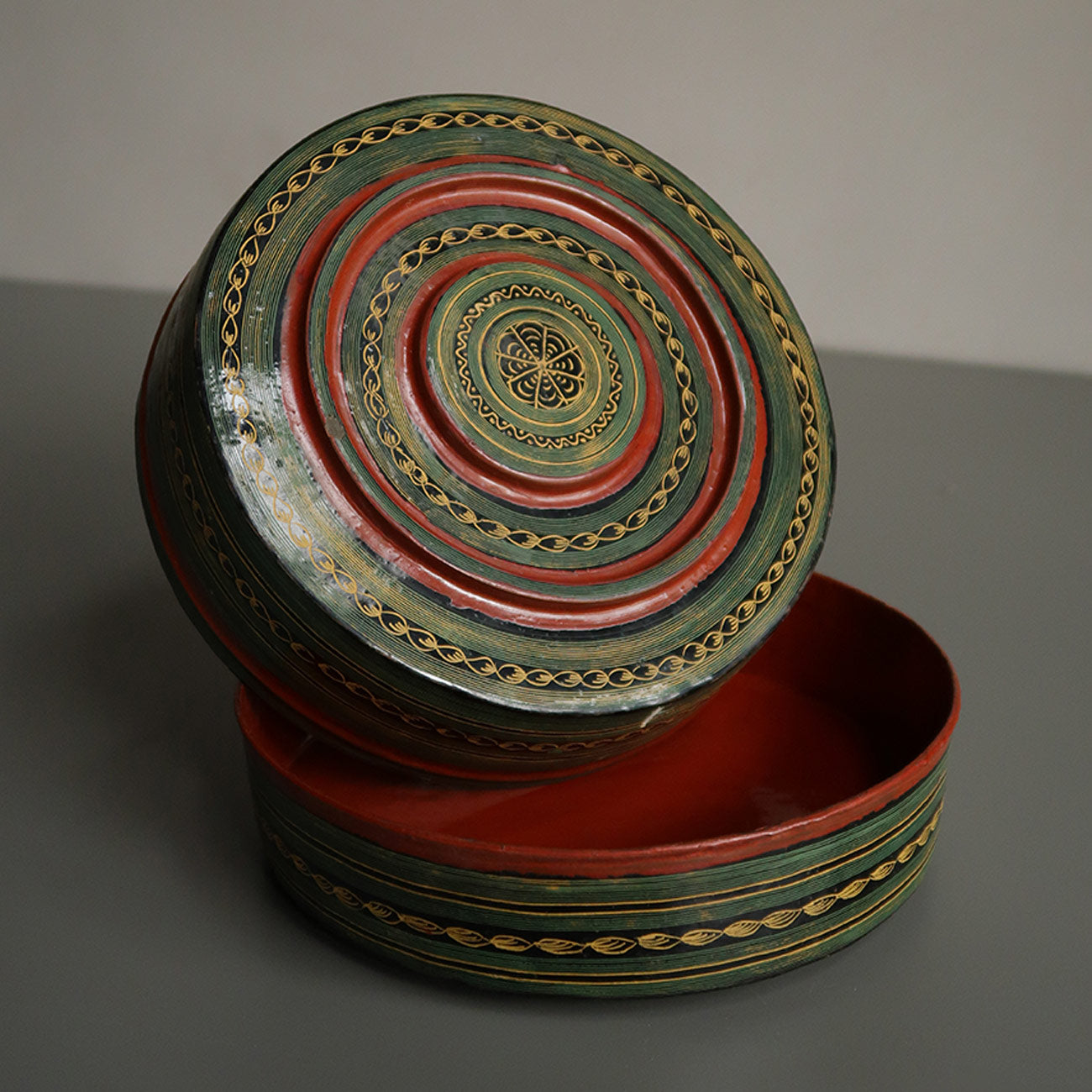
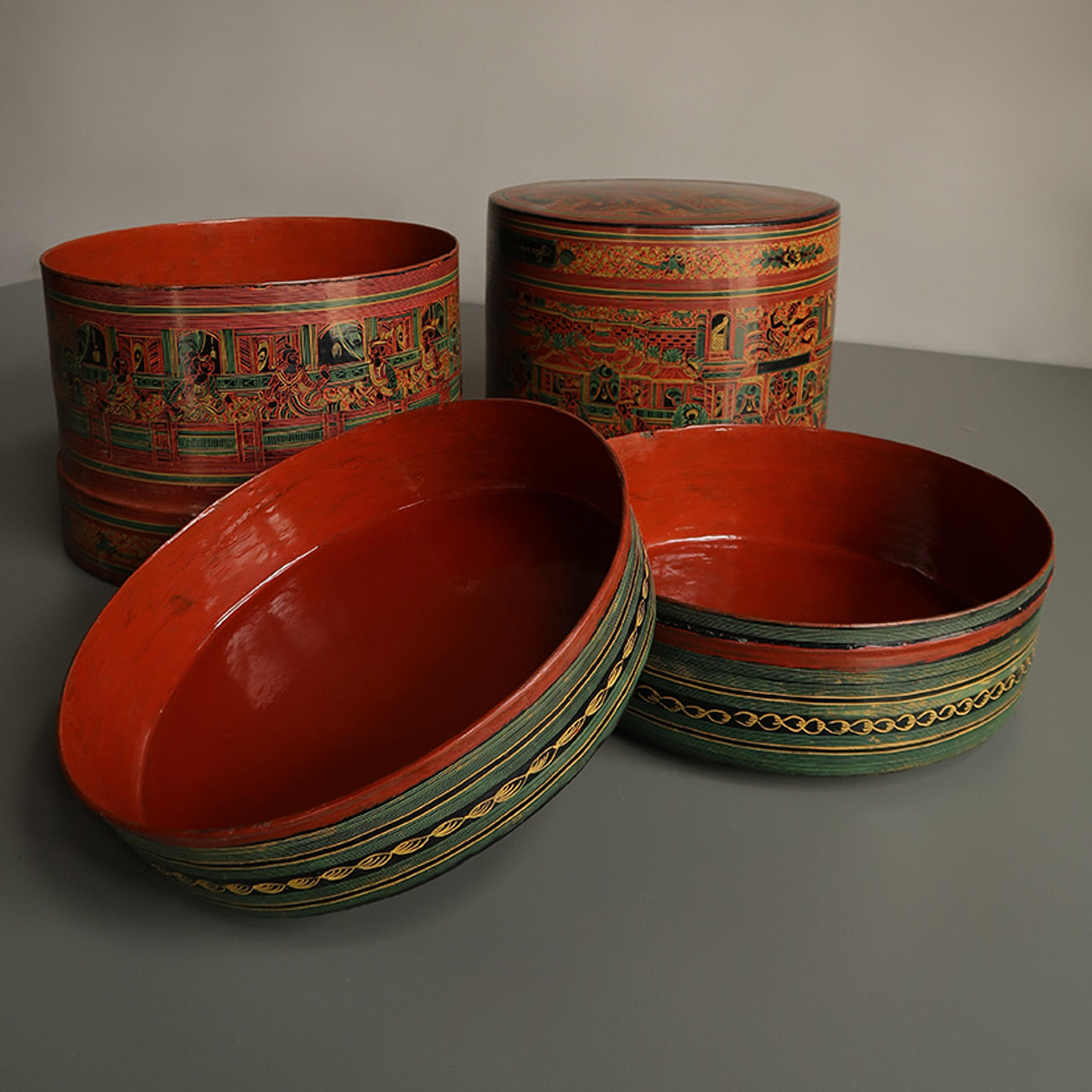
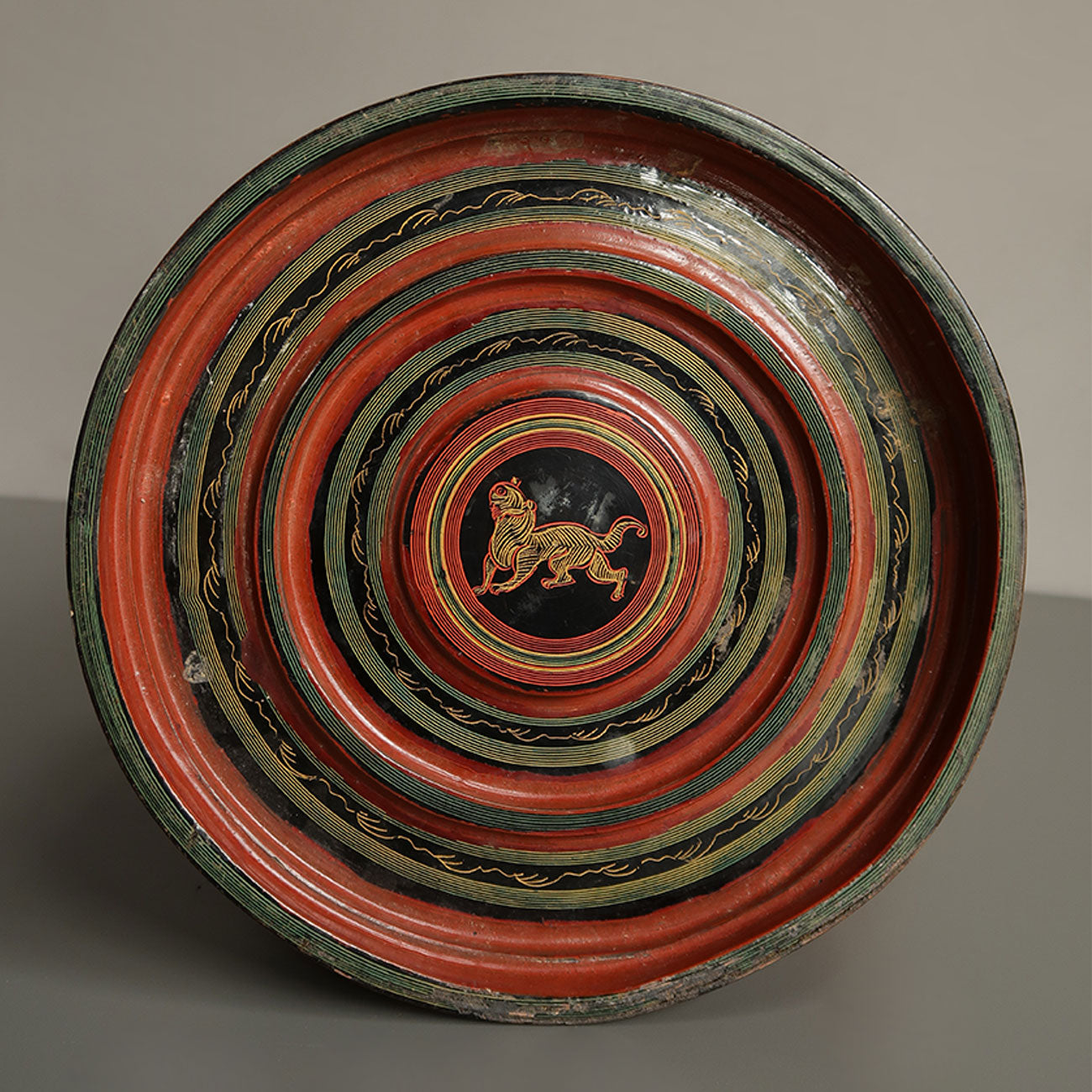
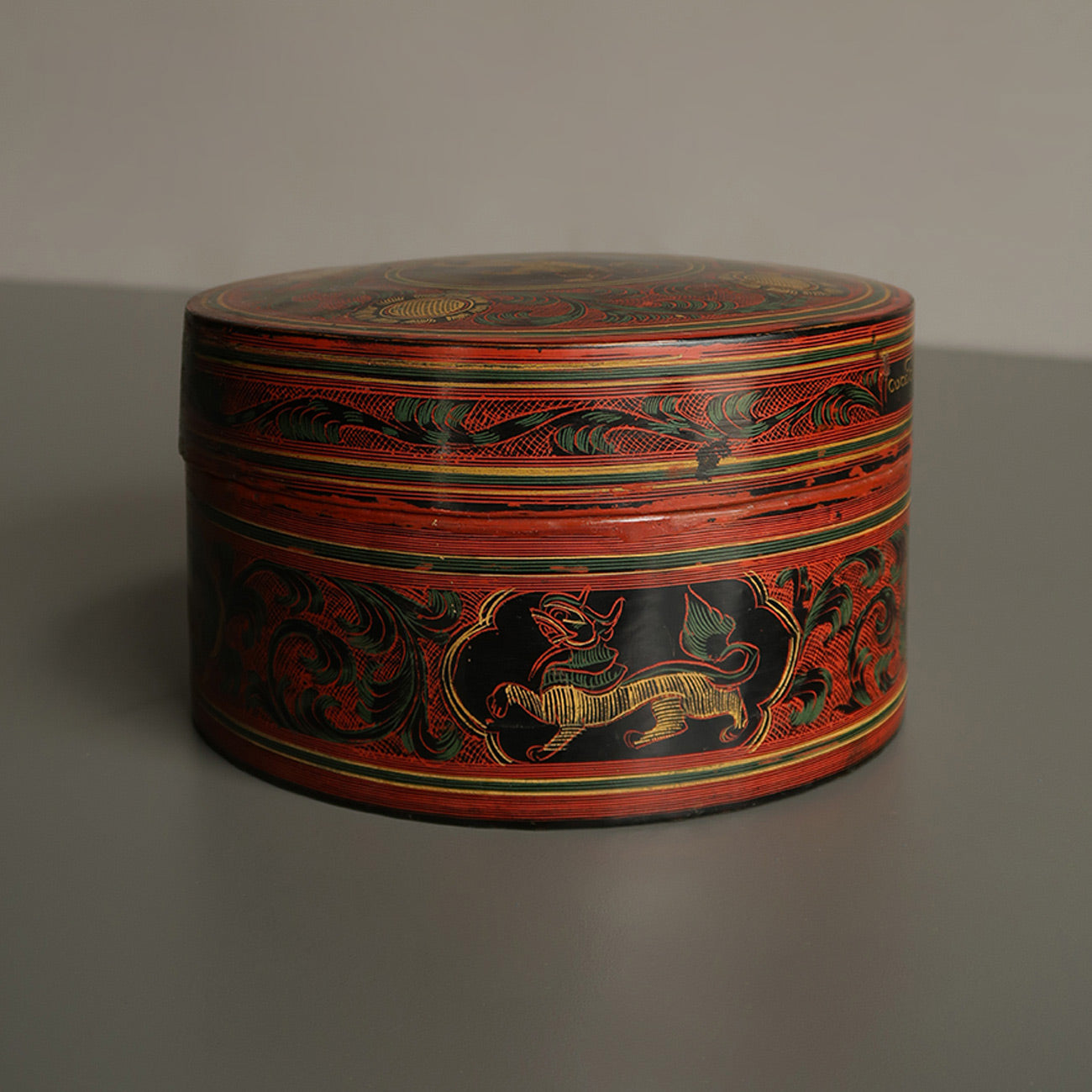
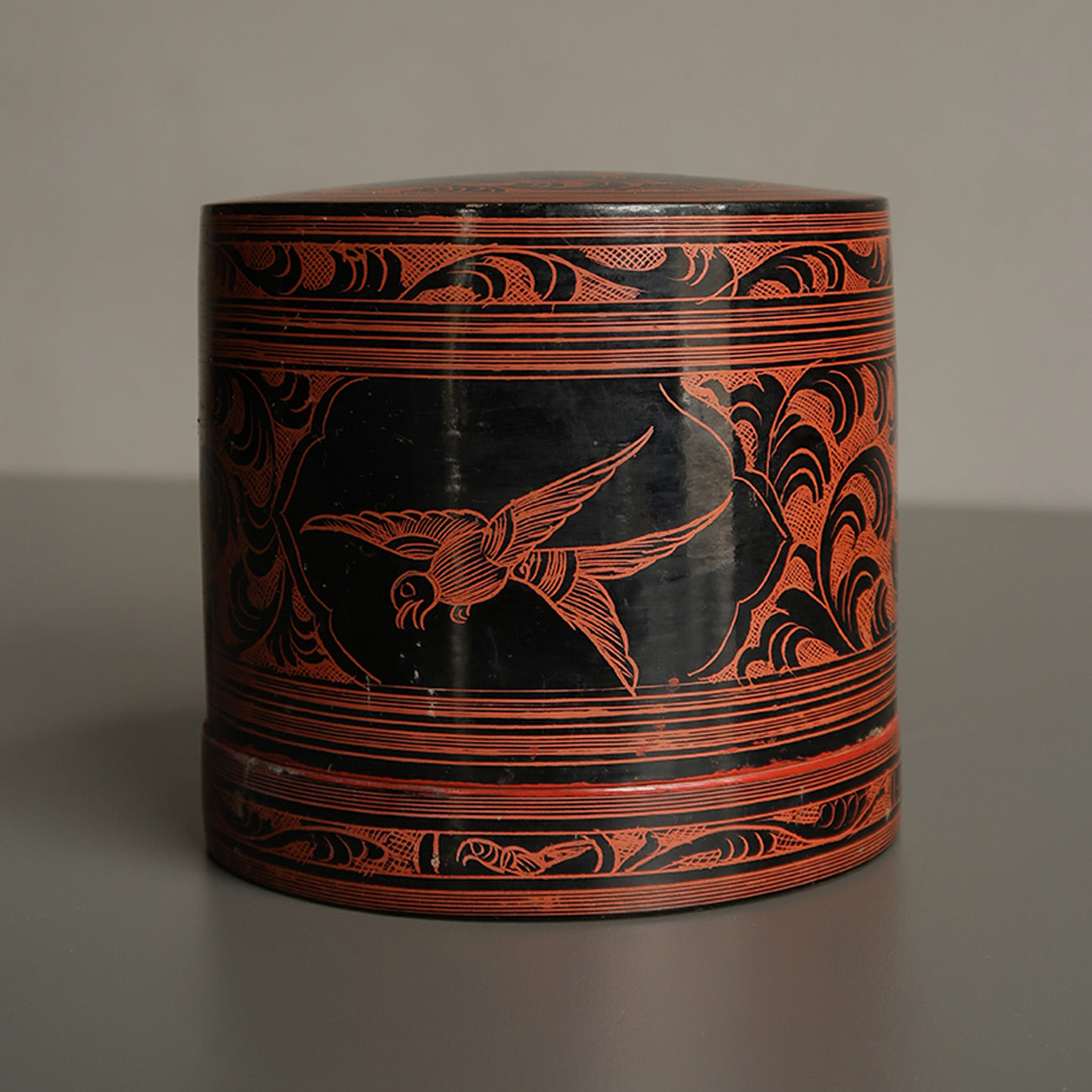
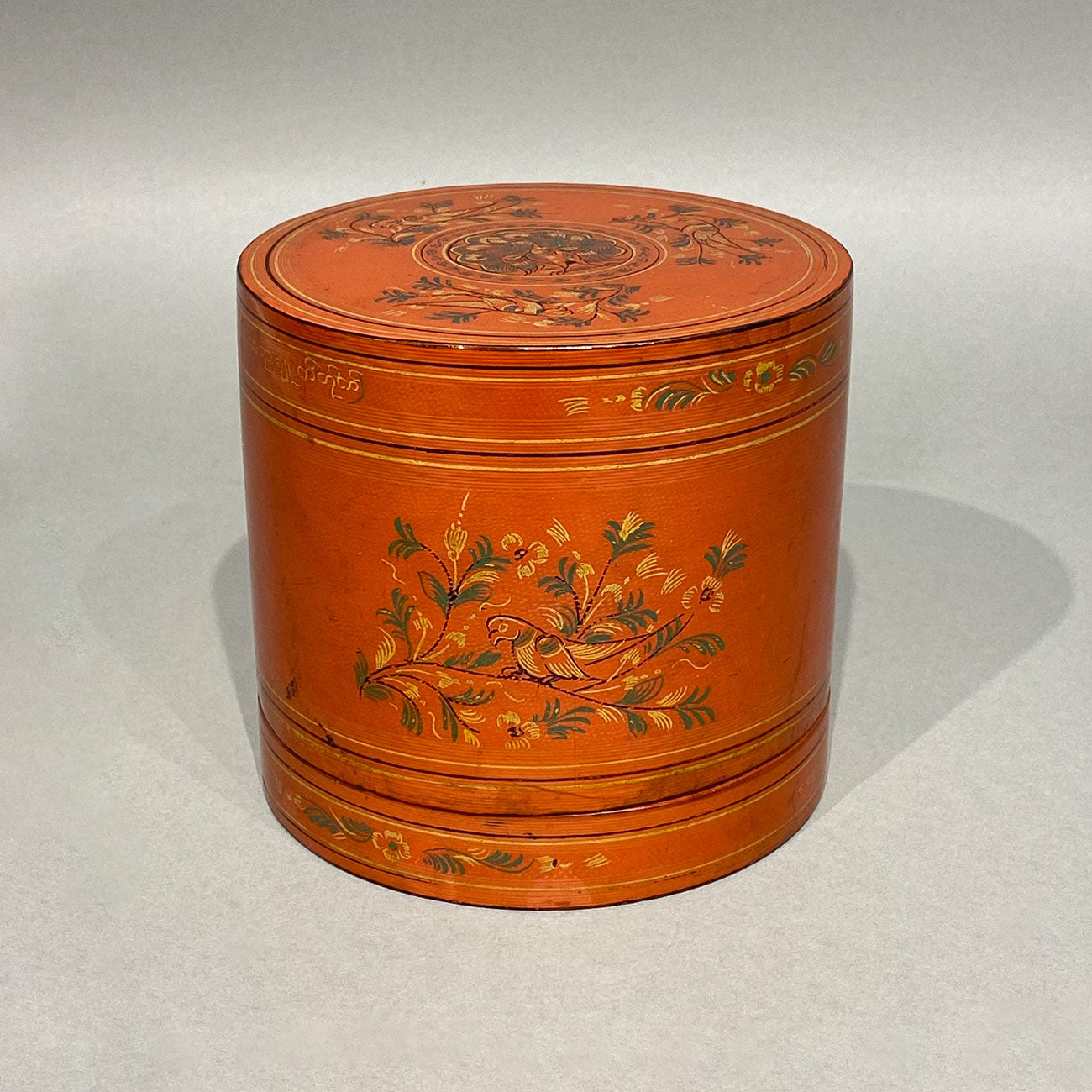
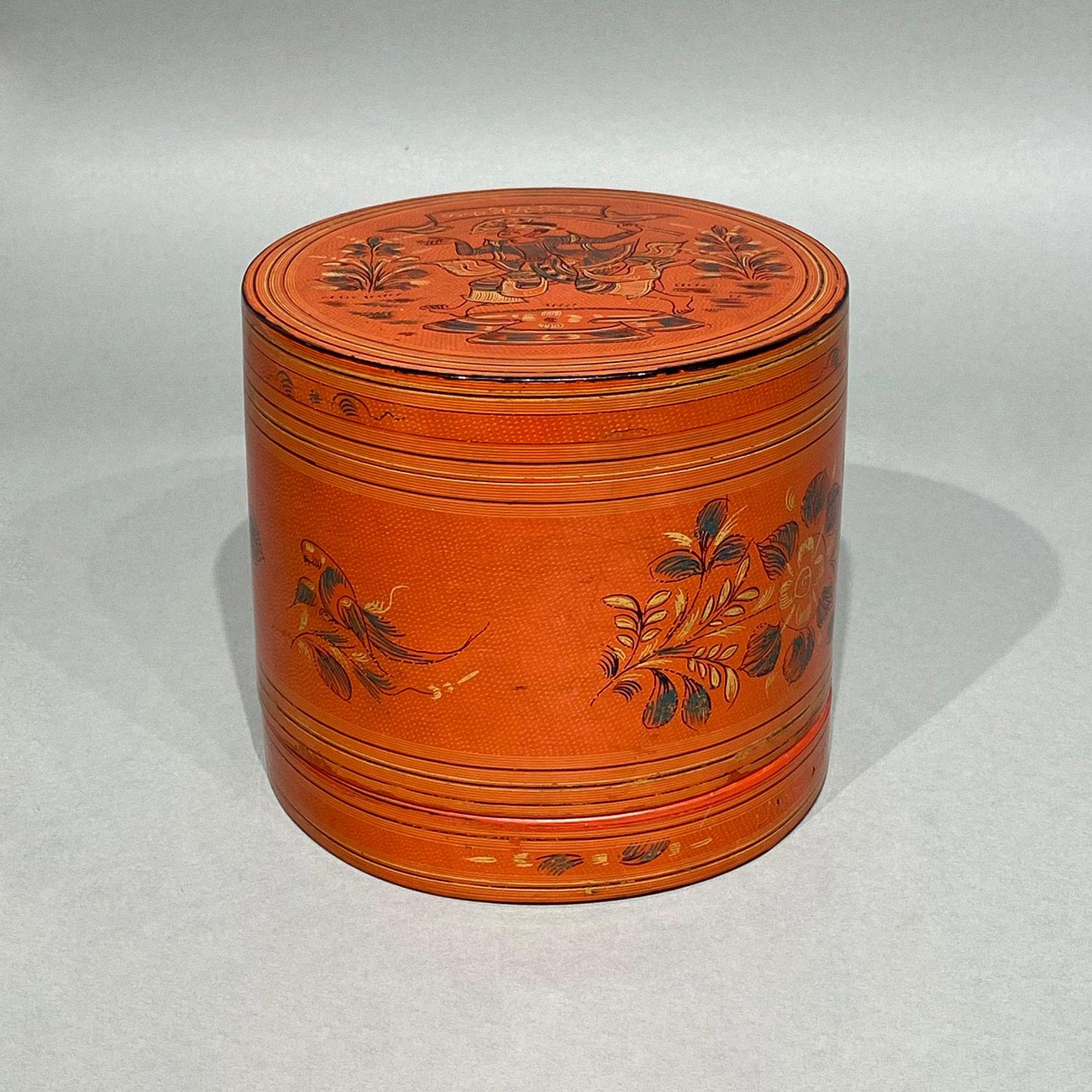
This is a Burmese lacquerware paan or betel (kun-it) box - a traditional item of hospitality in Burmese homes used to offer to visitors. Boxes like this were used to contain the ingredients to make paan, which in its basic form consists of slices of betel nut mixed with lime paste wrapped in betel leaf. The trays in the box would contain these ingredients, or even coconut, saffron, fragrant spices or rose preserves for more special paan preparations.
This particular box is designed with rich motifs in red, black, yellow, orange and green lacquer. On the lid is a court scene depicting a king surrounded by four courtiers - a popular motif from late 19th century, traditionally called nan-dwin. Surrounding the court are a series of multi-tiered palaces with pyramidal roofs, known as pya-thats. The pya-thats are an important element in religious and royal monuments and symbolise the sacred. Peacock feathers, inlaid with green lacquer hang from the doors as curtains. Surrounding the central court scene are geometric bands with an intricate hatch stroke pattern, interspersed with floral and fauna motifs. The box has two trays decorated on the reverse with geometric betel vine patterns. Hand-painted on the top and base are the initials V.AR added later - this was done because Chettiars typically belonged to large joint families, with each branch of the family owning very similar objects of their diasporic heritage. It was important to etch their belongings (valuable or utilitarian) with initials, clearly indicating ownership.
“A maze of sumptuary laws decreed the size, the extent of decoration, and the material permitted for the betel boxes of the various grades of courtiers” says Sylvia Fraser-Lu. Similar Burmese paan boxes can be found in the Victoria and Albert Museum, London. (Ref: Pages 68, 69, and 92 of the book ‘Burmese Lacquerware’ by Sylvia Fraser-Lu.)
This particular box is designed with rich motifs in red, black, yellow, orange and green lacquer. On the lid is a court scene depicting a king surrounded by four courtiers - a popular motif from late 19th century, traditionally called nan-dwin. Surrounding the court are a series of multi-tiered palaces with pyramidal roofs, known as pya-thats. The pya-thats are an important element in religious and royal monuments and symbolise the sacred. Peacock feathers, inlaid with green lacquer hang from the doors as curtains. Surrounding the central court scene are geometric bands with an intricate hatch stroke pattern, interspersed with floral and fauna motifs. The box has two trays decorated on the reverse with geometric betel vine patterns. Hand-painted on the top and base are the initials V.AR added later - this was done because Chettiars typically belonged to large joint families, with each branch of the family owning very similar objects of their diasporic heritage. It was important to etch their belongings (valuable or utilitarian) with initials, clearly indicating ownership.
“A maze of sumptuary laws decreed the size, the extent of decoration, and the material permitted for the betel boxes of the various grades of courtiers” says Sylvia Fraser-Lu. Similar Burmese paan boxes can be found in the Victoria and Albert Museum, London. (Ref: Pages 68, 69, and 92 of the book ‘Burmese Lacquerware’ by Sylvia Fraser-Lu.)
Details
| Net Quantity | Pages 68, 69, and 92 of the book ‘Burmese Lacquerware’ by Sylvia Fraser-Lu.) |
Delivery
You may also like
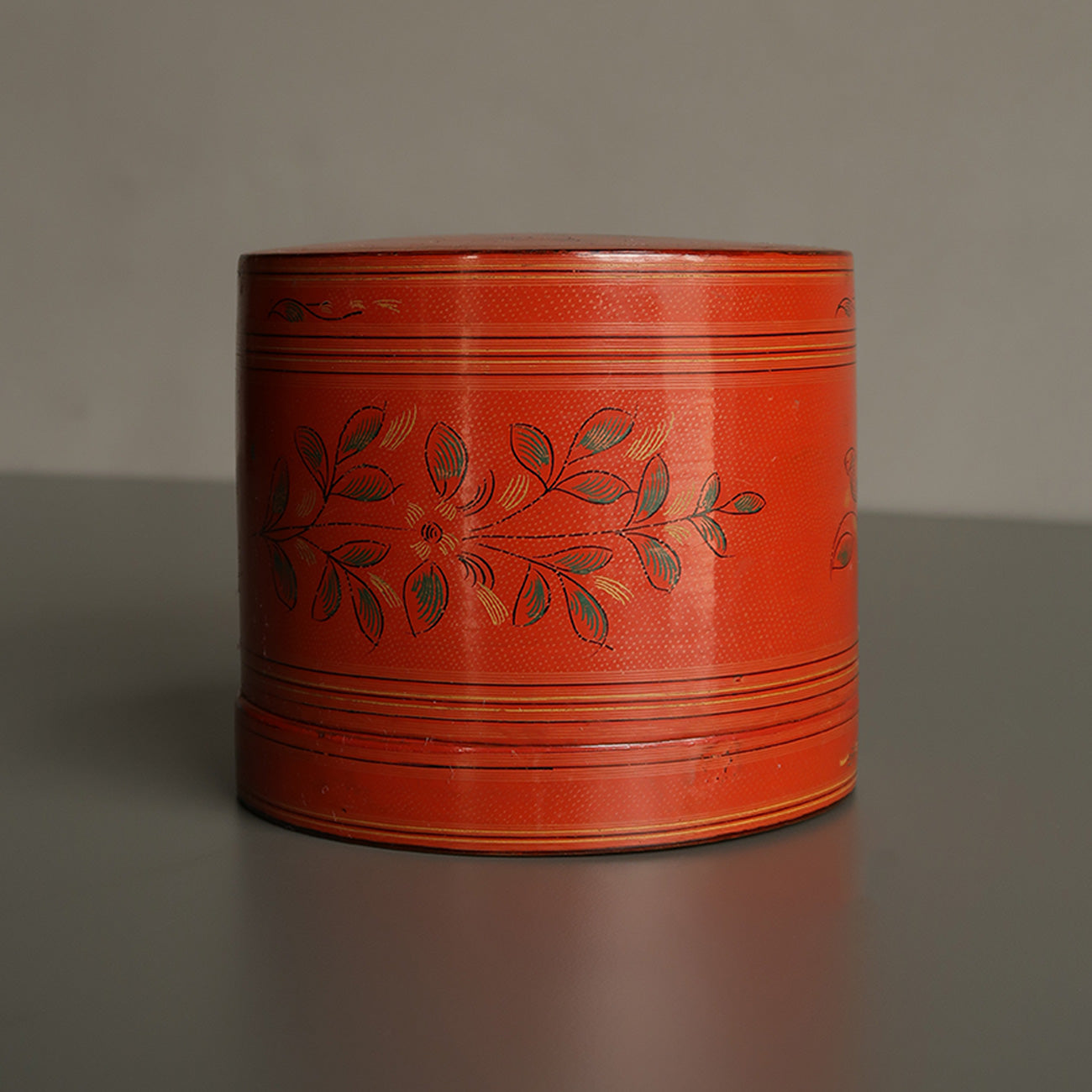
Burmese Lacquer Betel Box 04
Artisera
₹9,990
out of stock
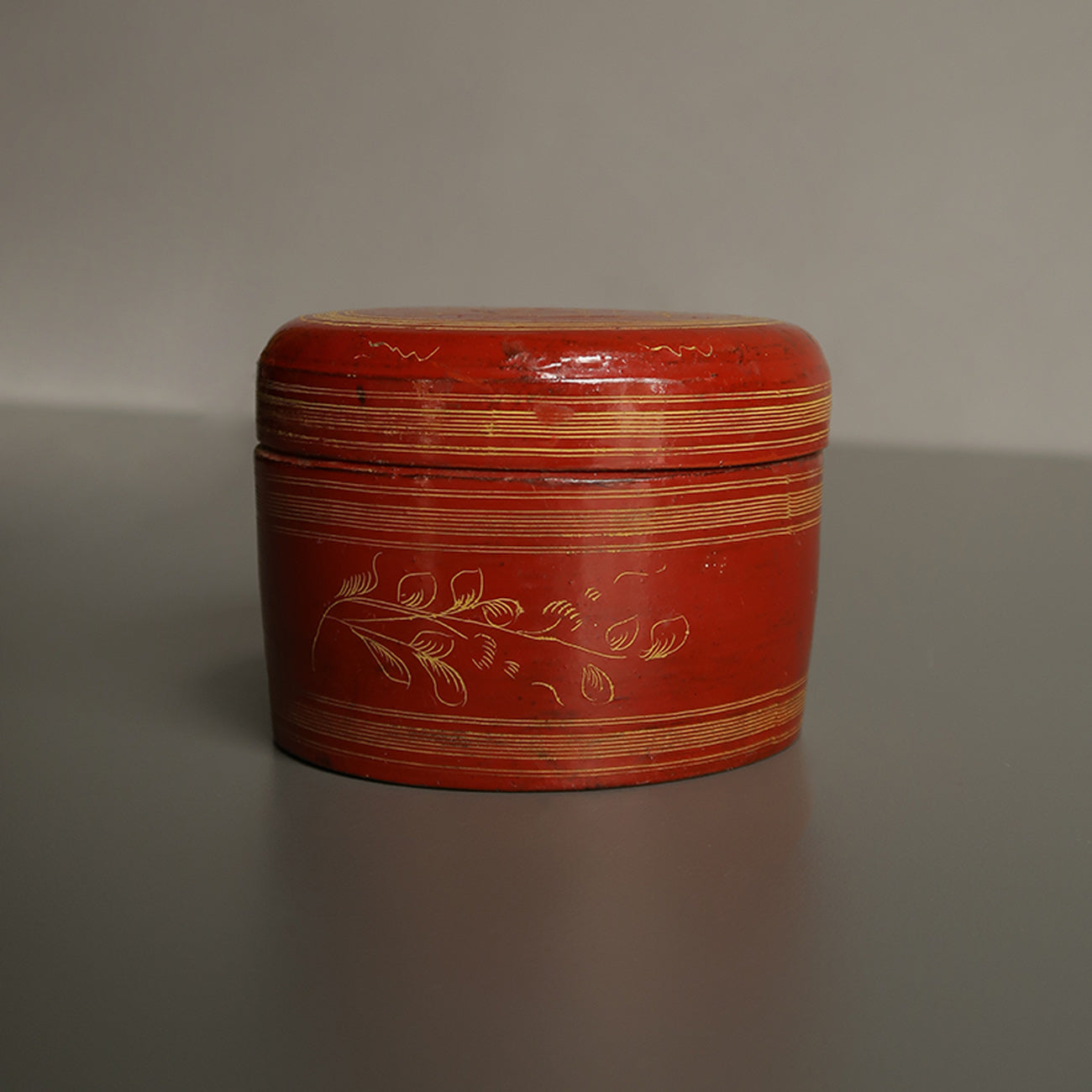
Burmese Lacquer Betel Box 05
Artisera
₹6,070
out of stock
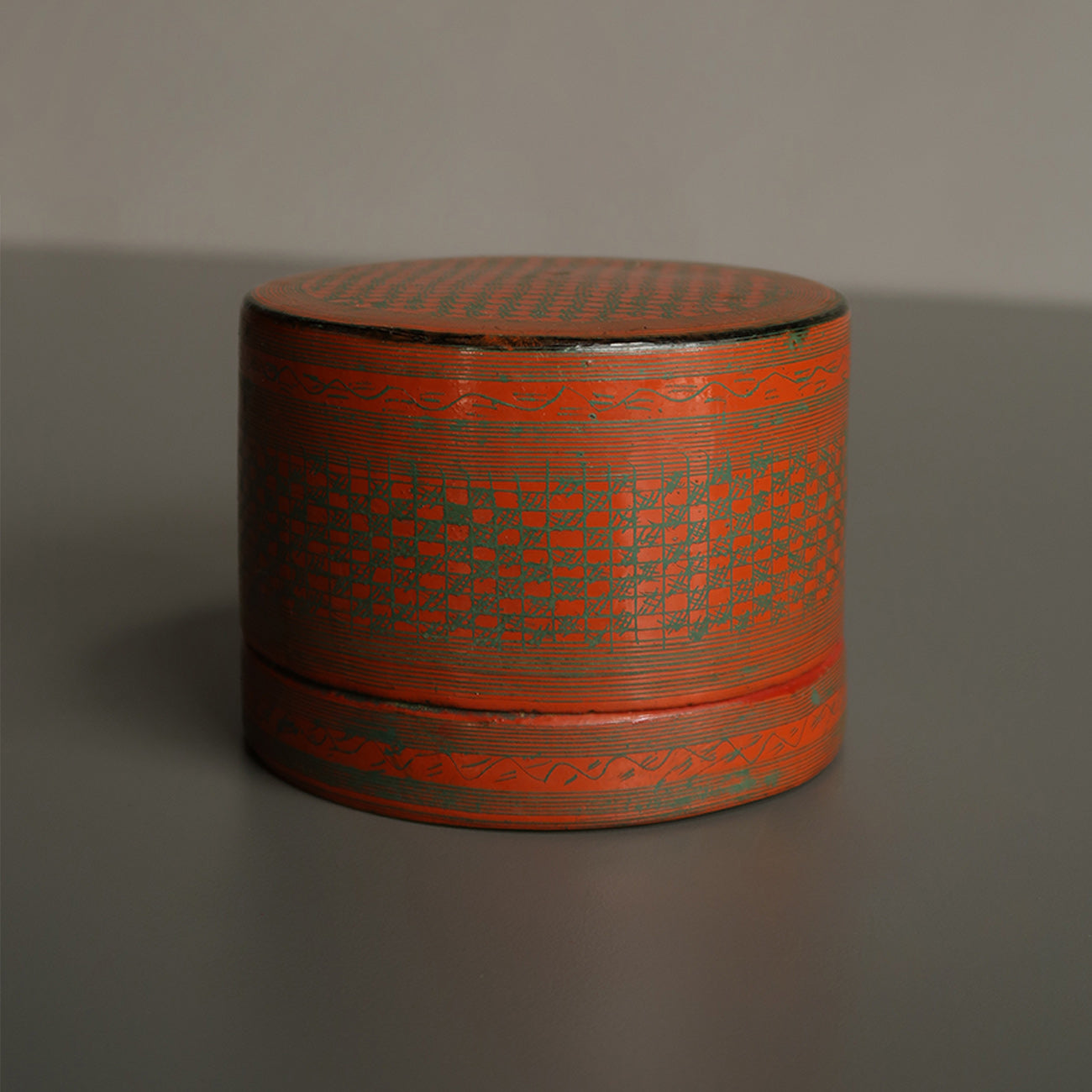
Burmese Lacquer Betel Box 07
Artisera
₹5,500
out of stock
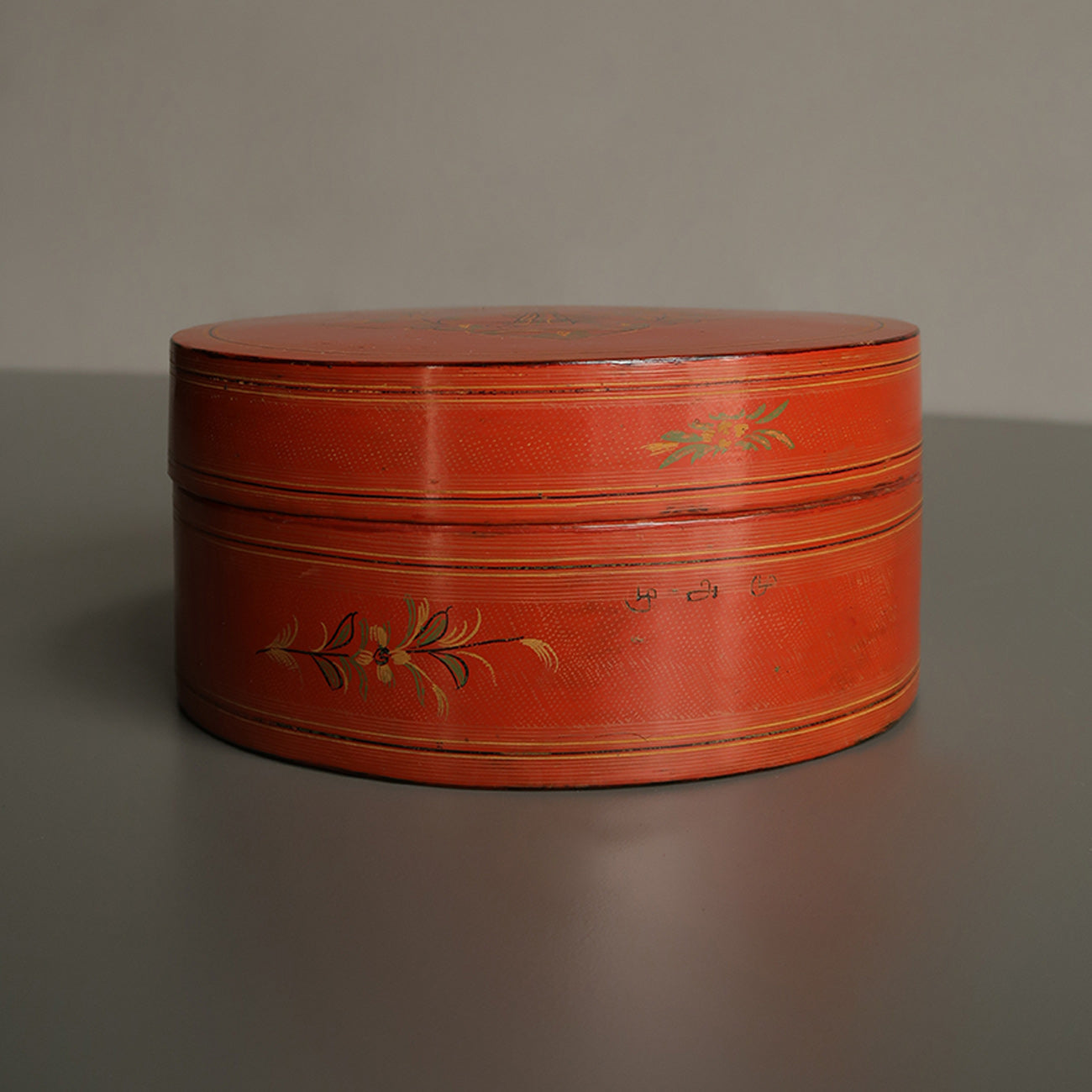
Burmese Lacquer Betel Box 08
Artisera
₹8,960
Burmese Lacquer Betel Box 09
Artisera
₹11,000
out of stock
Burmese Lacquer Betel Box 06
Artisera
₹8,500
out of stock
Burmese Lacquer Betel Box 01
Artisera
₹16,800
out of stock
Burmese Lacquer Betel Box 02
Artisera
₹16,800
out of stock