The Journey 2
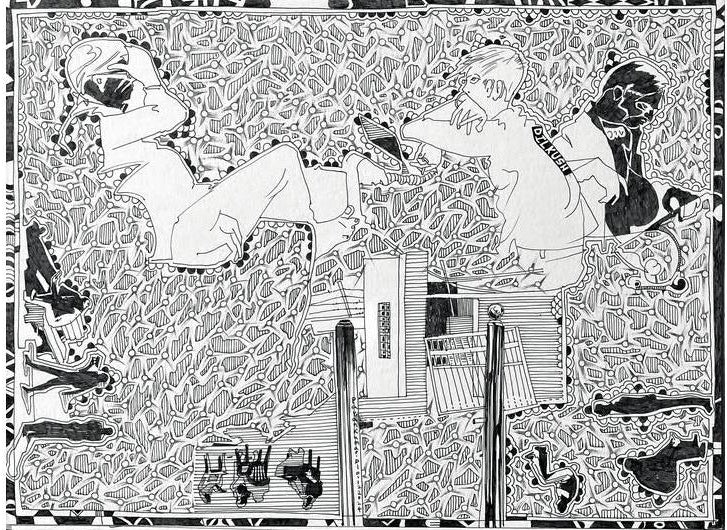
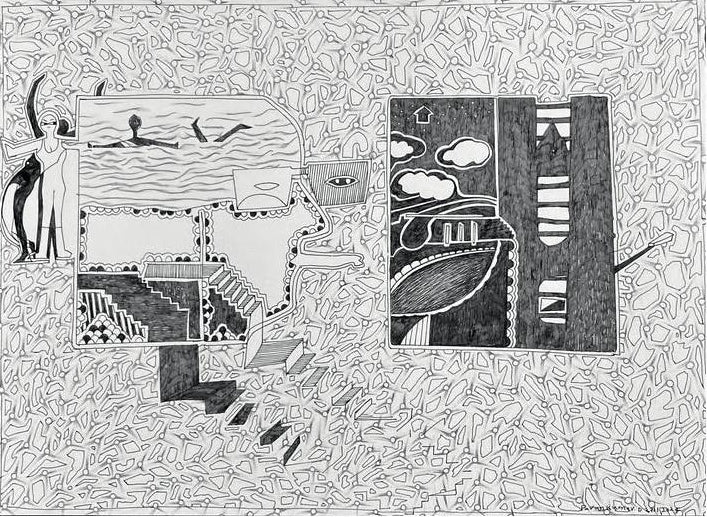
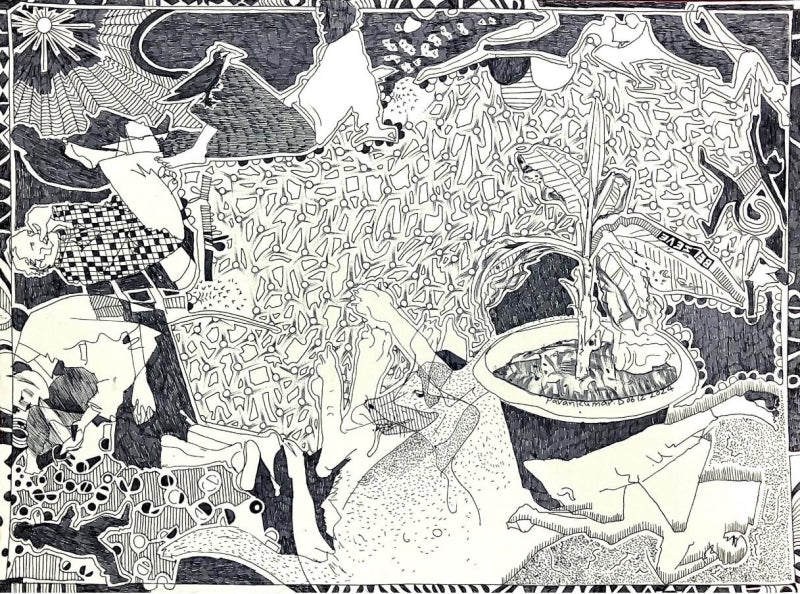
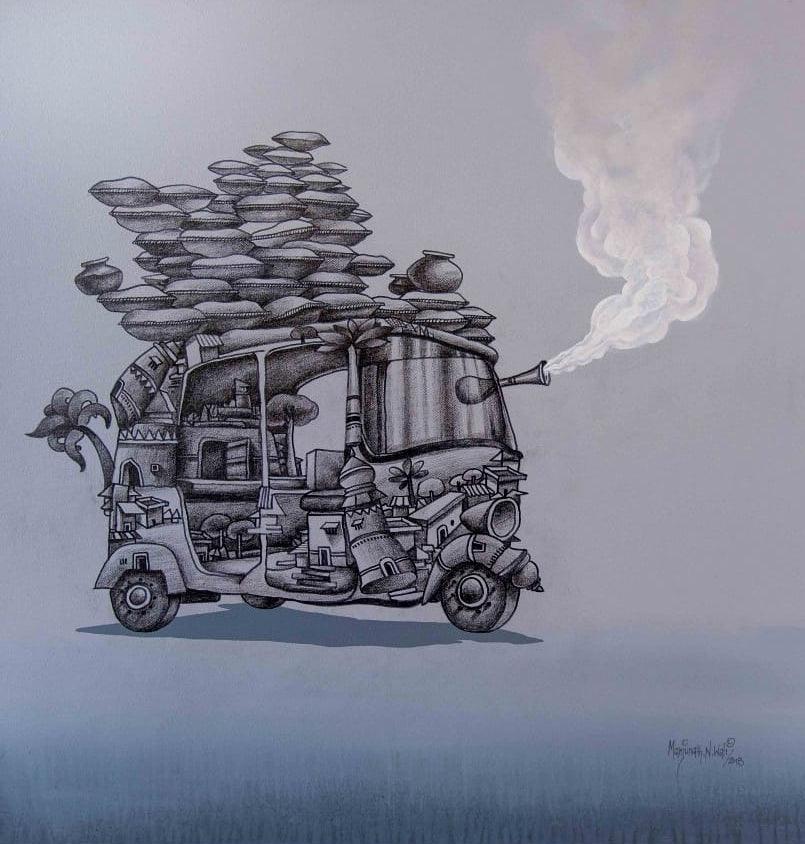
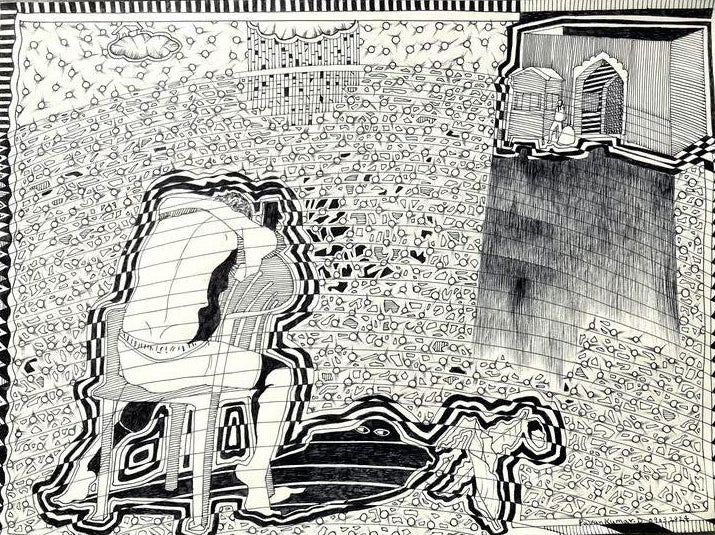
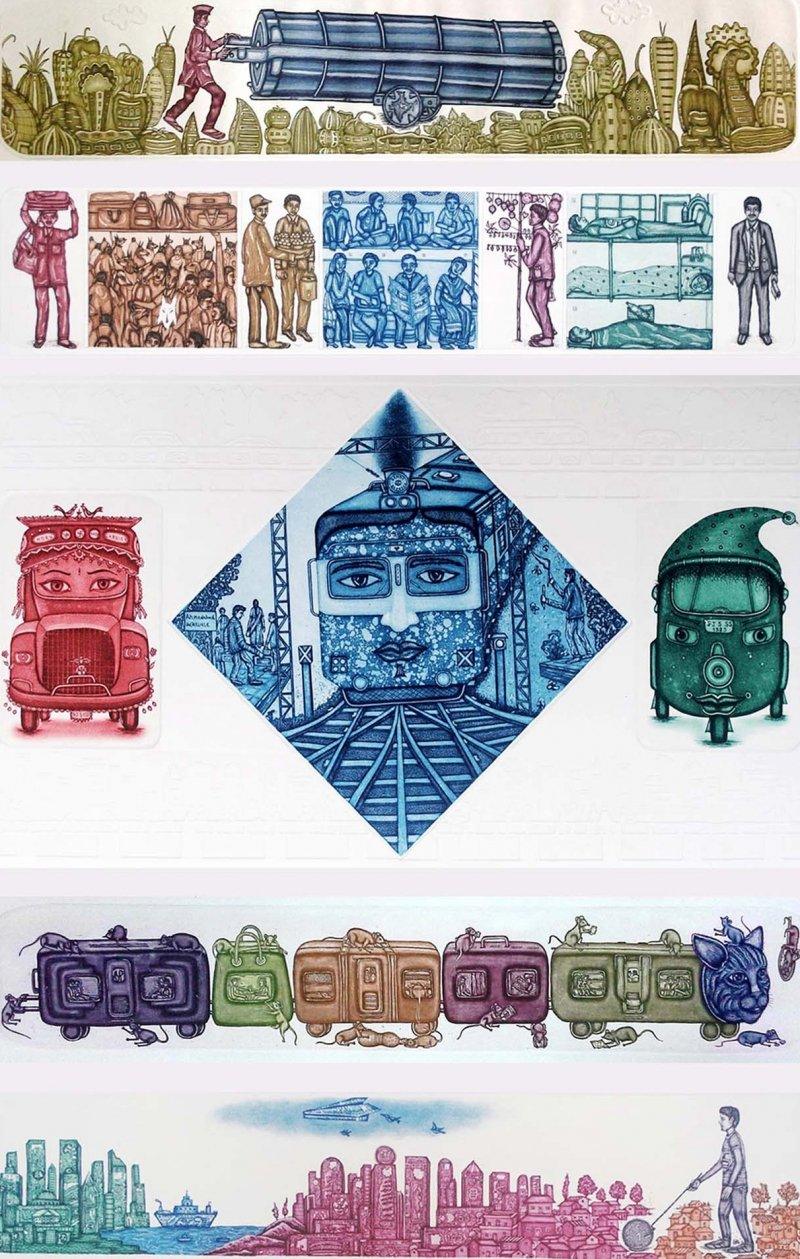
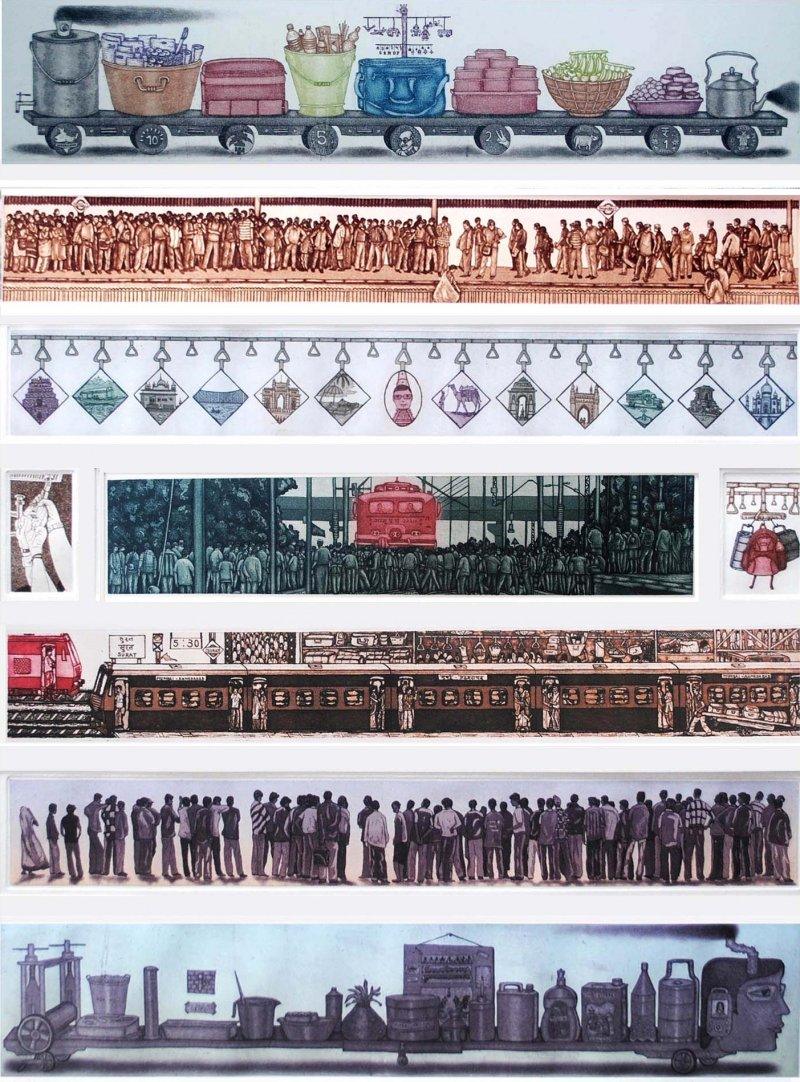
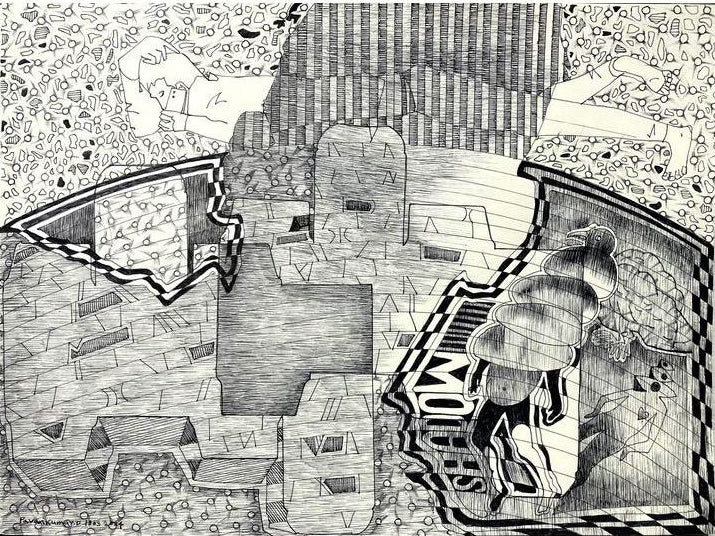
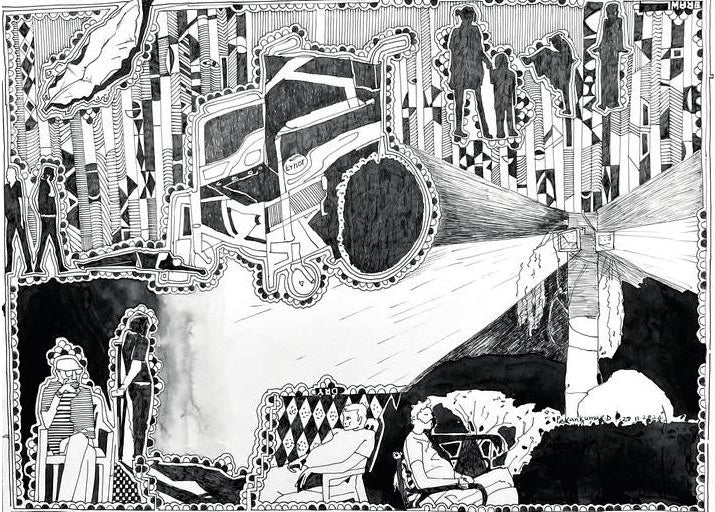
Rendered in an insistent black-and-white vocabulary, the composition stitches together vignettes of public life—figures, machinery, and patterned facades—into a fractured urban tapestry where each border feels like a thought contained, then reopened. A hard, triangular beam of light cuts across the page like surveillance or revelation, forcing disparate scenes into a single field of exposure while leaving pockets of darkness to hold what cannot be fully named. The dense ornamental textures and repeating geometries create a nervous rhythm, suggesting that modern experience is less a continuous narrative than a collage of interruptions, witnessed and remembered in uneven fragments. In this tension between illumination and enclosure, the work reads as a meditation on how cities choreograph attention, turning everyday bodies into silhouettes against systems that loom larger than any individual.