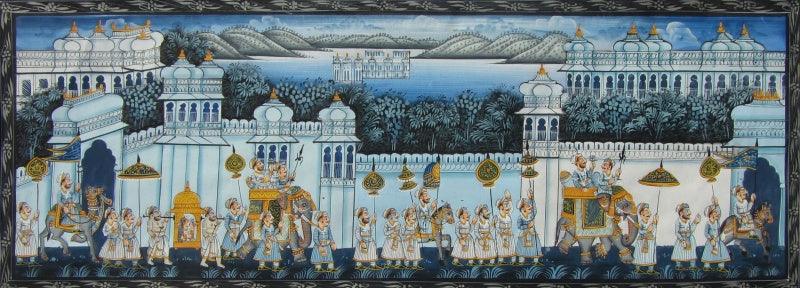
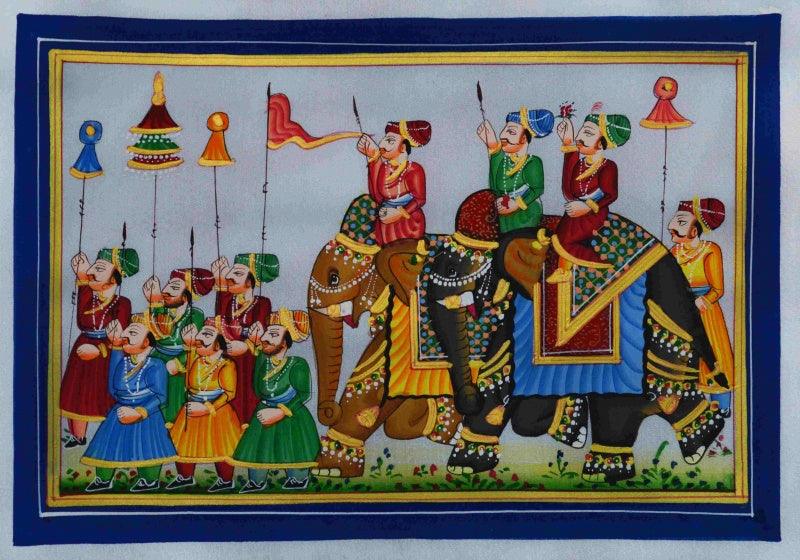
Royal Procession (Mughal Procession)
₹6,999
Out of stock · ★ 5.0 (15)checking live price…
Size
6x16Type
OriginalMaterial
SilkThe scene unfolds like a ceremonial procession suspended between architecture and dream, where rhythmic ranks of attendants and elephants animate an otherwise immaculate geometry of domes, parapets, and guarded gates. A cool, moonlit palette of whites and deep blues turns the palace complex into a sanctified stage, allowing gold ornaments and canopies to punctuate the surface like beats in a devotional chant. Space is layered in bands—procession, gardened wall, water, and distant hills—suggesting power as something both performed publicly and anchored in an ordered cosmology. Within this careful symmetry, the work quietly elevates spectacle into sovereignty, presenting rule as an aesthetic ritual as much as a political reality.
Delivery
You may also like
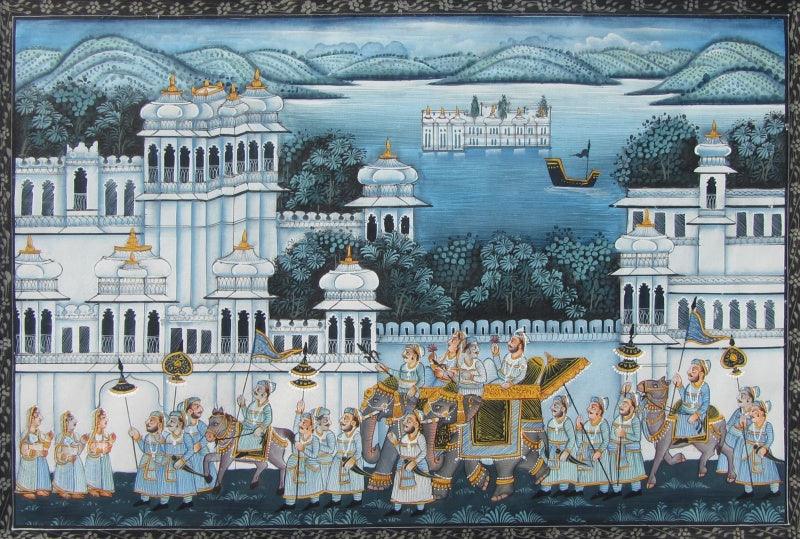
Royal Procession
Artzolo
₹2,499
out of stock
★ 5.0 (7)
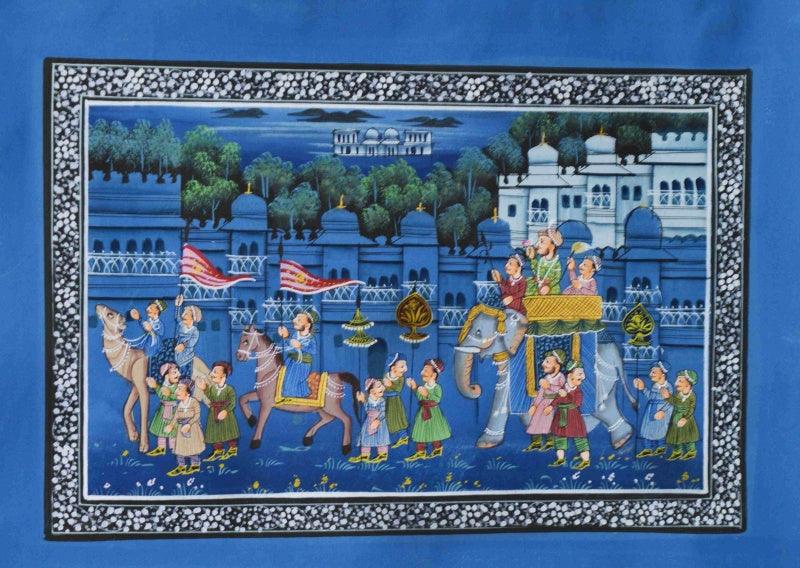
Royal Mughal Procession
Artzolo
₹1,599
out of stock
★ 5.0 (6)
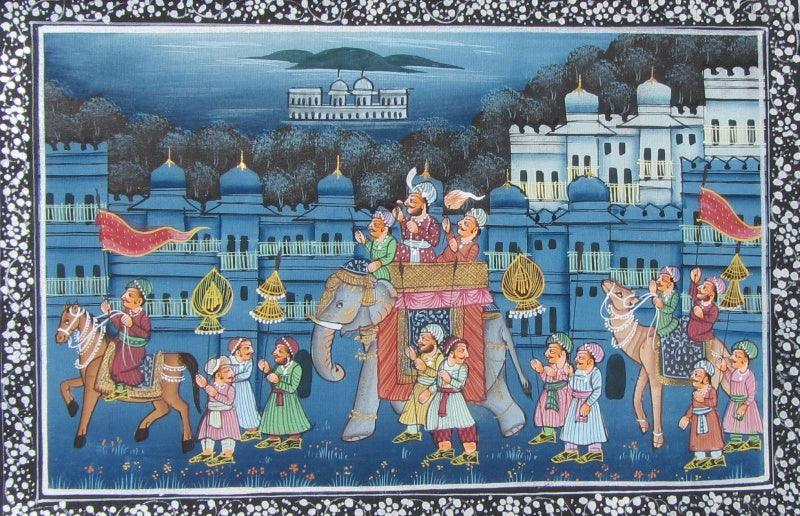
Majestic Mughal King Procession Painting
Artzolo
₹1,599
out of stock
★ 5.0 (12)
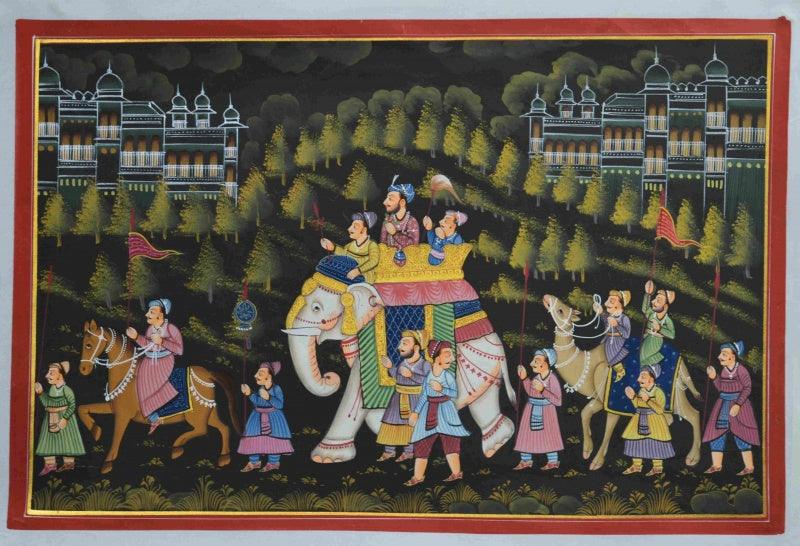
Royal Mughal Procession
Artzolo
₹1,999
out of stock
★ 4.0 (6)
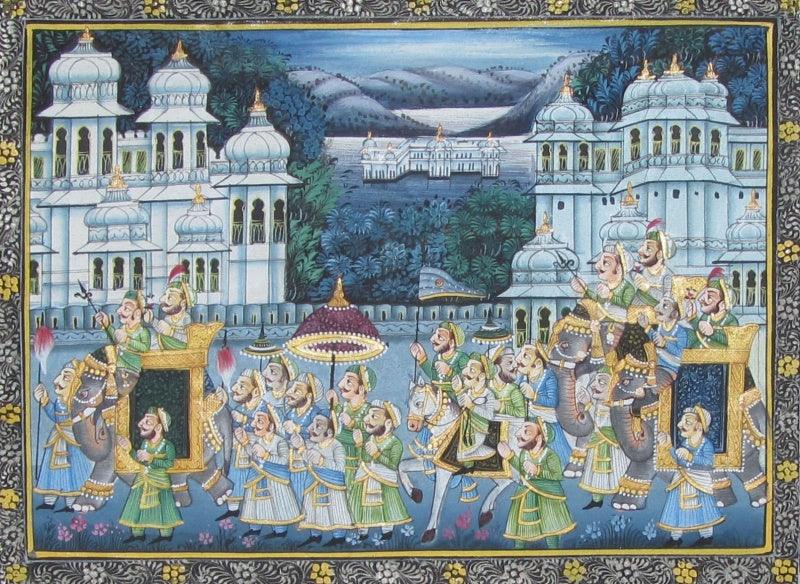
Mughal Royal Procession
Artzolo
₹6,499
out of stock
★ 4.0 (13)
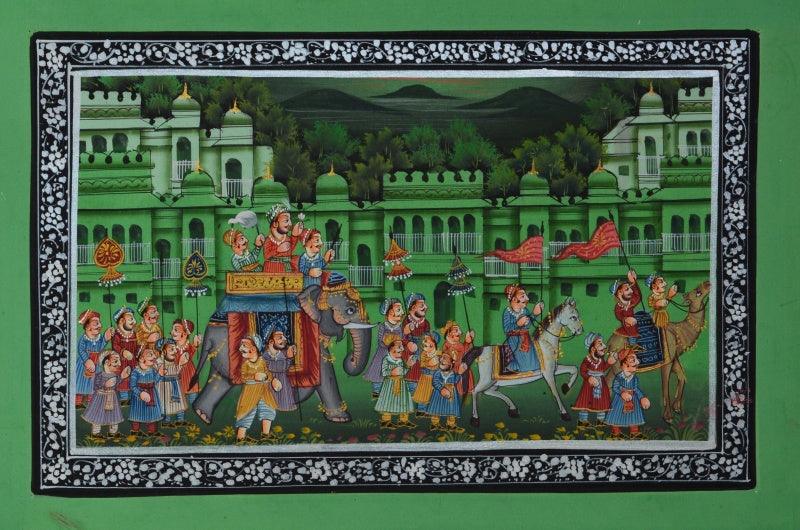
Royal Procession
Artzolo
₹1,599
out of stock
★ 5.0 (13)
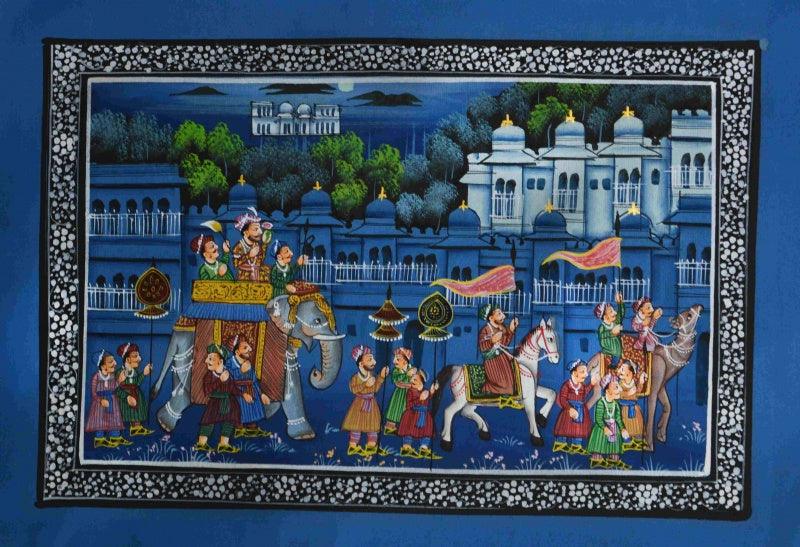
Majestic Royal Procession 2
Artzolo
₹1,599
out of stock
★ 4.0 (12)
Royal Procession 2
Artzolo
₹1,599
out of stock
★ 4.0 (6)