Zeenat Sareki One-OF-A-Kind-Afghan Rug
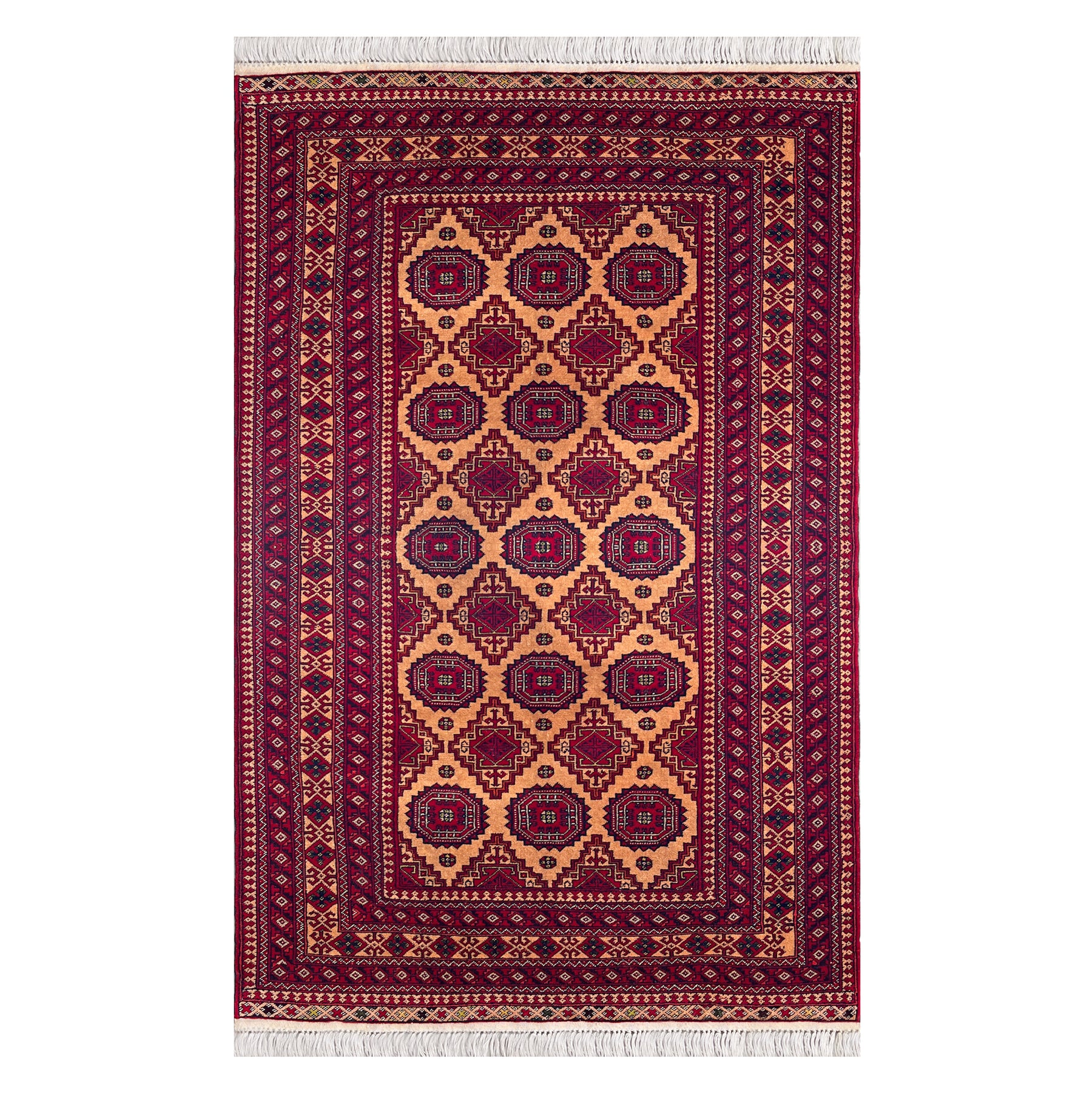
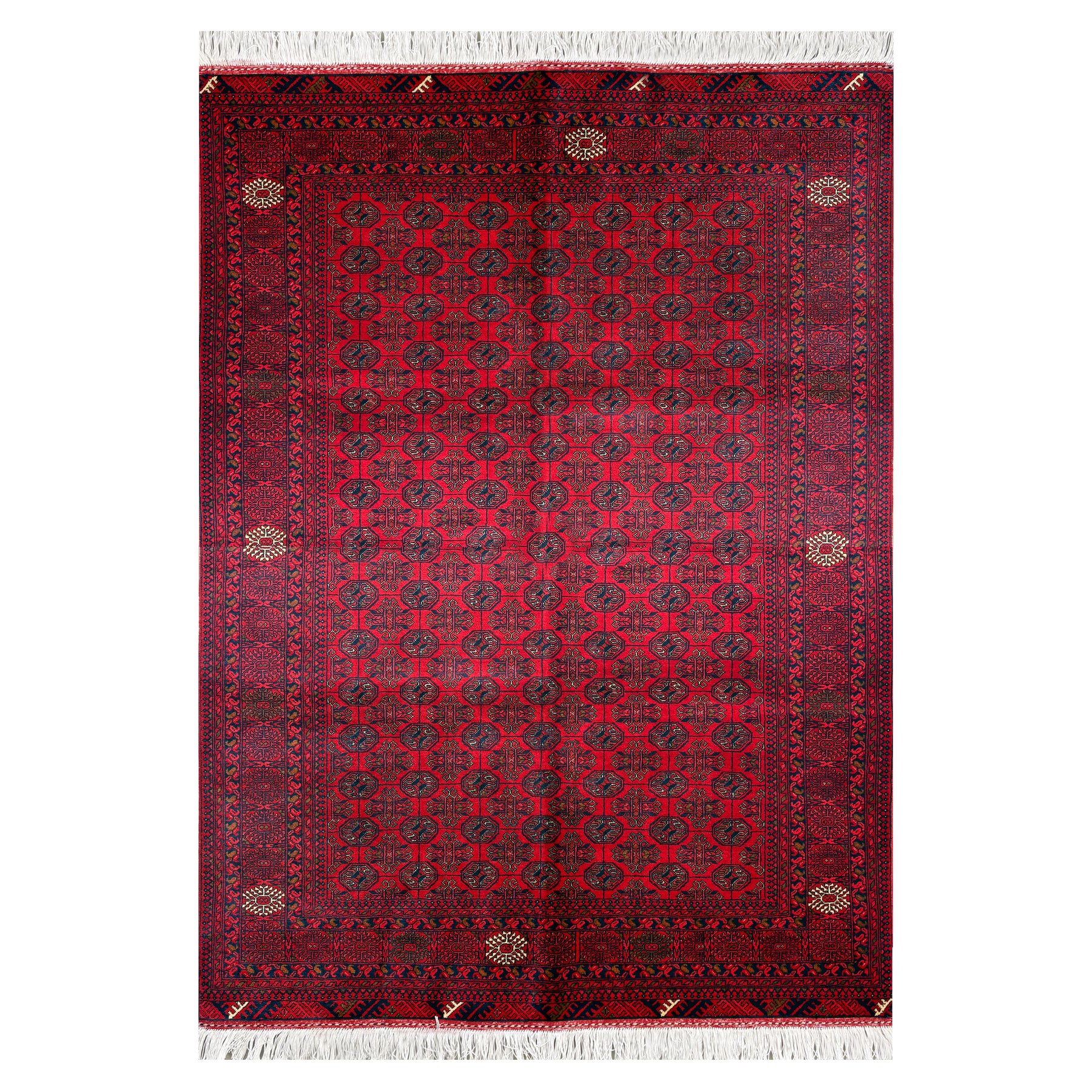
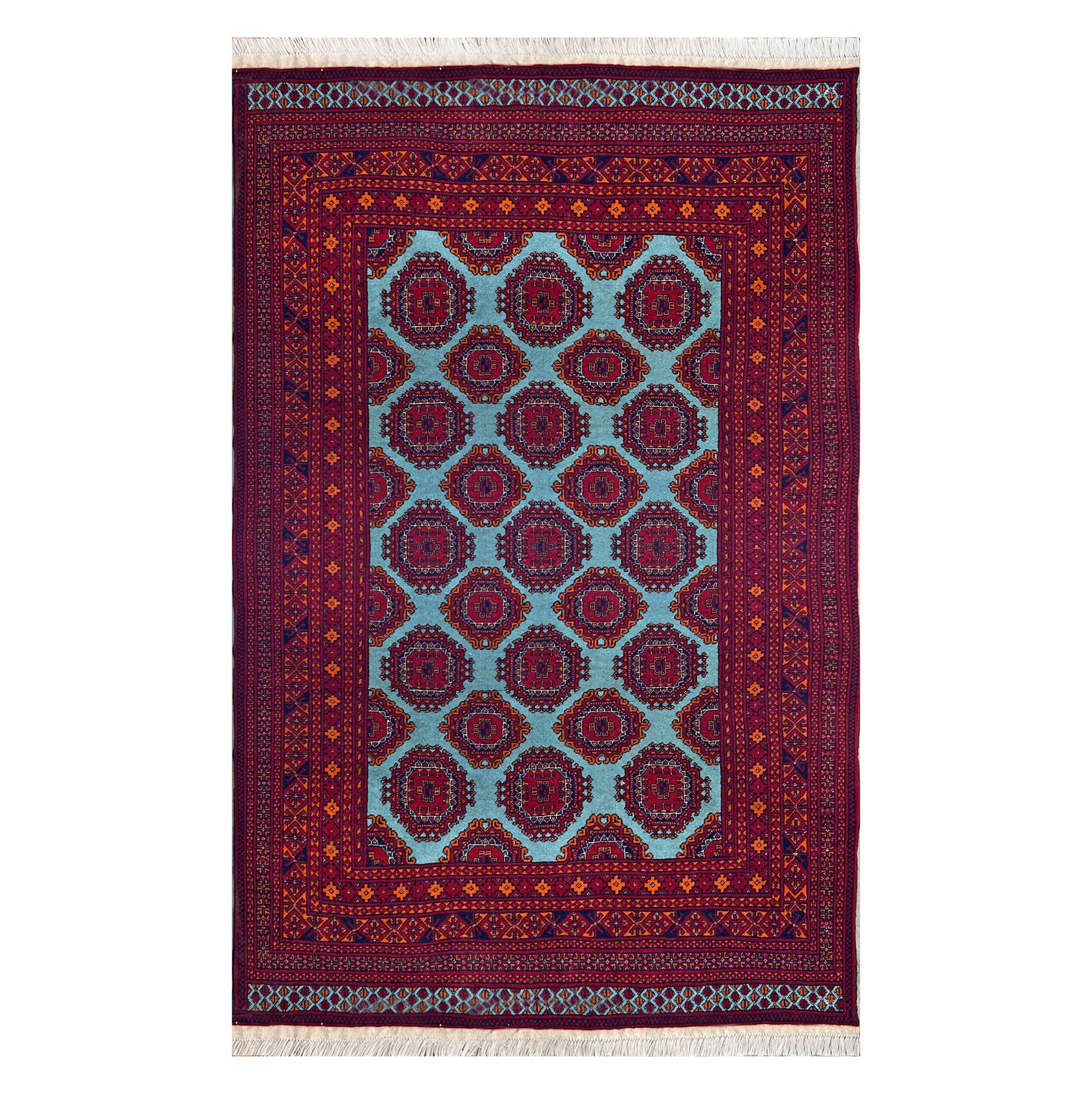
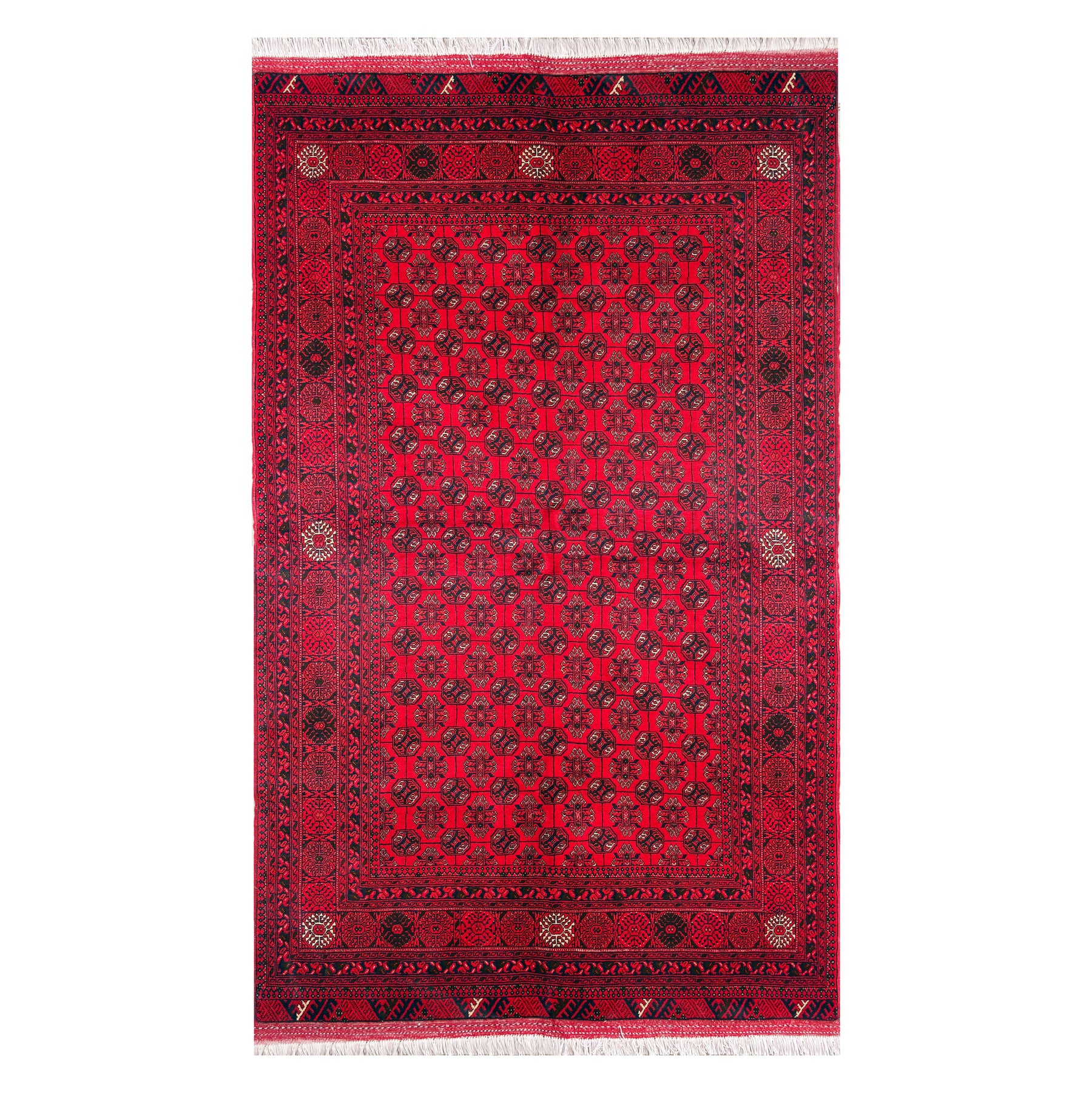
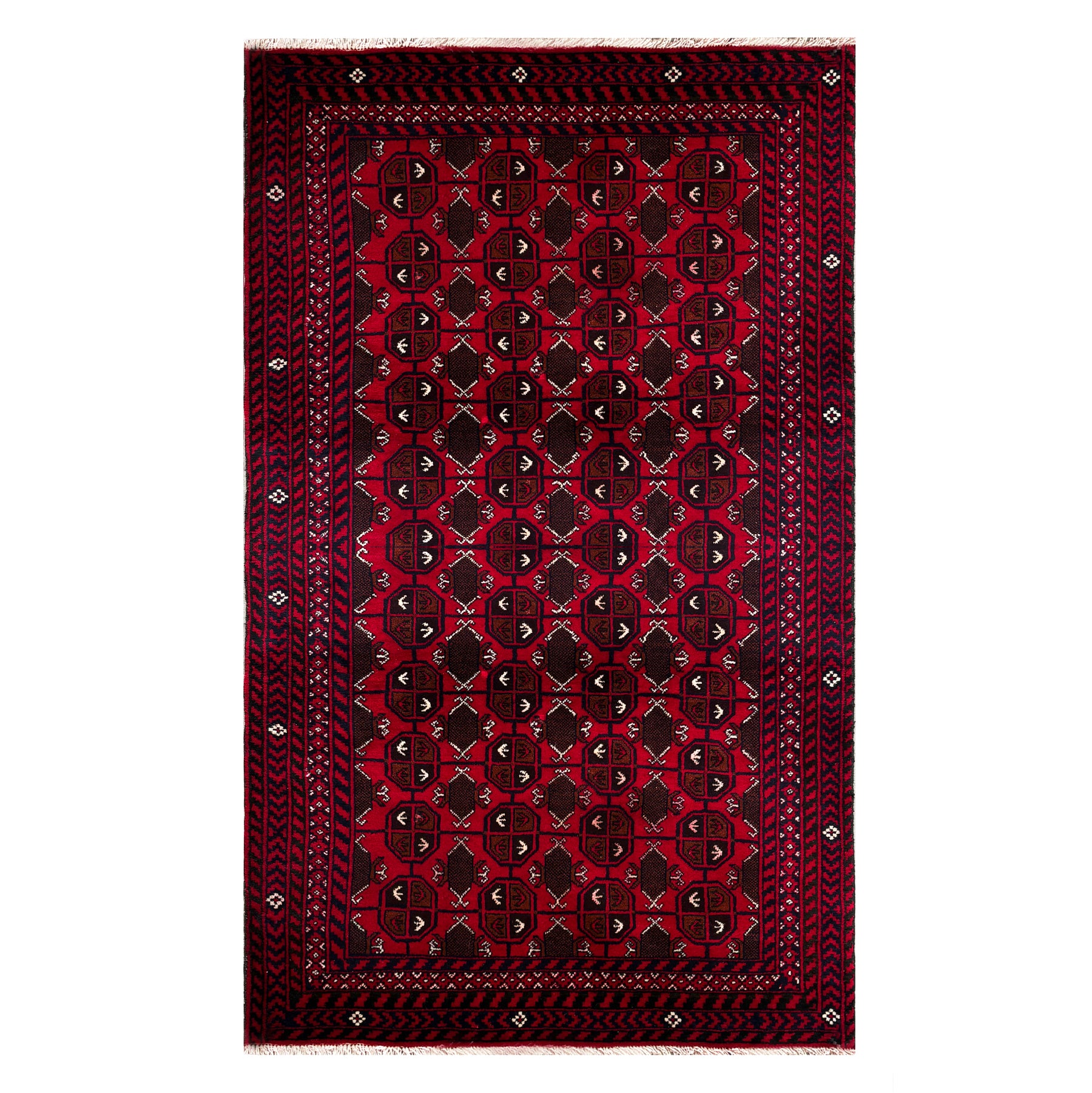
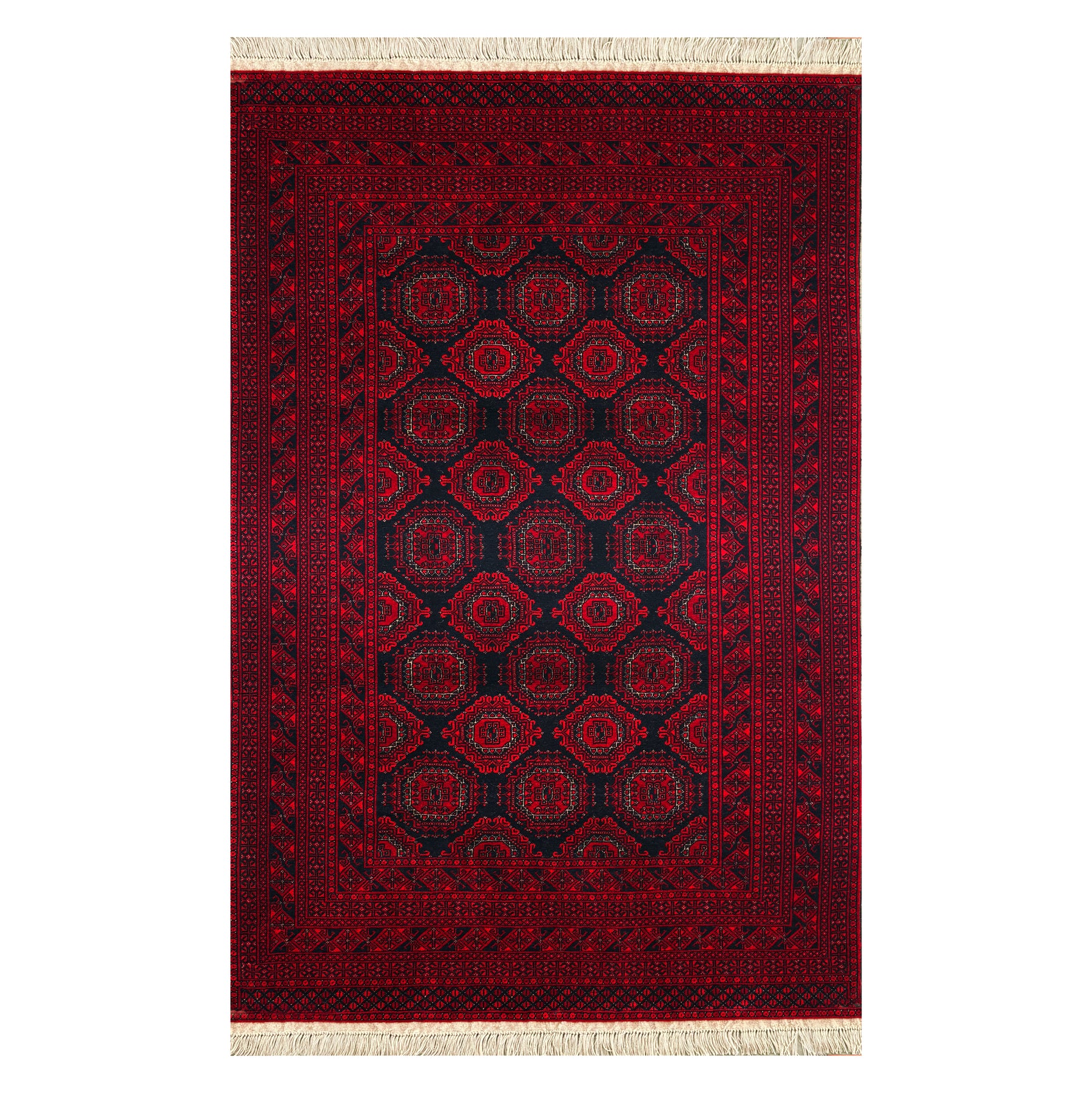
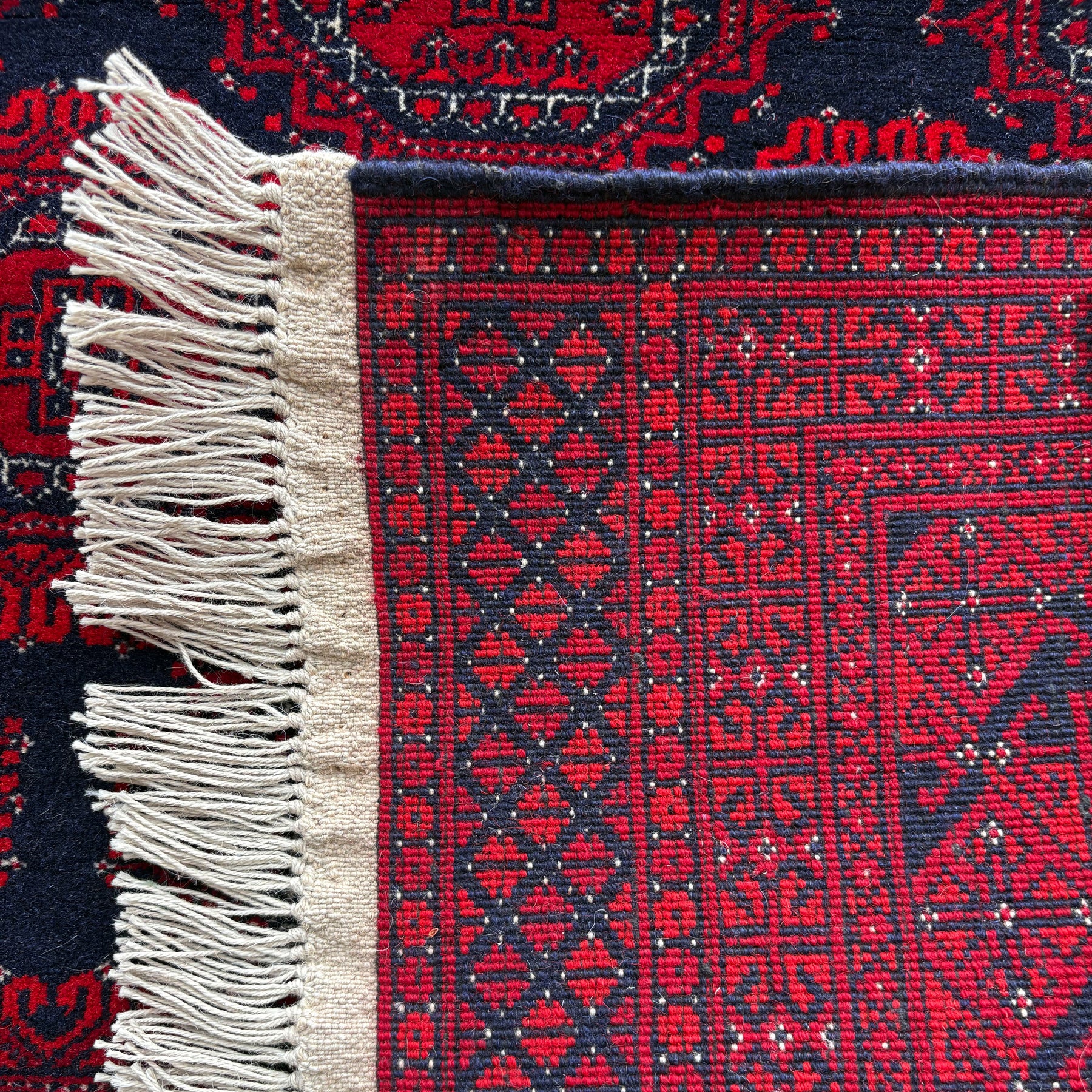
A near-monochromatic Mazar-e-Sharif Sareki carpet of deep crimson — the gul repeat resolving into the field with the quiet authority of a tradition utterly sure of itself.
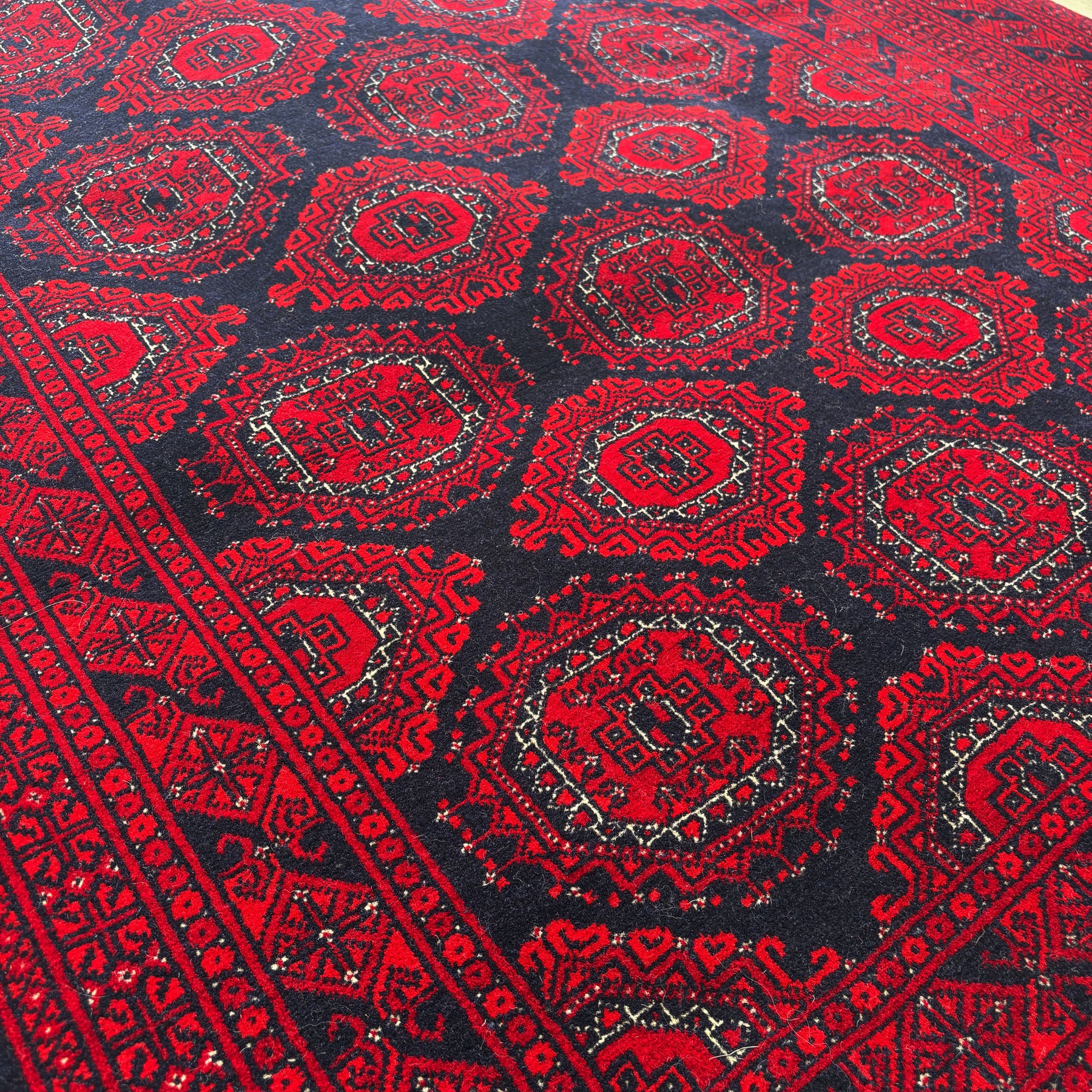
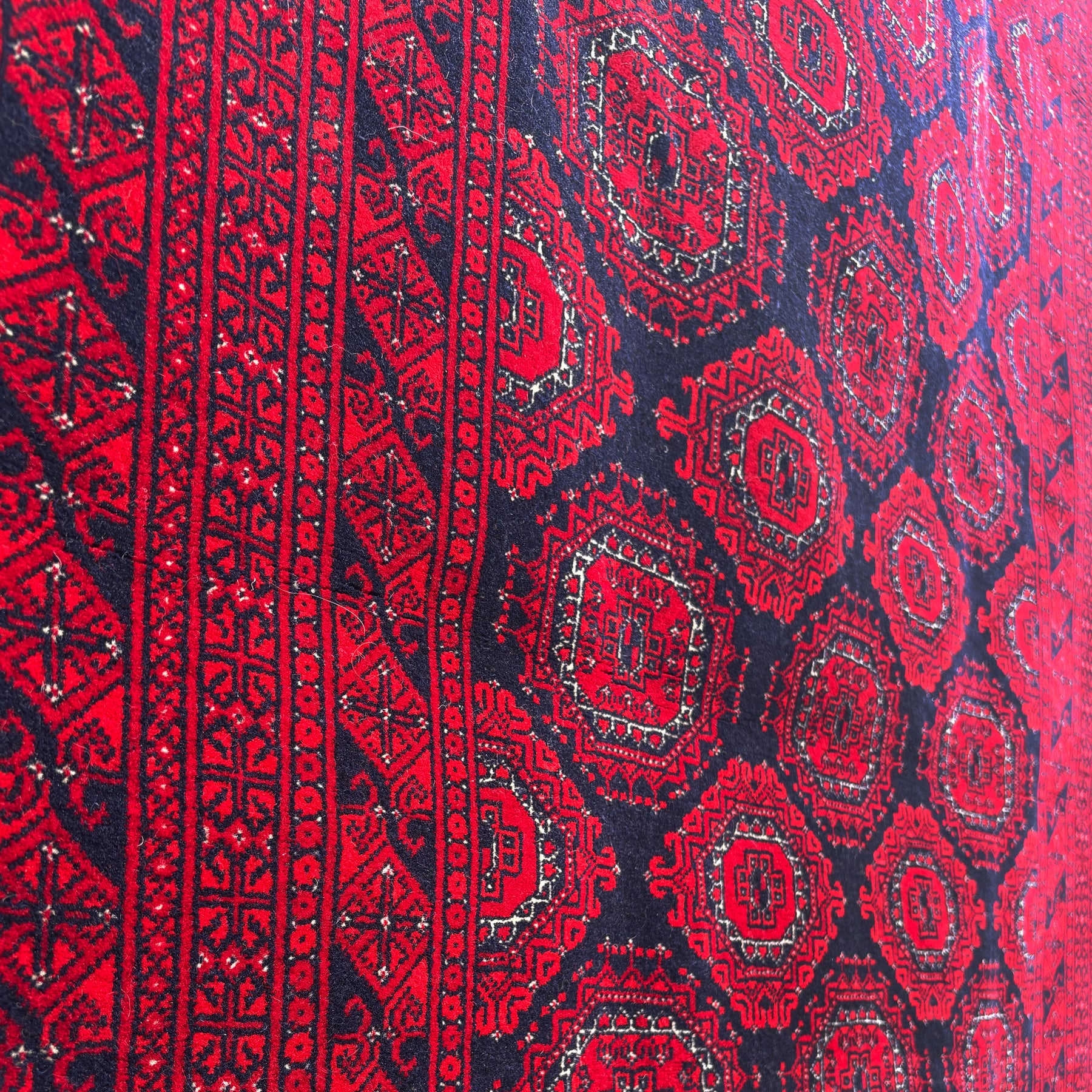
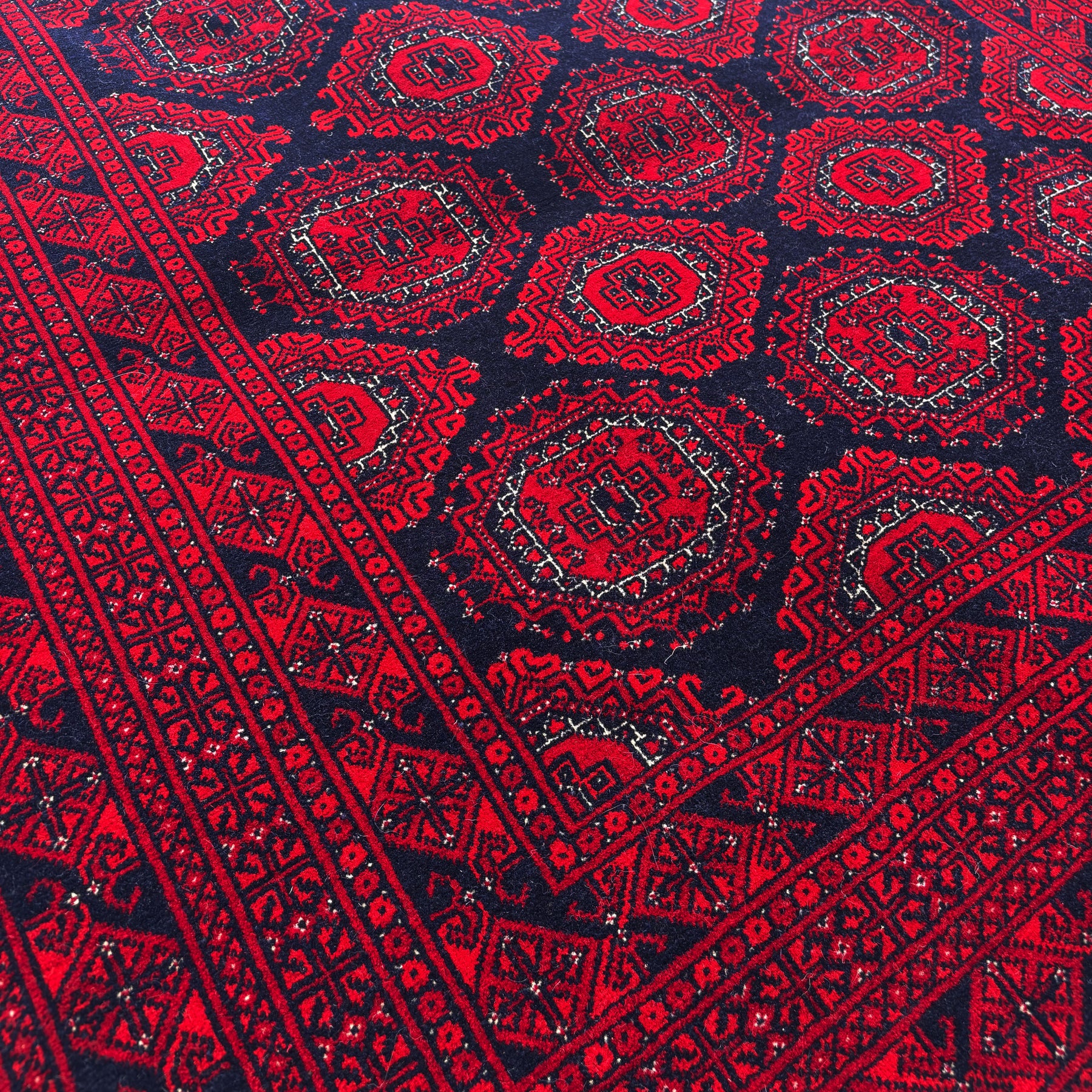
The gul has been the central motif of Turkmen weaving for almost a thousand years. It is the tribal medallion — the octagonal form that identifies a clan, marks a lineage, asserts a presence — and it has travelled with the Turkmen from Central Asia into Afghanistan without losing its essential character. In this carpet, the gul-repeat is rendered in a near-monochromatic palette: deep crimson medallions on a slightly darker crimson ground, the distinction in tone rather than colour, the cream fringe at head and foot the only relief. It is a composition of considerable restraint and formal confidence — a carpet that does not need contrast to hold a room. Knotted in wool on a cotton foundation by Turkmen craftspeople in Mazar-e-Sharif at approximately 110 knots per square inch.
A hand-knotted rug is an investment piece. With proper care it will last a lifetime and become a cherished heirloom. Each knot in this collection is tied by hand by nomadic tribesmen, making every piece entirely one of a kind.
Variations in colour and tone — known as abrash — are a hallmark of authentic handmade rugs, particularly tribal and vintage pieces. Wear and age only add to their beauty.
| Origin | Mazar-e-Sharif, Afghanistan |
| Tribe | Turkmen (Sareki) |
| Technique | Hand-knotted |
| Construction | Approx. 110 knots per square inch |
| Material | Wool pile on cotton foundation |
| One of a kind | Yes |
Coupons
Delivery
You may also like