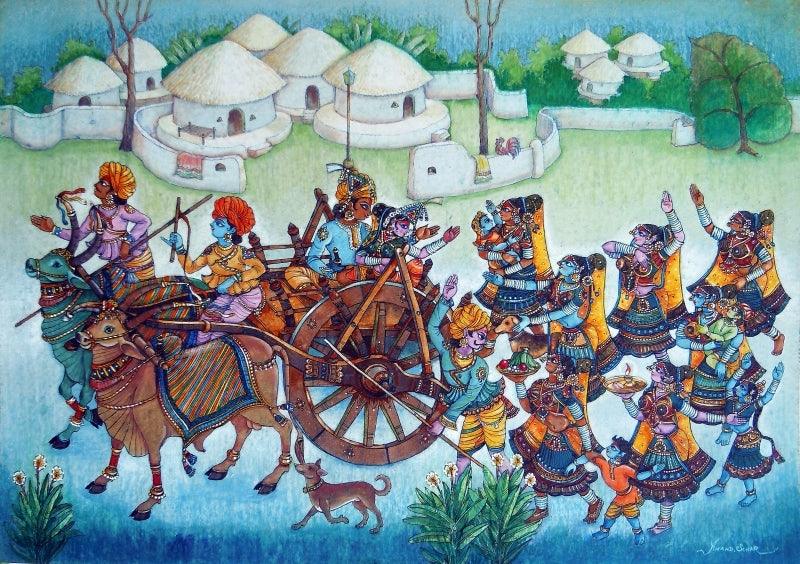
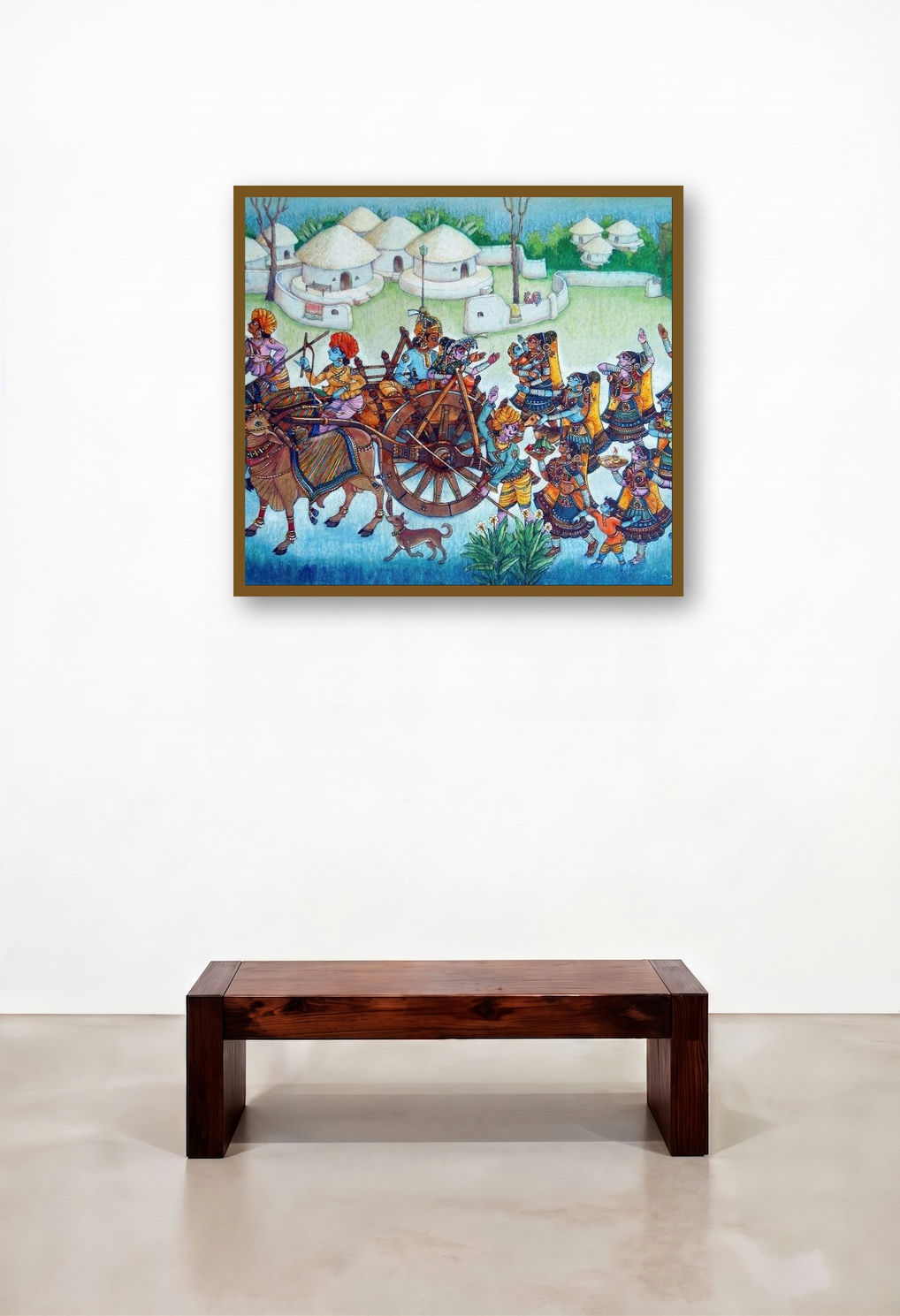
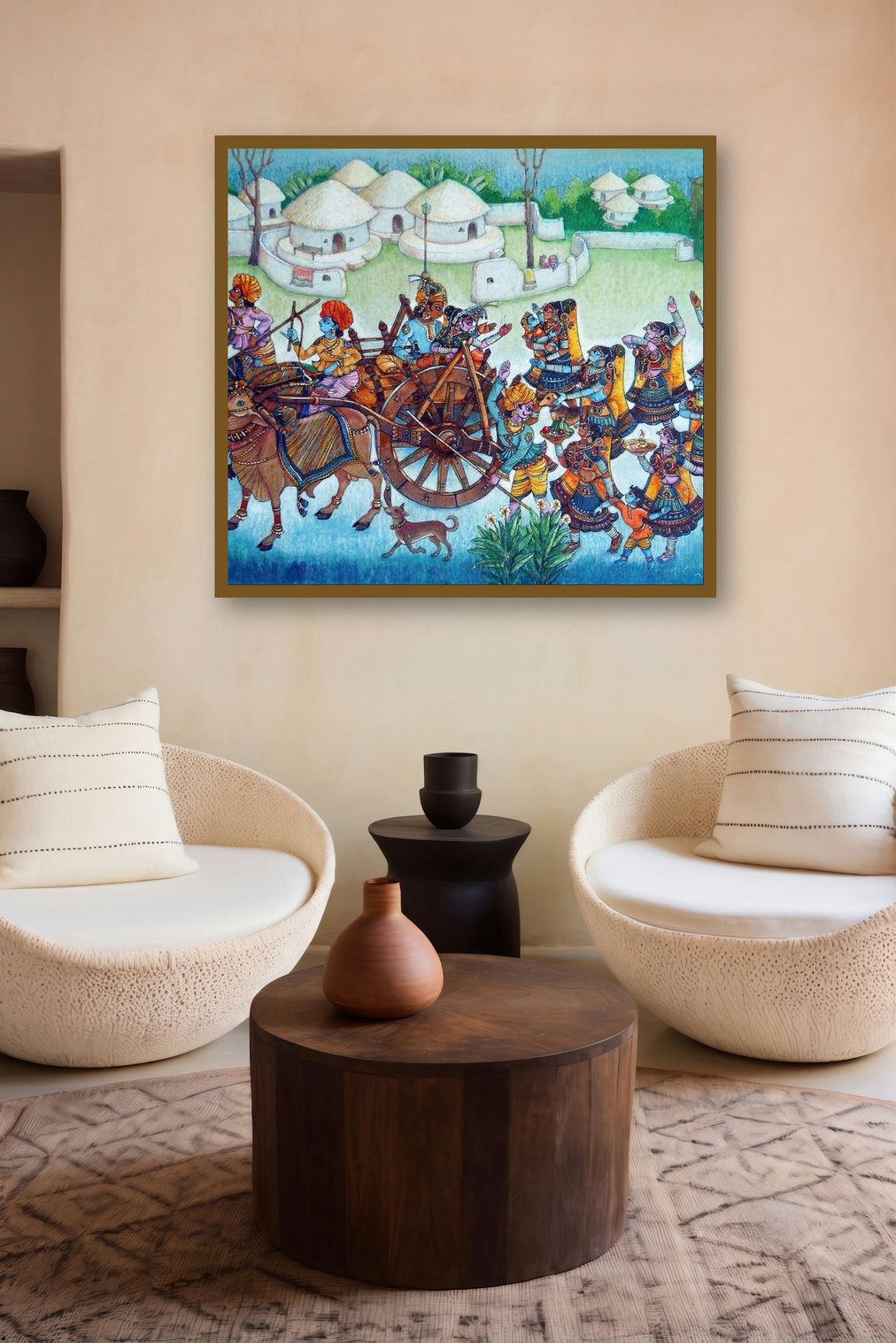
Bidayi (A Festive Journey)
₹60,000
● In stock · ★ 4.0 (12)checking live price…
Size
20x29Type
OriginalMaterial
Handmade PaperThis buoyant village tableau turns procession into poetry, where the bullock cart’s commanding diagonal and the wheel’s emphatic circle become emblems of continuity—life moving forward while tradition keeps time. Saturated blues and warm reds pulse through patterned textiles and ornament, choreographing the figures into a single communal rhythm that feels equal parts celebration and pilgrimage. Against the quiet geometry of whitewashed huts and enclosing walls, the dancers’ raised arms and clustered offerings suggest a ritual of belonging—an assertion that joy itself can be a shared architecture. The scene reads as a living archive, preserving memory not through stillness but through exuberant motion and collective gaze.
Delivery
You may also like
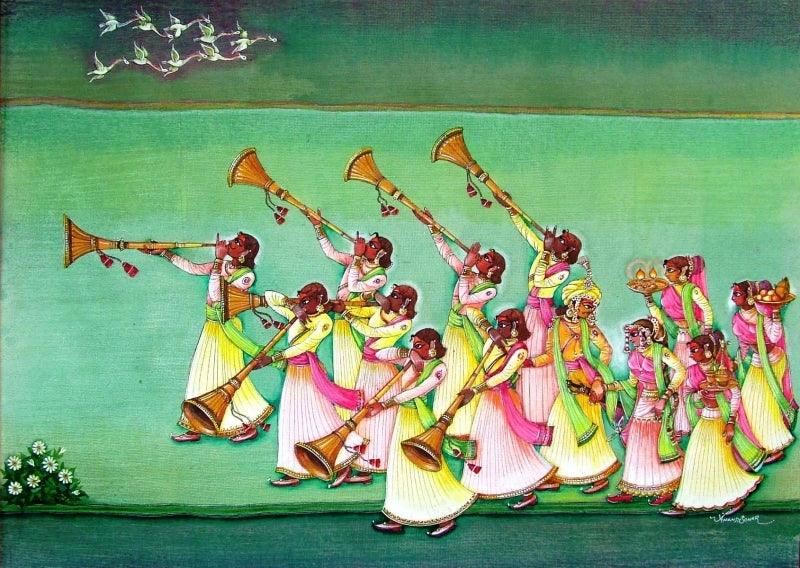
Miravnuk (A Festive Procession)
Artzolo
₹60,000
★ 5.0 (14)
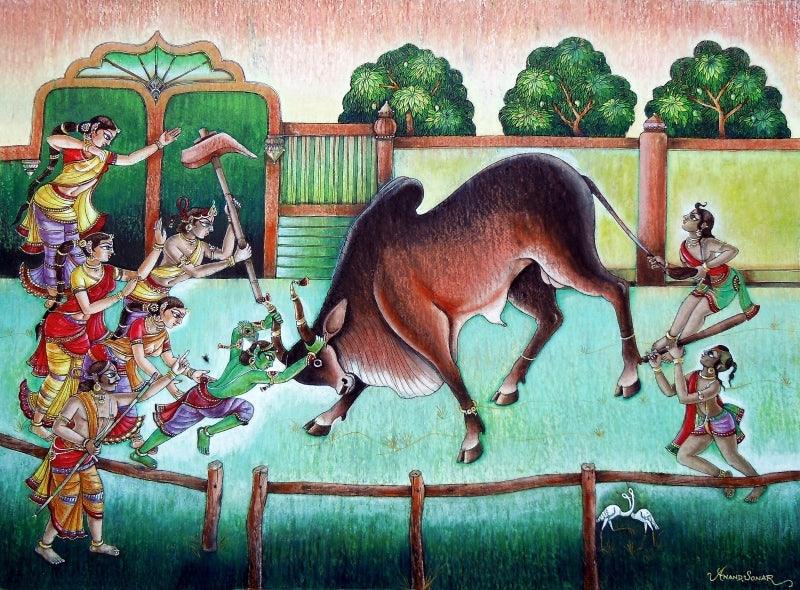
Bull Fight (Durga's Triumph)
Artzolo
₹60,000
★ 4.0 (6)
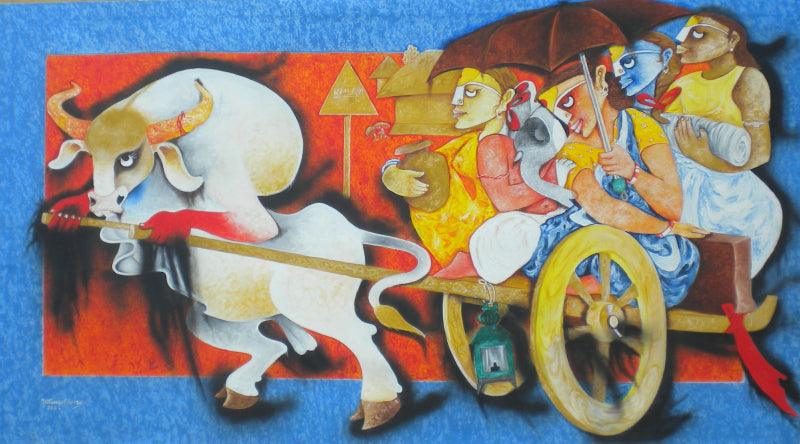
Journey 5 (The Journey of Life)
Artzolo
₹90,000
★ 4.0 (10)
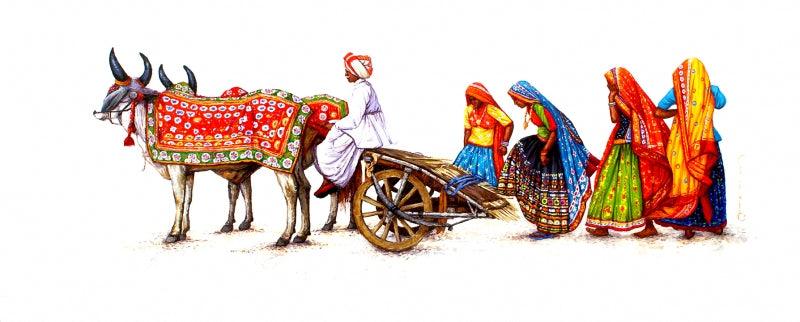
Untitled 22
Artzolo
₹0
out of stock
★ 4.0 (13)
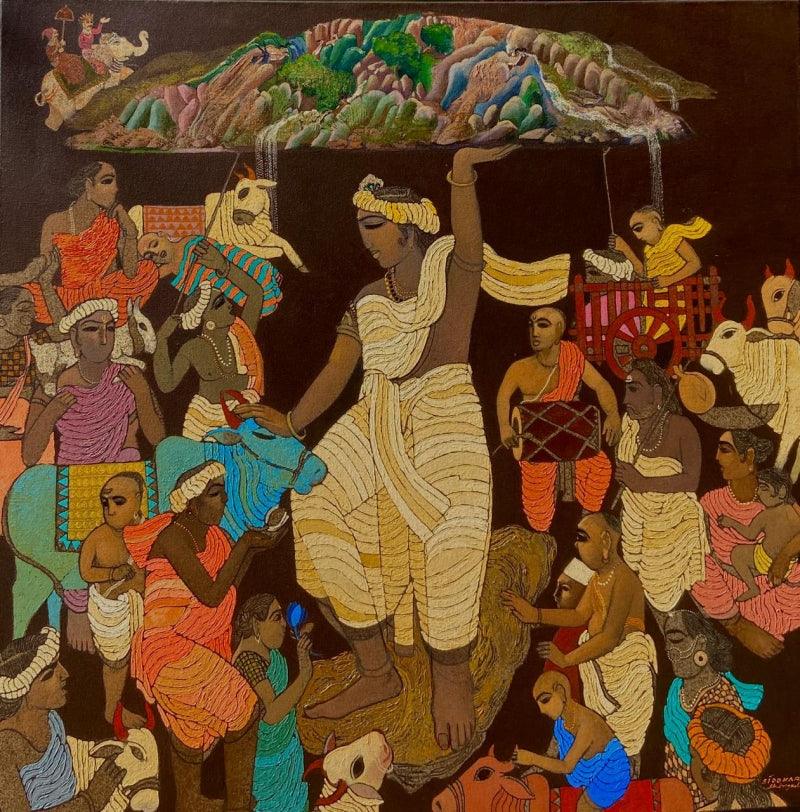
Vrindavan 5 (Royal Journey)
Artzolo
₹180,000
out of stock
★ 5.0 (7)
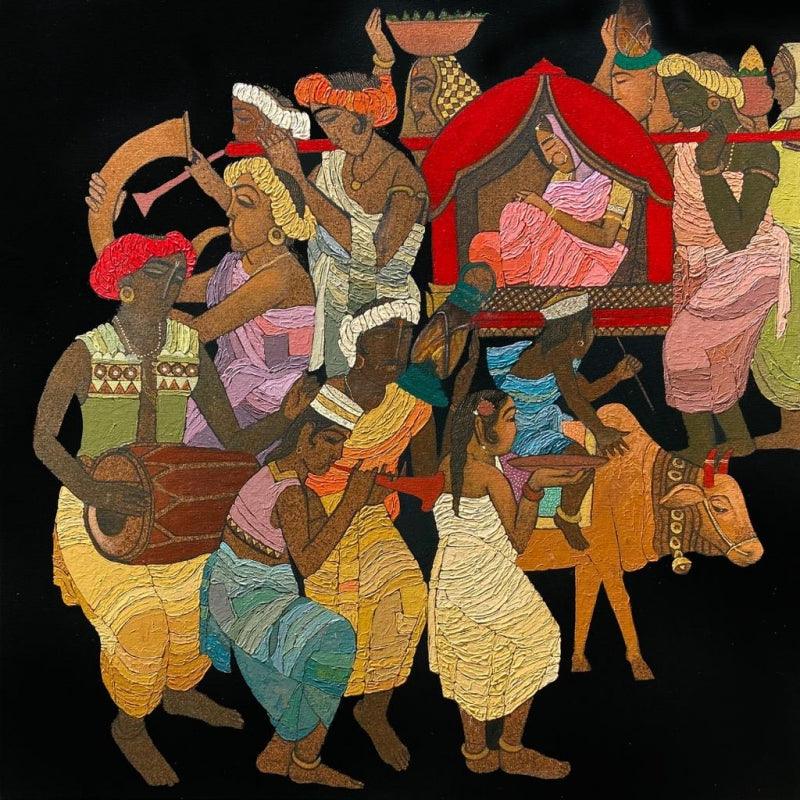
Procession Series 2 (Village Procession)
Artzolo
₹72,000
out of stock
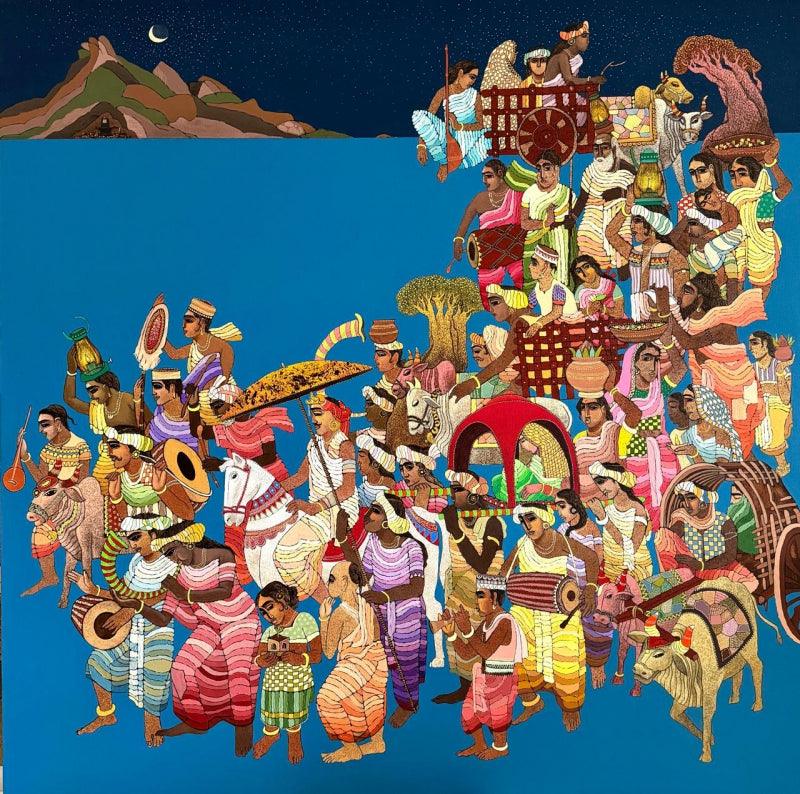
Vrindavan
Artzolo
₹640,000
out of stock
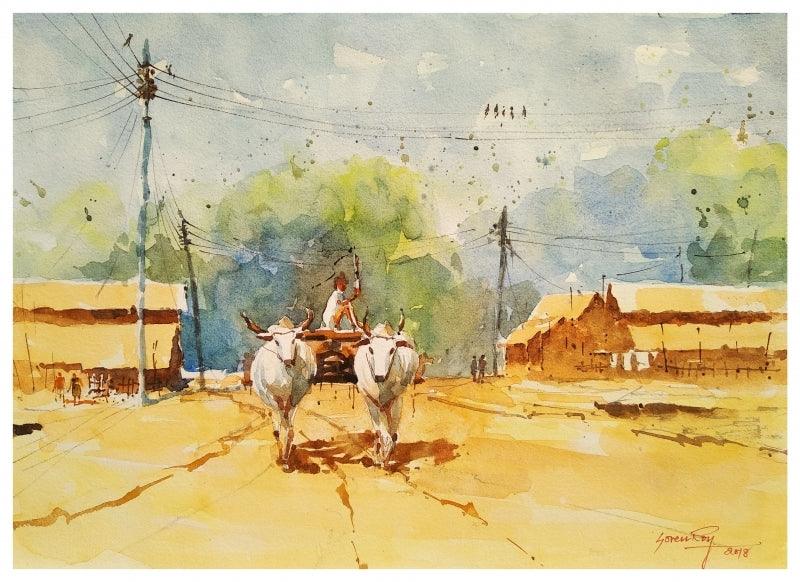
Bullock Cart
Artzolo
₹6,500
out of stock
★ 5.0 (7)