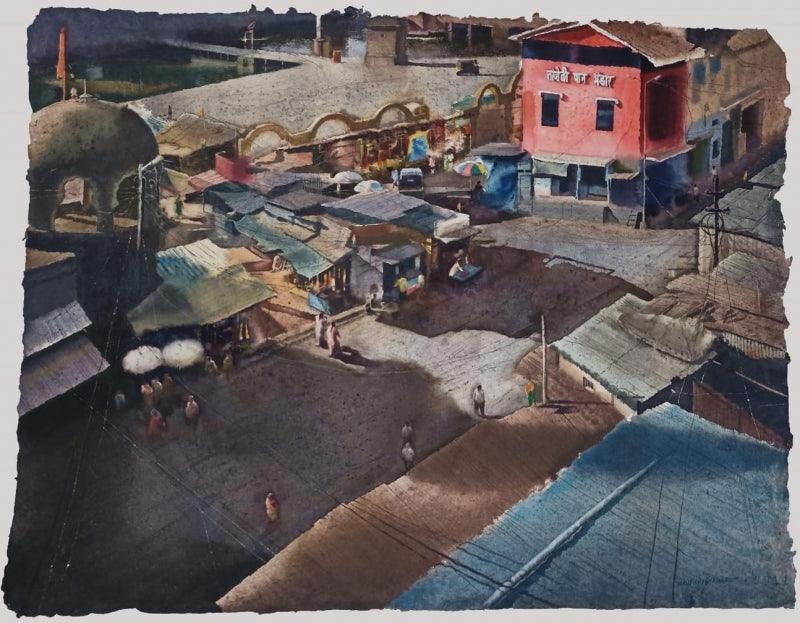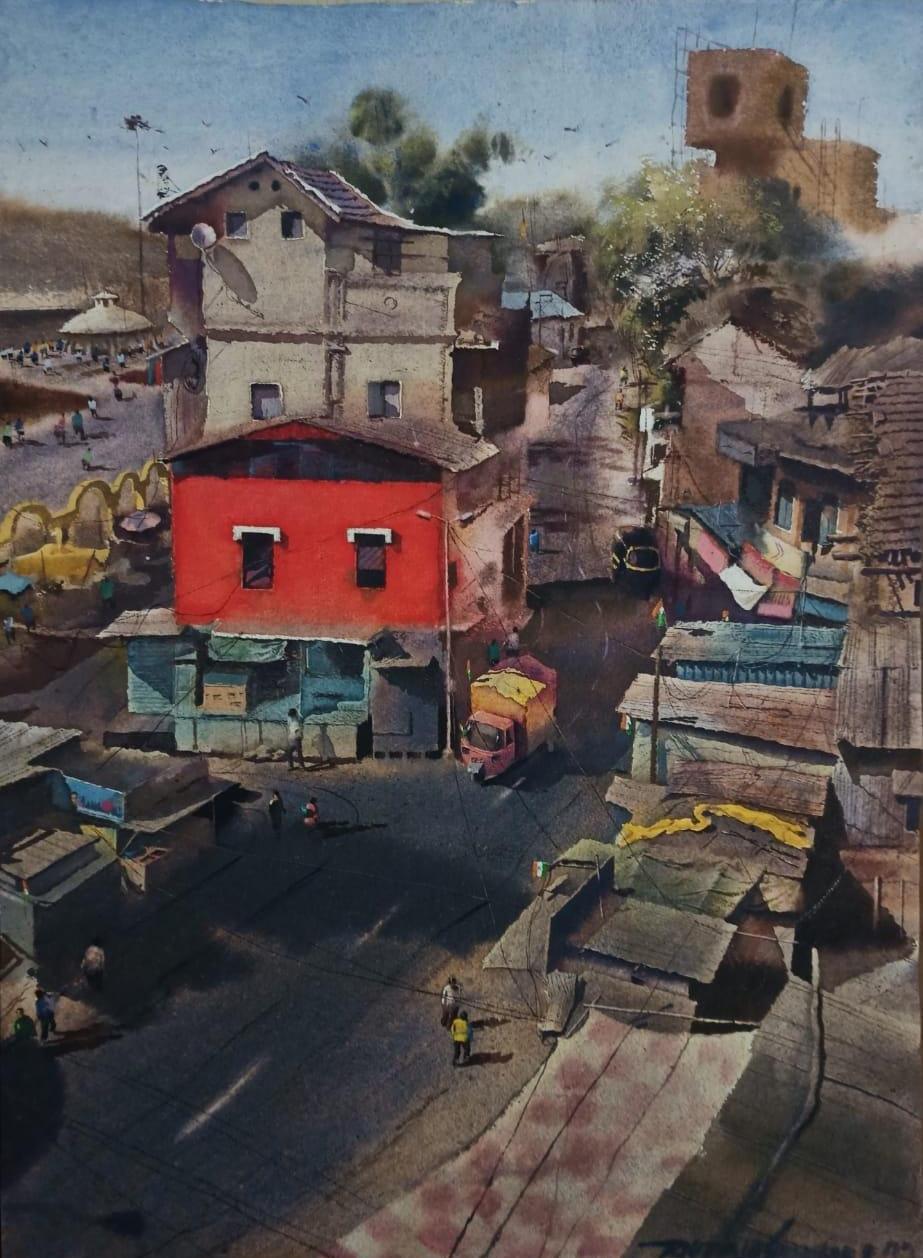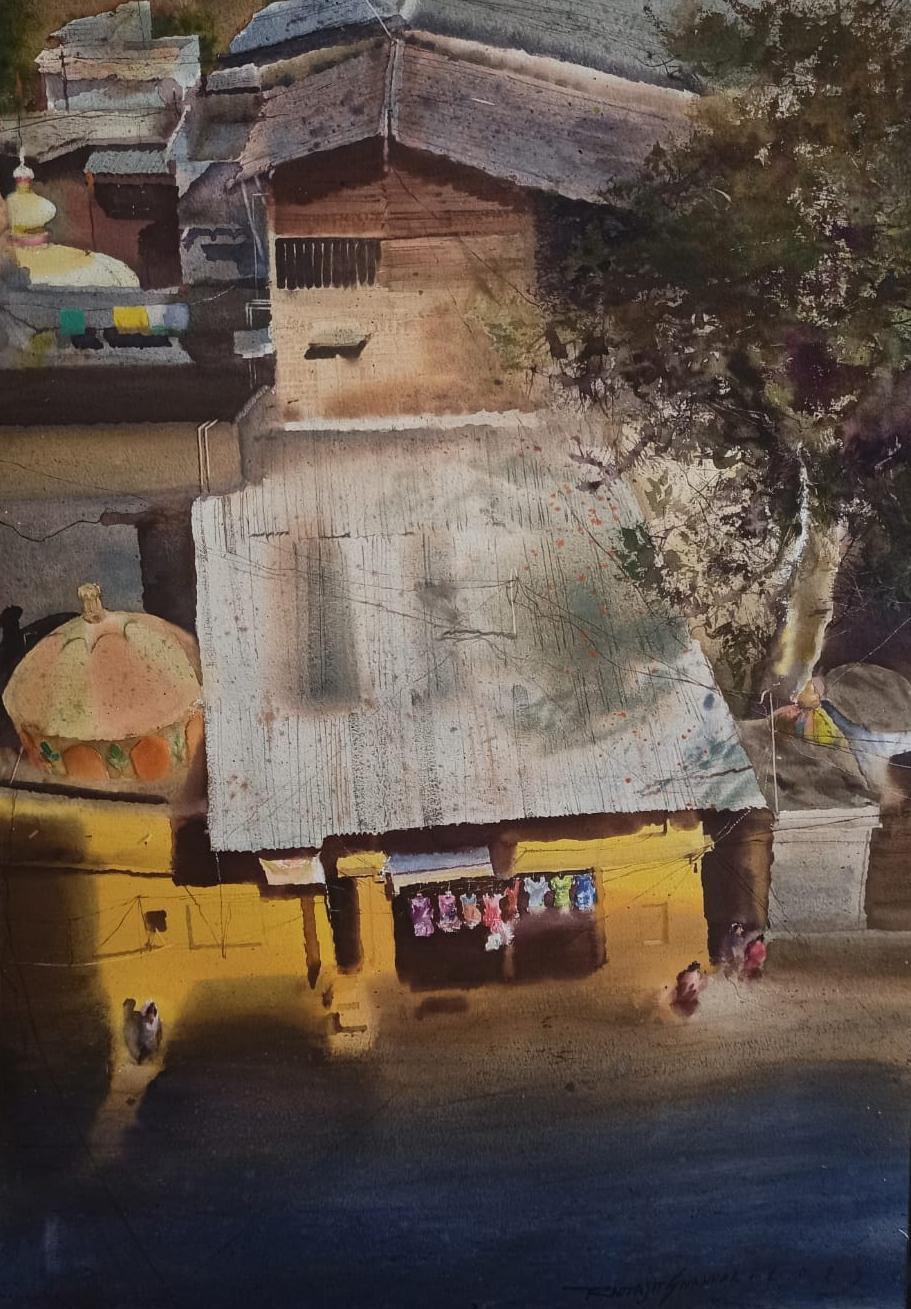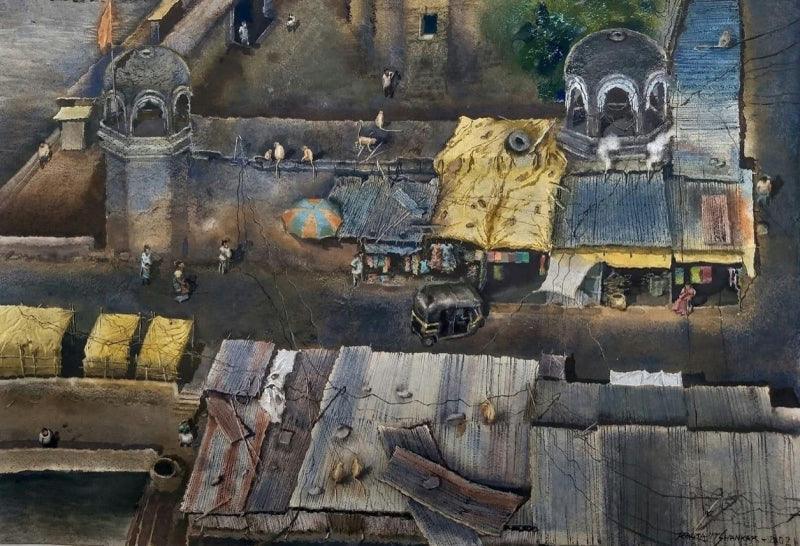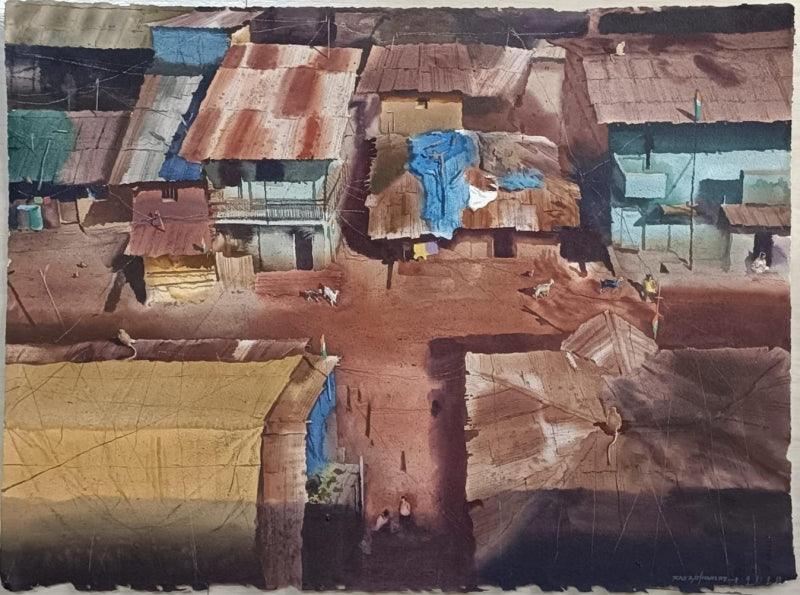
Tiranga 3 (Urban Landscape)
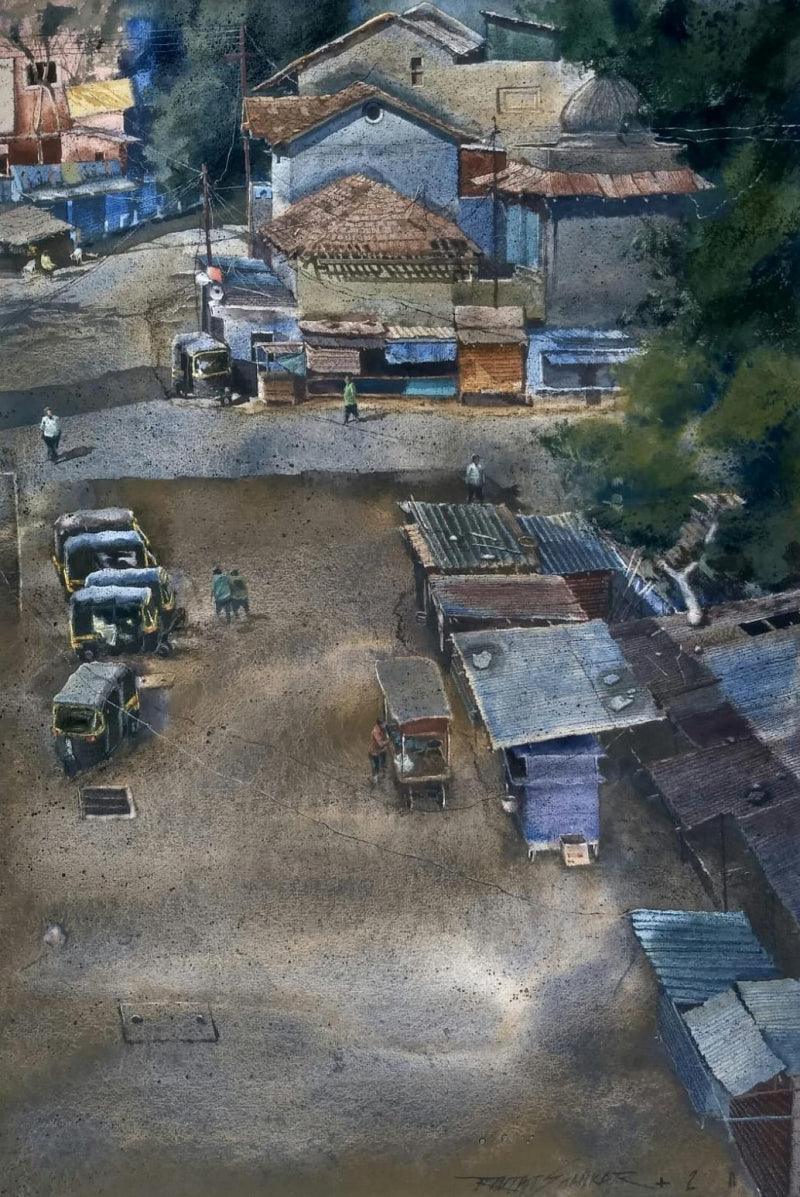
Viewed from an elevated, almost impartial vantage, the settlement becomes a patchwork of corrugated roofs—rust, sand, and slate stitched together—where each plane of metal reads like a humble biography of weather, labor, and time. The composition is organized by a central corridor of earth that cuts through the dense geometry, a quiet artery of movement that makes absence and distance as palpable as the buildings themselves. Subtle washes and soft-edged shadows temper the harshness of the materials, allowing small accents of blue cloth and scattered figures to flicker as signs of resilience within scarcity. What emerges is not merely a record of place, but a meditation on how community is assembled from fragments, and how dignity persists in the everyday architecture of survival.
Delivery
You may also like