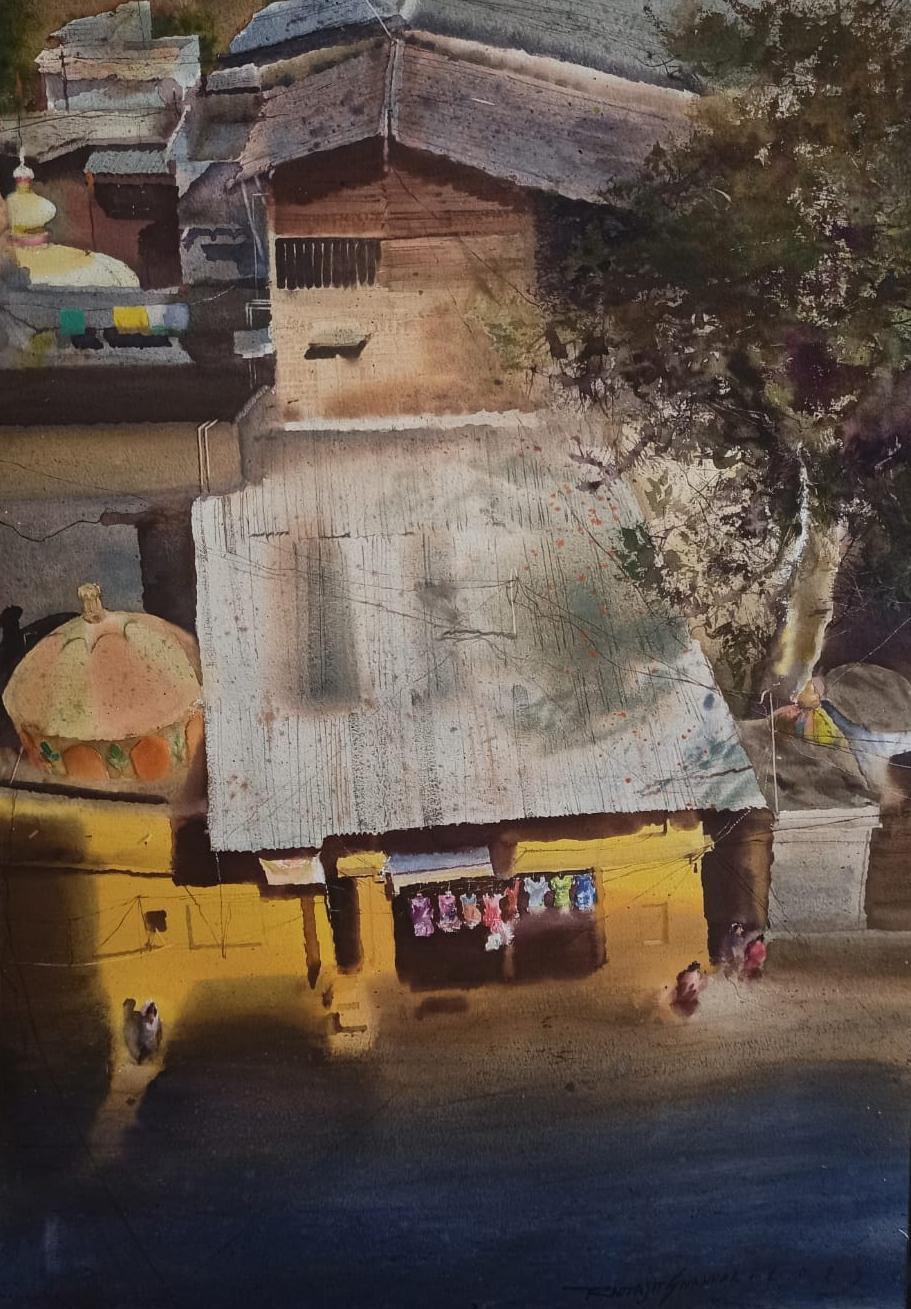
Urbanization (A Glimpse of Rural India)
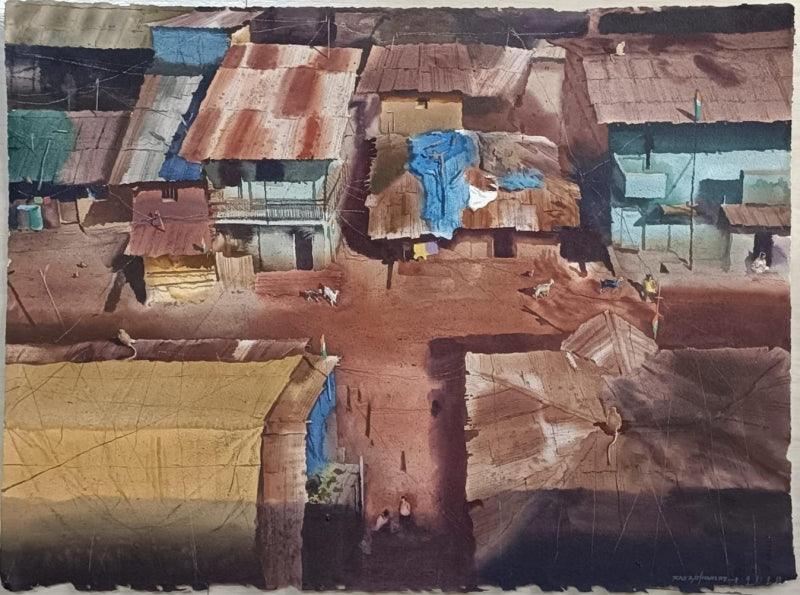
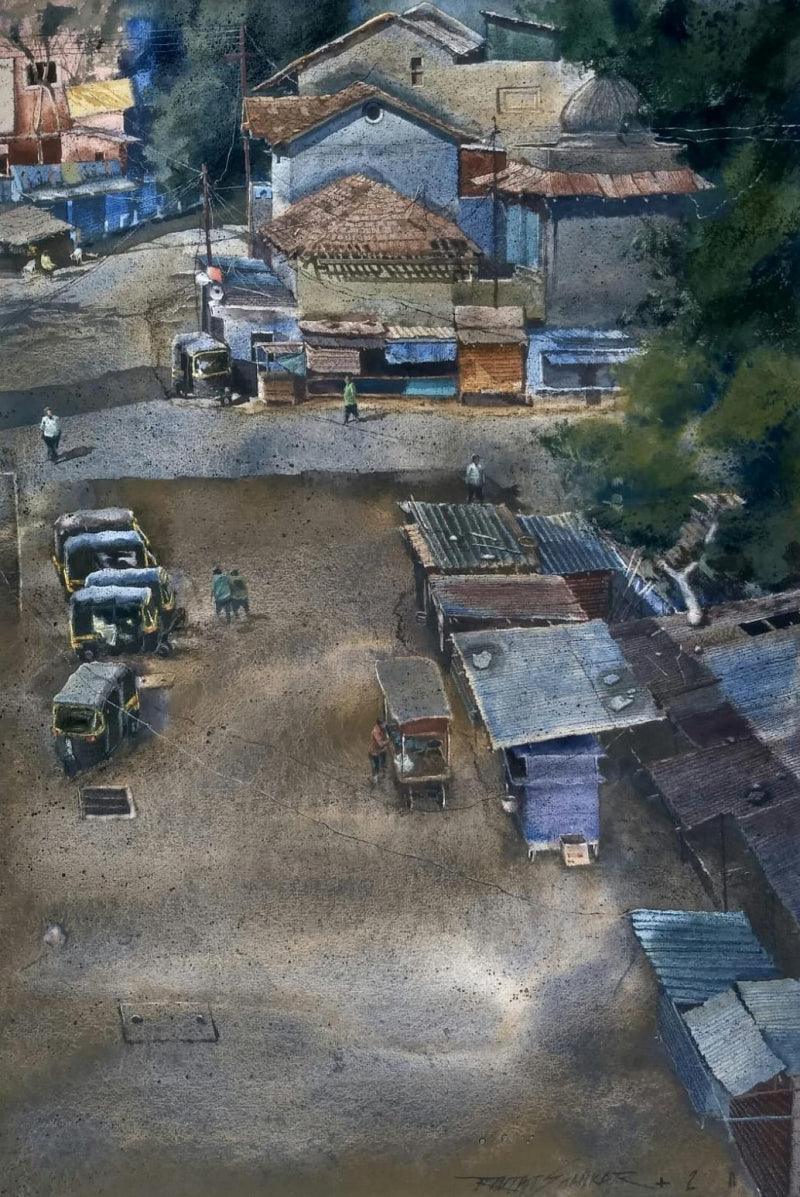
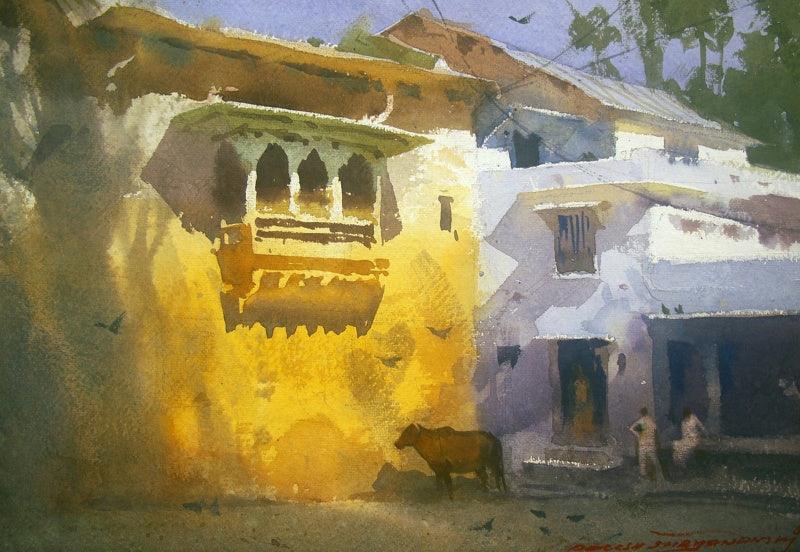
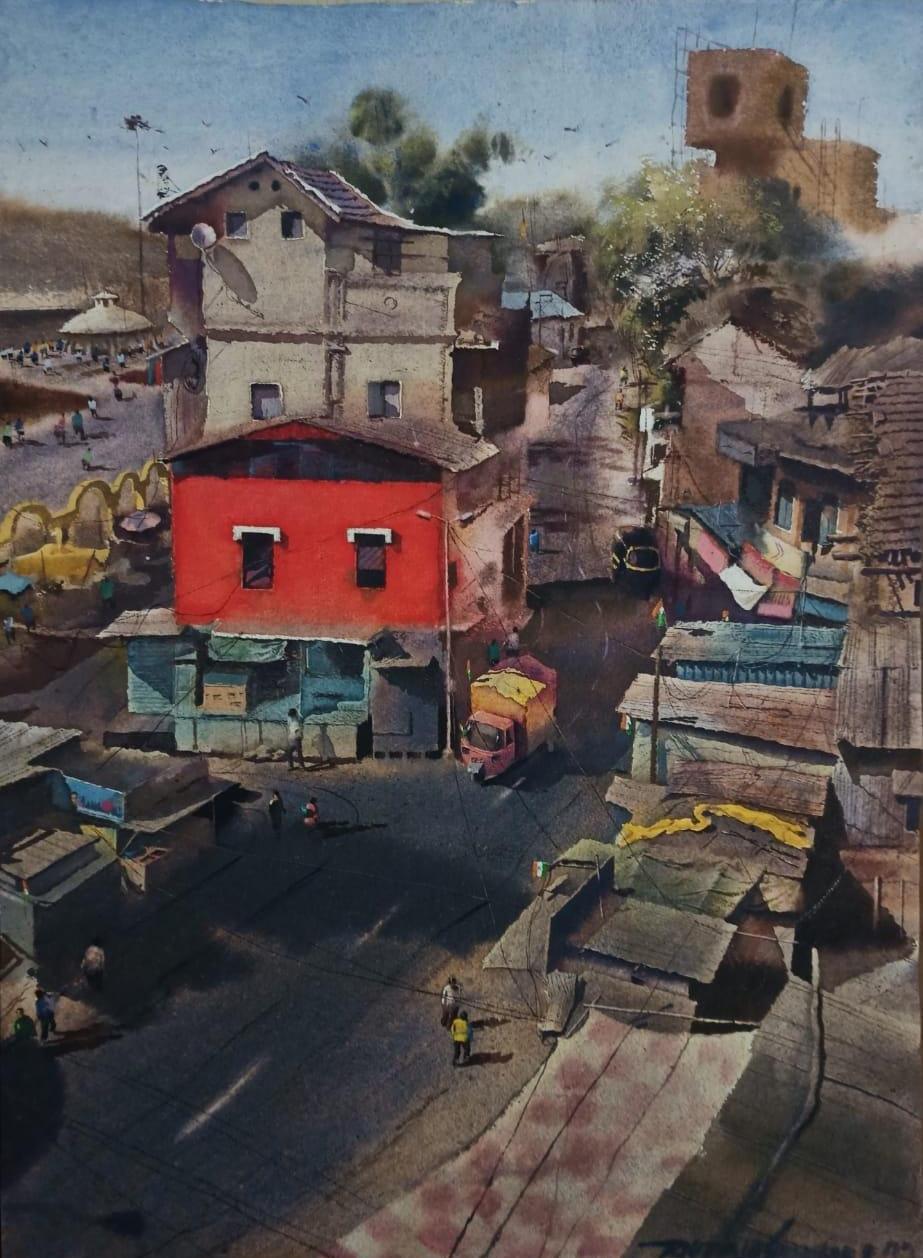
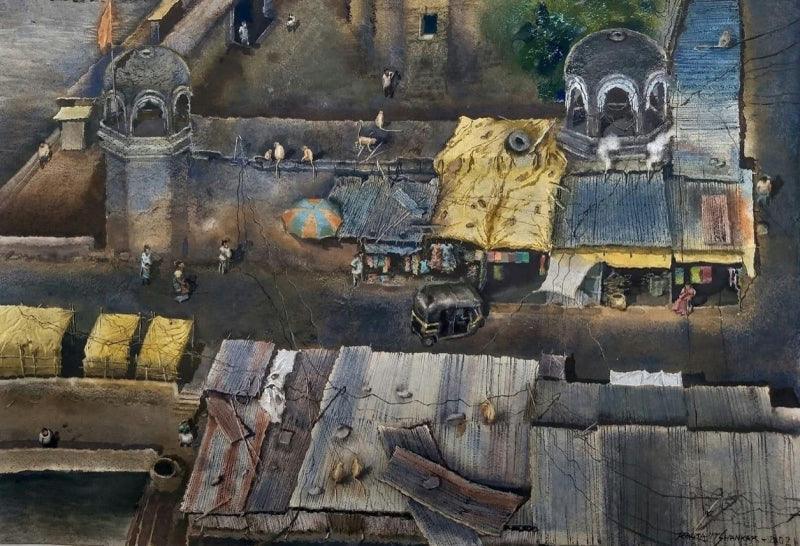
The work observes a dense vernacular settlement from an elevated, almost remembered vantage, where corrugated rooftops become a patchwork of lived geometry and time-worn surfaces. Sunlight pools on the yellow façade and dissolves into broad shadow, turning the street into a quiet threshold between public passage and private interior worlds. The domed shrine-like forms punctuate the scene as soft anchors of devotion, while the small, bright line of hanging cloth reads like daily ritual—colorful proof that intimacy persists within the weight of stone, tin, and dust. In the dialogue between hard architectural edges and the breathing canopy of trees, the painting suggests a city held together not by monumentality, but by the humble choreography of ordinary life.
Delivery
You may also like