Violence An Politican 4 (The Weight of History)
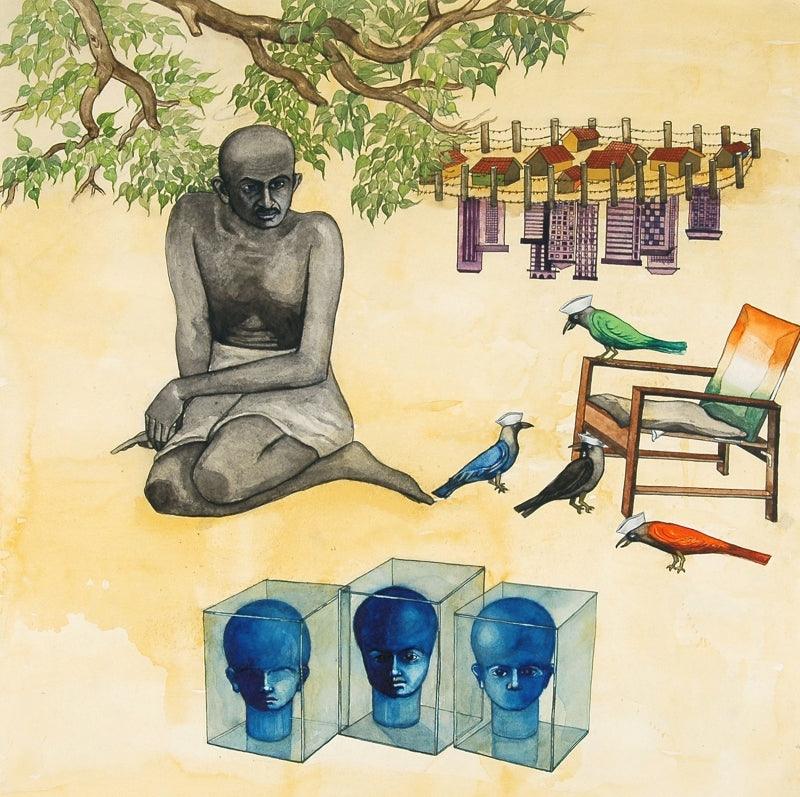
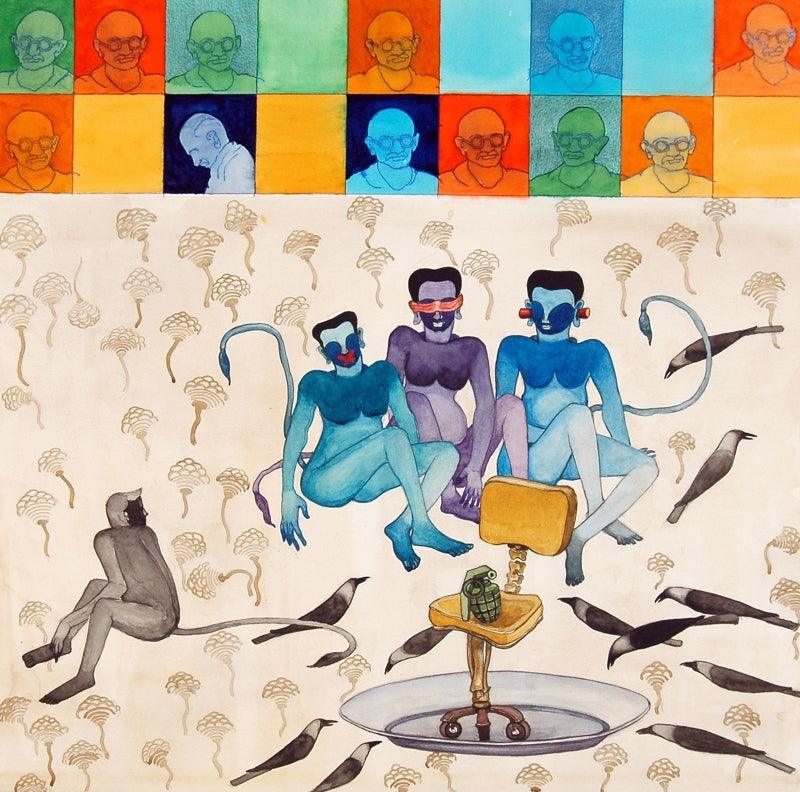
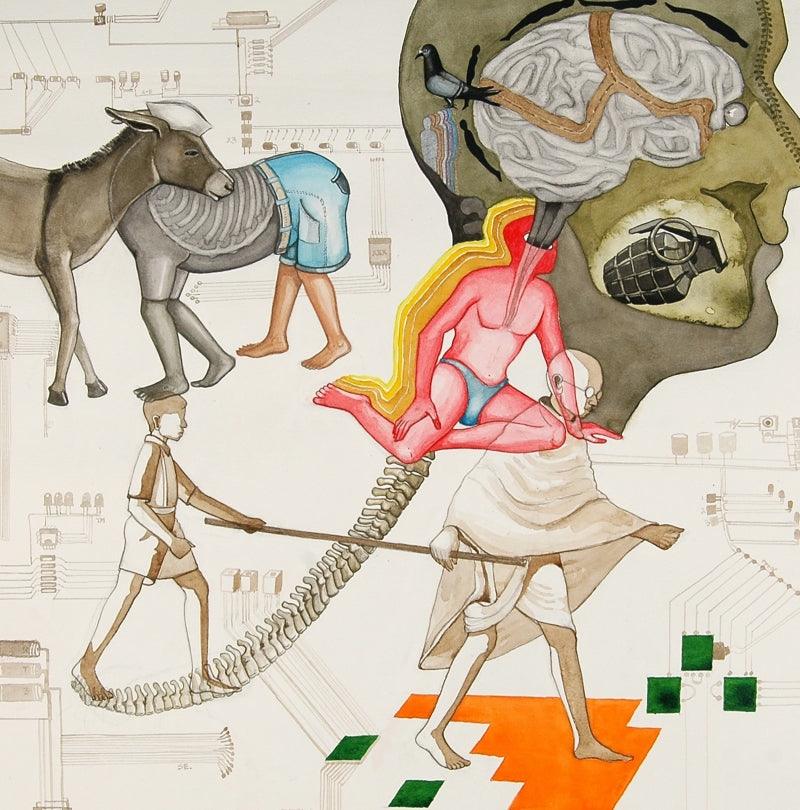
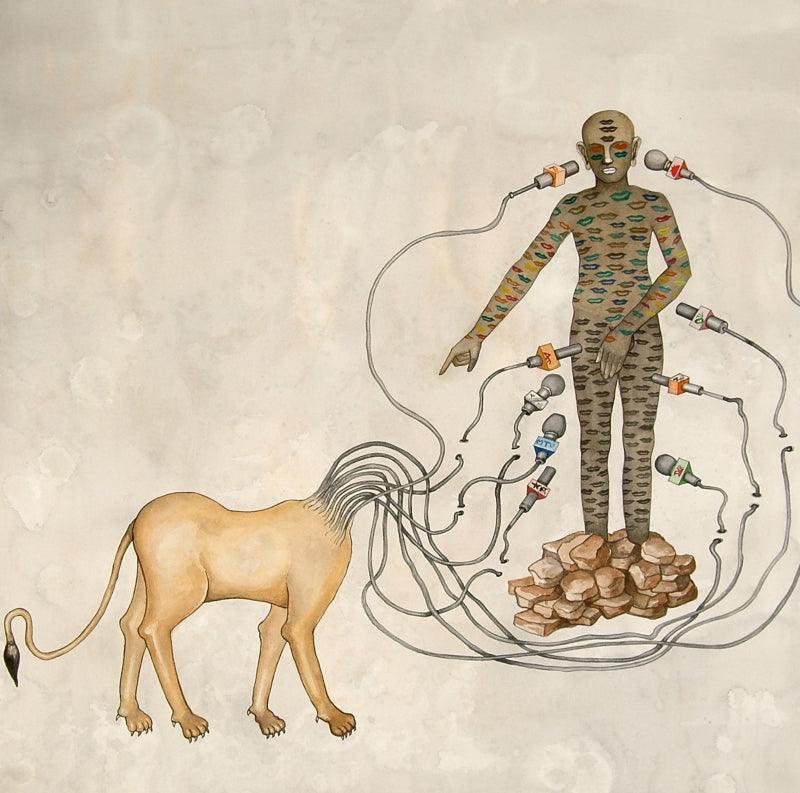
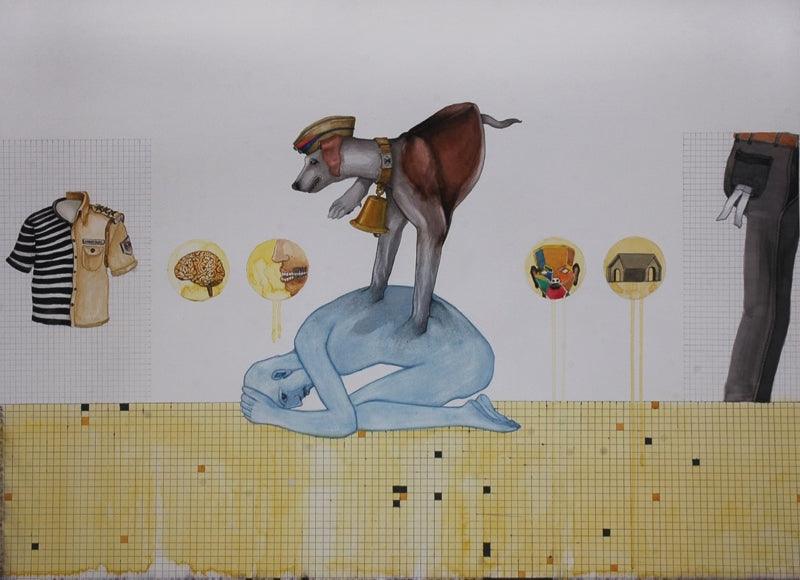
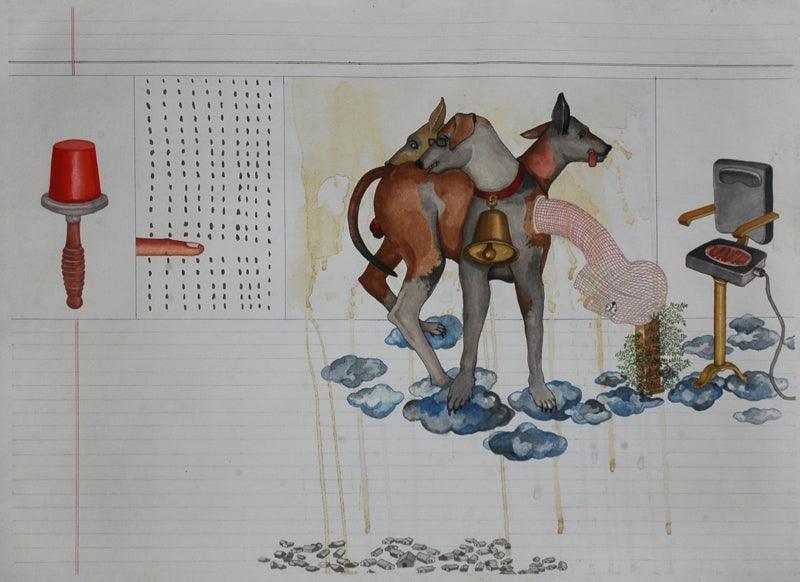
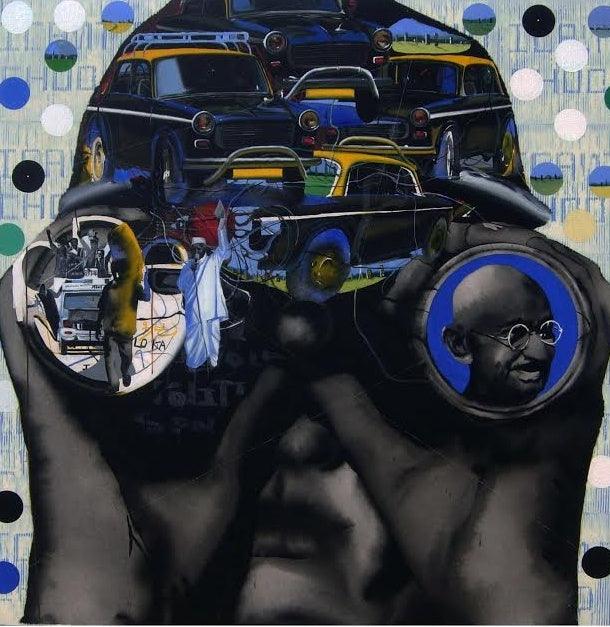
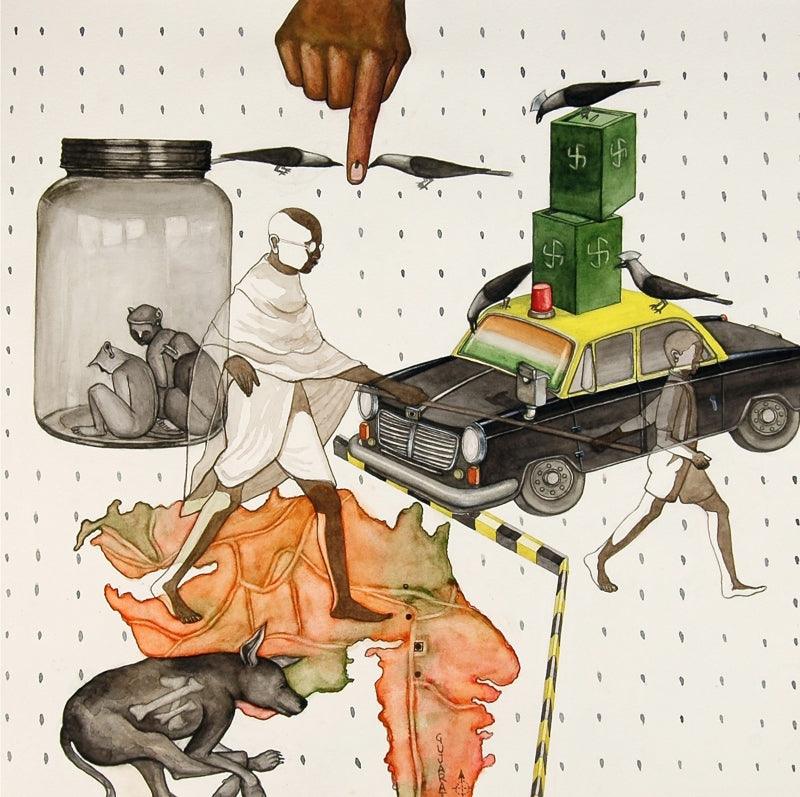
Suspended in a field of falling marks like relentless rain, the scene assembles as a moral diagram: a Gandhi-like figure strides across a bruised, map-like ground while a disembodied finger presses down from above, turning history into something steered, measured, and coerced. The glass jar of bound bodies and the toppled animal form compress the language of captivity and sacrifice, as if compassion has been archived and pain made collectible. Against this, the sleek car crowned with stacked currency becomes a traveling shrine to extraction—its hard geometry and acidic accents cutting through the otherwise porous washes—while the circling crows serve as witnesses, scavengers, and judges. The composition reads as a tense choreography of power and conscience, where the promise of virtue is continually intercepted by systems that label, contain, and monetize the living.
Delivery
You may also like