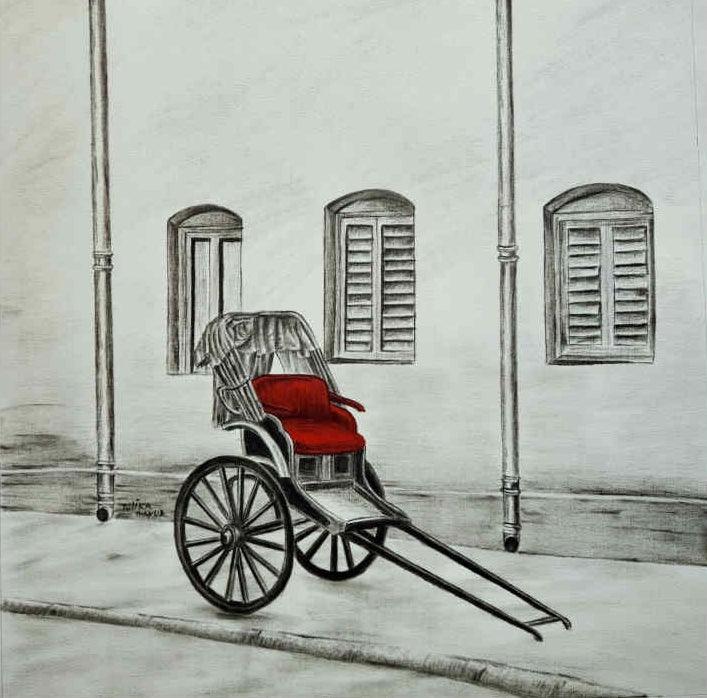
Old Memories In Kolkata 11 (Nostalgic Rickshaw)
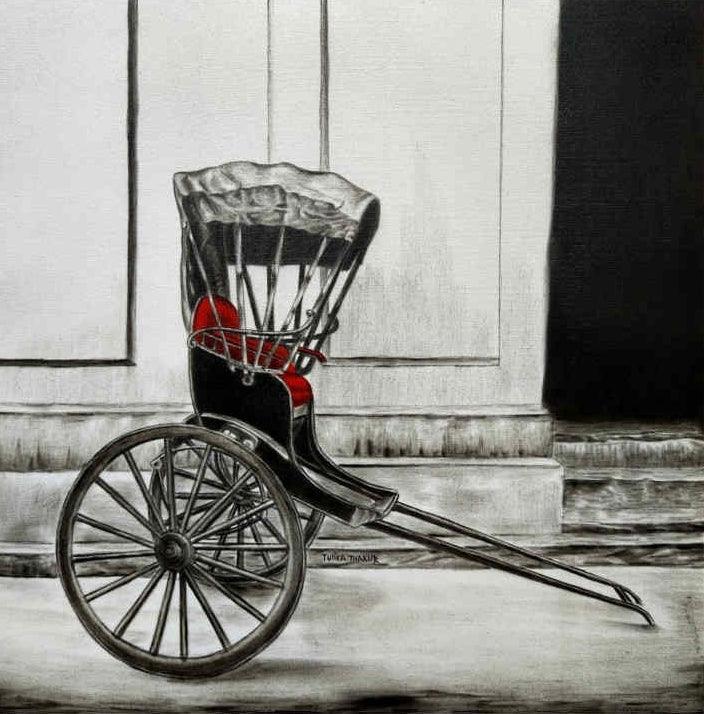
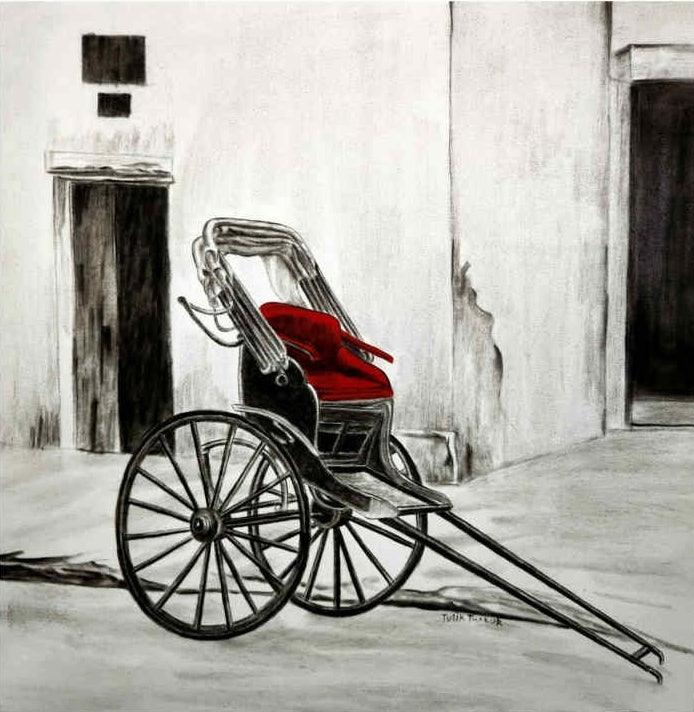
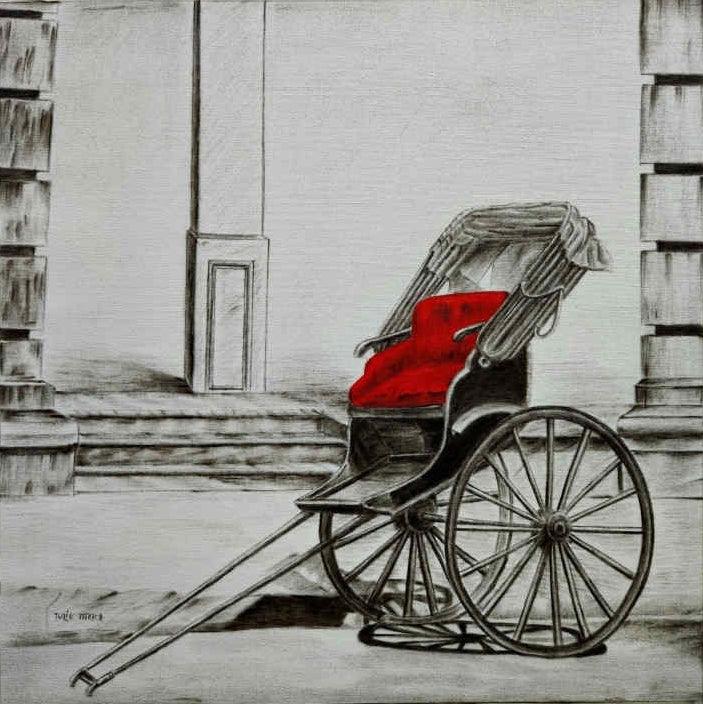
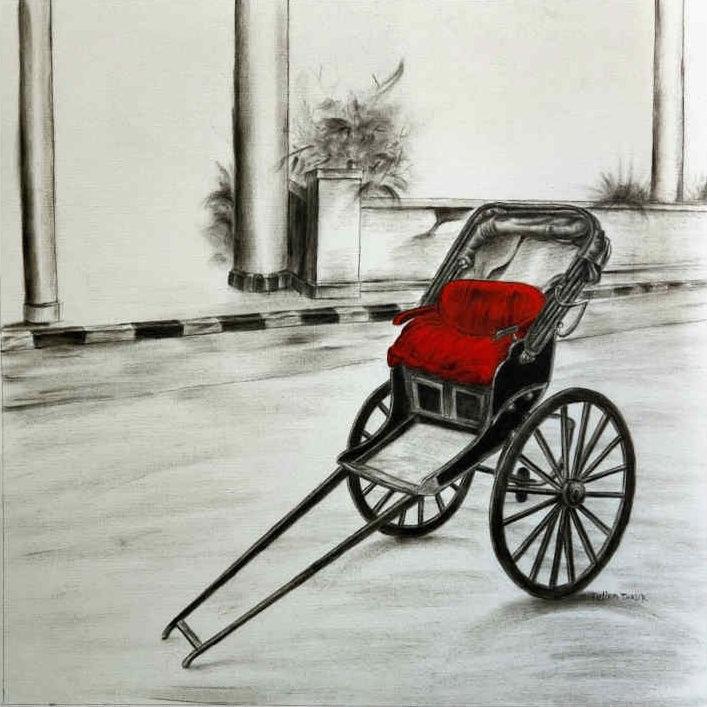
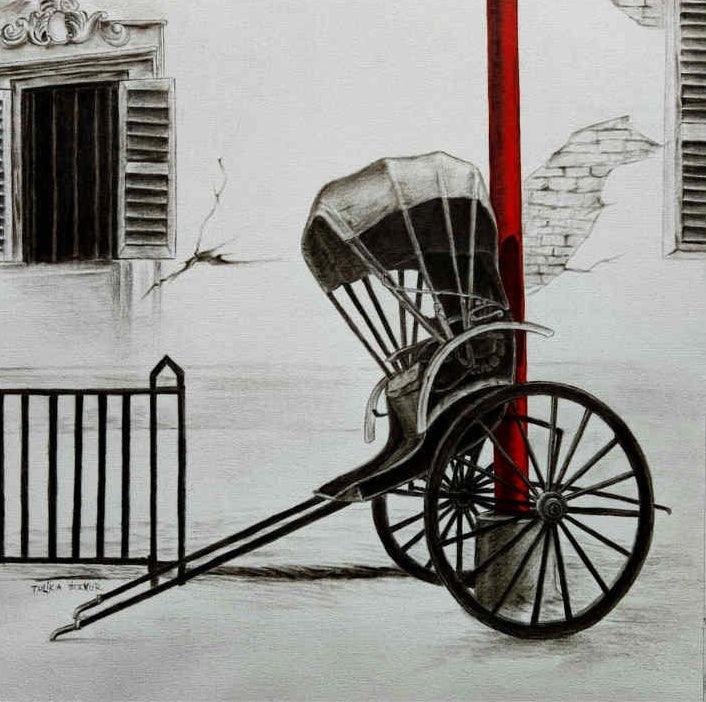
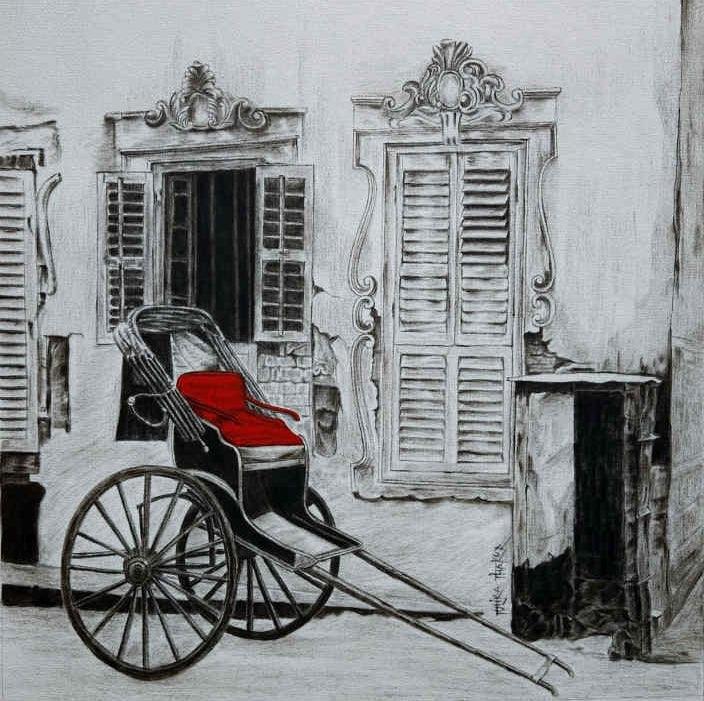
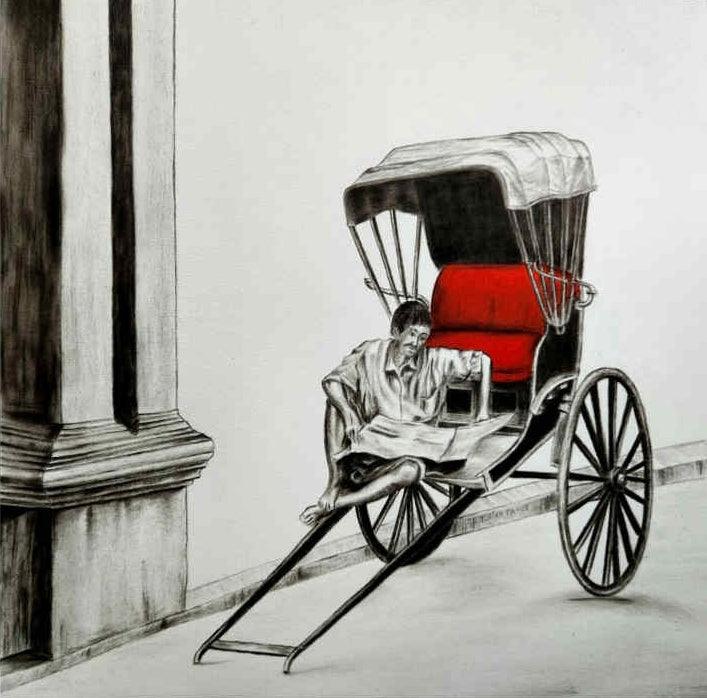
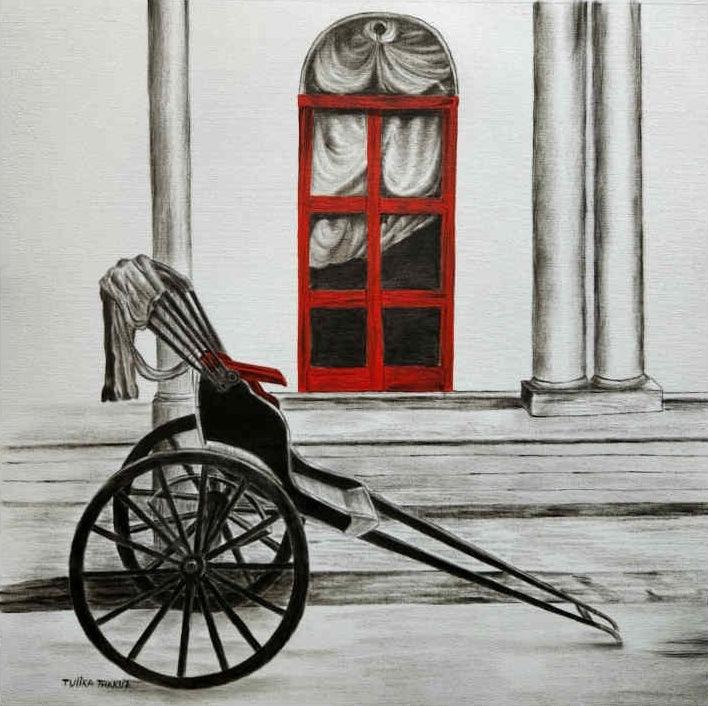
Rendered in a restrained monochrome, the quiet street façade becomes a stage for absence, where shuttered windows and vertical poles impose a measured rhythm that feels both orderly and emotionally withholding. At the center, the hand-pulled rickshaw sits like a paused sentence—its spoked wheel and elongated shafts projecting movement that never arrives—while the single red seat ignites the scene with the afterglow of human presence. This lone chromatic pulse reads as memory and labor condensed, suggesting dignity, fatigue, and the fragile warmth of lives that pass through spaces that rarely acknowledge them. In its spare geometry and hushed light, the work turns an everyday vehicle into a tender emblem of waiting and the quiet economics of the street.
Delivery
You may also like