

Gadgets Ruin Childhood
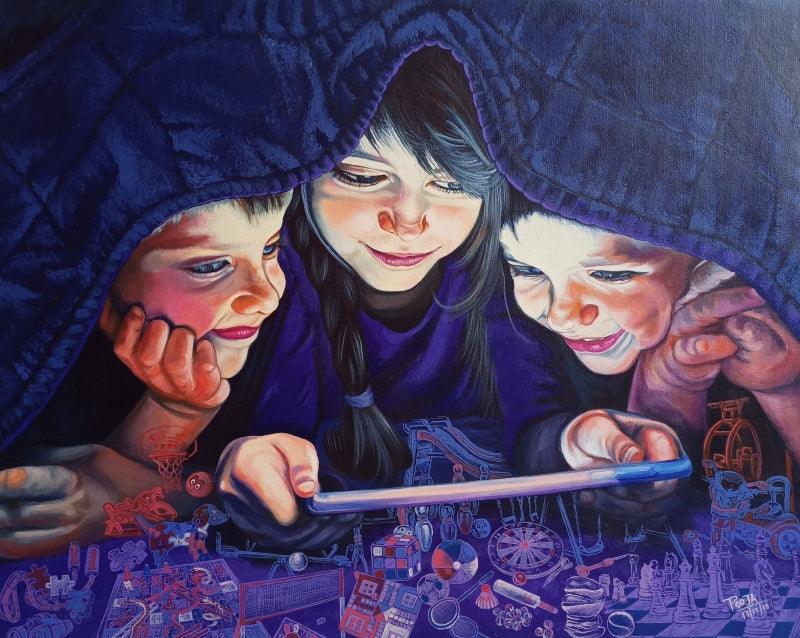
Huddled beneath a makeshift canopy of indigo cloth, the three children form a small, private cosmos where the only true daylight emanates from a handheld screen. That cool, electric glow sculpts their faces into a shared reverie—wonder edged with dependence—while the surrounding darkness becomes a protective womb that also quietly isolates them from the wider world. Along the bottom, the delicate line-drawn debris of toys, games, and icons reads like a contemporary still life: a catalogue of imagination now refracted through technology, suggesting how play’s tactile mythology is being reorganized into pixels and pooled attention. The composition’s triangular intimacy turns the device into a modern hearth—an altar of connection—asking whether this new warmth nourishes childhood or hypnotizes it.
Delivery
You may also like