Expected Childhood
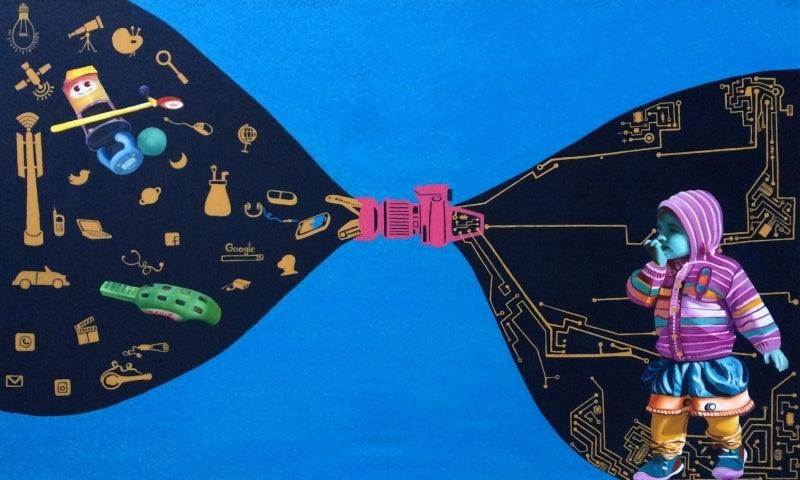
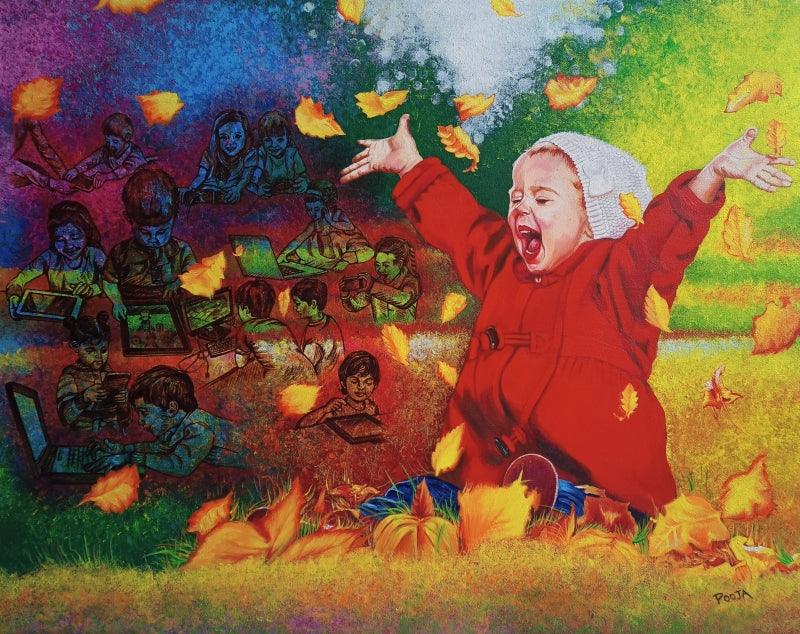
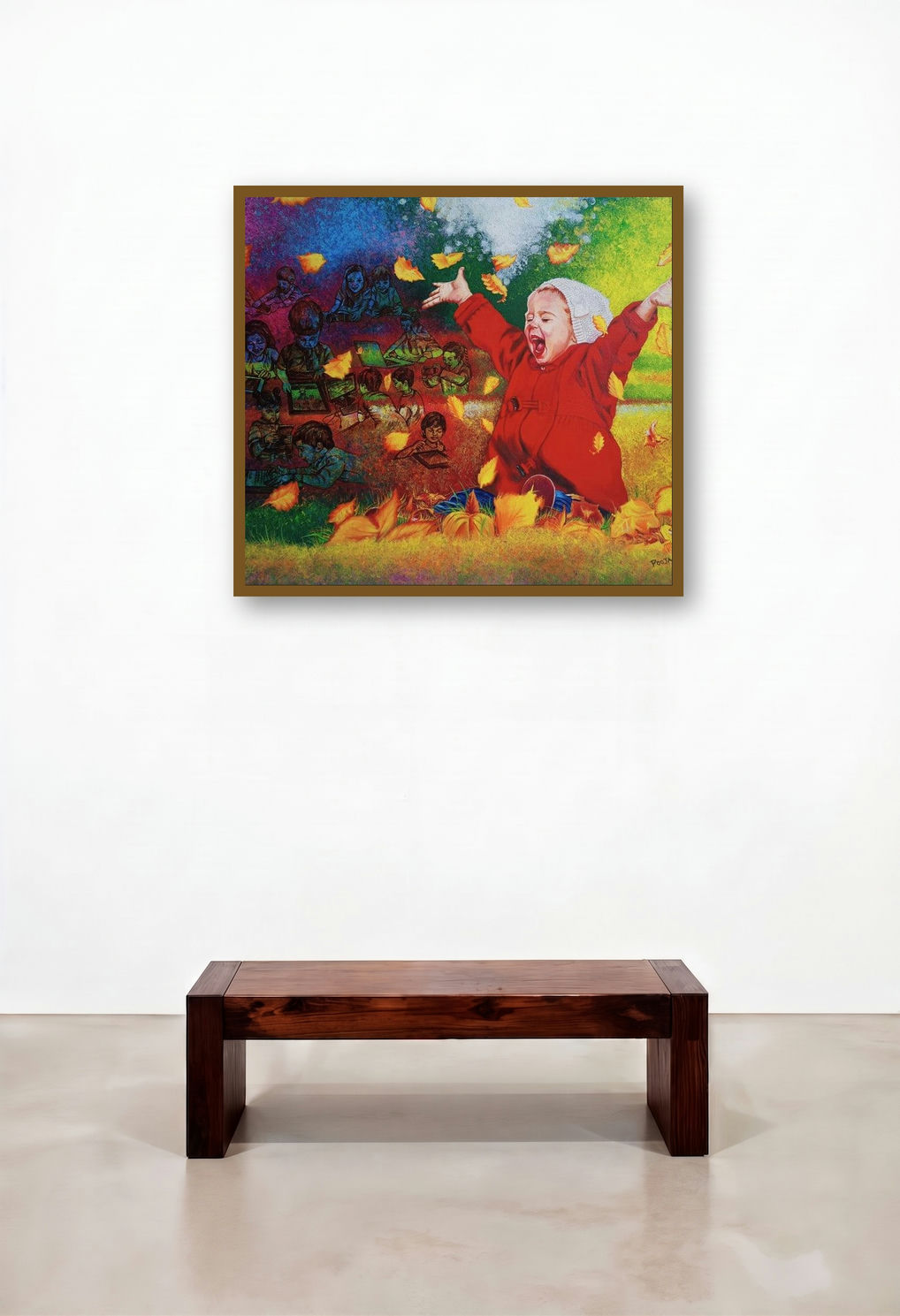
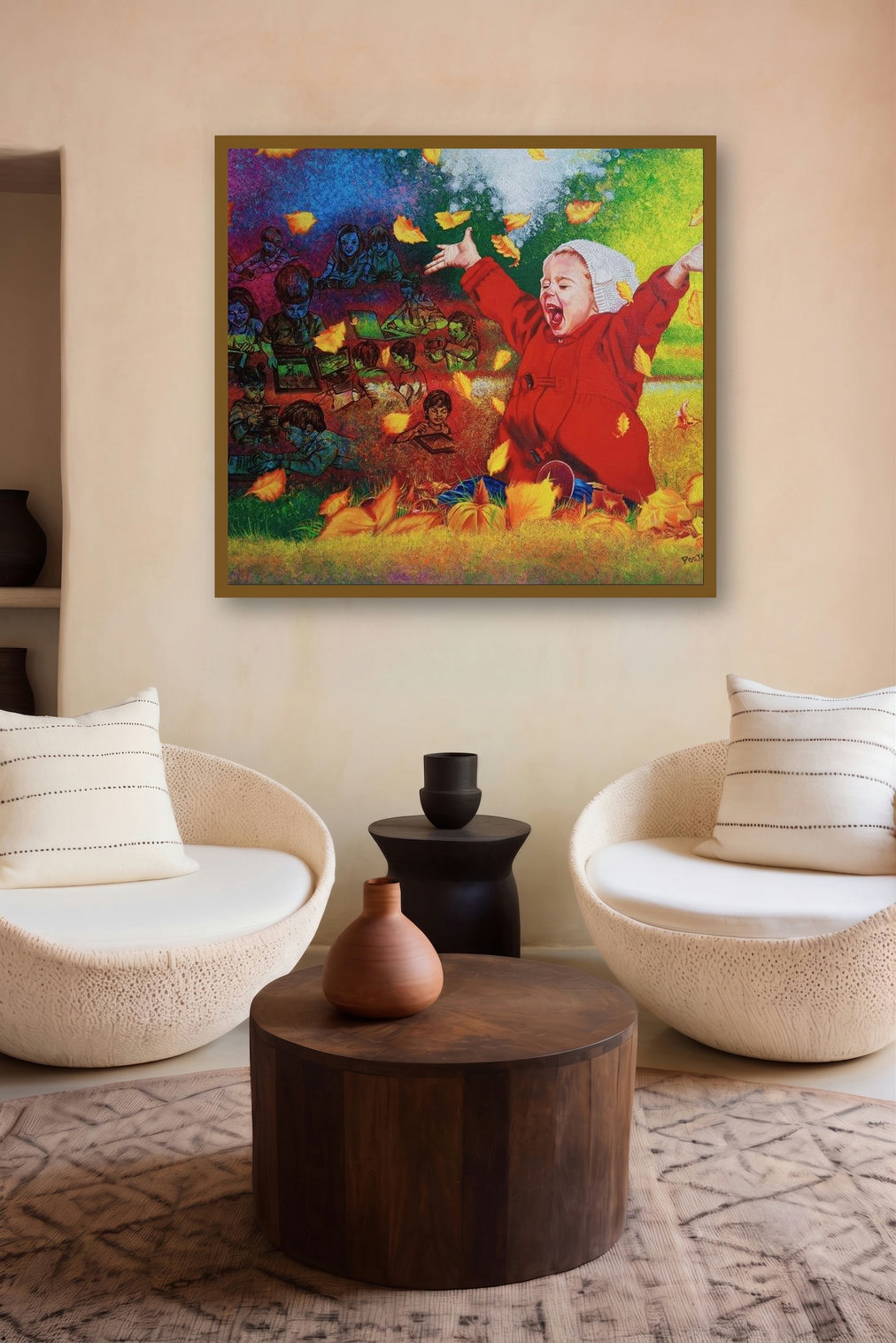
A jubilant child in a crimson coat erupts into the foreground, arms flung wide as if to conduct the whirl of autumn leaves, and the painting lets that gesture become a manifesto for unselfconscious presence. Behind this bright, sun-washed field, a shadowed crowd of children glow in cooler, bruised tones, absorbed by screens—an inward spiral that contrasts sharply with the infant’s outward, bodily delight. Color and space operate like a moral weather system: warm yellows and greens open into breathable light, while the darker, cluttered left side compresses attention into circuitry and isolation. The work reads as a tender elegy for play itself, suggesting that joy survives not as nostalgia but as an act of resistance against mediated living.
Delivery
You may also like