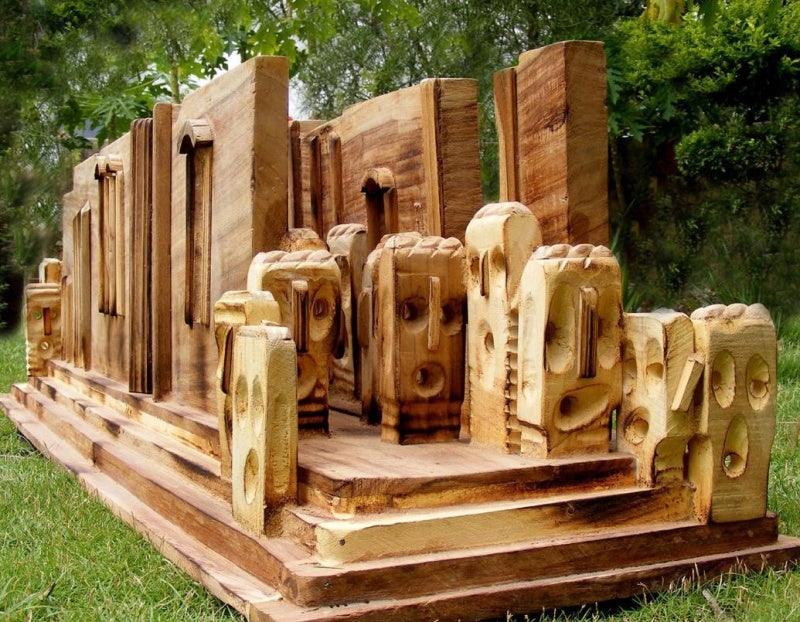
Fenced In (Enclosed Spirits)
₹120,000
● In stock · ★ 5.0 (6)checking live price…
Size
52x17x14Type
OriginalMaterial
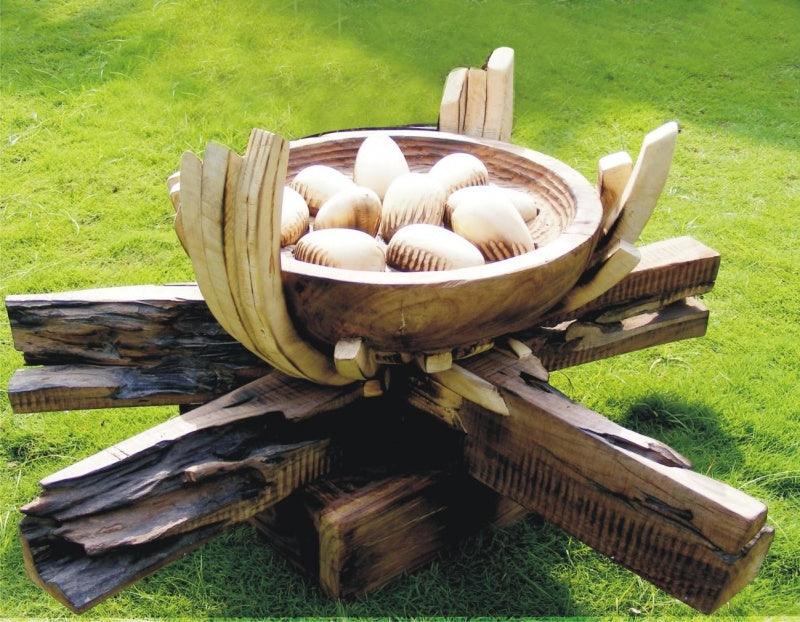
WoodThis carved wooden installation stages a miniature architecture of memory, where uprights and rounded volumes rise like a small civic precinct—part sanctuary, part ruin—set low to the ground as if inviting reverence rather than conquest. The warm grain and knotting of the timber behaves like a living topography, catching daylight in soft bands that alternately reveal and conceal the hollows, making absence as tactile as presence. Its repeated apertures and totemic blocks suggest doors, faces, and thresholds at once, turning the work into a meditation on passage—how communities are built from stacked layers of protection, erosion, and shared myth.
Delivery
You may also like
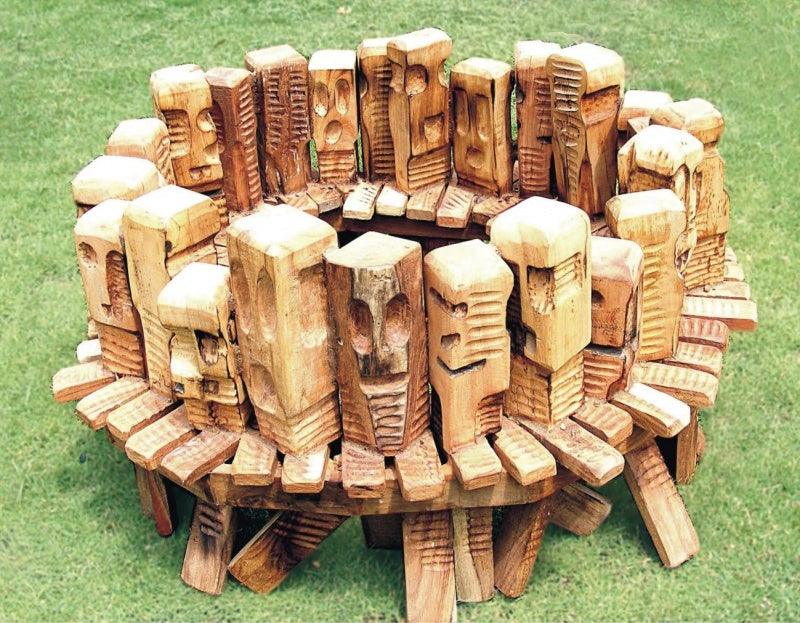
Gatgering (Circle of Faces)
Artzolo
₹80,000
★ 5.0 (7)
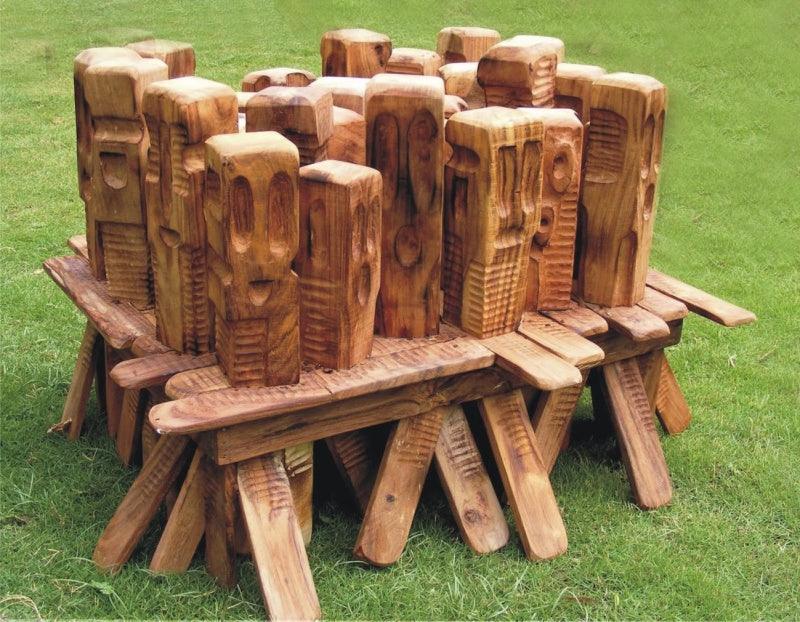
The Mob (Council of Spirits)
Artzolo
₹80,000
★ 5.0 (15)
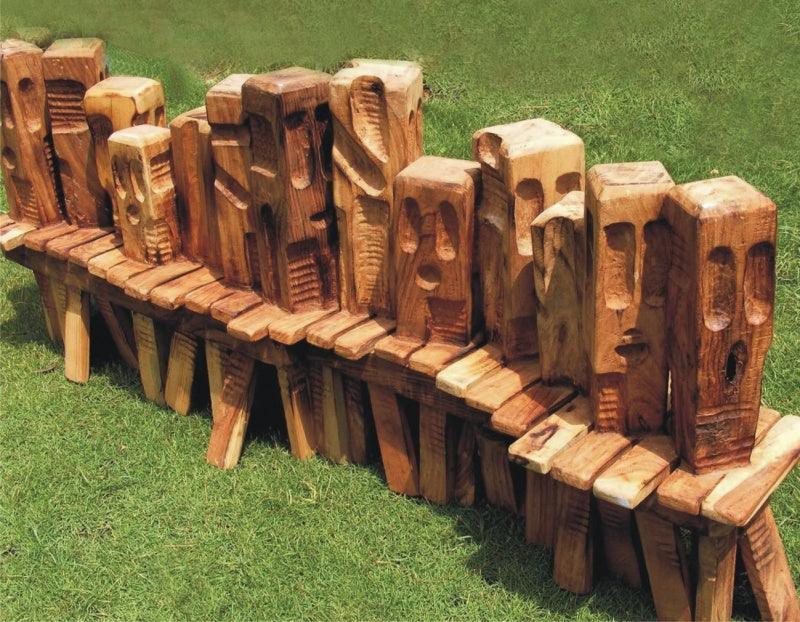
Queue (Guardians of the Green)
Artzolo
₹80,000
★ 4.0 (14)
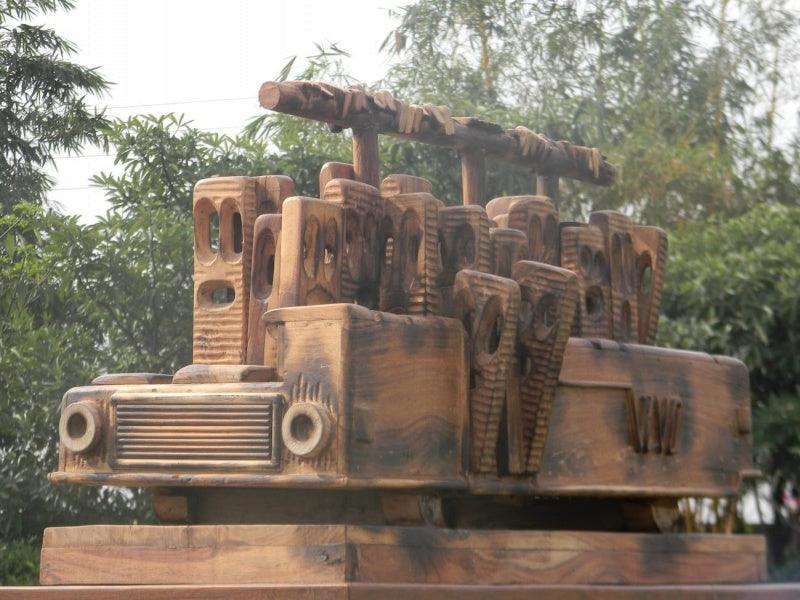
For A Place (Journeys Vessel)
Artzolo
₹100,000
★ 5.0 (6)
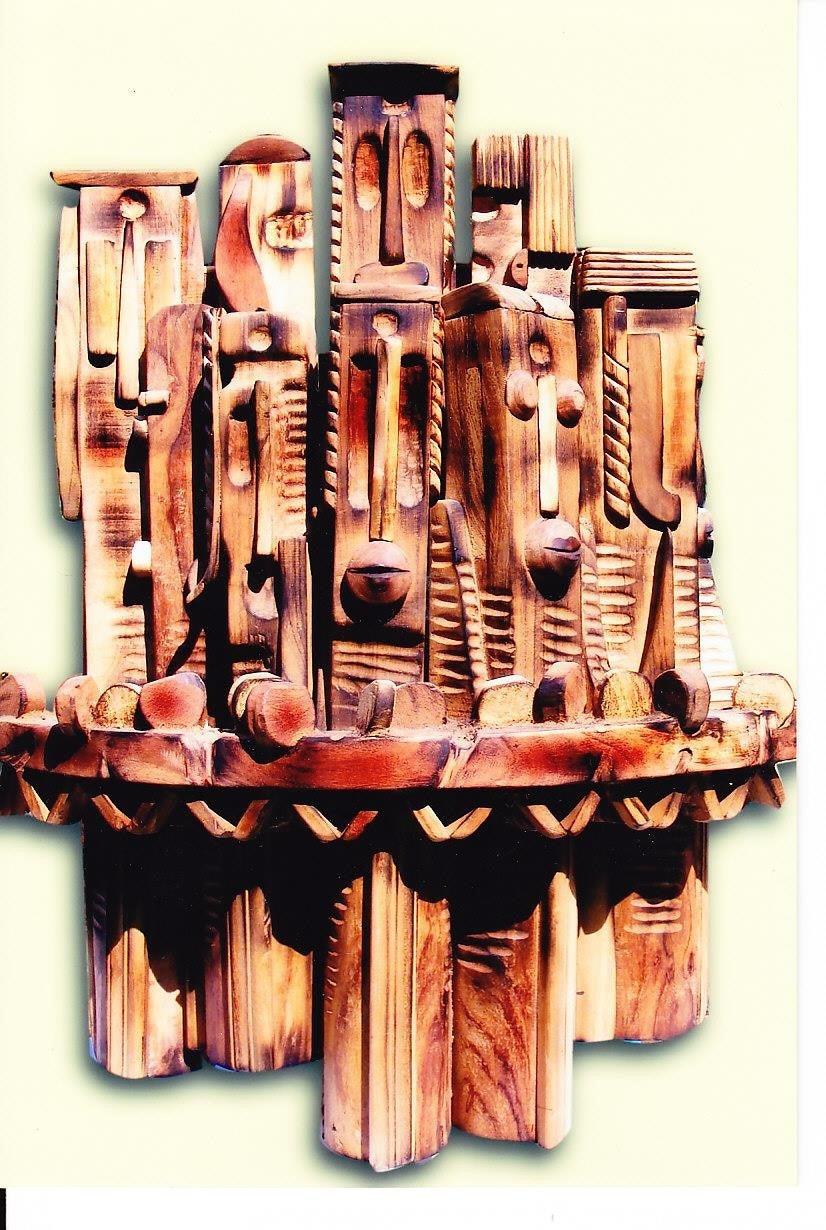
Untitled 3 (Ancestral Watchers)
Artzolo
₹50,000
★ 4.0 (15)
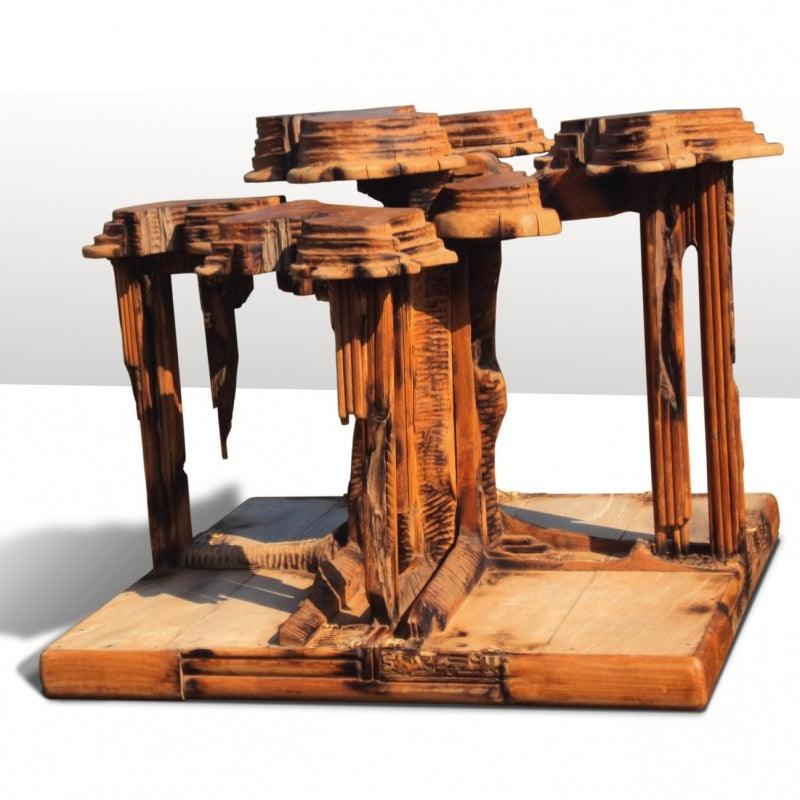
Embrace (Carved Terrain)
Artzolo
₹250,000
out of stock
★ 4.0 (10)
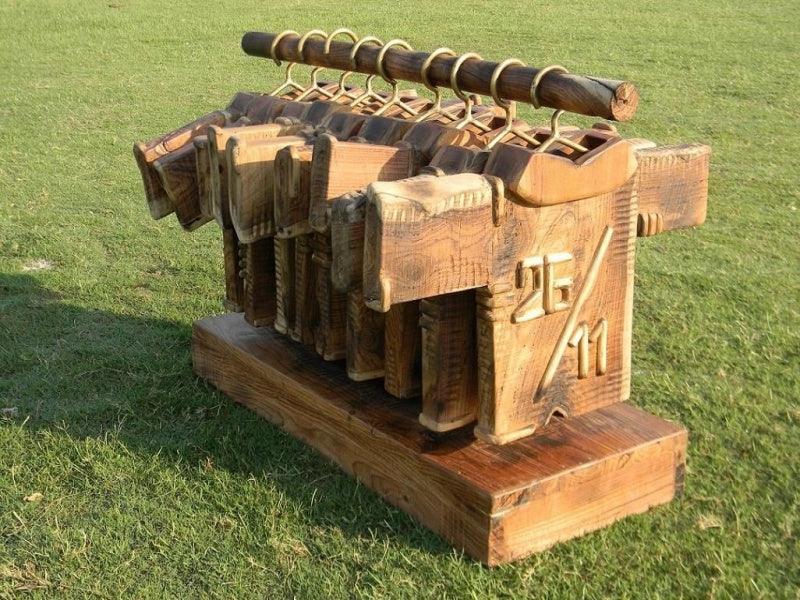
Resilience (Curiositys Gaze)
Artzolo
₹150,000
★ 5.0 (8)
Hunger Creates Destroys (Offering of Forms)
Artzolo
₹150,000
★ 4.0 (12)